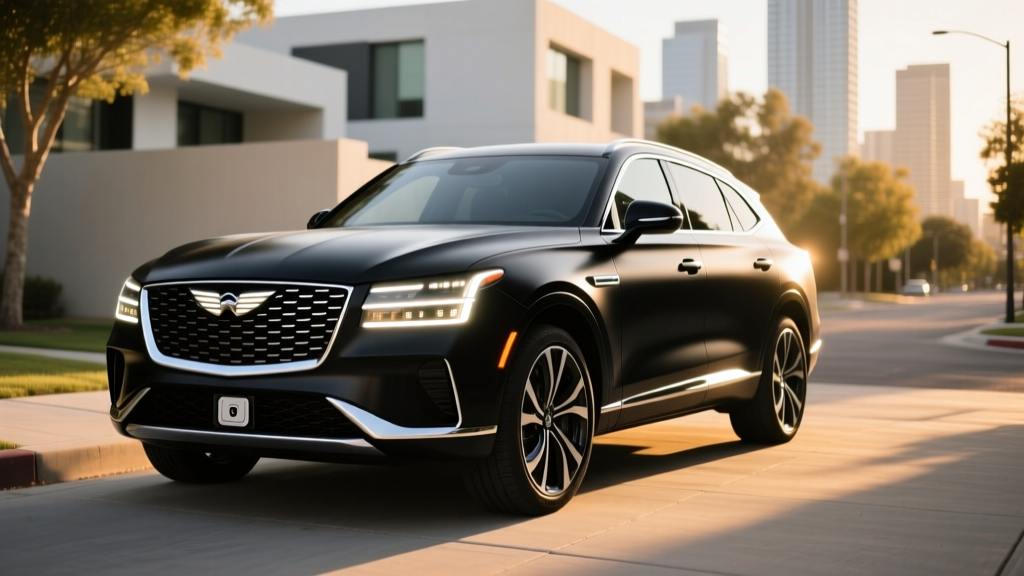
Quick Answer: The 2026 Genesis GV80 Electric is a luxury midsize SUV built on Hyundai Motor Group's eM platform, offering an EPA-estimated 280 miles of range from a ~94.8 kWh NMC battery, peak DC fast charging at 350 kW (10–80% in approximately 18 minutes), and a starting MSRP around $72,000. It qualifies for partial or full §30D federal tax credits depending on battery-sourcing compliance and buyer income. Real-world highway range drops to roughly 230–250 miles, and cold-weather driving can reduce that further. It's best suited for buyers with Level 2 home charging access who want BMW iX-rivaling luxury without Tesla's minimalist interior philosophy.
Genesis GV80 Electric at a Glance: Core Specs
Genesis entered the electric luxury SUV space with the GV80 Electric (sometimes referred to in early coverage as the electrified GV80 or GV80 EV), leveraging the dedicated eM skateboard architecture shared with the upcoming electric GV70 redesign. Here's what the numbers look like for the 2026 model year:
| Specification | 2026 Genesis GV80 Electric |
|---|---|
| EPA Range (est.) | ~280 miles |
| Battery Capacity (usable) | ~94.8 kWh, NMC chemistry |
| Peak DC Fast Charge Rate | 350 kW (800V architecture) |
| 10–80% DC Charge Time | ~18 minutes (ideal conditions) |
| Level 2 AC Charge Rate | 10.9 kW onboard charger |
| 0–60 mph | ~4.5 seconds (dual-motor AWD) |
| Horsepower | ~365 hp combined |
| Drivetrain | Dual-motor AWD |
| Starting MSRP | ~$72,000 (base) |
| Battery/Powertrain Warranty | 10 years / 100,000 miles |
| Connector (North America) | NACS (Tesla Supercharger compatible) |
These are preliminary figures based on Genesis announcements and eM-platform capabilities. Final EPA certification numbers may shift slightly before showroom arrivals. Check fueleconomy.gov for the certified sticker once published.
EPA vs. Real-World Range: The ~280-mile EPA estimate assumes mixed driving. Expect 230–250 miles on sustained highway trips at 70–80 mph, and 200–220 miles in sub-freezing temperatures without aggressive preconditioning. Genesis's heat pump (standard on EV trims) helps mitigate cold losses, but physics still applies — cold electrolyte and cabin heating draw heavily from the pack.
Charging the GV80 Electric: 800V Architecture Explained
The GV80 Electric inherits Hyundai Motor Group's 800V electrical architecture — the same system that makes the Ioniq 5 and EV6 charging champions in their segments. Here's what that translates to in practice:
| Charging Level | Power | Miles Added per Hour | Typical Use Case |
|---|---|---|---|
| Level 1 (120V household) | ~1.4 kW | ~4–5 miles/hr | Emergency top-up only |
| Level 2 (240V home/public) | 10.9 kW (max onboard) | ~34–38 miles/hr | Daily/overnight charging |
| DC Fast Charge (peak) | Up to 350 kW | ~800+ miles/hr (peak) | Road trips, 10–80% in ~18 min |
| DC Fast Charge (typical 150 kW station) | ~150 kW | ~450 miles/hr | Common public fast chargers |
Charging curve reality: The 350 kW peak only sustains briefly between roughly 10–40% state of charge. From 40–80%, the rate tapers progressively — you'll average closer to 200–220 kW across the full 10–80% session. This is normal for all EVs and is managed by the battery management system to protect cell longevity. Still, an 18-minute 10–80% session at a capable 350 kW charger (like Electrify America's newest stalls or Tesla Supercharger V4 with NACS adapter) is among the fastest in the luxury SUV class.
Home charging: A full Level 2 home installation (240V, 48-amp circuit for the 10.9 kW onboard charger) will replenish the GV80 Electric's battery from 10% to 100% in roughly 9–10 hours. Installation costs range from $800–$2,500 depending on panel capacity and conduit run. If your electrical panel is at or near capacity, a panel upgrade to 200A can add $1,500–$3,500. Always get a quote from a licensed electrician before purchasing equipment.
GV80 Electric vs. Gas GV80 vs. Competitors: Cost Comparison
The decision between the GV80 Electric, the conventional GV80 (3.5T V6), and rival luxury EVs hinges on more than sticker price. Here's a five-year total cost of ownership (TCO) estimate assuming 12,000 miles/year, $3.80/gallon premium fuel, and $0.14/kWh average home electricity:
| Cost Factor (5 years / 60k miles) | GV80 Electric (~$72,000) | GV80 3.5T Gas (~$63,000) | BMW iX xDrive50 (~$87,000) |
|---|---|---|---|
| Purchase Price (MSRP) | $72,000 | $63,000 | $87,000 |
| Est. Federal Tax Credit (§30D) | Up to $7,500* | $0 | Up to $7,500* |
| Fuel / Electricity (5 yrs) | ~$2,700 | ~$9,800 | ~$2,900 |
| Maintenance (5 yrs) | ~$1,800 | ~$4,200 | ~$2,000 |
| Insurance (5 yrs, est.) | ~$12,500 | ~$10,800 | ~$13,200 |
| Est. Depreciation | ~$28,000 | ~$26,000 | ~$36,000 |
| Total 5-Year TCO | ~$109,000 | ~$113,800 | ~$138,600 |
*Federal tax credit caveat: Under IRS §30D rules, the $7,500 credit requires compliance with battery-component and critical-mineral sourcing thresholds, buyer AGI limits ($150k single / $300k joint), and SUV MSRP caps ($80,000). Credit eligibility for the GV80 Electric depends on Genesis's supply chain — verify current status on the IRS clean vehicle credit page before purchasing. The credit can now be transferred to the dealer at point of sale, reducing your out-of-pocket cost immediately.
Key takeaway: The GV80 Electric's higher purchase price is substantially offset by fuel savings (~$7,100 over five years) and lower maintenance costs (no oil changes, fewer brake replacements due to regen braking). The break-even point versus the gas GV80 typically arrives around year 3–4, assuming home charging at average electricity rates.
Real-World Ownership: What First-Time EV Buyers Must Know
If you're transitioning from a gas vehicle to the GV80 Electric, these factors will define your daily experience more than any spec sheet:
Home Charging Is Non-Negotiable for Most Owners
Over 80% of EV charging happens at home. Without a Level 2 home setup, you'll rely on public charging infrastructure — which, while improving, still has reliability gaps. If you live in an apartment or condo without charging access, weigh this carefully. Public DC fast charging costs $0.35–$0.55/kWh in most metro areas, erasing much of the cost advantage over gasoline.
Cold Weather Demands Preconditioning
The GV80 Electric's battery thermal management system includes a heat pump, but cold-soaked batteries still lose 15–30% of usable range in temperatures below 30°F. Use the Genesis Connected Services app to precondition the battery and cabin while still plugged in — this draws from grid power rather than the pack, preserving range for your drive.
Insurance Costs Are Higher for EVs
Expect insurance premiums 10–20% above the gas GV80, driven by higher repair costs for battery packs and specialized body structures. Get quotes from multiple carriers before committing — some insurers now offer dedicated EV policies with battery-specific coverage.
Tire Wear Accelerates
The GV80 Electric's instant torque and heavier curb weight (~5,200 lbs) accelerate tire wear by roughly 15–25% compared to the gas model. Budget for a set of EV-optimized touring tires (Michelin Pilot Sport EV or Hankook iON evo SUV) every 25,000–35,000 miles.
Common Misconceptions About the GV80 Electric
| Myth | Fact |
|---|---|
| "The battery will need replacing in 5 years" | Genesis warrants the battery for 10 years/100,000 miles with a minimum 70% capacity retention threshold. Industry data shows NMC packs with active thermal management typically retain 85–90% capacity at 100k miles. |
| "280 miles isn't enough range" | The average American drives 37 miles/day (FHWA data). Even with cold-weather losses, 280 EPA miles covers weeks of commuting. For road trips, 18-minute fast-charge stops are comparable to gas-station rest breaks. |
| "Public charging is always broken" | Network uptime varies. Tesla Superchargers (now NACS-accessible) average 99%+ uptime. Electrify America and EVgo have improved significantly, but rural corridors still have gaps. Plan road trips using PlugShare or A Better Routeplanner. |
| "EVs are worse for the environment" | Even on coal-heavy grids, lifecycle emissions for EVs are lower than gas vehicles within 1–2 years of driving (EPA analysis). On cleaner grids, the advantage is immediate. |
| "I'll qualify for the full $7,500 tax credit" | Credit eligibility depends on your AGI, the vehicle's MSRP relative to the $80,000 SUV cap, and Genesis's battery-sourcing compliance. Always verify on irs.gov before relying on the credit in your budget. |
Should You Buy the Genesis GV80 Electric? A Decision Framework
Choose the GV80 Electric if:
- You have Level 2 home charging access (garage or driveway with 240V capability)
- Your daily driving is under 100 miles round-trip, with occasional road trips under 400 miles
- You value a traditional luxury interior (leather, open-pore wood, rotary shifter) over Tesla-style minimalism
- You want 350 kW charging capability for road-trip practicality
- You qualify for the §30D federal tax credit or live in a state with additional EV rebates
Stick with the gas GV80 (or wait) if:
- You lack home charging and your nearest reliable public charger is more than 10 minutes away
- You regularly tow (the GV80 Electric's towing capacity is lower than the gas model's 5,000-lb rating)
- You frequently drive 500+ mile routes in regions with sparse charging infrastructure (rural Mountain West, parts of the Great Plains)
- Your household income exceeds the §30D AGI caps and your state offers no additional incentives
Consider the BMW iX instead if: you need more cargo space, prefer a more futuristic interior design, and can absorb a ~$15,000 higher entry price. The iX offers slightly more range (~324 miles EPA) and a more established EV track record.
Consider the GV80 PHEV (if available) if: you want electric commuting range (est. 30–40 miles) with gas-engine flexibility for long trips and no charging-infrastructure dependence.
Genesis GV80 Electric FAQ
What is the real-world range of the 2026 Genesis GV80 Electric?
The EPA estimates approximately 280 miles. In real-world highway driving at 75 mph in moderate temperatures, expect 230–250 miles. In sub-freezing conditions, that drops to 200–220 miles without preconditioning. Always plan road-trip charging stops with a 20% buffer.
How long does it take to charge the GV80 Electric at home?
On a Level 2 home charger (240V, 48A), a full charge from 10% to 100% takes approximately 9–10 hours. Most owners plug in overnight and wake up to a full battery every morning — similar to charging a smartphone.
Does the GV80 Electric qualify for the $7,500 federal tax credit?
It may, depending on current IRS §30D battery-sourcing requirements, your adjusted gross income (must be under $150k single / $300k joint), and the vehicle's MSRP relative to the $80,000 SUV cap. The credit can be transferred at point of sale to reduce your purchase price directly. Verify current eligibility at irs.gov.
Is the GV80 Electric self-driving?
No. The GV80 Electric features Genesis's Highway Driving Assist II, which is a Level 2 driver-assistance system per SAE classification. It provides adaptive cruise control and lane-centering on divided highways, but the driver must remain fully engaged with hands on the wheel and eyes on the road at all times. It is not autonomous.
What happens if the battery degrades significantly?
Genesis covers the high-voltage battery for 10 years or 100,000 miles, guaranteeing a minimum of 70% capacity retention. If the battery falls below that threshold within the warranty period, Genesis will repair or replace it at no cost. Out-of-warranty replacement costs for a pack this size typically range from $12,000–$18,000, though prices are declining as the supply chain matures.
Can I charge at Tesla Superchargers?
Yes. The 2026 GV80 Electric is equipped with the NACS (North American Charging Standard) port, giving native access to Tesla's Supercharger network — the most extensive and reliable DC fast-charging network in North America, with over 25,000 stalls.