Quick Verdict: The 2017 Leaf at a Glance
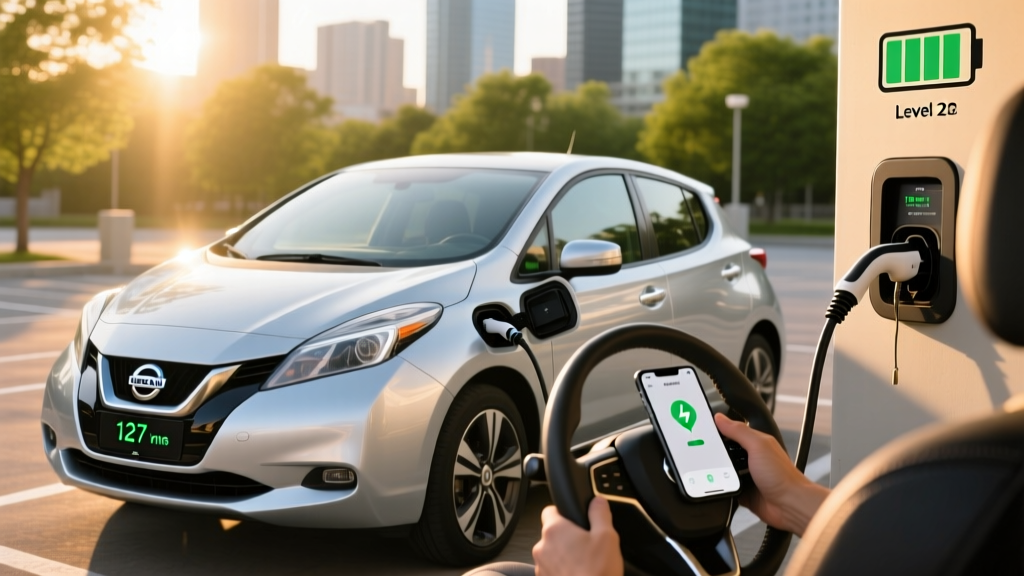
The 2017 Nissan Leaf occupies a specific niche in the 2026 used-EV market: an affordable, practical commuter car with limited range by modern standards but strong reliability credentials and low running costs. With an EPA-estimated 107 miles of range from its 30 kWh battery pack, this final-year first-generation Leaf is best suited for city drivers with home charging access and daily commutes under 60 miles round-trip.
As a used vehicle, the 2017 Leaf no longer qualifies for the federal §30D new-EV tax credit, though buyers may be eligible for the Used Clean Vehicle Credit (up to $4,000) if purchasing from a licensed dealer and meeting income thresholds. Prices in the used market typically range from $7,000 to $12,000 depending on mileage, condition, and battery health — making it one of the most accessible entry points into EV ownership.
| Spec | Value |
|---|---|
| EPA Range | 107 miles (30 kWh pack) |
| Battery Capacity | 30 kWh usable (NMC lithium-ion) |
| Motor Output | 80 kW (107 hp) / 187 lb-ft torque |
| 0-60 mph | ~11.5 seconds |
| Drivetrain | FWD (single front motor) |
| DC Fast Charge (Peak) | ~50 kW (CHAdeMO) |
| 10-80% DC Charge Time | ~30 minutes (at 50 kW station) |
| Level 2 Charge Rate | 6.6 kW onboard charger |
| EPA Efficiency | 112 MPGe combined (30 kWh/100mi) |
| Cargo Volume | 24.0 cu ft (rear seats up) / 30.0 cu ft (folded) |
| Battery Warranty (Original) | 8 yr / 100,000 mi (capacity loss coverage) |
| Original MSRP (Base S) | $30,680 (before incentives) |
| Typical Used Price (2026) | $7,000 - $12,000 |
Range & Efficiency: Real-World Expectations
EPA Sticker: 107 miles
Real-World Expectation: Plan for 80-95 miles in mixed driving. Highway speeds (70+ mph) reduce range by roughly 15-20%. Cold-weather operation (below 32°F) with cabin heat can drop range to 60-75 miles due to the 2017 Leaf's lack of a heat pump — it uses resistive PTC heating, which is energy-intensive.
The 2017 Leaf's 30 kWh NMC (nickel manganese cobalt) battery pack was an upgrade over the earlier 24 kWh pack found in 2011-2015 models, and it represents the final iteration of the first-generation Leaf before the 2018 redesign introduced the 40 kWh and later 62 kWh packs.
Efficiency is rated at 112 MPGe combined by the EPA, which translates to roughly 30 kWh per 100 miles. In practice, city driving with frequent regenerative braking opportunities can push efficiency to 3.0-3.2 miles/kWh (120-130 MPGe equivalent), while sustained highway driving drops it to 2.5-2.7 miles/kWh.
One critical factor for used buyers: battery degradation. The 2017 Leaf's air-cooled battery management system (Nissan calls it passive thermal management) is more susceptible to capacity loss than liquid-cooled packs found in competitors like the Chevy Bolt or Tesla Model 3. Expect 10-20% degradation at 80,000-100,000 miles, depending on climate and charging habits. A Leaf in Phoenix that was frequently DC fast-charged will show more degradation than one garage-kept in Seattle and charged primarily on Level 2.
Charging: CHAdeMO in a NACS World
| Charge Level | Power | Miles Added per Hour | Notes |
|---|---|---|---|
| Level 1 (120V) | ~1.4 kW | ~4-5 mi/hr | Emergency/trickle only; full charge ~22 hours |
| Level 2 (240V) | 6.6 kW (max) | ~22-25 mi/hr | Full charge ~5 hours; requires 30A+ circuit |
| DC Fast (CHAdeMO) | ~50 kW peak | ~150 mi/hr (peak) | 10-80% in ~30 min; tapers significantly above 80% |
The 2017 Leaf uses the CHAdeMO DC fast-charging standard, which was once widely available but has been largely superseded by CCS and, increasingly, the Tesla NACS standard. As of 2026, CHAdeMO connectors are still available at many Electrify America, EVgo, and older ChargePoint stations, but new installations overwhelmingly favor CCS/NACS. This is a meaningful consideration for buyers who rely on public fast charging.
The Leaf's 6.6 kW onboard Level 2 charger is adequate for overnight home charging. On a 240V/30A circuit (like a dryer outlet), you'll add roughly 22-25 miles of range per hour, meaning a full charge from empty takes about 5 hours. Most owners plug in nightly and wake up with a full battery — the ideal EV ownership pattern.
DC fast charging peaks around 50 kW, which is modest by 2026 standards (many new EVs peak at 150-350 kW). The charge curve tapers sharply above 80% state of charge to protect the air-cooled battery, so charging from 80-100% can take nearly as long as 10-80%. For road trips, plan to charge in the 20-80% sweet spot and avoid charging to 100% at DC stations unless necessary.
Home charging setup cost: Expect $500-$1,500 for a Level 2 home charger installation (equipment + electrician + permit), assuming your electrical panel has capacity. Older homes may need a panel upgrade ($1,500-$3,000+), which can significantly increase total cost.
Performance & Driving Dynamics
The 2017 Leaf's 80 kW (107 horsepower) AC synchronous electric motor delivers 187 lb-ft of torque to the front wheels. The 0-60 mph time of approximately 11.5 seconds is unhurried by modern EV standards — for comparison, a 2026 Chevy Equinox EV hits 60 in about 7.5 seconds, and a Tesla Model 3 RWD does it in 5.8 seconds.
However, the Leaf's instant torque delivery makes it feel peppy in city driving, where most of its miles will be accumulated. The low center of gravity (battery pack under the floor) contributes to composed handling, though the eco-oriented low-rolling-resistance tires prioritize efficiency over grip. Ride quality is comfortable, with a compliant suspension tuned for urban streets rather than canyon carving.
The regenerative braking system offers two modes: "D" mode provides moderate regen (similar to engine braking in a gas car), while "B" mode increases regen intensity for more one-pedal-like driving. However, the 2017 Leaf does not come to a complete stop via regen alone — you'll still need the friction brakes at low speeds. This is a notable difference from newer EVs with true one-pedal driving.
Interior, Tech & Practicality
The 2017 Leaf's interior reflects its 2010 design origins. Materials are functional but plasticky, and the infotainment system feels dated compared to 2026 standards. The 5-inch touchscreen (SV and SL trims) supports basic Bluetooth audio and phone connectivity, but Apple CarPlay and Android Auto are not available — a significant omission for modern buyers.
The instrument cluster includes a digital range estimator, battery temperature gauge, and eco-driving feedback displays. The "trees" graphic that grows as you drive efficiently became a Leaf signature, though it's more novelty than practical tool.
Cargo space: 24.0 cubic feet behind the rear seats, expanding to 30.0 cubic feet with the 60/40 split rear seat folded. This is competitive with compact hatchbacks and sufficient for groceries, luggage for two, or a week's worth of commuting gear. The rear seats offer 33.3 inches of legroom — adequate for adults on short trips but tight for taller passengers on longer journeys.
Driver assistance: The 2017 Leaf offers basic safety features including a rearview camera (standard on SV/SL), but lacks the advanced ADAS suites (adaptive cruise, lane centering, automatic emergency braking) that became common in later model years. This is a Level 0 vehicle by SAE automation standards — no driver-assist automation is present.
Pricing, Tax Credits & Ownership Costs
| Trim | Original MSRP | Typical Used Price | Used EV Credit Eligibility |
|---|---|---|---|
| S (base) | $30,680 | $7,000 - $9,000 | Up to $4,000 (10% of used price) |
| SV | $34,200 | $8,500 - $11,000 | Up to $4,000 |
| SL (top) | $36,200 | $9,500 - $12,000 | Up to $4,000 |
Federal tax credit status: The 2017 Leaf does not qualify for the §30D new-vehicle credit (obviously, as it's a used vehicle). However, buyers purchasing from a licensed dealer may qualify for the Used Clean Vehicle Credit under IRS rules. Key requirements:
- Vehicle must be at least 2 model years old (2017 qualifies)
- Purchase price must be $25,000 or less (all 2017 Leafs qualify)
- Buyer income caps: $75,000 single / $112,500 head of household / $150,000 joint (modified AGI)
- Credit is 30% of sale price, up to $4,000 maximum
- Must purchase from a licensed dealer (private-party sales do not qualify)
- Credit can be transferred to dealer at point of sale for immediate price reduction
For a $9,000 Leaf SV purchased from a dealer, the credit would be $2,700 (30% of $9,000), bringing effective cost to $6,300. For a $12,000 SL, the credit caps at $3,600, netting $8,400. Consult a tax professional to confirm eligibility based on your specific situation.
Insurance: Expect $900-$1,400 annually depending on location, driving record, and coverage level. The Leaf's low replacement cost and strong safety record keep premiums modest.
Maintenance: EVs require minimal routine maintenance — no oil changes, no spark plugs, no transmission fluid. Budget for tire rotation ($50-80 every 7,500 miles), cabin air filter replacement ($30-60 annually), and brake fluid flush ($100-150 every 2-3 years). The regenerative braking system extends brake pad life significantly; many Leaf owners report original brake pads at 80,000+ miles.
Charging costs: At the U.S. average residential electricity rate of ~$0.16/kWh, fully charging the 30 kWh battery costs about $4.80, yielding a fuel cost of roughly $0.045 per mile. Compare this to a 30 MPG gas car at $3.50/gallon ($0.117 per mile) — the Leaf saves about $0.07 per mile, or $700 per year at 10,000 miles driven.
Battery Health & Warranty Considerations
The original battery warranty was 8 years/100,000 miles against capacity loss below 9 bars (out of 12) on the battery health display. As of 2026, most 2017 Leafs are out of warranty unless they were purchased late in the model year and have under 100,000 miles.
Nissan's battery health indicator uses a 12-bar system. A new Leaf showed 12 bars; degradation to 11 bars typically occurs around 30,000-50,000 miles depending on climate and charging patterns. Loss of a second bar (10 bars remaining) suggests roughly 15-20% capacity loss, reducing real-world range to 85-90 miles.
Before purchasing a used 2017 Leaf, request a Leaf Spy report (a third-party OBD-II app that reads detailed battery health metrics) or have a Nissan dealer perform a battery health check. Key metrics:
- State of Health (SOH): Percentage of original capacity remaining. Above 85% is excellent for a 2017; below 75% suggests significant degradation.
- Hx value: Battery health index used by Leaf Spy. Higher is better.
- Ah (amp-hours): Current capacity vs. original 66 Ah nominal.
Battery replacement cost (if needed) ranges from $6,500-$9,000 installed at a Nissan dealer, though third-party refurbishment services may offer lower prices. Given the vehicle's low market value, a battery replacement rarely makes economic sense unless the rest of the car is in excellent condition.
Pros & Cons: The Honest Assessment
Pros
- Low purchase price ($7K-$12K used) makes EV ownership accessible
- Proven reliability with minimal maintenance needs
- Comfortable ride quality for city commuting
- Strong regenerative braking extends brake life
- Practical hatchback cargo space (24 cu ft)
- Low operating costs (~$0.045/mile on home charging)
- Used EV tax credit up to $4,000 available
Cons
- 107-mile EPA range limits use to commuting/local driving
- CHAdeMO charging standard is becoming obsolete
- Air-cooled battery prone to degradation in hot climates
- No Apple CarPlay/Android Auto support
- Slow 0-60 time (11.5 sec) feels dated
- No advanced driver-assist features (AEB, lane keep, ACC)
- Most examples are out of battery warranty
Who Should Buy the 2017 Leaf?
Best for:
- City commuters with home charging and daily round-trips under 60 miles
- Second-car households needing an efficient runabout
- Budget-conscious buyers wanting to try EV ownership with minimal financial risk
- Drivers in mild climates (Pacific Northwest, coastal California) where battery degradation is slower
Skip it if:
- You need 200+ miles of range for road trips or long commutes
- You live in a hot climate (Arizona, Texas, Florida) where battery degradation accelerates
- You rely on public DC fast charging (CHAdeMO availability is declining)
- You want modern infotainment with smartphone integration
- You need advanced safety features like automatic emergency braking
Key competitors to consider:
- 2017 Chevy Bolt EV: 238-mile range, liquid-cooled battery, CCS charging, more modern interior. Used prices $12K-$16K.
- 2018+ Nissan Leaf (40 kWh): 151-mile range, updated styling, ProPILOT Assist available. Used prices $14K-$18K.
- 2017 Volkswagen e-Golf: 125-mile range, premium interior, CCS charging. Used prices $11K-$15K.
Frequently Asked Questions
What is the real-world range of the 2017 Nissan Leaf?
Expect 80-95 miles in mixed driving, 70-80 miles at highway speeds, and 60-75 miles in cold weather with cabin heat. The EPA sticker says 107 miles, but real-world conditions — especially temperature and driving style — significantly impact usable range.
How fast does the 2017 Leaf charge?
On a 240V Level 2 home charger (6.6 kW), the Leaf adds 22-25 miles per hour and fully charges in about 5 hours. On a 50 kW CHAdeMO DC fast charger, it reaches 80% in roughly 30 minutes, though charging slows dramatically above 80% to protect the air-cooled battery.
Does the 2017 Leaf qualify for any tax credits?
Not the $7,500 new-vehicle credit. However, buyers purchasing from a licensed dealer may qualify for the Used Clean Vehicle Credit (30% of sale price, up to $4,000) if they meet income caps ($75K single / $150K joint). Check IRS guidelines for current rules.
Is the 2017 Leaf worth buying in 2026?
Yes, for the right use case. If you need an affordable commuter car with home charging and short daily drives, the Leaf offers excellent value at $7K-$12K. For longer commutes, road trips, or hot-climate driving, consider a used Chevy Bolt or newer Leaf with a larger battery.
How long will the 2017 Leaf battery last?
Most 2017 Leafs show 10-20% capacity loss at 80,000-100,000 miles, depending on climate and charging habits. The air-cooled battery degrades faster in hot climates and with frequent DC fast charging. With proper care (garage parking, Level 2 charging, avoiding 100% state of charge), the battery can provide acceptable range for 150,000+ miles.
Can I charge the 2017 Leaf at Tesla Superchargers?
No. The 2017 Leaf uses CHAdeMO for DC fast charging and J1772 for Level 2. Tesla Superchargers use NACS connectors, and adapters for CHAdeMO-to-NACS are not widely available or practical. You'll rely on Electrify America, EVgo, ChargePoint, and other networks with CHAdeMO connectors.
What are the biggest drawbacks of the 2017 Leaf?
The three main limitations are: (1) 107-mile range, which restricts use to local driving; (2) CHAdeMO charging standard, which is becoming less common at public stations; and (3) air-cooled battery, which degrades faster than liquid-cooled alternatives, especially in hot climates.
Sources: EPA Fuel Economy (fueleconomy.gov), IRS Used Clean Vehicle Credit (irs.gov), SAE International automation levels.