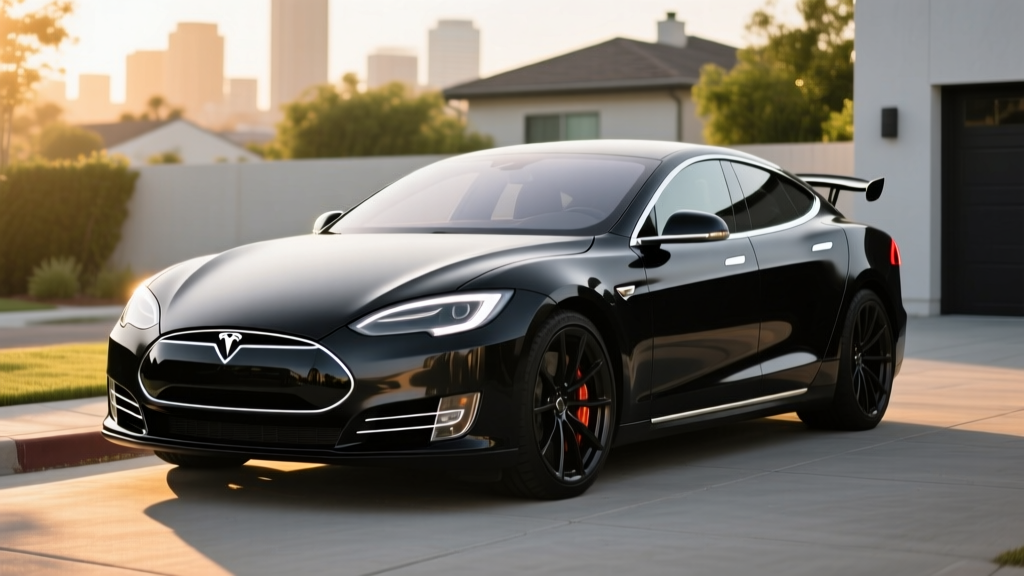
The 2017 Tesla Model S P100D remains one of the most talked-about performance sedans of the last decade. When Tesla introduced the 100 kWh battery pack and Ludicrous Mode+ software update, the headline was singular: a production sedan that could hit 60 mph in 2.5 seconds. But nearly a decade later, the conversation has shifted. Buyers in the used market are asking harder questions about battery degradation, real-world range, Supercharger speeds, and whether a 2017 flagship still holds up against modern EVs. This profile delivers the exact numbers you need before signing on a pre-owned P100D.
2017 Tesla Model S P100D Performance: The 0-60 Benchmark
The P100D's dual-motor all-wheel-drive powertrain pairs a front AC induction motor with a rear AC induction motor, producing a combined output that Tesla rated at approximately 762 horsepower (in Ludicrous Mode). The 2017 Model S P100D 0-60 time is 2.5 seconds with the Ludicrous Mode+ software update applied — a figure Tesla validated with Motor Trend testing and later eclipsed only with the Plaid generation.
| Specification | Value |
|---|---|
| Drivetrain | Dual-Motor AWD |
| Motor Type | AC Induction (front + rear) |
| Horsepower (Ludicrous) | ~762 hp combined |
| 0-60 mph (Ludicrous+) | 2.5 seconds |
| Top Speed | 155 mph |
| Battery Capacity (Usable) | ~100 kWh (NMC chemistry) |
| EPA Range | 315 miles |
| MPGe (Combined) | 98 MPGe |
| Efficiency | 34 kWh / 100 mi |
| Max DC Fast Charge | ~120 kW (V2 Supercharger) |
| Level 2 Charge Rate | 11.5 kW (48A onboard charger) |
| Cargo Volume | 26.3 cu ft (rear) + 5.3 cu ft (frunk) |
| Original MSRP | ~$134,500 (base P100D) |
The 2.5-second sprint was achieved with specific conditions: a fully charged battery, warm temperatures, a prepared surface, and the battery preconditioned to optimal temperature. In real-world driving with a partial state of charge, expect 0-60 times closer to 3.0-3.5 seconds — still ferociously quick, but not the record-setting headline number. The instant torque delivery characteristic of AC induction motors means the P100D pulls hardest from a standstill; acceleration tapers noticeably above 80 mph compared to the tri-motor Plaid models that followed.
Real-World Range: EPA vs What You'll Actually See
EPA Estimated Range: 315 miles
Real-World Expectation: 240-280 miles in mixed driving; 220-250 miles at sustained 75+ mph highway speeds; 180-220 miles in freezing weather with cabin heat.
The 315-mile EPA rating was class-leading in 2017, but several factors compress that number in daily use. The P100D's 100 kWh battery uses NMC (nickel manganese cobalt) chemistry, which is energy-dense but more sensitive to extreme temperatures than the LFP (lithium iron phosphate) packs Tesla later adopted for Standard Range models.
At highway speeds of 75-80 mph, energy consumption rises to approximately 38-42 kWh/100 miles, yielding a practical range of 220-250 miles on a full charge. Cold weather (below 32°F) introduces two penalties: reduced battery efficiency (the pack cannot deliver or accept energy as readily) and cabin heating demand. The 2017 Model S uses a resistive PTC heater rather than the heat pump Tesla introduced in the 2021 refresh, meaning winter range loss can reach 25-35% in sub-freezing conditions.
For a used P100D in 2026, battery degradation is a critical variable. According to aggregated fleet data, a 2017 100 kWh pack with 80,000-100,000 miles typically retains 88-92% of its original capacity. A P100D with 10% degradation and 90 kWh of usable capacity would see its real-world highway range drop to roughly 200-230 miles. Always request a battery health report or use third-party diagnostics (such as the TeslaFi or Scan My Tesla apps with an OBD2 adapter) before purchasing.
Charging Speeds: Supercharger V2 and Home Level 2
The 2017 P100D predates Tesla's V3 Supercharger architecture (introduced 2019) and the CCS/NACS adapter era. Its charging profile reflects the hardware of its time.
| Charging Method | Power (kW) | Rate / Time |
|---|---|---|
| Level 1 (120V household) | ~1.4 kW | ~3-4 miles per hour |
| Level 2 (240V, 48A onboard) | 11.5 kW | ~34 miles per hour; 0-100% in ~10 hours |
| DC Fast (V2 Supercharger) | Peak ~120 kW | 10-80% in ~40 minutes |
| DC Fast (V3 Supercharger, adapter) | Limited to ~120 kW | No speed benefit over V2 for this generation |
The 100 kWh battery's charge curve is the defining limitation. Peak charging rates of approximately 120 kW are only sustained between roughly 10-30% state of charge. Above 50%, the rate drops to 60-80 kW, and above 80%, it tapers to under 20 kW as the battery management system protects cell longevity. A 10-80% session takes approximately 40 minutes at a V2 Supercharger — acceptable for road trips but noticeably slower than modern 800V architectures (Hyundai Ioniq 5, Porsche Taycan) that achieve 10-80% in 18 minutes.
Home charging on a 240V/48A Level 2 circuit (requiring a 60A breaker) replenishes the full pack in about 10 hours. Most owners charge overnight from 20-80% (Tesla's recommended daily limit for NMC chemistry), which takes roughly 5-6 hours and provides approximately 180-200 miles of usable range for the next day. Installation of a dedicated 60A circuit typically costs $800-$2,000 depending on panel capacity and run length — consult a licensed electrician for a site-specific quote.
For non-Tesla DC fast chargers (Electrify America, EVgo), the 2017 Model S requires a CHAdeMO adapter (Tesla sold one for approximately $450). Note that CCS1 compatibility was not natively supported on pre-2021 Model S vehicles, though third-party CHAdeMO-to-CCS adapters exist in limited supply. The Tesla Supercharger network remains the most seamless option for this generation.
Interior, Cargo, and Technology
The 2017 Model S interior reflects Tesla's minimalist philosophy: a 17-inch portrait touchscreen dominates the center stack, controlling virtually all vehicle functions including climate, media, navigation, and vehicle settings. Physical buttons are limited to steering wheel controls, window switches, and hazard lights. Build quality on 2017 models is generally regarded as improved over 2012-2015 production, though panel gaps and interior rattles remain common complaints in owner forums.
Cargo capacity is a genuine strength of the liftback design: 26.3 cubic feet behind the rear seats, expanding to 58.1 cubic feet with the 60/40 split rear seats folded. The front trunk (frunk) adds 5.3 cubic feet — useful for charging cables or a small bag. Rear legroom measures 35.4 inches, adequate for adults on shorter trips but tighter than a BMW 5 Series or Mercedes E-Class. The optional rear-facing third-row seat (for children only, discontinued after 2018) is rare on P100D examples.
Driver-assistance technology on the 2017 model depends on the hardware suite installed. Vehicles built after October 2016 feature Hardware 2.0 (HW2) or later HW2.5, which supports Autopilot (SAE Level 2) including Traffic-Aware Cruise Control and Autosteer. Enhanced Autopilot (EAP) and Full Self-Driving (FSD) capability were available as paid software upgrades. Critical note: All Tesla driver-assist features on the 2017 Model S are SAE Level 2 — the driver must remain fully engaged with hands on the wheel and eyes on the road at all times. This is not autonomous driving.
Pricing, Used Market Values, and Tax Credit Reality
The 2017 Model S P100D originally carried a base MSRP of approximately $134,500, with typical as-tested prices reaching $145,000-$155,000 after options (Enhanced Autopilot, premium interior, red multi-coat paint, 21-inch Arachnid wheels). In the 2026 used market, P100D examples with 60,000-100,000 miles typically list between $35,000 and $55,000, depending on condition, battery health, mileage, and whether FSD was purchased and is transferable.
| Factor | Details |
|---|---|
| Original MSRP (2017) | ~$134,500 base |
| Typical 2026 Used Price | $35,000 - $55,000 |
| Federal Used EV Credit (§25E) | Up to $4,000 or 30% of sale price (whichever is less) |
| §25E Income Caps (2026) | $75K single / $112,500 HOH / $150K MFJ (AGI) |
| §25E Vehicle Price Cap | $25,000 maximum sale price |
| New EV Credit (§30D) | Not applicable — vehicle is used / not a new purchase |
An important nuance for used buyers: the IRS §25E Used Clean Vehicle Credit offers up to $4,000 (or 30% of the sale price, whichever is less) for qualifying pre-owned EVs. However, the vehicle's sale price must not exceed $25,000 — a threshold most P100D examples currently exceed. If you find a high-mileage P100D priced at or below $25,000, verify the vehicle's VIN eligibility on the IRS qualified vehicle list and confirm your AGI falls within the income caps. The new-vehicle §30D credit does not apply to any used purchase regardless of price. Always consult a tax professional before assuming credit eligibility.
Battery Warranty and Long-Term Ownership Costs
Tesla's battery and drive unit warranty for the 2017 Model S P100D covers 8 years or 150,000 miles (whichever comes first), with a guaranteed minimum capacity retention of 70%. For a 2017 model, this warranty expired in 2025 at the latest (8 years from date of first delivery). This means any 2017 P100D purchased in 2026 is out of factory battery warranty unless an extended service agreement was purchased and is transferable.
Out-of-warranty battery replacement for a 100 kWh pack typically costs $15,000-$22,000 including labor at a Tesla Service Center, though third-party refurbishment shops have emerged offering replacements for $10,000-$15,000. Drive unit failures are less common but can cost $5,000-$8,000 per motor. These are real financial risks that must factor into any used P100D purchase decision.
Insurance premiums for the P100D tend to run 15-30% higher than a comparable Model S 75D or Long Range, reflecting the vehicle's performance classification and higher repair costs. Annual maintenance is minimal (no oil changes, minimal brake wear due to regenerative braking), but cabin air filter replacement, tire rotation, and brake fluid checks still apply. Expect annual maintenance costs of $300-$600 if no major repairs arise.
Pros and Cons: The Honest Assessment
Pros
- 2.5-second 0-60 mph remains elite performance in 2026
- 315-mile EPA range still competitive for road trips
- Access to Tesla Supercharger network (most reliable DC charging)
- Generous liftback cargo space (26.3 cu ft + frunk)
- Over-the-air updates continue to add features
- Strong depreciation means significant value vs. original MSRP
Cons
- Out of battery warranty — replacement cost $15K-$22K
- DC fast charging capped at ~120 kW (40 min 10-80%)
- Resistive cabin heater causes significant winter range loss
- Pre-HW3 Autopilot hardware limits FSD capability
- No native CCS compatibility without adapter
- Used price often exceeds §25E tax credit $25K cap
- AC induction motors less efficient than permanent-magnet designs
Who Should Buy a Used 2017 P100D?
The 2017 Model S P100D suits a specific buyer: someone who values explosive acceleration, appreciates Tesla's Supercharger ecosystem, and is comfortable assuming the financial risk of an out-of-warranty high-performance EV. It works well as a weekend performance car or a commuter with home Level 2 charging. It is less ideal as a sole family vehicle in cold climates (range loss + no heat pump), as a frequent road-tripper who needs rapid DC charging (modern 800V vehicles recharge twice as fast), or as a budget-conscious buyer who cannot absorb a potential $15,000+ battery replacement.
Key competitors in the 2026 used market include the 2018-2019 Tesla Model 3 Performance ($28,000-$38,000, faster charging, newer platform), the 2019-2020 Porsche Taycan 4S ($45,000-$60,000, superior build quality, 800V architecture), and the 2020-2021 Lucid Air Pure (newer, longer range, but higher used prices). Against these, the P100D's advantage is raw straight-line performance and Supercharger access; its disadvantage is aging charging hardware and warranty expiration.
Frequently Asked Questions
What is the real-world range of the 2017 Model S P100D?
The EPA rated the P100D at 315 miles, but expect 240-280 miles in mixed driving, 220-250 miles at sustained highway speeds, and 180-220 miles in freezing temperatures. Battery degradation on a used example (typically 8-12% loss at 80K-100K miles) further reduces these figures.
How fast does the 2017 P100D charge at home and on DC fast chargers?
At home on a 240V/48A Level 2 circuit, the P100D charges at 11.5 kW, adding about 34 miles per hour (full charge in ~10 hours). On a V2 Supercharger, it peaks at approximately 120 kW, achieving 10-80% in about 40 minutes. It cannot take advantage of V3 Supercharger speeds above 120 kW.
Does the 2017 Model S P100D qualify for any federal tax credit?
The new-vehicle §30D credit does not apply. The used-vehicle §25E credit (up to $4,000) requires the sale price to be $25,000 or less and buyer AGI to fall within income caps. Most P100D examples currently exceed the $25,000 price cap, making the credit unavailable for the majority of transactions. Verify with a tax professional.
Is the 2017 P100D's Autopilot system self-driving?
No. All Autopilot, Enhanced Autopilot, and FSD features on the 2017 Model S are SAE Level 2 driver-assistance systems. The driver must remain fully attentive, keep hands on the steering wheel, and be prepared to take over at any moment. Additionally, 2017 models with HW2/HW2.5 hardware have more limited FSD capabilities than HW3/HW4 vehicles.
Is a used 2017 P100D worth buying in 2026?
It depends on your priorities. If you want record-setting acceleration and Supercharger access at a fraction of the original MSRP, and you can budget for potential out-of-warranty repairs, it offers compelling value. If charging speed, modern efficiency (heat pump, permanent-magnet motors), and remaining warranty are more important, a newer Model 3 Performance, Model S Long Range, or competing EV may serve you better.
What should I check before buying a used 2017 P100D?
Prioritize a battery health assessment (state of health percentage via OBD2 diagnostic), a pre-purchase inspection at a Tesla Service Center, verification of Autopilot hardware version (HW2 vs HW2.5 vs HW3 retrofit), confirmation of whether FSD was purchased and transfers with the vehicle, and a review of service records for drive unit or battery replacements under the original warranty.