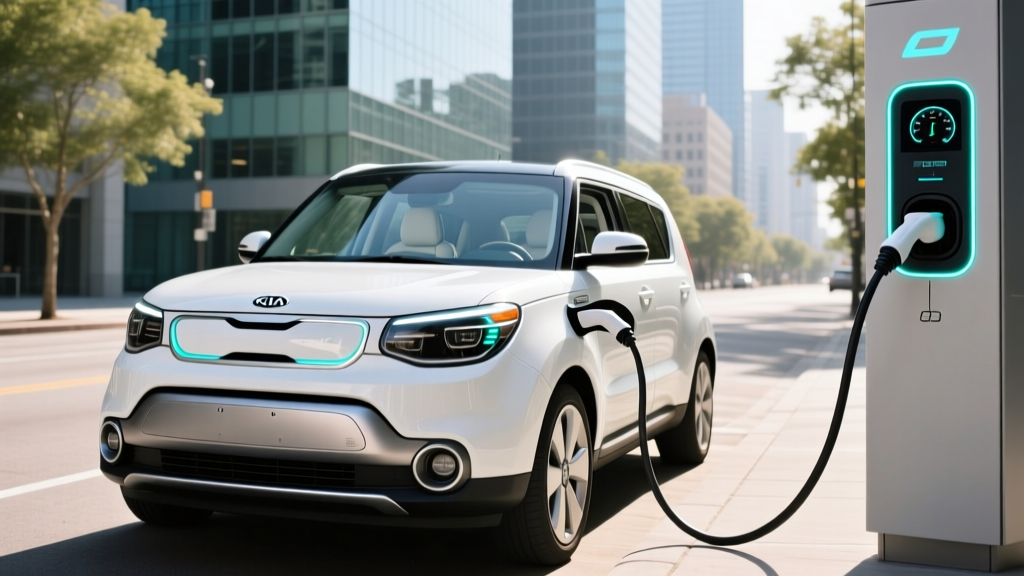
Quick Verdict: Should You Buy a Used 2017 Kia Soul EV in 2026?
The 2017 Kia Soul EV delivers an EPA-estimated 93 miles of range from its 27 kWh (usable) lithium-ion polymer battery, making it a viable second car or city commuter — but not a primary vehicle for most drivers. Used prices in 2026 typically range from $7,000 to $12,000 depending on mileage and battery health. It charges at up to 50 kW on DC fast charging (CHAdeMO) and 6.6 kW on Level 2. If your daily round-trip commute is under 60 miles, you have reliable Level 2 home charging, and you live in a moderate climate, this is one of the most affordable entry points into EV ownership. If you need highway range, live in extreme cold, or lack home charging access, look at a newer 200+ mile EV or a plug-in hybrid instead.
Range, Battery, and Real-World Expectations
The 2017 Kia Soul EV was a significant upgrade over the 2015–2016 model years. Kia increased the battery from 27 kWh total capacity to 30 kWh total (approximately 27 kWh usable), which pushed the EPA range from 93 miles to 111 miles for the 2017 model year according to fueleconomy.gov. This was a meaningful improvement, though it still falls well short of modern budget EVs like the Chevrolet Bolt (259 mi) or Nissan Leaf Plus (212 mi).
EPA Range: 111 miles (2017 model year)
Real-World Expectations:
- City/combined driving (moderate temps): 95–110 miles
- Highway driving (65–75 mph): 75–90 miles — the Soul EV's boxy shape creates significant aerodynamic drag at speed
- Cold weather (below 32°F): 60–80 miles — expect 25–40% range loss due to battery chemistry limitations and cabin heating demands. The 2017 Soul EV uses a resistive PTC heater, not a heat pump, which draws heavily from the battery
- Hot weather with A/C: 90–100 miles — less impact than cold but still noticeable
The battery chemistry is an earlier-generation NMC (nickel manganese cobalt) formulation. After 8–9 years of service, expect some degradation. Most owners report 85–92% State of Health (SoH) on 2017 models with typical mileage (60,000–90,000 miles), meaning effective range may be closer to 80–100 miles EPA-adjusted in practice. Always request a battery health diagnostic before purchasing.
| Spec | Value |
|---|---|
| EPA Range | 111 miles |
| Battery Capacity | 30 kWh total / ~27 kWh usable |
| Battery Chemistry | NMC (lithium-ion polymer) |
| Motor Output | 109 hp / 210 lb-ft torque |
| 0–60 mph | ~11.2 seconds |
| EPA Efficiency | 108 MPGe combined (31 kWh/100 mi) |
| DC Fast Charge (CHAdeMO) | 50 kW peak, ~35 min (10–80%) |
| Level 2 Charge (J1772) | 6.6 kW, ~4.5 hours (0–100%) |
| Level 1 Charge (120V) | ~1.4 kW, ~22+ hours (0–100%) |
| Battery Warranty (original) | 10 years / 100,000 miles (capacity below 70%) |
| Original MSRP | $33,950 (base, before incentives) |
| Used Price Range (2026) | $7,000–$12,000 |
Charging: Speeds, Connectors, and the CHAdeMO Problem
Charging is where the 2017 Soul EV reveals its age most clearly. The vehicle uses three charging methods:
| Level | Connector | Max Power | Miles Added/Hour | Full Charge Time |
|---|---|---|---|---|
| Level 1 (120V) | Standard outlet | 1.4 kW | ~4–5 mi/hr | 22+ hours |
| Level 2 (240V) | J1772 | 6.6 kW | ~22–25 mi/hr | ~4.5 hours |
| DC Fast | CHAdeMO | 50 kW peak | ~150+ mi/hr (peak) | ~35 min (10–80%) |
The CHAdeMO challenge: In 2026, the North American charging infrastructure has overwhelmingly standardized on NACS (Tesla's connector, now adopted by nearly every major automaker) and CCS1. CHAdeMO stations are becoming increasingly rare. Electrify America has largely stopped installing new CHAdeMO connectors, and many older CHAdeMO stations have been decommissioned or converted. This means DC fast charging on road trips is significantly less practical than it was when the car was new.
For daily use, this matters less if you can install a Level 2 home charger. A 6.6 kW onboard charger means you'll recover a full battery overnight — roughly 4.5 hours from empty. Home Level 2 installation typically costs $500–$2,000 depending on your electrical panel's proximity to the charging location and whether a panel upgrade (to 200A service) is needed. Factor in $300–$600 for a quality Level 2 EVSE unit (ChargePoint Home Flex, Emporia Vue, or similar).
Important kW vs kWh note: The 6.6 kW charge rate (power) means the car can accept 6.6 kilowatts of energy flow at any given moment. The 27 kWh battery (energy capacity) is the total "fuel tank." Dividing 27 kWh by 6.6 kW gives roughly 4.1 hours — plus charging overhead and taper near full, yielding ~4.5 hours total.
Cost Breakdown: What Ownership Actually Costs
One of the strongest arguments for a used 2017 Soul EV is its low running cost — but the full picture requires examining every expense category.
| Cost Category | Soul EV (Used) | Soul Gas (1.6L) |
|---|---|---|
| Purchase Price (2026) | $7,000–$12,000 | $9,000–$14,000 |
| Fuel / Electricity | $350–$550/yr (home charging at $0.13/kWh) | $1,300–$1,600/yr (30 MPG, $3.50/gal) |
| Maintenance | $200–$400/yr (no oil, fewer brake jobs due to regen) | $600–$900/yr (oil, filters, belts, brakes) |
| Insurance | $1,100–$1,500/yr | $900–$1,300/yr |
| Tires | $500–$700 every 40,000 mi (EVs are heavier) | $400–$600 every 45,000 mi |
| Estimated 5-Year Total* | $15,000–$24,000 | $22,000–$30,000 |
*Includes purchase price. Electricity costs vary by region; gas prices fluctuate. Insurance premiums for EVs tend to run 10–20% higher due to higher repair costs and battery replacement risk.
The fuel savings alone — roughly $800–$1,100 per year — are significant. Over five years of ownership, that's $4,000–$5,500 in fuel savings compared to the gas Soul. Combined with lower maintenance, the EV version can save $6,000–$9,000 total over a five-year ownership period, even accounting for slightly higher insurance.
Federal tax credit note: The §30D federal tax credit of up to $7,500 applies only to new EV purchases and has strict MSRP caps, buyer income limits, and battery sourcing requirements per the IRS. For used EVs, a separate used clean vehicle credit of up to $4,000 (30% of sale price, max $4,000) may apply if the sale price is $25,000 or less, you meet income requirements, and you purchase from a licensed dealer. Since most 2017 Soul EVs sell well under $25,000, this credit is potentially available — but verify eligibility with a tax professional.
How It Compares: Soul EV vs. Gas Soul vs. Modern Used EVs
| Metric | 2017 Soul EV | 2017 Soul Gas (1.6L) | 2019 Chevy Bolt EV | 2018 Nissan Leaf Plus |
|---|---|---|---|---|
| EPA Range | 111 mi | ~370 mi (13.2 gal tank) | 259 mi | 226 mi |
| Used Price (2026) | $7K–$12K | $9K–$14K | $12K–$17K | $10K–$15K |
| Annual Fuel Cost | $350–$550 | $1,300–$1,600 | $400–$600 | $400–$600 |
| DC Fast Connector | CHAdeMO (50 kW) | N/A | CCS (55 kW) | CHAdeMO (100 kW) |
| Cargo Space | 24.4 cu ft | 24.4 cu ft | 16.9 cu ft | 23.6 cu ft |
| 0–60 mph | ~11.2 sec | ~9.8 sec | ~6.5 sec | ~7.9 sec |
The Soul EV's advantage is its combination of low entry price, practical boxy cargo area, and low running costs. Its disadvantages — short range, CHAdeMO connector, slow DC charging — become deal-breakers if you regularly drive more than 80 miles round-trip or take road trips.
The Chevy Bolt EV (2017–2022) is the stronger used buy for most people: 238–259 miles of range, CCS connector, and a more modern battery management system. But it costs $3,000–$5,000 more on the used market and offers less cargo volume. If budget is the primary constraint and your commute is short, the Soul EV wins on pure value.
Real-World Ownership Considerations
Home Charging Access Is Non-Negotiable
With only 111 miles of range, relying on public charging is impractical for daily use. You need a dedicated Level 2 (240V) charging setup at home or work. If you live in an apartment without charging access, or street-park without a garage, the Soul EV's short range becomes a daily burden. Level 1 charging (standard 120V outlet) adds only ~4–5 miles per hour — meaning a full recharge takes over 22 hours, which is functionally inadequate for daily driving exceeding 30–40 miles.
Climate Matters Significantly
The 2017 Soul EV lacks a heat pump. Its resistive PTC cabin heater draws 2–4 kW in cold weather, directly reducing range. Owners in northern states (Minnesota, Maine, Colorado) routinely report winter ranges of 60–75 miles in sub-freezing temperatures. If you live in a region with harsh winters, plan your commute around this reduced figure — not the 111-mile EPA sticker.
In moderate climates (California coast, Southeast, Pacific Northwest), the Soul EV performs closest to its rated range year-round and is a far more practical proposition.
Battery Health Before Purchase
Before buying any used 2017 Soul EV, insist on a battery State of Health (SoH) report. Kia's original battery warranty covers 10 years/100,000 miles against capacity dropping below 70%. Since 2017 models are now approaching or exceeding those thresholds, verify whether:
- The battery SoH is above 85% (healthy) or approaching 70% (warranty territory)
- Any warranty claims have been filed or honored
- The car has a clean service history with no evidence of deep-discharge damage or DC fast-charging abuse
A Kia dealer can pull the SoH via OBD-II diagnostic. Third-party tools like LeafSpy (adapted for Kia protocols) can also read this data. Do not skip this step — a degraded battery can cost $5,000–$8,000+ to replace, which would exceed the car's value.
Common Misconceptions — Fact vs. Fiction
| Myth | Fact |
|---|---|
| "The battery will need replacing soon and cost a fortune." | Kia's NMC batteries have proven durable. Most 2017 examples show 85–92% SoH after 60K–90K miles. Degradation is gradual, not a sudden cliff. Replacement is rarely needed before 150K+ miles. |
| "It qualifies for the $7,500 federal tax credit." | The §30D new-vehicle credit does not apply to used purchases. A separate used-EV credit of up to $4,000 may apply if purchased from a dealer for ≤$25,000 and you meet income caps. Verify with a tax professional. |
| "I can use any DC fast charger on road trips." | The Soul EV uses CHAdeMO, which is being phased out in North America. NACS and CCS stations will not work without adapters (which don't currently exist for CHAdeMO-to-NACS). Plan road trips around remaining CHAdeMO infrastructure. |
| "111 miles of range is enough for anyone." | It's enough for some drivers — those with sub-60-mile commutes, home charging, and moderate climates. For single-car households or anyone with unpredictable driving patterns, 200+ miles is the practical minimum in 2026. |
| "EVs have no maintenance costs." | EVs have lower maintenance costs — no oil changes, fewer brake replacements thanks to regenerative braking. But tires wear faster (heavier vehicle), cabin air filters need replacing, coolant loops require service, and the 12V auxiliary battery still needs periodic replacement. |
Decision Framework: Is the 2017 Soul EV Right for You?
Buy the 2017 Kia Soul EV If:
- Your daily round-trip commute is under 60 miles (leaving a comfortable buffer for errands and climate effects)
- You have Level 2 home charging (or can install it for under $1,500)
- This will be a second vehicle in a two-car household
- You live in a moderate climate (rarely below 25°F)
- Your budget is under $12,000 and you want the lowest possible running costs
- You value the Soul's boxy cargo space and upright seating position
Look Elsewhere If:
- This will be your only car and you occasionally drive 100+ miles in a day
- You cannot charge at home or work
- You live in a cold-winter climate with frequent sub-freezing temperatures
- You take road trips more than once or twice a year (CHAdeMO infrastructure is too sparse)
- You need quick acceleration for highway merging (11.2-second 0–60 is leisurely)
- You want a vehicle with strong resale value — short-range EVs depreciate steeply
Frequently Asked Questions
What is the real-world range of a used 2017 Kia Soul EV?
Expect 80–100 miles in mixed driving with a healthy battery in moderate temperatures. Highway-only driving at 70 mph drops this to 75–90 miles. Cold weather (below freezing) can reduce range to 60–75 miles. The EPA sticker says 111 miles, but plan around the lower figures for daily trip planning.
How long does it take to charge a 2017 Soul EV at home?
On a Level 2 (240V) charger at 6.6 kW, a full charge from empty takes about 4.5 hours. In practice, most owners plug in nightly and add 30–50 miles of range in 2–3 hours, waking to a full battery. On a standard 120V outlet (Level 1), a full charge takes over 22 hours — only practical as emergency trickle charging.
Is the CHAdeMO connector a deal-breaker?
For daily commuting with home charging, no. For road trips, it's a significant limitation. CHAdeMO fast-charging stations are declining in North America as the industry moves to NACS and CCS. If road-trip capability matters to you, choose a vehicle with CCS (Chevy Bolt, VW ID.4) or NACS (Tesla, newer Fords and GMs).
What should I check before buying a used 2017 Soul EV?
Prioritize these four items: (1) Battery State of Health — request an SoH reading from a Kia dealer; aim for 85% or above. (2) Charging port condition — inspect the CHAdeMO and J1772 ports for corrosion or damage. (3) Service history — verify the car hasn't been repeatedly deep-discharged or stored at 0% SoC for extended periods. (4) Warranty status — check if the 10-year/100,000-mile battery warranty is still active based on the car's in-service date and odometer.
How does the 2017 Soul EV compare to the 2020 Kia Soul EV?
The 2020 model (sold in limited markets) featured a dramatically upgraded 64 kWh battery with 243 miles of EPA range, CCS fast-charging capability at up to 77 kW, and a 201 hp motor. It's a fundamentally more capable vehicle but commands $18,000–$24,000 on the used market. If budget allows, the 2020 model is the superior buy. The 2017 model's advantage is purely its lower entry price.
Can I install a home Level 2 charger for the Soul EV?
Yes. The Soul EV uses the standard J1772 connector for Level 2 charging, which is compatible with every Level 2 home charger on the market (ChargePoint, Emporia, Wallbox, Grizzl-E, etc.). Installation costs typically range from $500–$2,000 depending on electrical panel proximity and whether a panel upgrade is needed. Consult a licensed electrician for a site-specific quote — older homes with 100A service may need a panel upgrade ($1,500–$3,000) to safely support a 6.6 kW charger alongside other household loads.