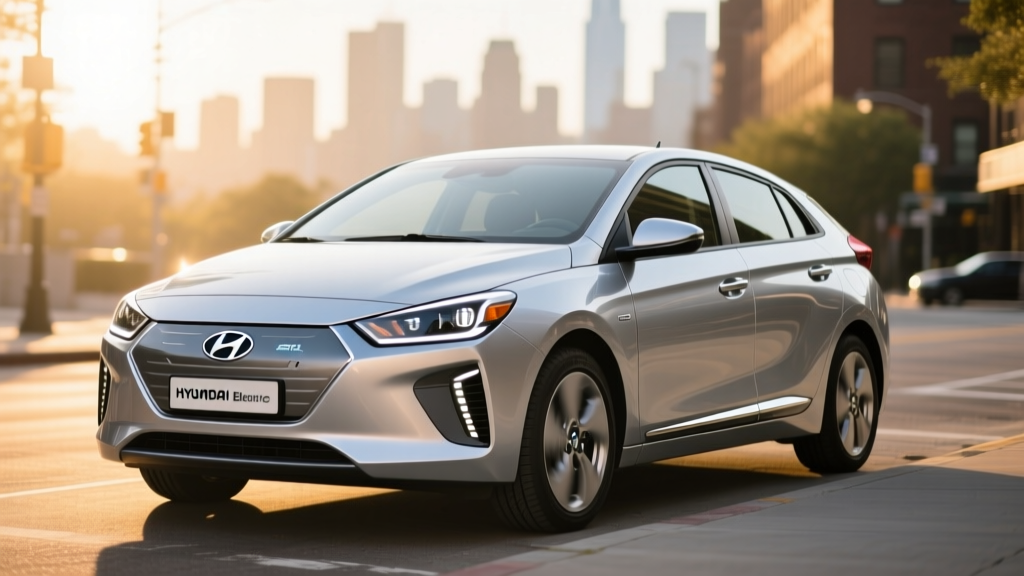
If you're searching for a 2017 Hyundai electric vehicle, you're looking at the 2017 Hyundai Ioniq Electric — a compact hatchback that was Hyundai's first dedicated battery-electric model sold in the United States. Here's the direct answer: with an EPA-estimated 124 miles of range, a 28 kWh battery, and used prices typically between $10,000 and $15,000 in 2026, the Ioniq Electric is a viable budget commuter EV if your daily driving stays under 80 miles round-trip and you have reliable home charging. It is not a road-trip vehicle, and its small battery means cold-weather range loss hits harder than on modern 300-mile EVs.
2017 Hyundai Ioniq Electric: Key Specifications
The 2017 Ioniq Electric was sold in a single well-equipped trim level. Here are the numbers that matter for a used purchase decision:
| Specification | 2017 Hyundai Ioniq Electric |
|---|---|
| EPA Range | 124 miles |
| Battery Capacity | 28 kWh (usable) |
| Battery Chemistry | NMC (Nickel Manganese Cobalt) |
| MPGe (City / Hwy / Combined) | 150 / 122 / 136 MPGe |
| Energy Consumption | 25 kWh/100 mi |
| Motor Output | 88 kW (118 hp) / 218 lb-ft torque |
| 0–60 mph | ~9.9 seconds |
| Level 2 Charging (240V, 7.2 kW) | ~4 hours (0–100%) |
| DC Fast Charging (CCS) | ~50 kW peak; 30 min for ~70 mi |
| Connector | CCS1 (Combo) / J1772 for Level 2 |
| Original MSRP | $30,335 (before incentives) |
| 2026 Used Price Range | $10,000–$15,000 |
| Battery Warranty (Original) | 8 years / 100,000 miles (transfers to second owner) |
Source: EPA fueleconomy.gov
Real-World Range: What to Actually Expect
The EPA sticker says 124 miles, but real-world range in a used 2017 Ioniq Electric depends on three factors: battery degradation, ambient temperature, and driving style.
• Mild weather, city driving: 110–125 miles (with a healthy battery)
• Highway (70 mph): 90–105 miles
• Cold weather (below 32°F): 75–95 miles (20–30% loss is typical for NMC batteries without a heat pump)
• With 10% battery degradation: Subtract ~12 miles from each figure above
The Ioniq Electric does not have a heat pump — it uses resistive cabin heating, which draws significant power from the 28 kWh battery in winter. This is one of the biggest practical limitations for buyers in northern climates. If your commute is 40 miles each way in Minnesota winter, this car will be tight.
The Ioniq's efficiency is its strongest trait. At 25 kWh/100 miles, it was one of the most efficient EVs sold in 2017, beating even the contemporary Nissan Leaf (30 kWh battery, 107-mile range) and VW e-Golf (24.2 kWh, 83-mile range). That efficiency means every mile of range goes further.
Charging Speeds and What You Need at Home
With a small 28 kWh battery, the Ioniq Electric charges quickly on Level 2 — a genuine advantage for daily use.
| Charging Level | Power | Miles Added per Hour | Full Charge Time |
|---|---|---|---|
| Level 1 (120V household) | ~1.4 kW | ~5 miles/hour | ~24 hours |
| Level 2 (240V, 32A) | 7.2 kW | ~27 miles/hour | ~4 hours |
| DC Fast (CCS) | ~50 kW peak | ~140 miles/hour (peak) | ~30 min (0–80%) |
Key charging reality: The 50 kW DC fast-charging peak is modest by 2026 standards (modern EVs charge at 150–350 kW), but because the battery is only 28 kWh, you still reach 80% in roughly 30 minutes. The charge curve tapers significantly above 80%, so DC charging past that point is painfully slow — plan your road-trip stops accordingly.
For home charging, a Level 2 (240V) installation is strongly recommended. Level 1 (standard 120V outlet) adds only about 5 miles per hour of charging — enough to replenish roughly 50 miles overnight, which may not cover your daily driving. Expect to pay $500–$1,500 for a Level 2 home charger installation if your electrical panel has capacity, or $2,000–$4,000+ if a panel upgrade is needed. The Ioniq's onboard charger accepts up to 7.2 kW, so a 32-amp Level 2 circuit is ideal.
Used 2017 Ioniq Electric vs. Gas and Hybrid Alternatives
How does a used 2017 Ioniq Electric stack up against the gas and hybrid versions of the same car, and against a comparable used gas compact?
| Metric | 2017 Ioniq Electric | 2017 Ioniq Hybrid | 2017 Toyota Corolla (Gas) |
|---|---|---|---|
| EPA Efficiency | 136 MPGe | 58 MPG combined | 32 MPG combined |
| Fuel/Energy Cost per Mile | ~$0.035 (at $0.14/kWh) | ~$0.055 (at $3.20/gal) | ~$0.10 (at $3.20/gal) |
| Annual Fuel Cost (12,000 mi) | ~$420 | ~$660 | ~$1,200 |
| Annual Maintenance | ~$200–$350 | ~$500–$700 | ~$600–$900 |
| Typical Used Price (2026) | $10,000–$15,000 | $12,000–$17,000 | $10,000–$14,000 |
| Range / Tank | 124 miles | ~540 miles | ~400 miles |
The math: At national average electricity rates, the Ioniq Electric saves roughly $540–$780 per year in fuel compared to the gas Corolla, and about $240 per year compared to the Ioniq Hybrid. Over 5 years of ownership, that's $2,700–$3,900 in fuel savings versus gas, plus lower maintenance (no oil changes, fewer brake replacements thanks to regenerative braking).
However, the Ioniq Hybrid gives you 540+ miles of range and no charging dependency — a better fit if you lack home charging or frequently drive long distances.
Battery Health and Degradation: What to Check Before Buying
The 2017 Ioniq Electric's 28 kWh NMC battery is now 9 years old. Here's what you need to know about longevity:
Expected degradation: NMC batteries from this era typically lose 8–15% of capacity over 8–10 years under normal use. That means a 2017 Ioniq with 80,000 miles might realistically deliver 105–115 miles of range instead of the original 124. This isn't catastrophic given the car's commuter role, but it's measurable.
Warranty status: Hyundai's original battery warranty was 8 years / 100,000 miles, and it does transfer to subsequent owners. If the car is under 100,000 miles and hasn't reached the 8-year mark from its original in-service date, some battery coverage may still apply. However, most 2017 models will have crossed the 8-year threshold by 2025–2026, meaning warranty coverage is likely expired or expiring.
Before buying, do this:
- Ask for the battery's State of Health (SoH) reading — a Hyundai dealer can pull this via OBD-II diagnostics. Acceptable SoH is above 85%.
- Check for any battery-related warranty claims or recalls via the NHTSA recall database.
- Verify whether the car was originally sold in a hot climate (Arizona, Texas) — heat accelerates NMC degradation more than cold.
- Look at charging history if available: frequent DC fast charging to 100% accelerates wear.
Total Cost of Ownership: 5-Year Breakdown
Let's compare what it actually costs to own and operate a used 2017 Ioniq Electric over 5 years, assuming 12,000 miles per year and home Level 2 charging:
| Cost Category | 2017 Ioniq Electric | 2017 Corolla (Gas Baseline) |
|---|---|---|
| Purchase Price | $12,500 (avg used) | $12,000 (avg used) |
| Home Charger Install | $1,000 | $0 |
| Fuel/Energy (5 years) | $2,100 | $6,000 |
| Maintenance (5 years) | $1,250 | $3,500 |
| Insurance (5 years, est.) | $6,500 | $5,500 |
| Tax Credits | Up to $4,000 (used EV credit*) | $0 |
| 5-Year Total | ~$19,350 | ~$27,000 |
*The IRS §25E used clean vehicle credit offers up to $4,000 (30% of sale price, capped at $4,000) for qualifying used EVs purchased from a dealer, subject to income limits ($75,000 single / $150,000 joint) and a sale price cap of $25,000. Confirm eligibility with a tax professional.
The Ioniq Electric can save a used buyer $7,000–$8,000 over five years versus a comparable gas car, even after accounting for the home charger installation. The biggest variable is insurance — EV insurance premiums tend to run 10–20% higher than equivalent gas vehicles due to repair cost structures. Get a quote before purchasing.
Common Misconceptions About the 2017 Ioniq Electric
| Myth | Fact |
|---|---|
| "124 miles of range is useless." | The average American drives 37 miles per day (FHWA data). For 70%+ of daily commutes, 124 miles with overnight home charging is more than sufficient. |
| "The battery will need replacing and cost $15,000." | NMC degradation at 9 years typically means 85–92% capacity remaining — not a failure. A full replacement would cost $6,000–$10,000, but most batteries outlast the car's economic life at this price point. |
| "I can't take road trips." | You can, with planning. CCS DC fast charging adds ~70 miles in 30 minutes. Use PlugShare or A Better Routeplanner to map stops. Expect 3–4 stops on a 400-mile trip. |
| "Used EVs don't qualify for tax credits." | The §25E used clean vehicle credit provides up to $4,000 for eligible buyers purchasing from a licensed dealer. Income and price caps apply — see IRS guidelines. |
| "Level 1 charging from a regular outlet is fine." | Level 1 adds ~5 miles per hour. A 10-hour overnight charge yields only ~50 miles — tight for many commutes. A Level 2 install is strongly recommended for daily usability. |
Decision Framework: Is the 2017 Ioniq Electric Right for You?
Choose the 2017 Ioniq Electric if:
- Your round-trip commute is under 80 miles (leaving buffer for errands and climate losses)
- You have garage or driveway access for a Level 2 (240V) home charger
- You want the lowest possible operating cost — ~$0.035/mile in electricity
- You live in a mild or moderate climate (less cold-weather range penalty)
- This will be a second car or dedicated commuter — not your only vehicle for long trips
- You can find one with SoH above 85% and under 100,000 miles
Look elsewhere if:
- Your commute exceeds 50 miles one way, especially in cold climates
- You rely on street parking with no charging access
- You need a car for frequent 200+ mile road trips
- You live in a region with limited CCS public charging infrastructure (check PlugShare)
- You want modern ADAS features — the 2017 Ioniq has basic lane-keep and AEB but nothing like today's Level 2 highway assist systems
Consider these alternatives instead:
- 2018–2019 Hyundai Kona Electric: 258-mile EPA range, similar efficiency, ~$16,000–$20,000 used
- 2018 Nissan Leaf (60 kWh): 226-mile range, CHAdeMO connector (check your local charging network)
- 2017 Ioniq Hybrid: 58 MPG, 540-mile range, no charging needed — ideal if you can't charge at home
Frequently Asked Questions
What is the real-world range of a used 2017 Hyundai Ioniq Electric?
Expect 105–120 miles in mild weather with a healthy battery. Highway driving at 70 mph drops this to 90–105 miles. In freezing temperatures, plan for 75–95 miles due to resistive heating draw and reduced battery performance.
Does the 2017 Ioniq Electric use CCS or CHAdeMO?
It uses the CCS1 (Combo) standard for DC fast charging and J1772 for Level 2 AC charging. This is good news in 2026, as CCS has become the dominant non-Tesla standard, and most public fast-charging networks (Electrify America, EVgo) support it. Note: this car does not have a NACS (Tesla) port, so Supercharger access requires checking for Magic Dock-equipped stations.
How much does it cost to charge the Ioniq Electric at home?
A full charge (28 kWh) at the national average residential rate of ~$0.16/kWh costs about $4.48. That delivers roughly 112 real-world miles, or about $0.04 per mile. Compare that to a gas car at 30 MPG and $3.20/gallon: ~$0.11 per mile.
Is the 2017 Ioniq Electric reliable?
The Ioniq platform has a strong reliability record. The electric powertrain has far fewer moving parts than a gas car — no transmission, no timing belt, no exhaust system. The main concern at this age is battery degradation (check SoH) and the standard wear items: suspension components, 12V auxiliary battery, and brake calipers (which can seize from underuse due to heavy regen braking).
Can I get a tax credit on a used 2017 Ioniq Electric?
Possibly. The IRS §25E used clean vehicle credit offers up to $4,000 (30% of the sale price) if you buy from a licensed dealer, the sale price is $25,000 or less, and your income is under $75,000 (single) or $150,000 (joint). The vehicle must be at least 2 model years old (a 2017 qualifies). Confirm details with a tax professional and review the IRS §25E page.
What should I inspect before buying a used 2017 Ioniq Electric?
Prioritize: (1) Battery State of Health reading from a Hyundai dealer, (2) charging port condition and CCS connector latch function, (3) 12V battery age (these fail every 3–5 years and strand the car), (4) tire wear (EVs eat tires faster due to instant torque), and (5) service records showing cabin air filter and brake fluid changes.