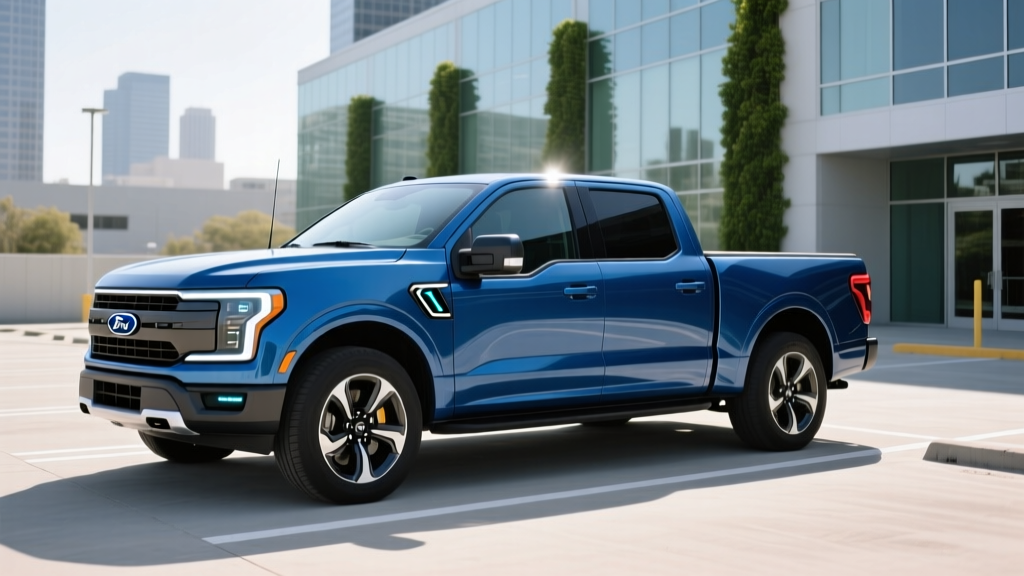
The Ford F-150 Lightning remains one of the most practical full-size electric pickups on the market, blending work-truck capability with zero-tailpipe-emission daily driving. But for buyers measuring garage space, trailer fit, or bed utility, the physical dimensions — particularly the F-150 Lightning's length — matter just as much as the powertrain specs. This review covers every critical measurement alongside range, charging, pricing, and tax-credit eligibility for the current model year.
Ford F-150 Lightning Length and Exterior Dimensions
Whether you're checking if it fits your garage or comparing it against the Rivian R1T or Chevrolet Silverado EV, exact exterior dimensions dictate real-world usability. The F-150 Lightning is built on the SuperCrew cab configuration with a 5.5-foot bed, and its overall length varies slightly by trim and suspension setup.
| Dimension | Measurement |
|---|---|
| Overall Length | 232.7 inches |
| Wheelbase | 145.5 inches |
| Width (w/o mirrors) | 79.9 inches |
| Width (w/ mirrors) | 96.0 inches |
| Height | 78.3–79.3 inches (varies by trim) |
| Ground Clearance | 8.4–8.9 inches |
| Bed Length | 66.9 inches (5.5 ft) |
| Bed Width (between wheel wells) | 50.6 inches |
| Curb Weight | 6,015–6,770 lbs |
At 232.7 inches long, the Lightning is roughly on par with the gas F-150 SuperCrew/5.5-bed configuration. It's approximately 12 inches longer than a Rivian R1T (which rides on a shorter platform) and about 10 inches shorter than the Chevrolet Silverado EV with its extended wheelbase. For garage planning, you'll need a minimum depth of roughly 240 inches (20 feet) to accommodate the truck with walking clearance. Standard two-car garages with 22-foot depth are usually sufficient, but tight single-bay garages may require measurement before committing.
Spec Overview: Range, Battery, Power, and Efficiency
| Spec | Standard Range | Extended Range |
|---|---|---|
| EPA Range | 230 miles | 310 miles |
| Battery Capacity (usable) | ~98 kWh | ~131 kWh |
| Battery Chemistry | NMC (Nickel Manganese Cobalt) | NMC |
| Drivetrain | Dual-motor AWD | Dual-motor AWD |
| Horsepower | 563 hp | 563 hp |
| Torque | 775 lb-ft | 775 lb-ft |
| 0–60 mph | ~4.0 seconds | ~3.8 seconds |
| Max Towing (w/ Max Trailer Tow Pkg) | 7,700 lbs | 10,000 lbs |
| Max Payload | ~2,235 lbs | ~1,952 lbs |
| MPGe (combined) | 76 MPGe | 70 MPGe |
| Efficiency | ~44 kWh/100 mi | ~48 kWh/100 mi |
Charging Speeds: DC Fast Charging and Home Level 2
Charging a full-size truck battery requires patience or planning. The Lightning's peak DC fast-charge rate and home-charging capability determine whether this truck fits your lifestyle.
| Charging Level | Standard Range | Extended Range |
|---|---|---|
| Level 1 (120V, 12A) | ~2 mi/hr | ~2 mi/hr |
| Level 2 (240V, 32A mobile) | ~13 mi/hr (7.7 kW) | ~13 mi/hr (7.7 kW) |
| Level 2 (240V, 48A Ford Charge Station Pro) | ~19 mi/hr (11.5 kW) | ~19 mi/hr (11.5 kW) |
| Level 2 (240V, 80A Charge Station Pro)* | ~30 mi/hr (19.2 kW) | ~30 mi/hr (19.2 kW) |
| DC Fast Charge (peak) | 150 kW | 150 kW |
| DC Fast 10–80% | ~36 minutes | ~41 minutes |
*80A charging requires the Charge Station Pro hardwired to a 100-amp circuit by a licensed electrician.
The Lightning's peak 150 kW DC fast-charge rate is adequate but not class-leading. The Silverado EV and Tesla Cybertruck accept higher peak rates. More importantly, the Lightning's charge curve tapers noticeably above 80% state of charge — a 10–80% session takes roughly 36–41 minutes at a 150+ kW station, but topping from 80–100% can add another 30+ minutes. Ford's onboard charger supports up to 19.2 kW on Level 2, which is among the best in the segment, meaning a full overnight replenishment is realistic with the right home setup.
For home installation, budget $1,200–$2,500 for the Charge Station Pro and standard 48A/60A circuit work. If your electrical panel requires an upgrade to 200A service to support the 80A circuit, expect $2,000–$4,000 additional. Always consult a licensed electrician for final specs and permitting.
Pricing, Trim Levels, and Federal Tax Credit
| Trim | Battery | Base MSRP |
|---|---|---|
| Pro | Standard Range | ~$54,995 |
| XLT | Standard Range | ~$62,995 |
| Lariat | Extended Range | ~$74,995 |
| Flash | Extended Range | ~$69,995 |
| Platinum | Extended Range | ~$96,875 |
Pricing has shifted significantly since the Lightning's 2022 debut, with Ford adjusting MSRPs in response to market competition and battery cost changes. A well-equipped Lariat Extended Range — the volume sweet spot — typically lands in the $75,000–$82,000 range after destination and common options.
- MSRP Cap: The vehicle must have an MSRP at or below $80,000 (trucks/vans/SUVs). Platinum trims exceeding this cap are ineligible.
- Buyer Income Limits: AGI must not exceed $300,000 (joint), $225,000 (head of household), or $150,000 (single).
- Battery Sourcing: Critical mineral and battery component requirements phase in annually, potentially splitting the credit into $3,750 + $3,750 halves. Check the latest IRS qualified vehicle list for current eligibility.
- Point-of-Sale Transfer: Eligible buyers can transfer the credit to the dealer at purchase for an upfront price reduction rather than waiting to claim it on their tax return.
Interior Space, Cargo, and the Mega Power Frunk
The Lightning's SuperCrew cab offers generous passenger room, and its front trunk ("frunk") is a standout feature that gas trucks simply can't match.
| Measurement | Dimension |
|---|---|
| Front Legroom | 43.9 inches |
| Rear Legroom | 43.6 inches |
| Front Headroom | 40.8 inches |
| Rear Headroom | 38.8 inches |
| Frunk Volume | 14.1 cu ft |
| Frunk Payload Capacity | 400 lbs |
| Bed Volume | 52.8 cu ft |
| Max Interior Cargo (behind front seats) | Not applicable (no fold-flat) |
The 14.1-cubic-foot Mega Power Frunk is lockable, weather-sealed, drainable, and includes four 120V outlets plus two USB-C ports. It's large enough for two carry-on bags, a full set of power tools, or a week's worth of groceries you want to keep separate from the bed. The 5.5-foot bed offers 52.8 cu ft of volume — adequate for most truck tasks, though those needing an 8-foot bed will need to look elsewhere (the Lightning is not offered in long-bed configuration).
Technology, Driver Assists, and Pro Power Onboard
The Lightning's cabin tech centers on Ford's SYNC 4A infotainment system, displayed on a 12-inch touchscreen (15.5-inch portrait screen on Lariat and above). Wireless Apple CarPlay and Android Auto are standard. The digital instrument cluster runs 12 inches across all trims.
Ford Co-Pilot360 2.0 is standard, bundling automatic emergency braking, lane-keeping assist, blind-spot monitoring with trailer coverage, and rear cross-traffic alert. Available BlueCruise (Ford's Level 2 hands-free driving system) enables hands-off-highway driving on pre-mapped divided highways — currently covering over 130,000 miles of road in the U.S. and Canada.
Pro Power Onboard is arguably the Lightning's most unique feature. Available in 2.4 kW or 9.6 kW configurations, it turns the truck's battery into a mobile generator with up to 11 120V outlets and one 240V outlet (9.6 kW version). Contractors can run job-site tools directly from the truck, and homeowners can use it for backup power during outages via the Ford Intelligent Backup Power system (requires a compatible home transfer switch, sold separately).
Warranty and Long-Term Ownership
| Coverage | Term |
|---|---|
| Basic (Bumper-to-Bumper) | 3 years / 36,000 miles |
| Powertrain | 5 years / 60,000 miles |
| Battery & Electric Components | 8 years / 100,000 miles |
| Battery Capacity Retention Guarantee | ≥70% capacity over 8 yr / 100k mi |
The 8-year/100,000-mile battery warranty is industry-standard for light-duty EVs. Ford guarantees the battery will retain at least 70% of its original capacity during the warranty period. Real-world NMC degradation data from early Lightning owners suggests roughly 5–8% capacity loss over the first 50,000 miles, which is within expectations. NMC chemistry generally degrades faster than LFP if routinely charged to 100%, so Ford recommends setting a daily charge limit of 80–90% and reserving full charges for road trips.
For out-of-warranty battery replacement, expect quotes in the $15,000–$25,000 range depending on pack size, though costs are projected to decline as the supply chain matures.
How the Lightning Compares to Key Rivals
| Spec | F-150 Lightning (Ext.) | Rivian R1T (Dual Max) | Chevy Silverado EV (4WT) |
|---|---|---|---|
| EPA Range | 310 mi | 410 mi | 492 mi |
| Battery (usable) | ~131 kWh | ~141 kWh | ~200 kWh |
| Overall Length | 232.7 in | 217.1 in | 233.1 in |
| Bed Length | 66.9 in (5.5 ft) | 54.0 in (4.5 ft) | 72.0 in (5 ft 11 in) |
| Peak DC Charge | 150 kW | 220 kW | 350 kW |
| Starting MSRP | ~$54,995 | ~$69,900 | ~$55,000 (WT) |
| Frunk | 14.1 cu ft | 11.0 cu ft (tunnel + frunk) | 10.7 cu ft |
The Lightning's advantages center on familiarity (it drives and looks like a conventional F-150), the massive frunk, Pro Power Onboard, and a lower entry price. The Rivian R1T is shorter (easier to park), offers a longer Max-pack range, and has a more premium interior, but starts higher and has a shorter bed. The Silverado EV boasts superior range and charging speed but is larger, heavier, and currently limited in retail availability.
- You want a full-size truck that looks and feels like a traditional F-150
- Pro Power Onboard is critical for work or emergency backup
- You prioritize a large, secure frunk for daily cargo
- Your budget favors the sub-$60K entry point (Pro trim)
- You need maximum range (Silverado EV or Rivian Max Pack)
- Faster DC charging is a priority (Rivian or Silverado EV)
- You prefer a shorter wheelbase for tighter urban driving (Rivian R1T)
- You need an 8-foot bed (not available on the Lightning)
Frequently Asked Questions
What is the real-world range of the F-150 Lightning?
The Extended Range model is EPA-rated at 310 miles. In real-world highway driving at 70 mph in mild weather, expect 250–275 miles. In freezing temperatures, plan for 215–250 miles. The Standard Range model (EPA 230 miles) realistically delivers 180–200 highway miles in fair conditions. Towing a heavy trailer can cut range to 80–120 miles.
How fast does the F-150 Lightning charge?
On a DC fast charger, the Lightning peaks at 150 kW and charges from 10–80% in roughly 36–41 minutes. At home on a 240V Level 2 Ford Charge Station Pro (80A), it adds about 30 miles of range per hour, meaning a full charge from empty takes approximately 10–13 hours depending on pack size. On a standard 120V outlet, expect roughly 2 miles per hour — sufficient only for topping off.
Does the F-150 Lightning qualify for the federal EV tax credit?
It may qualify for up to $7,500 under IRS §30D, but eligibility depends on the specific trim's MSRP (must be ≤$80,000 for trucks), buyer income (≤$300,000 joint AGI), and current battery-sourcing/critical-mineral requirements. The Platinum trim's MSRP exceeds the cap and is ineligible. Verify current eligibility on the IRS qualified manufacturers page and consult a tax professional.
Is the F-150 Lightning worth buying vs. the Rivian R1T or Silverado EV?
If you want a traditional truck experience, Pro Power Onboard, a huge frunk, and the lowest starting price in the segment, the Lightning is the strongest pick. If range and fast-charging speed are your top priorities, the Silverado EV or Rivian R1T Max Pack are better. If you want a shorter, more maneuverable truck with a premium interior, the Rivian R1T fits better. All three are capable — the right choice depends on your daily use case.
What are the biggest pros and cons?
- Familiar F-150 styling and driving dynamics
- Massive 14.1 cu ft frunk with onboard power
- Pro Power Onboard (up to 9.6 kW) for work/backup
- Competitive entry price starting ~$55K
- Strong 775 lb-ft torque, 3.8-sec 0–60 (Extended Range)
- BlueCruise hands-free highway driving available
- 150 kW peak DC charging lags behind rivals
- Real-world range drops significantly when towing
- Heavy curb weight (6,770 lbs) affects tire wear
- Only available in 5.5-foot bed — no long-bed option
- NMC battery degrades faster than LFP if routinely charged to 100%
- Platinum trim exceeds $80K tax credit cap
How long is the F-150 Lightning compared to a gas F-150?
The Lightning measures 232.7 inches overall — virtually identical to a gas F-150 SuperCrew with the 5.5-foot bed. The wheelbase (145.5 inches) is also the same. Width and height are comparable, so if a gas F-150 fits your garage or parking space, the Lightning will too. The primary dimensional difference is the Lightning's additional ~700 lbs of curb weight from the battery pack.
Sources: fueleconomy.gov (EPA range/efficiency data), Ford F-150 Lightning specifications, IRS §30D qualified vehicle list.