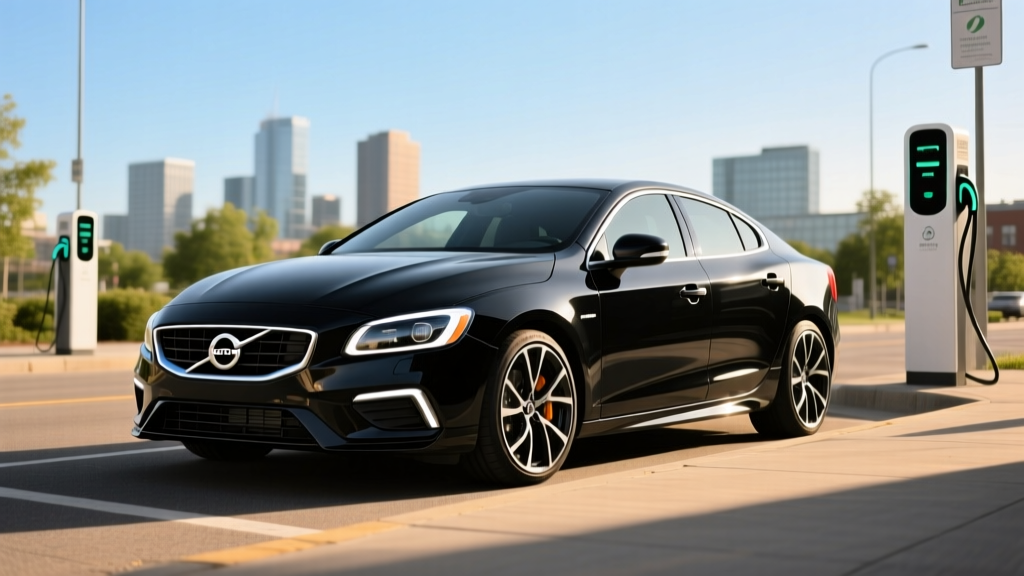
The 2016 Volvo S60 Polestar: A Turbocharged Gas Icon, Not an EV
If you're searching for the 2016 Volvo S60 Polestar expecting an electric vehicle, you're not alone — the Polestar name has become synonymous with electrification thanks to models like the Polestar 2 and the upcoming Polestar 4. But the 2016 S60 Polestar was something entirely different: a limited-production, gasoline-powered performance sedan that served as the bridge between Volvo's motorsport heritage and its all-electric future.
Produced in just 750 units worldwide (with only about 250 allocated to the U.S.), the 2016 S60 Polestar was hand-tuned by Polestar — then Volvo's official performance partner, before it spun off into a standalone EV brand in 2017. This article clarifies what the 2016 S60 Polestar actually was, why it still matters to EV shoppers researching Polestar's lineage, and how it compares to today's electric performance sedans.
2016 Volvo S60 Polestar: Complete Specifications
Before we discuss its place in automotive history, here are the exact figures for the 2016 S60 Polestar. Note that because this is a gasoline vehicle, EV-specific metrics like kWh, MPGe, and DC fast-charge rates do not apply.
| Specification | Value |
|---|---|
| Powertrain | 2.0L turbocharged + supercharged 4-cylinder (Drive-E) |
| Horsepower | 367 hp @ 5,700 rpm |
| Torque | 347 lb-ft @ 3,100–5,100 rpm |
| 0–60 mph | 4.5 seconds |
| Top Speed | 155 mph (electronically limited) |
| Drivetrain | AWD (Haldex-based, BorgWarner) |
| Transmission | 8-speed automatic (Aisin) |
| EPA Fuel Economy | 20 city / 28 highway / 23 combined MPG |
| Fuel Tank | 17.8 gallons |
| EPA Range (est.) | ~409 miles per tank |
| Curb Weight | ~3,681 lbs |
| Cargo Volume | 12.0 cu ft (trunk) |
| Base MSRP (2016) | $59,195 (incl. destination) |
| Units Produced | 750 globally (~250 U.S.) |
| Federal EV Tax Credit | Not eligible (gasoline vehicle) |
Performance DNA: What Made the S60 Polestar Special
The 2016 S60 Polestar was far more than an appearance package bolted onto a standard S60 T6. Polestar engineers reworked the chassis, suspension, brakes, and engine calibration to create a genuine sports sedan that competed with the BMW M3, Mercedes-AMG C63, and Audi S4 of its era.
Engine and Powertrain
The heart of the car was Volvo's then-new Drive-E 2.0-liter four-cylinder, force-fed by both a turbocharger and a supercharger. The twin-charging setup eliminated turbo lag at low RPM while delivering strong top-end pull. At 367 hp and 347 lb-ft, it extracted more output per liter than nearly any production four-cylinder at the time.
An 8-speed Aisin automatic transmission routed power to all four wheels through a Haldex-based AWD system with a Polestar-specific torque distribution calibration. The result was a 4.5-second 0–60 mph sprint — competitive with six-cylinder rivals.
Chassis and Brakes
Polestar fitted Öhlins dual-flow valve dampers (manually adjustable), stiffer springs, a revised front strut tower brace, and upgraded anti-roll bars. Brembo supplied 6-piston front calipers clamping 371mm rotors — serious hardware for a sedan wearing a Volvo badge. The car rode on 20-inch alloy wheels wrapped in Michelin Pilot Super Sport tires.
Driving Experience
On road, the S60 Polestar felt taut and communicative in a way no standard Volvo did. The Öhlins dampers gave it composure over rough surfaces that the stiffer German rivals struggled with. The exhaust note, enhanced by a Polestar-tuned system, delivered a purposeful baritone growl. In daily driving, it remained livable — a dual personality that defined the best sports sedans of the era.
Why This Matters for EV Shoppers in 2026
You might wonder why an EV-focused publication is profiling a gasoline car from 2016. The answer lies in understanding Polestar's evolution:
- 2016 S60 Polestar: The last gasoline-only Polestar-badged car. It proved Polestar could engineer world-class performance machines.
- 2017: Volvo announced all new models from 2019 would be electrified. Polestar was spun off as a standalone electric performance brand.
- 2020: Polestar 2 launched — a battery-electric fastback with up to 270 miles of EPA range and a 0–60 of 4.1 seconds (dual motor).
- 2024–2026: Polestar 3 (SUV) and Polestar 4 (SUV coupe) expand the lineup with 800V architecture and 300+ mile ranges.
The S60 Polestar established the performance benchmark that every subsequent Polestar EV has been measured against. When reviewers praise the Polestar 2's chassis balance or the Polestar 3's dual-motor acceleration, they're channeling the engineering philosophy forged in cars like the 2016 S60 Polestar.
2016 S60 Polestar vs. Today's Electric Performance Sedans
To put the S60 Polestar's performance in modern context, here's how it stacks up against current electric sedans that carry the Polestar spirit forward:
| Metric | 2016 S60 Polestar | 2026 Polestar 2 (LRDM) | 2026 Tesla Model 3 Perf. | 2026 BMW i4 M50 |
|---|---|---|---|---|
| Powertrain | 2.0L turbo+super I4, gas | Dual-motor BEV | Dual-motor BEV | Dual-motor BEV |
| Horsepower | 367 hp | 421 hp | 510 hp | 536 hp |
| 0–60 mph | 4.5 sec | 4.1 sec | 2.9 sec | 3.7 sec |
| EPA Range | ~409 mi (gas tank) | 276 mi | 315 mi | 276 mi |
| Energy/Fuel Cost per Year | ~$2,550 (gas) | ~$650 (electric) | ~$600 (electric) | ~$680 (electric) |
| MSRP | $59,195 (2016) | $53,300 | $54,990 | $67,795 |
| Fed. EV Tax Credit | None | Up to $7,500* | Up to $7,500* | Up to $7,500* |
*Federal §30D tax credit eligibility depends on MSRP caps ($55,000 for sedans), buyer income limits ($150K single / $300K joint), battery sourcing requirements, and point-of-sale transfer availability. Verify current rules at IRS.gov.
The takeaway: modern EVs match or exceed the S60 Polestar's acceleration while costing significantly less to operate annually. The S60 Polestar's advantage today is collector scarcity and analog driving feel — not efficiency or running costs.
Ownership Today: Collector Market and Practical Realities
Used Pricing
With only ~250 U.S. examples, the 2016 S60 Polestar has become a collectible. As of early 2026, well-maintained examples with under 50,000 miles trade between $35,000 and $48,000 on enthusiast marketplaces like Bring a Trailer and Cars & Bids — sometimes exceeding the original MSRP when mileage is exceptionally low.
Maintenance Considerations
The Drive-E powertrain is generally reliable, but the twin-charging system adds complexity. The Öhlins dampers are rebuildable but expensive to service (~$800–$1,200 per corner). Brake pads and rotors for the Brembo system cost roughly 2–3× more than standard S60 parts. Budget $2,000–$3,500 annually for maintenance and insurance on a collector-driven example.
No EV Incentives Apply
Because the 2016 S60 Polestar is a gasoline vehicle, it does not qualify for any federal EV tax credit (§30D), state EV rebates, HOV lane access programs, or utility charging incentives. Total cost of ownership reflects conventional gas-car economics: fuel, oil changes, emissions equipment, and higher per-mile energy costs compared to a modern EV.
Who Should Buy the 2016 S60 Polestar — And Who Should Look at a Polestar EV Instead
Buy the 2016 S60 Polestar If:
- You're a Volvo/Polestar collector seeking a rare, appreciating asset
- You value analog driving feel, mechanical AWD, and a tuned exhaust note
- You want a weekend car with motorsport provenance and sub-1,000-unit production
- You have a second vehicle for daily commuting
Buy a Polestar 2 or Polestar 4 If:
- You want a daily-driver with low operating costs (~$600/yr electricity vs. ~$2,550/yr gas)
- You need modern safety tech (the Polestar 2 earned IIHS Top Safety Pick+)
- You want federal tax credit savings up to $7,500 at point of sale
- You need a back seat, practical range (276+ miles), and DC fast charging
- You want OTA software updates and Google built-in infotainment
Pros and Cons: The Honest Assessment
✅ Pros
- Rare collectible — only ~250 U.S. units; appreciating value
- Genuine 4.5-sec 0–60 from a 2.0L four-cylinder — engineering showcase
- Öhlins dampers and Brembo brakes — premium hardware rarely found at this price point
- Daily-driver comfort despite track-capable chassis
- Distinctive Rebel Blue paint and Polestar styling cues
- Represents the final analog Polestar before the EV era
❌ Cons
- Not an EV — no electric range, no plug, no tax credits
- 23 MPG combined is thirsty by 2026 standards
- Twin-charged engine adds long-term maintenance complexity
- Limited infotainment (Sensus system feels dated vs. modern EVs)
- No advanced driver-assist beyond basic City Safety (no adaptive cruise standard)
- Spare parts for Polestar-specific components are scarce and expensive
Frequently Asked Questions
Is the 2016 Volvo S60 Polestar an electric car?
No. The 2016 S60 Polestar is a gasoline-powered performance sedan with a 2.0L turbocharged and supercharged four-cylinder engine producing 367 hp. It has no electric motor, no battery pack, and cannot be plugged in. The Polestar brand later became a standalone EV manufacturer starting in 2017.
Does the 2016 S60 Polestar qualify for the federal EV tax credit?
No. The IRS §30D clean vehicle credit applies only to new plug-in electric vehicles (BEVs and qualifying PHEVs) that meet MSRP caps, buyer income limits, and battery sourcing requirements. A 2016 gasoline vehicle does not qualify for any federal EV incentive. For current credit rules, see IRS.gov's clean vehicle credit page.
How many 2016 S60 Polestars were made?
Volvo and Polestar produced 750 units globally for the 2016 model year, with approximately 250 allocated to the United States. This limited production run is a key reason the car has become collectible.
What is the 2016 S60 Polestar worth today?
As of early 2026, examples in good condition with under 50,000 miles typically sell for $35,000–$48,000 on enthusiast auction platforms. Low-mileage, single-owner examples in Rebel Blue have occasionally exceeded $50,000 — approaching or surpassing the original $59,195 MSRP.
Should I buy a 2016 S60 Polestar or a Polestar 2?
These serve entirely different purposes. The S60 Polestar is a collectible gas sports sedan for enthusiasts and weekend driving. The Polestar 2 is a practical daily-driver EV with 276 miles of EPA range, lower operating costs, modern safety tech, and available tax credits. If you need a primary vehicle, the Polestar 2 is the rational choice. If you want a rare piece of Polestar history, the S60 Polestar is unmatched.
What was the first all-electric Polestar?
The Polestar 2, which went on sale in the U.S. for the 2021 model year, was Polestar's first mass-production all-electric vehicle. The limited-run Polestar 1 (2019–2021) was a plug-in hybrid grand tourer, not a full BEV.
Sources: Volvo Cars USA heritage archives, EPA fueleconomy.gov, IRS Clean Vehicle Credit, Polestar USA official site.