Quick Verdict: The 2016 Model S in 2026
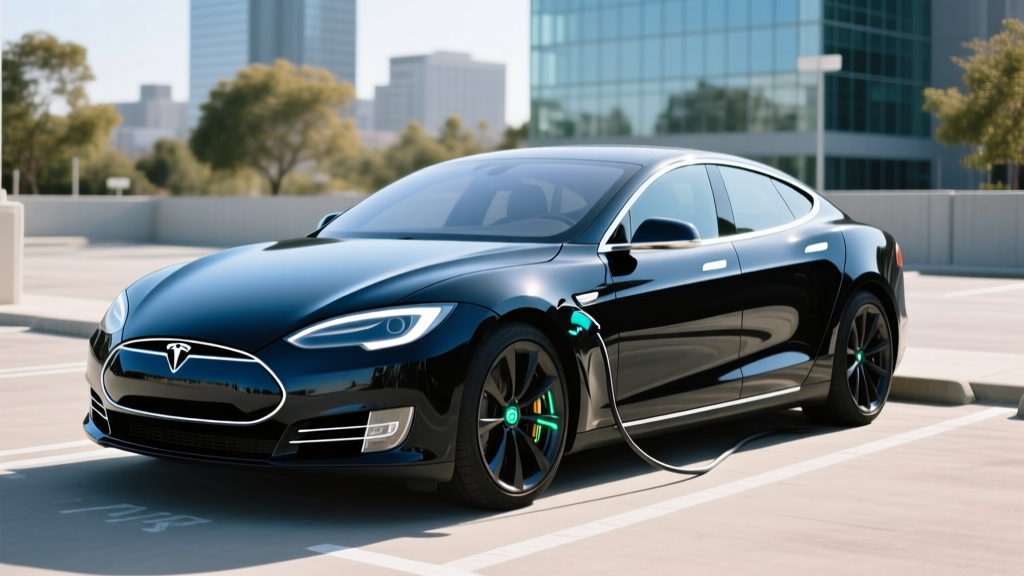
The 2016 Tesla Model S sedan remains one of the most compelling used electric vehicles on the market a decade after its production year. With EPA ranges spanning 210 to 294 miles depending on battery pack, access to Tesla's Supercharger network, and over-the-air software updates that have continued to improve the car years after purchase, the 2016 Model S offers luxury-sedan practicality at a fraction of its original $70,000–$130,000 sticker. However, prospective buyers must carefully evaluate battery State of Health (SoH), understand that DC fast-charging speeds lag behind modern 800-volt EVs, and budget for potential out-of-warranty repairs. This profile breaks down every number you need before buying.
Range, Battery & Real-World Efficiency
The 2016 Model S was offered in four main battery configurations, each with distinct range and performance characteristics. Tesla used NMC (nickel manganese cobalt) lithium-ion chemistry across all packs — not the LFP (lithium iron phosphate) cells found in some newer Standard Range Teslas. NMC offers higher energy density but is more sensitive to repeated 100% charging and extreme temperatures.
| Trim | Battery (usable kWh) | Drivetrain | EPA Range (mi) | EPA Efficiency |
|---|---|---|---|---|
| 60 | 60 (software-limited 75) | RWD | 210 | 95 MPGe / 35 kWh/100mi |
| 75 | 75 | RWD or AWD | 249 (RWD) / 238 (AWD) | 101 MPGe / 33 kWh/100mi |
| 90D | 90 | AWD (Dual Motor) | 294 | 104 MPGe / 32 kWh/100mi |
| P90D | 90 | AWD (Dual Motor) | 268 | 95 MPGe / 35 kWh/100mi |
EPA figures assume mixed driving at moderate temperatures. In real-world 2026 ownership, expect:
- Highway (70 mph, 75°F): ~85–90% of EPA — roughly 250 mi for the 90D, ~180 mi for the 60.
- Cold weather (30°F, city/highway mix): 20–30% range loss is typical for NMC packs without a heat pump (the 2016 Model S uses resistive cabin heating). A 90D may drop to 200–220 mi.
- Battery degradation: Data from Tesla fleet analytics show 2016-era NMC packs retaining roughly 85–90% of original capacity at 100,000 miles. A 90D originally rated at 294 mi may now deliver 250–265 mi at full charge.
Always check the car's actual State of Health via the Tesla service menu or a third-party diagnostic tool before purchasing.
Charging Speeds: Supercharger, Level 2 & Home Setup
The 2016 Model S uses Tesla's proprietary connector (now being phased into the North American Charging Standard, or NACS). It charges natively on Tesla Superchargers and, with adapters, on CCS networks. Understanding charge rates in kW (power, or how fast energy flows) versus the battery's kWh (energy capacity) is essential for trip planning.
| Charging Level | Max Rate | Speed (approx.) | Notes |
|---|---|---|---|
| Level 1 (120V household) | ~1.4 kW | ~3–4 mi/hr | Emergency/trickle only |
| Level 2 (240V, 48A) | 11.5 kW | ~29–34 mi/hr | Full charge in ~8–9 hrs (90D) |
| Level 2 (240V, dual charger option) | 22 kW (80A)* | ~58 mi/hr | Rare dual-charger option; requires 100A circuit |
| DC Fast (V2 Supercharger) | ~120 kW peak | 10–80% in ~40 min | Peak only below 40% SoC; tapers sharply above 60% |
| DC Fast (V3 Supercharger) | ~150 kW peak (limited) | 10–80% in ~35 min | 2016 Model S cannot reach V3's 250 kW — architecture limited |
*The dual onboard charger was a $3,000 option on 2016 models; most used examples have the single 11.5 kW charger.
The 2016 Model S peaks at roughly 120 kW only when the battery is below 40% State of Charge and properly preconditioned (the car warms the battery when navigation is set to a Supercharger). Above 60% SoC, the rate drops to ~60 kW, and above 80% it falls below 30 kW. Plan road-trip stops around 10–80% charges for the fastest sessions — charging from 80–100% at a Supercharger can take as long as the 10–80% session itself.
Performance & Drivetrain
Even by 2026 standards, the 2016 Model S delivers brisk acceleration. The P90D with Ludicrous Mode was one of the quickest production sedans of its era.
| Trim | 0–60 mph | Horsepower | Drivetrain | Top Speed |
|---|---|---|---|---|
| 60 | 5.5 sec | 315 hp | RWD | 140 mph |
| 75 | 4.3 sec (RWD) / 4.2 sec (AWD) | 328 hp | RWD or AWD | 155 mph |
| 90D | 4.0 sec | 417 hp | AWD Dual Motor | 155 mph |
| P90D (Ludicrous) | 2.8 sec | 532 hp | AWD Dual Motor | 155 mph |
All trims feature regenerative braking with a strong one-pedal driving experience. The dual-motor AWD models provide confident all-weather traction, though the 2016 Model S does not offer the adaptive air suspension's lowest "track mode" found on later refreshes. Towing is not recommended — Tesla did not rate the 2016 Model S for towing.
Interior, Cargo & Technology
The 2016 Model S received a significant interior refresh that spring, replacing the previous upright touchscreen with the now-iconic 17-inch landscape-oriented display. This update also brought revised front fascia styling (no more black grille insert) and available HEPA air filtration with "Bioweapon Defense Mode."
Passenger & Cargo Dimensions:
- Front legroom: 42.7 in
- Rear legroom: 35.4 in
- Cargo (rear trunk): 26.3 cu ft
- Frunk (front trunk): 5.3 cu ft
- Total cargo with rear seats folded: 58.1 cu ft
- Optional rear-facing third-row seats: Adds 2 small seats (child-sized); reduces rear cargo
Standout Tech:
- 17-inch touchscreen with navigation, streaming, and web browser
- Over-the-air updates: Tesla has continued pushing software updates to 2016 vehicles, adding features like improved Autopilot visualization and Sentry Mode (hardware-dependent)
- Autopilot (Hardware 1 or HW2): Early 2016 models have HW1 (Mobileye-based); post-October 2016 models have HW2 (Tesla-built). HW1 cannot run current Autopilot features. HW2 supports basic Autopilot (lane centering + adaptive cruise) but lacks the camera resolution and processor for modern FSD (Supervised)
- Keyless entry via phone or key fob, power liftgate, panoramic glass roof (standard)
Notable Drawbacks:
- Build quality is inconsistent — panel gaps, interior rattles, and door-handle failures are well-documented in 2016 models
- MCU1 (Media Control Unit) in early 2016 models is prone to failure; replacement costs ~$1,500–$2,500 out of warranty
- No heat pump — resistive cabin heating consumes significant range in winter
- HW1 Autopilot cars are essentially locked out of modern driver-assist features
The 2016 Model S with Autopilot is an SAE Level 2 driver-assistance system. It provides combined steering and speed control on highways, but the driver must remain fully engaged, hands on or near the wheel, and eyes on the road at all times. It is not self-driving. Only Level 4 systems (such as Waymo's driverless robotaxi service) operate without a human driver.
Used Pricing, Tax Credits & Ownership Costs
As of early 2026, used 2016 Tesla Model S sedans trade in a wide range depending on trim, mileage, battery SoH, and hardware version.
| Trim | Original MSRP | Typical Used Price (2026) | Federal Used EV Credit (§25E) |
|---|---|---|---|
| 60 | $71,200 | $14,000–$18,000 | Up to $4,000 (30% of sale price, max $4,000) |
| 75 / 75D | $76,200–$81,200 | $16,000–$22,000 | Up to $4,000 |
| 90D | $90,200 | $20,000–$28,000 | Up to $4,000 |
| P90D | $110,200–$130,000 | $22,000–$32,000 | Up to $4,000 |
The 2016 Model S is eligible for the Used Clean Vehicle Credit, not the new-vehicle §30D credit. Key rules:
- Credit amount: 30% of the sale price, capped at $4,000
- Price cap: The vehicle must sell for $25,000 or less to qualify
- Buyer income cap: AGI ≤ $75,000 (single) / $150,000 (married filing jointly) / $112,500 (head of household)
- Dealer requirement: Must be purchased from a licensed dealer (private-party sales do not qualify)
- Point-of-sale transfer: The credit can be applied at the time of purchase to reduce the sale price
A 2016 Model S 75 selling for $18,000 from a dealer would yield a $4,000 credit (30% of $18,000 = $5,400, but the cap is $4,000), bringing the net cost to ~$14,000. Always consult a tax professional and verify current IRS guidelines before relying on credit eligibility.
Ownership Cost Considerations:
- Insurance: Model S insurance averages $2,200–$3,200/year depending on state, driver profile, and trim. P90D models command higher premiums.
- Maintenance: No oil changes, minimal brake wear (regen braking). Budget for cabin air filter ($150/2 yrs), wiper fluid, tire rotation, and potential A/C compressor or drive-unit replacement ($2,000–$5,000 out of warranty).
- Charging cost: At $0.15/kWh (national average home rate), a full 75 kWh charge costs ~$11.25. Supercharger rates average $0.28–$0.35/kWh in 2026, making a full charge ~$21–$26.
- Tires: Heavy EV weight and instant torque wear tires faster; expect replacement every 25,000–35,000 miles ($800–$1,400 for a set).
Warranty & Battery Longevity
Understanding the 2016 Model S warranty status is critical since most examples are now out of their original coverage.
| Coverage | Term | Status in 2026 |
|---|---|---|
| Basic Vehicle (bumper-to-bumper) | 4 years / 50,000 mi | Expired for all 2016 models |
| Battery & Drive Unit — 60/75 | 8 years / unlimited miles | Expired by end of 2024 |
| Battery & Drive Unit — 90D/P90D | 8 years / 150,000 mi (60/70 kWh) or 8 yrs/unlimited (90 kWh) | Expired by end of 2024 for all |
Battery Degradation & Replacement:
Tesla's battery warranty guaranteed retention of at least 70% of original capacity during the coverage period. Data from Tesla's Impact Reports indicate that Model S/X battery packs degrade approximately 12–15% over the first 150,000 miles, with the curve flattening significantly afterward. A 2016 90D with 120,000 miles may retain ~87% SoH — well above the 70% threshold, but now entirely the owner's responsibility.
Out-of-warranty battery replacement for a 2016 Model S ranges from $12,000 to $22,000 depending on pack size and whether Tesla offers a refurbished unit. Third-party EV repair shops may offer replacement or module-level repair for $6,000–$14,000. Before buying, request a battery health report or use a tool like TeslaFi or Scan My Tesla (via OBD-II adapter) to check SoH.
Pros, Cons & Who Should Buy
Pros
- Class-leading range (90D: 294 mi EPA) even with degradation
- Access to Tesla Supercharger network — the most reliable DC fast-charging network in the US
- Strong acceleration across all trims; P90D remains thrilling
- Continued OTA software updates a decade after production
- Generous cargo space (26.3 cu ft trunk + 5.3 cu ft frunk)
- Eligible for up to $4,000 federal used-EV tax credit
- Premium audio, panoramic roof, and 17-inch screen standard
Cons
- All original warranties have expired — repair risk is real
- DC fast-charge speed (120 kW peak) is slow vs. modern 250–350 kW EVs
- No heat pump — significant winter range loss (20–30%)
- HW1 Autopilot cars lack modern driver-assist capability
- Inconsistent build quality; MCU1 failures are costly
- Insurance premiums above average for the used price bracket
- Resale value declining faster than newer EV platforms
- Commuters with home charging: The 75 or 90D offers ample daily range and cheap overnight Level 2 charging. Ideal for 40–80 mile round trips.
- Tech-savvy sedan buyers on a budget: You get a 17-inch screen, OTA updates, and Supercharger access for under $25,000 (after credit).
- Performance enthusiasts: The P90D's 2.8-second 0–60 time is supercar territory at a used-sedan price.
Who should look elsewhere:
- Cold-climate drivers without a garage: No heat pump means brutal winter range loss and slow cold-weather charging.
- High-mileage road trippers: 120 kW peak charging means longer Supercharger stops vs. a Hyundai Ioniq 5 (240 kW) or newer Model 3 (250 kW).
- Buyers who want modern ADAS: HW1 cars cannot run current Autopilot; even HW2 is dated vs. 2024+ Tesla Vision or competitors like Ford BlueCruise and GM Super Cruise.
2016 Model S vs. Key Used EV Competitors
| Spec | 2016 Tesla Model S 90D | 2017 Chevy Bolt EV | 2018 Nissan Leaf Plus |
|---|---|---|---|
| Used Price Range | $20,000–$28,000 | $12,000–$17,000 | $13,000–$18,000 |
| EPA Range | 294 mi | 238 mi | 226 mi |
| Battery | 90 kWh NMC | 60 kWh NMC | 62 kWh NMC |
| DC Fast Charge | 120 kW (Tesla) | 50 kW (CCS) | 100 kW (CHAdeMO) |
| 0–60 mph | 4.0 sec | 6.5 sec | 6.8 sec |
| Cargo | 26.3 + 5.3 cu ft | 16.9 cu ft | 23.6 cu ft |
| Charging Network | Tesla Supercharger | CCS (EA, etc.) | CHAdeMO (declining) |
The Model S wins decisively on range, performance, cargo space, and charging network. The Bolt and Leaf are cheaper to acquire but sacrifice range, charging speed, and long-distance usability. CHAdeMO (Leaf) is a dying standard in North America, making the Leaf a riskier long-term bet.
Frequently Asked Questions
What is the real-world range of the 2016 Tesla Model S?
The EPA rates the 90D at 294 miles and the 75 at 249 miles. In real-world driving, expect 85–90% of EPA on the highway in mild weather (~250 mi for the 90D), and 20–30% less in freezing temperatures due to the lack of a heat pump. Factor in battery degradation: a 100,000-mile example may have lost 10–15% of original capacity, further reducing practical range.
How fast does the 2016 Model S charge?
At home on a 240V Level 2 outlet (48A), the single charger adds about 29–34 miles per hour (11.5 kW), fully recharging a 90D overnight in ~8–9 hours. On a Tesla V2 Supercharger, the 2016 Model S peaks at ~120 kW, charging from 10–80% in approximately 40 minutes. It cannot take full advantage of V3 Superchargers (250 kW) due to its older battery architecture.
Does the 2016 Model S qualify for any federal tax credit?
Not the new-vehicle §30D credit — it's no longer sold new. However, it qualifies for the IRS §25E Used Clean Vehicle Credit if purchased from a dealer for $25,000 or less and the buyer's AGI falls within limits ($75K single / $150K married). The credit is 30% of the sale price, capped at $4,000, and can be transferred at point of sale.
Is the 2016 Model S worth buying in 2026 vs. newer used EVs?
It depends on your priorities. If you value range, Supercharger access, performance, and luxury at a sub-$25,000 price point, the 90D is hard to beat. If you prioritize fast DC charging, modern driver-assist hardware, a heat pump, and remaining warranty, a 2021+ Model 3 or Hyundai Ioniq 5 (both available used for $25,000–$35,000) may serve you better. The 2016 Model S is a calculated risk: immense value if the battery and drive unit hold up, expensive if they don't.
What are the biggest risks of buying a used 2016 Model S?
The three largest financial risks are: (1) battery replacement ($12,000–$22,000 out of warranty), (2) drive-unit failure ($3,000–$7,000), and (3) MCU1 screen failure ($1,500–$2,500). All original warranties have expired. Mitigate risk by purchasing from a dealer that offers a third-party extended warranty, requesting a pre-purchase inspection by a Tesla-certified independent shop, and verifying battery SoH before committing.
Can I use non-Tesla chargers with a 2016 Model S?
Yes, with adapters. Tesla sells a CCS adapter (~$250) that allows 2016 Model S vehicles to charge at Electrify America and other CCS stations (at the car's max DC rate of ~120 kW). A J1772 adapter (included with the car) handles Level 2 public charging. CHAdeMO adapters exist but are expensive (~$400) and increasingly unnecessary as CHAdeMO infrastructure declines in the US.