The Short Answer on Afeela
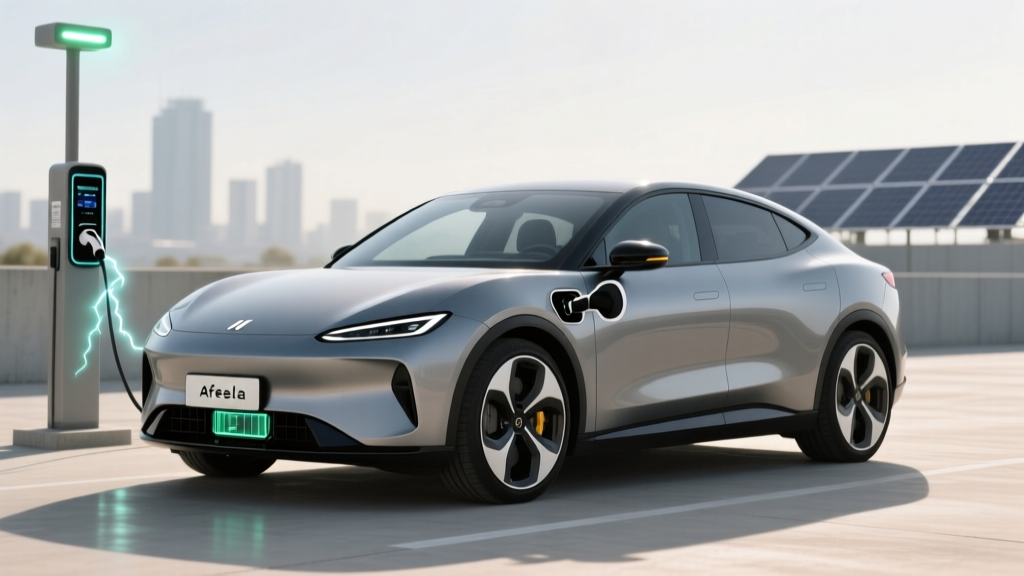
Afeela is the first electric vehicle from Sony Honda Mobility (SHM), a joint venture announced in 2022 and now entering production. The inaugural model, the Afeela 1, is a premium electric sedan targeting roughly 300 miles of EPA-estimated range, an ~$89,900 starting MSRP for the Signature trim (the only trim available at launch), and a heavy emphasis on in-cabin entertainment powered by Sony's technology stack. Deliveries in the U.S. began in limited form in late 2025 for California, with broader availability expected through 2026. Because SHM is a brand-new automaker with no dealer network, service infrastructure, and long-term reliability data remain open questions that buyers must weigh against the tech-forward appeal.
What Is Afeela, Exactly?
Afeela is not a Sony car or a Honda car — it is the product of Sony Honda Mobility Inc., a 50/50 joint venture between Sony Group Corporation and Honda Motor Co. headquartered in Tokyo. The partnership leverages Honda's vehicle engineering, manufacturing, and safety expertise alongside Sony's strengths in imaging sensors, entertainment content, and software.
The first production vehicle, the Afeela 1, was previewed as a prototype at CES 2023 and refined through subsequent auto shows. It slots into the premium/luxury electric sedan segment, competing on paper with the Tesla Model S, Lucid Air (base trims), Mercedes-Benz EQE, and the Hyundai Ioniq 6 — though at a notably higher entry price than the Korean contender.
SHM has confirmed that the Afeela 1 will initially be sold exclusively in the United States, with California as the launch market, using a direct-to-consumer sales model similar to Tesla and Rivian rather than traditional Honda dealerships.
Afeela 1: Estimated Specs at a Glance
Because SHM has released only preliminary specifications and final EPA certification figures may shift before widespread delivery, treat the table below as estimated/announced data. We will update once EPA-certified numbers appear on fueleconomy.gov.
| Specification | Afeela 1 (Signature Trim) |
|---|---|
| Body Style | 4-door premium sedan |
| Drivetrain | Dual-motor AWD (estimated) |
| Battery Capacity | ~91 kWh usable (announced) |
| Battery Chemistry | NMC (nickel manganese cobalt) — estimated |
| EPA Range (est.) | ~300 miles (preliminary) |
| Real-World Highway Range | ~250–270 miles (70–80 mph, mild weather) |
| DC Fast Charge (peak) | ~150–180 kW (announced estimate) |
| 10–80% DC Charge Time | ~30–35 minutes (estimated) |
| Level 2 AC Charging | ~11 kW onboard charger |
| 0–60 mph | ~5.0 seconds (estimated) |
| Horsepower | ~480 hp (estimated, dual motor) |
| ADAS / Automation | Level 2+ (driver must remain engaged) |
| Connector | CCS1 (at launch; NACS adapter TBD) |
| Base MSRP (Signature) | ~$89,900 (before destination) |
| Federal Tax Credit (§30D) | Unlikely — exceeds $55,000 sedan MSRP cap |
| Battery Warranty | 8 years / 100,000 miles (expected, per Honda norms) |
Real-World Range Reality Check
The preliminary ~300-mile EPA estimate is respectable, but real-world highway driving at 75+ mph typically reduces range by 10–15%. In freezing temperatures (below 32°F), expect an additional 20–30% loss, meaning a cold-weather highway trip could yield as little as 185–210 miles before you need to stop. This is physics, not a flaw unique to Afeela — all EVs behave similarly — but buyers in northern climates should plan accordingly.
How Afeela Compares to Gas, Hybrid, and Rival EVs
The Afeela 1's ~$89,900 price tag puts it in a different conversation than a Honda Accord Hybrid (~$33,000, ~48 MPG combined) or even a Tesla Model 3 Long Range (~$47,000, EPA 341 miles). To put the purchase decision in context, here is a comparison against vehicles a cross-shopping buyer might actually consider:
| Vehicle | Type | MSRP (Base) | EPA Range / MPG | Fuel/Charge Cost per 1,000 mi |
|---|---|---|---|---|
| Afeela 1 Signature | BEV | ~$89,900 | ~300 mi (est.) | ~$130–$160 (home L2) |
| Tesla Model S LR | BEV | ~$79,990 | 402 mi | ~$110–$140 (home L2) |
| Hyundai Ioniq 6 Ltd | BEV | ~$52,600 | 305 mi | ~$110–$140 (home L2) |
| BMW i5 xDrive40 | BEV | ~$70,200 | 282 mi | ~$130–$160 (home L2) |
| Honda Accord Hybrid | HEV | ~$33,995 | 48 MPG combined | ~$105 (at $3.15/gal) |
| BMW 530i | Gas | ~$58,900 | 28 MPG combined | ~$180 (at $3.15/gal) |
Key takeaway: On a pure cost-per-mile basis, the Afeela 1 charges for roughly the same as rival EVs but costs substantially more to buy. The Honda Accord Hybrid actually edges out EVs on fuel cost per mile at current gas prices, while costing $55,000 less upfront. The Afeela's value proposition is not frugality — it is technology, brand novelty, and Sony's entertainment ecosystem.
The Real Cost of Owning an Afeela
Purchase price is only the beginning. Here is a five-year estimated cost-of-ownership breakdown assuming 12,000 miles per year, home Level 2 charging at the national average of ~$0.16/kWh, and no federal tax credit (the Afeela 1's MSRP exceeds the IRS §30D $55,000 sedan cap).
| Cost Category | Afeela 1 (5-Year Est.) | Tesla Model S LR (5-Year Est.) | Honda Accord Hybrid (5-Year Est.) |
|---|---|---|---|
| Purchase Price | $89,900 | $79,990 | $33,995 |
| Federal Tax Credit | $0 (MSRP cap) | $0 (MSRP cap) | N/A |
| Energy/Fuel (60k mi) | ~$4,500 | ~$3,900 | ~$6,300 |
| Maintenance | ~$1,800 | ~$1,500 | ~$3,200 |
| Insurance (avg.) | ~$14,000 | ~$13,500 | ~$7,500 |
| Depreciation (est.) | ~$40,000 | ~$35,000 | ~$14,000 |
| 5-Year Total Cost | ~$150,200 | ~$133,890 | ~$64,995 |
Insurance is a wildcard. As a low-volume vehicle from a brand-new automaker, the Afeela 1 may carry elevated insurance premiums until actuaries have sufficient claims data. Early adopters should obtain quotes before committing. Depreciation is equally uncertain — first-year models from new brands (see: Fisker Ocean) can lose value rapidly if the brand struggles, or hold well if exclusivity and demand persist.
Charging and Infrastructure: What to Expect
Afeela is expected to launch with a CCS1 connector, meaning access to Electrify America, EVgo, and ChargePoint DC fast-charging networks. SHM has not confirmed NACS (Tesla Supercharger) compatibility or adapter availability at launch, which is a notable gap given that NHTSA-reported industry trends show the Tesla Supercharger network remains the most reliable public DC option in the U.S.
Common Afeela & EV Misconceptions
| Myth | Fact |
|---|---|
| "Afeela will be self-driving because Sony makes sensors." | Afeela ships with SAE Level 2+ driver assistance. The driver must remain attentive and keep hands available at all times. No consumer vehicle sold in the U.S. is Level 4 autonomous. |
| "I'll get the $7,500 federal tax credit." | The Afeela 1's ~$89,900 MSRP exceeds the §30D sedan cap of $55,000. It does not qualify for the new-vehicle federal credit. Some state incentives may apply — check your local DMV or energy office. |
| "300 miles of range means I'll always get 300 miles." | EPA range is a laboratory estimate. Highway driving, cold weather, elevation changes, and battery age all reduce real-world range. Plan for 250 miles on a good day, less in winter. |
| "I don't need home charging — public chargers are everywhere." | Public DC charging costs 2–4× more than home Level 2 and is less reliable. Without home or workplace charging, EV ownership becomes significantly more expensive and inconvenient. |
| "The battery will need replacing in a few years." | Modern NMC batteries typically retain 80–90% capacity after 100,000 miles. SHM is expected to offer an 8-year/100,000-mile battery warranty, consistent with Honda's existing EV coverage. |
Home Charging Requirements
If you have access to a garage or dedicated parking space, a Level 2 home charger (240V, 40–48 amps) will add roughly 25–30 miles of range per hour of charging, fully replenishing the ~91 kWh battery overnight. Installation costs range from $500 (simple outlet near the panel) to $3,000+ if your electrical panel needs an upgrade from 100A to 200A service. Always hire a licensed electrician for a site assessment before purchase.
What First-Time EV Buyers Should Know
If the Afeela 1 is your entry into electric ownership, understand these realities before signing:
- Charging curve taper: The peak DC charge rate (~150–180 kW) is only sustained between roughly 10–50% State of Charge. Above 80%, charging slows dramatically to protect the battery. A 10–80% session may take 30–35 minutes, but 80–100% can add another 25+ minutes.
- Preconditioning matters: To achieve peak DC charge speeds, the battery must be at optimal temperature. Navigation-based preconditioning (warming the battery en route to a charger) is expected to be standard — use it.
- Service network uncertainty: SHM has not detailed a nationwide service network. Early buyers in California may have access to mobile service or designated centers, but owners in other states should ask SHM directly about collision repair and warranty service logistics before purchasing.
- Over-the-air updates: Like Tesla and Rivian, Afeela is designed for OTA software updates. This means features may improve — or change — after purchase, and software bugs are a realistic early-adopter risk.
Should You Buy an Afeela? A Decision Framework
Choose the Afeela 1 if:
- You want a premium EV sedan with Sony's entertainment and sensor technology and are willing to pay a premium for novelty.
- You have reliable home Level 2 charging and live in or near SHM's initial service area (California).
- You accept early-adopter risks: limited service infrastructure, unproven long-term reliability, and uncertain resale value.
- Tax credit eligibility is not a deciding factor for you at this price point.
Look elsewhere if:
- You want the best range-per-dollar: the Tesla Model S (402 mi EPA, ~$79,990) or Lucid Air Pure (~419 mi, ~$69,900) offer more range at lower or similar prices.
- You need proven service infrastructure nationwide: Tesla, BMW, and Mercedes-Benz have established dealer/service networks.
- You want federal tax credit eligibility: the Hyundai Ioniq 6, Tesla Model 3, and Chevrolet Equinox EV all qualify (subject to IRS §30D income and sourcing rules).
- You live in a cold climate far from SHM's launch region and need accessible warranty service.
Frequently Asked Questions
Is the Afeela 1 available to order nationwide?
As of early 2026, Afeela deliveries are limited to California, with expansion to additional states expected throughout the year. SHM uses a direct-to-consumer model, so availability depends on your state's direct-sales regulations and SHM's service footprint.
Will the Afeela work with Tesla Superchargers?
Not natively at launch. The Afeela 1 is expected to use the CCS1 connector. SHM has not confirmed a NACS adapter or native NACS port, though the broader industry is migrating toward NACS. An adapter may become available post-launch, but this is unconfirmed.
Does the Afeela qualify for any EV tax credits?
The federal §30D new-vehicle credit is unavailable because the Afeela 1's MSRP exceeds the $55,000 sedan cap. Some states (e.g., California's CVRP, Colorado's state credit) may offer separate incentives — check your state energy office for current programs. Always consult a tax professional for eligibility.
How does Afeela's ADAS compare to Tesla Autopilot or GM Super Cruise?
Afeela's driver-assistance system leverages Sony's imaging and lidar sensor suite, but it remains an SAE Level 2 system — meaning the driver must remain engaged and supervise at all times. It is not "self-driving." Comparable systems include Tesla Autopilot, Ford BlueCruise, and GM Super Cruise, all of which are also Level 2. Independent safety testing data from IIHS or NHTSA is not yet available for Afeela.
What happens if Sony Honda Mobility discontinues the brand?
This is a legitimate early-adopter risk. Both Sony and Honda are massive, profitable corporations, which reduces the likelihood of an abrupt shutdown compared to startup automakers. However, low sales volume could lead to limited future model development or reduced service support. Buyers should factor this uncertainty into their purchase decision.
How long will the Afeela battery last?
Based on Honda's existing EV battery performance (e.g., Prologue) and industry NMC data, expect 80–90% capacity retention after 100,000 miles or 8 years. The expected warranty covers defects and excessive degradation (typically below 70% capacity) for 8 years / 100,000 miles. Full battery replacement, if needed out of warranty, could cost $12,000–$18,000 based on current NMC pack pricing.