Why the 2016 Tesla Model S Still Matters on the Used Market
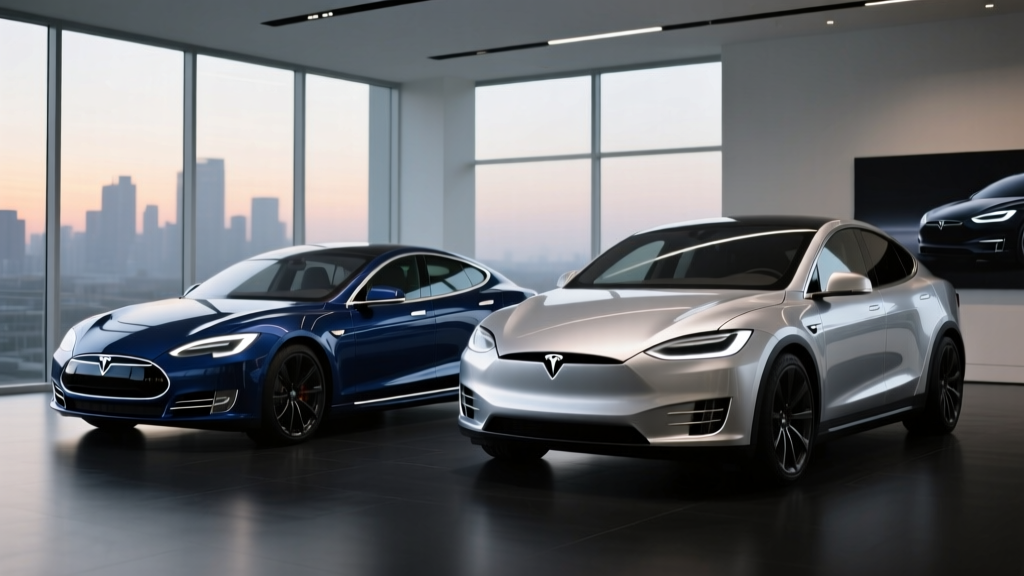
The 2016 Tesla Model S occupies a unique space in the used EV market. It was the year Tesla introduced the 100 kWh battery option, refreshed the front fascia to remove the faux grille, and brought hardware 2.0 for Autopilot into production. For buyers in 2026 searching for a 2016 Tesla Model S interior evaluation alongside real-world range and charging data, this sedan remains a compelling — if complex — proposition at its current used-market prices.
This guide covers every spec that matters to a used-EV buyer: EPA range versus what you'll actually see on the highway, DC fast-charging realities on older Supercharger hardware, battery degradation expectations, interior practicality, and whether this generation Model S still makes financial sense versus newer, cheaper EVs.
2016 Tesla Model S Core Specifications at a Glance
| Spec | Model S 60 | Model S 75 | Model S 90D | Model S P100D |
|---|---|---|---|---|
| EPA Range | 210 mi | 249 mi | 294 mi | 315 mi |
| Battery Capacity (usable) | ~60 kWh (NMC) | ~75 kWh (NMC) | ~90 kWh (NMC) | ~100 kWh (NMC) |
| Drivetrain | RWD | RWD / AWD (75D) | AWD (Dual Motor) | AWD (Dual Motor) |
| 0-60 mph | 5.5 sec | 4.3 sec (75D) | 4.2 sec | 2.5 sec |
| Horsepower | 315 hp | 328 hp (75D) | 417 hp | 670 hp |
| Efficiency (MPGe combined) | 101 MPGe | 104 MPGe | 104 MPGe | 102 MPGe |
| Original MSRP (base) | $66,000 | $74,500 | $89,000 | $134,500 |
| 2026 Used Market Range | $14,000–$18,000 | $17,000–$24,000 | $22,000–$32,000 | $35,000–$50,000 |
Sources: EPA fueleconomy.gov, Tesla historical press data.
Real-World Range: What the EPA Sticker Doesn't Tell You
EPA Rated: 294 miles
Real-World Highway (70 mph, moderate temps): ~245–265 miles
Real-World Cold Weather (30°F, highway): ~195–220 miles
Real-World City (moderate temps, regen active): ~275–290 miles
The 2016 Model S uses Tesla's older, less energy-dense NMC (nickel-manganese-cobalt) cells. These packs are heavier per kWh than modern LFP or 4680 cells, and that mass shows up in efficiency. Expect roughly 340–380 Wh/mile in mixed driving, compared to 250–280 Wh/mile in a 2024 Model 3 Highland.
Cold-weather range loss is significant. Without a heat pump — the 2016 Model S uses resistive cabin heating — winter range can drop 25–35% below the EPA figure. Battery preconditioning helps if you navigate to a Supercharger, but daily cold-soak starts will cut into usable range before the pack warms up.
Battery degradation is the critical unknown for any used 2016 Model S. Tesla's NMC packs from this era typically show 10–15% degradation at 80,000–100,000 miles, though frequent Supercharging and consistently charging to 100% accelerate loss. Always request a State of Health (SoH) reading or use third-party tools like Tessie or TeslaFi to check the car's actual usable capacity before purchasing.
Charging Speeds: DC Fast, Level 2, and the Supercharger Curve
Charging is where the 2016 Model S reveals its age most clearly. This vehicle predates Tesla's V3/V4 Supercharger architecture and the broader industry shift to 250+ kW peak rates.
| Charging Method | Peak Power | Speed | Notes |
|---|---|---|---|
| DC Fast Charge (Tesla Supercharger V2) | ~120–145 kW peak | 10–80% in ~40–50 min | Sustained rate drops sharply above 60% SoC |
| DC Fast Charge (CCS adapter, non-Tesla) | ~100–120 kW | 10–80% in ~50–60 min | Requires Tesla CCS adapter ($175–$250) |
| Level 2 Home (Tesla Wall Connector, 48A) | 11.5 kW | ~34 miles/hour | Full charge in ~8–9 hours (90D) |
| Level 2 Home (32A mobile connector) | 7.7 kW | ~23 miles/hour | Standard NEMA 14-50 outlet |
| Level 1 (120V household) | ~1.4 kW | ~3–4 miles/hour | Emergency/trickle only |
The charge curve on a 2016 Model S is notably less aggressive than modern EVs. Peak rate of ~145 kW holds only briefly between roughly 10–30% SoC on a V2 Supercharger, then tapers progressively. By 70% SoC, you're pulling closer to 40–50 kW. Plan road-trip stops accordingly — a 10–80% session takes roughly 45 minutes, not the 25–30 minutes Tesla advertises for newer vehicles.
For home charging, the onboard charger supports up to 48 amps (11.5 kW) on a hardwired Level 2 circuit. A typical overnight charge from 20% to 80% on a 48A Wall Connector takes about 5 hours for the 90D — perfectly adequate for daily use but slower than the 19.2 kW capability some newer EVs offer.
2016 Tesla Model S Interior: Space, Tech, and Daily Livability
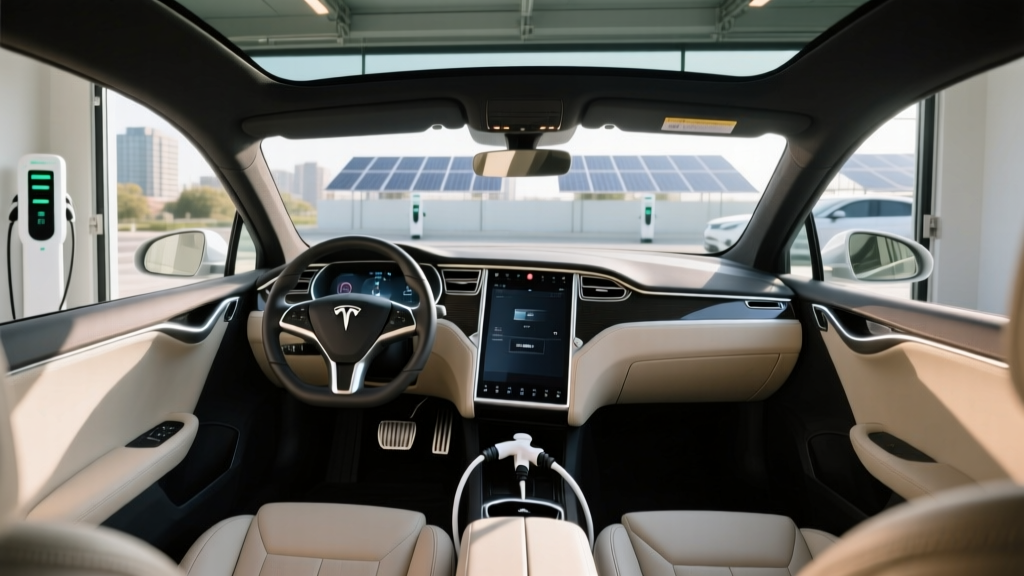
The keyword driving many searches for this generation — 2016 Tesla Model S interior — reflects genuine curiosity about how a decade-old luxury EV holds up inside. The answer is mixed.
Passenger and Cargo Dimensions
| Dimension | Measurement |
|---|---|
| Front Headroom | 38.8 in |
| Front Legroom | 42.7 in |
| Rear Headroom | 35.4 in |
| Rear Legroom | 35.4 in |
| Trunk (rear) | 26.3 cu ft |
| Frunk (front trunk) | 5.3 cu ft |
| Cargo w/ rear seats folded | 58.1 cu ft |
| Optional rear-facing 3rd row | 2 small seats (child-rated only) |
The Model S is a full-size liftback sedan, and the hatchback rear opening makes it far more practical than a traditional trunk. The frunk adds useful storage for charging cables or a soft bag. The optional third-row jump seats were rated only for children under ~75 lbs and are rarely found in used examples.
Interior Quality and Infotainment
The 2016 refresh removed the Model S's original "black plastic" center console and introduced a more integrated look, but by 2026 luxury standards, materials fall short of comparable BMW 5 Series or Mercedes E-Class interiors. Expect synthetic leather (Tesla's "vegan" leatherette), some hard plastics on the lower dash and door pockets, and seat bolsters that may show wear at 80,000+ miles.
The centerpiece remains the 17-inch center touchscreen — massive for 2016, and still competitive in size today. However, the 2016 Model S runs on older MCU1 (Media Control Unit) hardware with an NVIDIA Tegra processor. This means:
- Slower map rendering and app load times versus MCU2/MCU3 (found in 2018+ models)
- No native support for newer Tesla features like Theater mode, Sentry Mode viewer improvements, or the latest FSD visualizations
- Tesla offered an MCU2 upgrade (~$2,000–$2,500 at service centers) that some owners pursued; verify whether a used example has been upgraded
The 2016 model year introduced Hardware 2.0 for Autopilot (cameras and radar for enhanced Autopilot and early FSD capability). However, Tesla has progressively limited HW2.0 support for newer FSD (Supervised) features. As of 2026, HW2.0 vehicles receive basic Autopilot (Traffic-Aware Cruise Control + Autosteer) but may not support the latest FSD (Supervised) builds — a critical point if you're buying for autonomous-driving aspirations.
Pricing, Tax Credits, and Total Cost of Ownership
The 2016 Model S is now exclusively a used-market purchase. Federal tax credit eligibility for used EVs falls under a different provision (§25E) than the new-vehicle §30D credit.
- Credit amount: 30% of sale price, up to $4,000 maximum
- Vehicle sale price must be $25,000 or less
- Buyer AGI limits: $75,000 (single), $112,500 (head of household), $150,000 (joint)
- Vehicle must be at least 2 model years old (2016 qualifies)
- Must purchase from a licensed dealer (private-party sales excluded)
- Battery capacity must be at least 7 kWh (all Model S variants qualify)
- Can only be claimed once per buyer per 3-year period
This means a 2016 Model S 60 or 75 purchased from a dealer for $18,000–$24,000 could qualify for up to $4,000 off, bringing effective cost to $14,000–$20,000. The 90D and P100D typically sell above the $25,000 cap, making them ineligible for §25E.
5-Year Ownership Cost Estimate (Model S 75, purchased at $20,000)
| Category | Estimated 5-Year Cost | Notes |
|---|---|---|
| Purchase (after $4,000 credit) | $16,000 | Dealer sale at $20,000 |
| Electricity (home charging) | $3,200 | ~12,000 mi/yr, $0.14/kWh avg |
| Insurance | $12,500 | ~$2,500/yr; Tesla premiums run high |
| Maintenance & Repairs | $4,000–$8,000 | Suspension, MCU, drive unit are risk items |
| Tires | $2,400 | 2 sets at ~$1,200 each (heavy vehicle wear) |
| Depreciation | $6,000–$8,000 | Used EV depreciation slowing but still steep |
| 5-Year Total | $44,100–$50,100 |
Insurance is the hidden cost killer. Tesla vehicles carry some of the highest premiums in the industry due to repair costs and parts pricing. Get quotes before purchasing — a 2016 Model S can cost $200–$300/month to insure depending on your profile and state.
Warranty, Battery Health, and What Can Go Wrong
Tesla's original new-vehicle warranty for the 2016 Model S included:
- Battery & Drive Unit: 8 years / unlimited miles (60, 75); 8 years / 150,000 miles (90, 100)
- New-Vehicle Limited Warranty: 4 years / 50,000 miles
As of 2026, every 2016 Model S is at or past the 8-year mark. The battery and drive unit warranty may still apply for low-mileage 90D/P100D examples under 150,000 miles, but the basic warranty is long expired. This means out-of-pocket risk for:
- Air suspension failure: $1,500–$2,500 per corner; common at 80,000+ miles
- Drive unit replacement: $4,000–$7,000 remanufactured; listen for whining or clunking
- MCU1 failure/upgrade: $2,000–$3,000 for MCU2 retrofit
- 12V battery: Lead-acid 12V battery (not the traction pack) needs replacement every 3–4 years, ~$300–$450
- Battery replacement: If the pack drops below 70% capacity outside warranty, a remanufactured pack costs $12,000–$18,000 installed
The battery warranty guarantees retention above 70% of original capacity. If a 90D shows only 60 kWh of usable capacity (67%), and it's still within 8 years / 150,000 miles, Tesla should replace it under warranty. Document everything and get a pre-purchase battery health report.
Pros, Cons, and the Verdict
- Massive cargo capacity (26.3 cu ft trunk + 5.3 cu ft frunk)
- Still quick — even the base 60 does 0-60 in 5.5 seconds
- Supercharger network access (with CCS adapter for non-Tesla stations)
- Spacious rear seat for a sedan (35.4 in legroom)
- Over-the-air updates still supported (feature-dependent)
- Potential $4,000 used EV tax credit on lower trims
- Slow DC fast charging by 2026 standards (~45 min 10–80%)
- No heat pump — significant winter range loss
- MCU1 hardware limits infotainment and FSD capability
- High insurance premiums ($2,500+/year typical)
- Out-of-warranty repair risk (suspension, drive unit, MCU)
- Build quality inconsistent — panel gaps, rattles common
- No native CCS port — requires adapter for non-Tesla DC chargers
Is the 2016 Model S Worth It vs. the Competition?
At $17,000–$32,000 on the used market, the 2016 Model S competes with newer, smaller EVs that offer better efficiency and faster charging:
| Vehicle | Used Price (2026) | EPA Range | DC Charge 10-80% | Trade-off |
|---|---|---|---|---|
| 2016 Tesla Model S 75 | $17,000–$24,000 | 249 mi | ~45 min | More space, slower charging, higher repair risk |
| 2021 Tesla Model 3 LR | $22,000–$28,000 | 353 mi | ~25 min | Less cargo room, newer platform, faster charging |
| 2022 Hyundai Ioniq 5 | $26,000–$32,000 | 303 mi | ~18 min | Newer, 800V architecture, smaller sedan/crossover |
| 2021 Ford Mustang Mach-E | $23,000–$29,000 | 305 mi (ER) | ~38 min | Crossover utility, less range efficiency |
- You need full-size sedan cargo space and rear-seat comfort
- You value Supercharger network access and Tesla's software ecosystem
- You're comfortable with out-of-warranty repair risk and can budget $2,000–$4,000/year for maintenance
- You want air suspension and a premium ride quality feel
- Charging speed matters for road trips (18–25 min vs. 45 min)
- You want lower insurance costs and remaining factory warranty
- You prioritize energy efficiency (250 Wh/mi vs. 350+ Wh/mi)
- You want modern ADAS hardware with full FSD/autonomy potential
Frequently Asked Questions
What is the real-world range of a 2016 Tesla Model S?
Expect 245–265 highway miles in moderate weather for the 90D (EPA 294 mi), dropping to 195–220 miles in freezing temperatures. The 75 delivers roughly 200–220 highway miles in fair conditions. Actual range depends heavily on battery State of Health — a degraded pack at 85% SoH will proportionally reduce all figures.
How fast does the 2016 Model S charge at home and on the road?
On a Level 2 home charger at 48 amps (11.5 kW), expect roughly 34 miles of range per hour, or a full overnight charge. DC fast charging peaks around 145 kW on a V2 Supercharger with a 10–80% time of approximately 40–50 minutes. This is slow by 2026 standards — modern EVs achieve the same in 18–28 minutes.
Does a 2016 Tesla Model S qualify for any federal tax credit?
Not the new-vehicle §30D credit. However, under the §25E Used Clean Vehicle Credit, you can claim 30% of the sale price up to $4,000 if: the dealer sale price is $25,000 or less, your AGI falls under IRS income limits ($75K single / $150K joint), and you haven't claimed the used credit in the past 3 years. This typically applies to the Model S 60 and some 75 examples. Verify current rules at IRS.gov.
Is the 2016 Model S interior still comfortable and practical in 2026?
The cabin space remains generous — 42.7 inches of front legroom and a 26.3 cu ft liftback trunk beat most competitors. However, material quality (synthetic leather, hard lower plastics) hasn't aged as well as German luxury rivals, and the MCU1 infotainment processor feels sluggish by modern standards. An MCU2 retrofit improves responsiveness significantly.
What are the biggest risks of buying a used 2016 Model S?
Air suspension failure ($1,500–$2,500 per corner), drive unit wear ($4,000–$7,000 replacement), and battery degradation beyond the 70% warranty threshold are the top financial risks. Always get a pre-purchase inspection from a Tesla-certified shop, request battery SoH data, and budget $3,000–$5,000 for first-year repairs on a high-mileage example.
Can a 2016 Model S use non-Tesla charging networks?
Yes, but with caveats. Tesla sells a CCS adapter ($175–$250) that enables charging at Electrify America, EVgo, and other CCS-equipped networks. However, the 2016 Model S lacks the native NACS port found on 2025+ vehicles, and charging speeds on non-Tesla networks may be limited to ~100–120 kW depending on the station and adapter handshake.