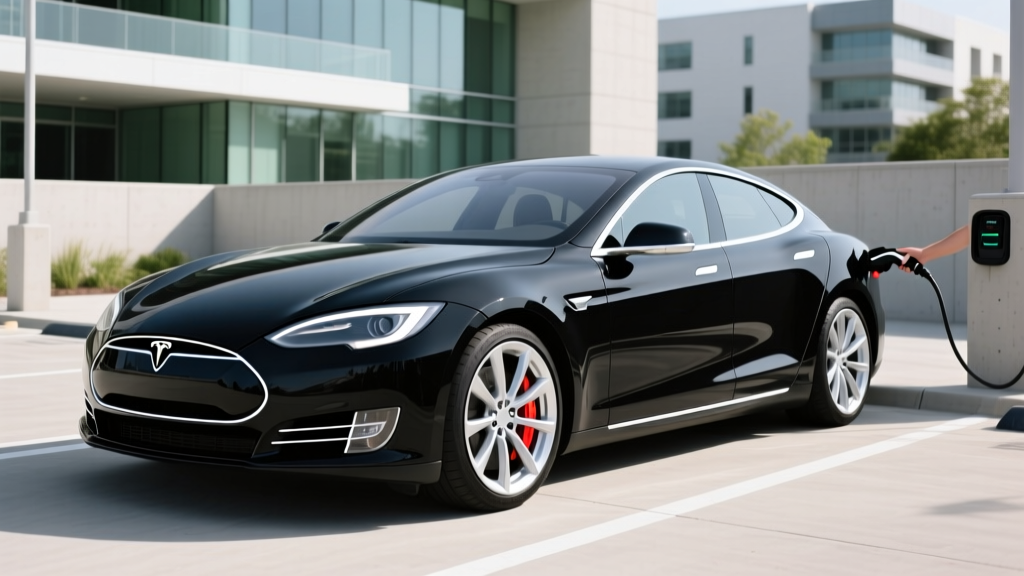
The 2016 Tesla Model S 90D was a watershed vehicle when new — a dual-motor, all-wheel-drive luxury sedan that could hit 60 mph in roughly 4.3 seconds while offering nearly 300 miles of EPA-rated range. A decade later, it remains one of the most searched used EVs on the market. Buyers hunting for the 2016 Tesla Model S 90D 0-60 time, real-world range, and charging practicality will find a car that still impresses on paper — but one that demands careful scrutiny on the used market.
This guide breaks down every spec that matters in 2026: battery health expectations, DC fast-charge speeds, home charging setup, and whether the 90D still holds up against modern EVs like the Hyundai Ioniq 6, BMW i5, and Tesla's own refreshed Model S. We also cover the federal used-EV tax credit, which can knock up to $4,000 off the purchase price if you qualify.
2016 Tesla Model S 90D: Key Specifications at a Glance
| Spec | Value |
|---|---|
| EPA Range (original) | 294 miles |
| Battery Capacity (gross / usable) | 90 kWh / ~85.5 kWh |
| Battery Chemistry | NMC (Nickel Manganese Cobalt) |
| Drivetrain | Dual-Motor AWD |
| Horsepower (combined) | 518 hp (approx.) |
| 0-60 mph | 4.3 seconds |
| Top Speed | 155 mph |
| EPA Efficiency | 101 MPGe combined / 33 kWh/100mi |
| Max DC Fast Charge Rate | ~120 kW (Supercharger V2) |
| Level 2 Home Charge Rate | Up to 17.2 kW (dual charger option) / 11.5 kW (single charger) |
| Cargo Volume | 26.3 cu ft (rear) + 5.3 cu ft (frunk) |
| Original Base MSRP | ~$95,200 (before incentives, 2016) |
| Typical Used Price (2026) | $22,000 – $32,000 |
| Battery & Drive Unit Warranty | 8 years / unlimited miles (original) |
Real-World Range: What 294 EPA Miles Means in 2026
EPA Sticker: 294 miles (when new)
Expected in 2026 (with ~10-15% degradation): 250–265 miles at full charge
Highway (70-75 mph): ~220–240 miles
Cold weather (below 32°F): ~185–210 miles
The 90 kWh NMC pack has aged a decade. Actual range depends heavily on battery State of Health (SoH), driving style, and climate.
The 2016 Model S 90D earned a 294-mile EPA combined rating when new — an impressive figure that still holds up today. However, every 2016 90D on the road in 2026 is at least 10 years old, and NMC lithium-ion batteries degrade with time and charge cycles.
Tesla's own battery reports and third-party fleet data suggest an average capacity loss of 10-15% over 100,000–150,000 miles for the 90 kWh pack. Some early 90D packs experienced faster-than-expected degradation due to the cell chemistry and thermal management strategies of the era. When evaluating a used 90D, request a battery health reading from the car's service menu or a Tesla Service Center — look for a State of Health (SoH) above 85%.
Highway driving at sustained speeds above 70 mph cuts range significantly in any EV, and the Model S is no exception. Its large frontal area and heavy curb weight (~4,900 lbs) mean you'll see closer to 220–240 miles on a road trip. In winter conditions, the resistive cabin heater (the 2016 model lacks a heat pump) draws substantial energy, reducing range by 25-35%.
Charging Speed: DC Fast Charging and Home Level 2
| Charging Level | Power | Speed / Time |
|---|---|---|
| Level 1 (120V household) | ~1.4 kW | ~3–4 miles per hour |
| Level 2 (240V, single charger) | 11.5 kW | ~34 miles per hour / full in ~8 hrs |
| Level 2 (240V, dual charger option) | 17.2 kW | ~51 miles per hour / full in ~5.5 hrs |
| DC Fast Charge (Tesla Supercharger V2) | Peak ~120 kW | 10-80% in ~35–40 minutes |
| DC Fast Charge (Supercharger V3/V4) | Capped ~120 kW (vehicle limit) | No faster than V2 for this model |
The 2016 Model S 90D uses Tesla's proprietary connector (now branded NACS). It was designed for Tesla's V2 Supercharger network, which delivers up to 150 kW at the stall — but the 90D's battery management system caps its intake at roughly 120 kW peak. Expect a 10-80% session to take about 35–40 minutes at a V2 or V3 Supercharger, as the vehicle cannot take advantage of the 250 kW peak that newer Teslas support.
The charge curve on the 90 kWh pack is notably aggressive in its taper. You'll see peak rates below 40% State of Charge (SoC), after which speed drops progressively. Above 80%, charging slows dramatically — plan to unplug at 80% on road trips to save time.
For home charging, the single onboard charger delivers 11.5 kW on a 240V/48A circuit (such as a Tesla Wall Connector on a 60A breaker). Some 90D models were optioned with dual onboard chargers, bumping Level 2 speed to 17.2 kW — a meaningful advantage if you have a 100A circuit available. A typical overnight charge from 20% to 80% takes about 5–6 hours on the single charger, which is more than adequate for daily commuting.
Cold-weather charging note: The 2016 Model S lacks a battery heat pump and relies on resistive heating for cabin and battery thermal management. In freezing conditions, preconditioning the battery while plugged in is essential — otherwise, DC fast-charge speeds will be severely limited until the pack warms up, sometimes adding 15–20 minutes to a session.
Performance: The 2016 Tesla Model S 90D 0-60 Time and Drivetrain
The headline number for performance shoppers is the 2016 Tesla Model S 90D 0-60 mph time of 4.3 seconds (Tesla's published figure; independent tests ranged from 4.2 to 4.5 seconds depending on conditions and rollout measurement). This was blisteringly quick for a 4,900-lb luxury sedan in 2016 and remains respectable today.
The 90D's dual-motor AWD setup pairs a front and rear AC induction motor producing a combined output of approximately 518 horsepower and 487 lb-ft of torque. Unlike the Ludicrous Mode-equipped P90D (which hit 60 in about 3.2 seconds), the standard 90D prioritized range over outright acceleration — but 4.3 seconds is still quicker than most gas-powered sport sedans from the same era.
The electric drivetrain delivers instant torque from zero RPM, making the 90D feel even quicker in real-world merging and passing situations than the 0-60 number suggests. Regenerative braking is strong enough for near one-pedal driving in Standard mode, though it lacks the adjustable regen levels found in modern EVs like the Hyundai Ioniq 5 or BMW i4.
Interior, Cargo, and Technology
The 2016 Model S interior was controversial at launch and shows its age in 2026. The centerpiece is a 17-inch portrait touchscreen that controls virtually every vehicle function — climate, navigation, media, and vehicle settings. The infotainment system received over-the-air updates for years, but by 2026, Tesla has shifted focus to newer platforms, and the MCU1 (Media Control Unit) hardware in early 2016 models is sluggish by modern standards. Tesla offered an MCU2 upgrade (Intel Atom-based) for roughly $1,500–$2,500; verify whether a used example has been upgraded.
Cargo capacity is a genuine strength. The rear hatchback opens to reveal 26.3 cubic feet of space behind the second row — more than most midsize SUVs — and the front trunk (frunk) adds another 5.3 cubic feet. With the rear seats folded, total volume expands to approximately 58.1 cu ft. Rear legroom measures 35.4 inches, which is adequate but not generous for the class.
Driver assistance: The 2016 Model S came with Tesla's Autopilot hardware suite. Cars built after October 2016 have the HW2 (Hardware 2.0) sensor suite; earlier examples have HW1. Full Self-Driving (FSD) capability was sold as an option, but it is critical to understand that FSD remains a Level 2 driver-assistance system per SAE classification — it requires active driver supervision at all times and is not autonomous driving.
Tesla Autopilot and FSD (Supervised) on the 2016 Model S are SAE Level 2 systems. The driver must keep hands on the wheel, monitor the road, and be prepared to take over instantly. These systems assist with steering, acceleration, and braking on marked roads but do not replace an attentive driver.
Used Pricing, Tax Credits, and Total Ownership Cost
| Item | Amount |
|---|---|
| Typical Used Price Range | $22,000 – $32,000 |
| Federal Used EV Tax Credit (§25E) | Up to $4,000 (30% of sale price, capped) |
| Estimated Price After Max Credit | $18,000 – $28,000 |
| Annual Insurance (avg.) | $2,200 – $3,000 |
| Annual Electricity Cost (12,000 mi/yr) | $500 – $750 (varies by rate) |
| Annual Maintenance | $300 – $600 (tires, cabin filter, wipers) |
The original MSRP of the 2016 Model S 90D was approximately $95,200 before options and destination charges. Well-equipped examples pushed past $110,000. In 2026, used 90D sedans typically trade between $22,000 and $32,000, depending on mileage, condition, battery health, and whether the MCU2 upgrade was performed.
Federal used-EV tax credit (§25E): Unlike the new-vehicle §30D credit, the used-EV credit under IRS §25E applies to EVs sold for $25,000 or less through a licensed dealer. The credit equals 30% of the sale price, capped at $4,000. Income limits apply: modified adjusted gross income (MAGI) must not exceed $75,000 (single), $112,500 (head of household), or $150,000 (joint). The vehicle must be at least two model years old and purchased from a dealer — private-party sales do not qualify. A 2016 Model S 90D priced at $25,000 or under from a qualifying dealer could yield the full $4,000 credit, bringing the effective cost to as low as $18,000–$21,000.
The original 8-year/unlimited-mile battery and drive unit warranty on the 2016 90D has expired as of 2024. This means any battery replacement or drive unit failure is now an out-of-pocket expense. Tesla quotes approximately $14,000–$20,000 for a replacement battery pack on this generation Model S. Third-party EV repair shops offer refurbished packs for $10,000–$14,000. Factor this risk into your purchase decision — a pre-purchase battery health inspection is strongly recommended.
Pros and Cons: Honest Assessment for 2026 Buyers
✅ Pros
- Still quick: 4.3-sec 0-60 and smooth AWD power delivery
- Massive cargo space (31.6 cu ft total with frunk)
- Access to Tesla Supercharger network (NACS native)
- Over-the-air updates extended feature set for years
- Comfortable air suspension ride (when functional)
- Strong used value — potential $4,000 federal credit
❌ Cons
- Battery degradation reduces range to ~250 mi or less
- No heat pump — cold-weather range and charging suffer
- Out-of-warranty battery replacement costs $14K–$20K
- MCU1 infotainment is slow; upgrade costs extra
- DC fast charge capped at ~120 kW (slower than modern EVs)
- Air suspension and door handles are known failure points
- Insurance costs remain elevated for luxury EV
How the 2016 Model S 90D Compares to Modern Alternatives
| Vehicle | EPA Range | 0-60 | DC Fast Charge | Typical Used Price |
|---|---|---|---|---|
| 2016 Tesla Model S 90D | 294 mi (new) | 4.3s | ~120 kW peak | $22K–$32K |
| 2019 Tesla Model 3 Long Range AWD | 310 mi (new) | 4.4s | ~250 kW peak | $24K–$30K |
| 2021 Hyundai Ioniq 5 (AWD) | 256 mi | 5.1s | ~235 kW peak | $28K–$34K |
| 2020 BMW i3 120 Ah | 153 mi | 6.9s | ~50 kW peak | $18K–$23K |
The 90D's biggest advantage over a similarly priced used Model 3 is interior space, cargo volume, and ride comfort. The Model 3 Long Range charges faster and will generally have better battery health due to its newer build date, but it's a smaller car inside. The Ioniq 5 offers the most modern platform with 800V architecture and CCS/NACS charging, but costs more and has less range.
Choose the 2016 Model S 90D if: You want a large luxury sedan with Supercharger access, need maximum cargo space, and can accept the battery-risk profile. It's best for buyers who commute daily, take occasional road trips, and can charge at home.
Look elsewhere if: You live in a cold climate without reliable home charging, plan to keep the car 5+ years without a battery-replacement budget, or prioritize the latest infotainment and driver-assist hardware.
Pre-Purchase Checklist for Used 2016 Model S 90D Buyers
- Battery SoH reading: Request the car's rated range at 100% charge from the vehicle's service menu. Compare to the original 294 mi — anything below 250 mi rated suggests >15% degradation.
- MCU version: Confirm whether the car has MCU1 (Nvidia Tegra, slower) or MCU2 (Intel Atom, faster). This affects navigation speed, streaming, and future software support.
- Air suspension: Test all ride height settings. Listen for compressor noise. Replacement air struts cost $1,500–$2,500 per corner.
- Drive unit condition: Listen for whining or clunking from front/rear motors during acceleration and regen.
- Supercharger history: Heavy Supercharger use accelerates battery degradation more than Level 2 home charging. Ask about charging habits.
- Title and accident history: Verify no salvage or rebuilt titles, which can void remaining Tesla support and complicate insurance.
Frequently Asked Questions
What is the real-world range of the 2016 Tesla Model S 90D in 2026?
With typical 10-year battery degradation, expect 250–265 miles at full charge in moderate conditions. Highway driving at 75 mph drops this to roughly 220–240 miles. In freezing weather, range can fall to 185–210 miles due to the lack of a heat pump and resistive cabin heating.
How fast does the 2016 Model S 90D charge at home and on the road?
On a home Level 2 charger (240V, 48A), the single onboard charger adds about 34 miles of range per hour at 11.5 kW. Dual-charger-equipped cars can pull 17.2 kW (~51 mi/hr). At a Tesla Supercharger, the 90D peaks around 120 kW and takes roughly 35–40 minutes from 10% to 80%.
Does the 2016 Tesla Model S 90D qualify for a federal tax credit?
It does not qualify for the new-vehicle §30D credit. However, it may qualify for the federal used-EV tax credit (§25E) — up to $4,000 — if purchased from a licensed dealer for $25,000 or less, and the buyer meets income caps ($75K single / $150K joint). The credit equals 30% of the sale price, capped at $4,000.
What is the 0-60 time of the 2016 Tesla Model S 90D?
Tesla rated the 90D at 4.3 seconds from 0-60 mph. Independent tests recorded times between 4.2 and 4.5 seconds depending on rollout measurement, surface conditions, and battery state of charge. Performance degrades slightly as the battery ages, but the difference is typically within a few tenths of a second.
Is the 2016 Model S 90D still worth buying in 2026?
It can be an excellent value at $22,000–$28,000 (potentially $18,000–$24,000 after the used-EV credit) for buyers who understand the risks. The battery is the biggest variable — a replacement costs $14,000–$20,000 out of warranty. If you find a low-mileage example with strong battery SoH, it delivers luxury, space, and performance that still competes with newer EVs. Budget for potential air suspension and MCU repairs.
Can the 2016 Model S 90D use non-Tesla chargers?
The 90D has a native NACS (Tesla) connector. Tesla's Supercharger network is now open to other brands, but the 90D can use any Tesla Supercharger natively. For CCS-based public chargers (Electrify America, EVgo CCS stalls), you'll need a NACS-to-CCS adapter — Tesla sells one, and third-party options exist. CHAdeMO charging requires a separate adapter that is increasingly hard to find.