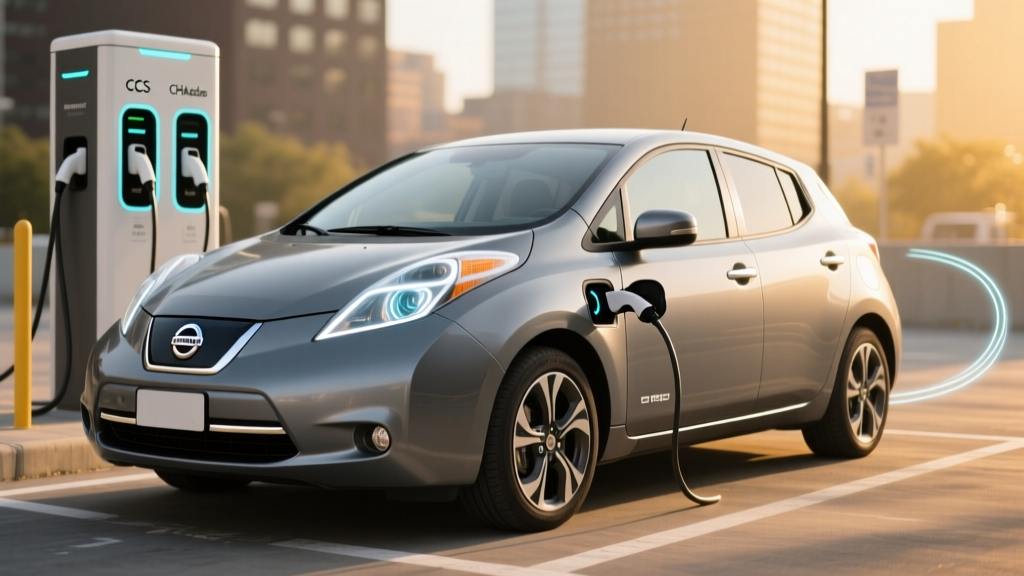
The 2016 Nissan Leaf was a pivotal year for Nissan's pioneering electric hatchback. It was the first model year to offer the upgraded 30 kWh battery pack alongside the carryover 24 kWh option, extending EPA-rated range from 84 to 107 miles. Nearly a decade later, the 2016 Leaf remains one of the most affordable entry points into EV ownership on the used market — but its air-cooled battery chemistry and CHAdeMO connector demand careful evaluation before you hand over cash.
This guide breaks down every spec that matters in 2026: real-world range after years of degradation, charging speeds on a network that has largely moved to NACS and CCS, battery health checks, and whether the 2016 Leaf still earns a spot in your driveway.
2016 Nissan Leaf Electric at a Glance: Core Specifications
| Spec | 24 kWh Pack (S trim) | 30 kWh Pack (SV / SL) |
|---|---|---|
| EPA Range | 84 miles | 107 miles |
| Battery Capacity (usable) | ~24 kWh | ~30 kWh |
| Battery Chemistry | NMC (laminated pouch cells) | NMC (laminated pouch cells) |
| Thermal Management | Passive air-cooled | Passive air-cooled |
| Motor Output | 80 kW (107 hp) | 80 kW (107 hp) |
| Torque | 187 lb-ft | 187 lb-ft |
| Drivetrain | FWD | FWD |
| 0–60 mph | ~11.5 seconds | ~11.5 seconds |
| EPA Efficiency (combined) | 114 MPGe (30 kWh/100 mi) | 112 MPGe (30 kWh/100 mi) |
| DC Fast Charge (CHAdeMO) | ~50 kW peak | ~50 kW peak |
| Level 2 Onboard Charger | 3.3 kW (6.6 kW optional) | 6.6 kW standard |
| Cargo Volume (rear seats up) | 24.0 cu ft | 24.0 cu ft |
| Cargo Volume (rear seats folded) | 30.0 cu ft | 30.0 cu ft |
| Original MSRP (before incentives) | $29,010 | $33,400 (SV) / $35,880 (SL) |
Source: EPA fueleconomy.gov
Real-World Range: What the EPA Sticker Doesn't Tell You
24 kWh pack: EPA 84 miles — expect 60–72 miles highway, 50–60 miles in freezing weather.
30 kWh pack: EPA 107 miles — expect 78–90 miles highway, 65–75 miles in freezing weather.
With battery degradation factored in (see below), subtract another 10–25% from these figures depending on pack health.
The 2016 Leaf's range was modest when new and has only shrunk with time. Nissan's NMC pouch cells lack active liquid thermal management — they rely on passive air cooling. This design choice means the battery degrades faster in hot climates and under frequent DC fast-charging, where heat buildup is significant.
On a 70°F day with a fully healthy 30 kWh pack, you might see 95 miles of mixed driving. Push 75 mph on the interstate and that drops to roughly 80 miles. In sub-30°F temperatures, expect a 30–40% range reduction due to cabin heating loads and reduced lithium-ion charge acceptance. The Leaf has no heat pump — it uses a resistive PTC heater that draws heavily from the traction battery.
The single biggest variable when buying a used 2016 Leaf is battery degradation. Nissan measures this through "capacity bars" on the dashboard instrument cluster. A new battery displays 12 bars. Most 2016 Leafs in 2026 show between 9 and 11 bars, translating to roughly 75–92% state of health (SoH). A 30 kWh pack at 9 bars effectively holds ~22–24 kWh — roughly matching a new 24 kWh Leaf. Always request a Leaf Spy Pro OBD-II reading before purchase for an exact SoH percentage.
Charging Speeds: CHAdeMO in a CCS/NACS World
The 2016 Leaf uses the CHAdeMO DC fast-charging standard and a J1772 inlet for Level 1 and Level 2 AC charging. This matters enormously in 2026 because the North American charging landscape has decisively shifted toward CCS1 and the Tesla NACS connector.
| Charging Level | Power (kW) | Rate / Time |
|---|---|---|
| Level 1 (120V household) | ~1.4 kW | ~4–5 miles per hour |
| Level 2 (240V, 3.3 kW onboard) | 3.3 kW | ~11 miles per hour |
| Level 2 (240V, 6.6 kW onboard) | 6.6 kW | ~22 miles per hour |
| DC Fast (CHAdeMO 50 kW) | ~50 kW peak | 0–80% in ~30 min (new battery) |
Several realities affect charging in 2026:
- CHAdeMO availability is shrinking. Electrify America stations are CCS-only. Some ChargePoint and EVgo locations still carry CHAdeMO connectors, but they are increasingly rare. Plan routes carefully.
- The 50 kW peak is rarely sustained. The Leaf's charge curve tapers sharply above 80% SoC. A 30–80% session on a 50 kW CHAdeMO station takes roughly 20–25 minutes with a healthy pack. Above 80%, speed drops to under 15 kW to protect the air-cooled cells.
- Heat throttling is real. Nissan's battery management system will reduce charge power if cell temperatures climb — a phenomenon owners call "Rapidgate." On a warm day after two consecutive DC fast charges, expect peak power to drop to 30–35 kW or lower.
- The 6.6 kW onboard charger is essential. The base S trim came with a 3.3 kW charger as standard. A full charge on 3.3 kW takes over 7 hours for the 24 kWh pack. If you're looking at an S trim, verify whether the optional 6.6 kW upgrade was installed — it cuts Level 2 time roughly in half.
For home charging, a standard 240V / 32A Level 2 wallbox (like a ChargePoint Home Flex or Emporia Vue) paired with the 6.6 kW onboard charger replenishes the 30 kWh pack in about 5 hours. That's practical overnight charging for daily commuting.
Performance, Ride, and Daily Usability
The 2016 Leaf's 80 kW (107 hp) AC synchronous motor delivers 187 lb-ft of instant torque to the front wheels. The 0–60 mph time of roughly 11.5 seconds is unhurried by modern EV standards — a 2026 Hyundai Ioniq 5 does it in about 5.1 seconds — but around town the Leaf feels responsive thanks to that immediate torque hit from a stoplight.
Top speed is electronically limited to approximately 90 mph. The regenerative braking system offers two modes: standard "D" mode with mild regen, and "B" mode with stronger regen that enables quasi-one-pedal driving in city traffic. It won't bring the car to a complete stop like modern one-pedal systems, but it reduces brake pedal use significantly.
Ride quality is comfortable and compliant. The 2,500-lb curb weight (light for an EV) means the suspension handles bumps well. Cabin noise is low at city speeds, though wind and tire noise become noticeable above 60 mph. The 114 MPGe combined rating (24 kWh) translates to roughly $0.04–$0.06 per mile on average U.S. electricity rates — a fraction of gasoline costs.
Interior space is surprisingly generous: 94.0 cu ft of passenger volume with 39.8 inches of front legroom and 33.3 inches rear. The 24.0 cu ft cargo area (30.0 cu ft with seats folded) beats most compact hatchbacks. The SL trim adds leather seats, a 7-inch touchscreen with navigation, a 360-degree Around View Monitor, and a quick-charge port.
Used Pricing and Federal Tax Credit Eligibility in 2026
The 2016 Nissan Leaf is exclusively available on the used market in 2026. Pricing varies significantly by mileage, condition, and — critically — battery health.
| Trim / Pack | Typical Price Range | Notes |
|---|---|---|
| S (24 kWh, 3.3 kW charger) | $5,500 – $7,500 | Lowest-cost EV on the market; check battery bars |
| SV (30 kWh, 6.6 kW charger) | $7,000 – $9,500 | Better range + faster L2 charging; best value |
| SL (30 kWh, fully loaded) | $8,500 – $11,000 | Leather, nav, 360° camera, Bose audio |
Does the 2016 Leaf Qualify for the Federal Used EV Tax Credit?
Yes — potentially. Under IRS §25E (the previously owned clean vehicle credit), eligible buyers can claim 30% of the sale price, up to $4,000, on a used 2016 Leaf purchased from a licensed dealer. Key requirements per IRS guidelines:
- Sale price cap: The dealer sale price must be $25,000 or less (virtually all 2016 Leafs qualify).
- Buyer income limits (2026): Modified AGI ≤ $75,000 (single) / $112,500 (head of household) / $150,000 (joint).
- Dealer sale required: Private-party sales do not qualify.
- First transfer since August 16, 2022: The vehicle must not have been resold after that date to a prior buyer who claimed the credit. Verify with the dealer.
- Minimum battery capacity: 7 kWh (the Leaf's 24/30 kWh pack easily clears this).
- Point-of-sale transfer: You can elect to transfer the credit to the dealer at purchase, reducing your out-of-pocket cost immediately.
Note: The §30D credit for new EVs does not apply here — the Leaf is no longer sold new. Do not confuse §30D (new) with §25E (used). Consult a tax professional for your specific eligibility.
A $7,500 SV-trim Leaf with a $4,000 point-of-sale credit effectively costs $3,500 — making it arguably the cheapest way to get into an EV in 2026.
Battery Longevity, Warranty, and Replacement Costs
Nissan's original battery warranty covered 8 years / 100,000 miles against capacity loss below 9 bars (out of 12). For a 2016 model, that factory warranty expired in 2024 at the latest. You are buying this car without battery warranty coverage unless the previous owner purchased an extended plan.
Degradation data from Leaf communities and fleet studies show:
- Average SoH at 8 years: 78–88% for 24 kWh packs; 80–90% for 30 kWh packs.
- Hot-climate penalty: Leafs in Arizona, Texas, and the Southeast typically show 2–4 more bars of degradation than identical cars in the Pacific Northwest or Northeast.
- DC fast-charge impact: Owners who relied primarily on CHAdeMO fast charging show measurably higher degradation than those who primarily used Level 2.
If the battery needs replacement, expect to pay $5,500–$8,500 for a refurbished or new Nissan pack (parts and labor) through a dealer. Third-party options from companies like ReJoule or independent EV shops may offer slightly lower pricing. Given that a used 2016 Leaf costs $5,500–$11,000, a battery replacement can approach or exceed the vehicle's value — making a pre-purchase battery health check absolutely essential.
Pros, Cons, and the Verdict
Pros
- Extremely affordable entry into EV ownership ($3,500 after tax credit)
- Low operating cost (~$0.05/mile on electricity)
- Comfortable ride, surprisingly roomy cargo area (24 cu ft)
- Simple, proven powertrain with minimal maintenance needs
- Eligible for up to $4,000 used EV tax credit (§25E)
- 6.6 kW onboard charger (SV/SL) enables practical overnight charging
Cons
- Range is severely limited — 60–90 real-world miles with degradation
- CHAdeMO fast-charging standard is disappearing from public networks
- No active thermal management — battery degrades faster in heat
- No heat pump — winter range loss of 30–40%
- Factory battery warranty has expired
- 0–60 in 11.5 seconds; not suited for highway merging confidence
- No modern ADAS features (no lane-keep, no adaptive cruise)
Who the 2016 Nissan Leaf Electric Suits Best
Buy it if: You need a dirt-cheap second car for a sub-30-mile daily commute, have reliable home Level 2 charging, live in a moderate climate, and can accept that road trips are not in this car's future. It's an ideal "grocery getter" or campus commuter where the low purchase price and near-zero maintenance outweigh the range limitations.
Skip it if: You need highway-capable range, live in a very hot climate, lack home charging, or want DC fast-charging infrastructure that will remain viable through 2030. Consider a used Chevrolet Bolt EV (238 EPA miles, CCS, liquid-cooled battery) for $2,000–$4,000 more — it solves nearly every Leaf weakness.
Frequently Asked Questions
What is the real-world range of the 2016 Nissan Leaf?
With a healthy battery in moderate temperatures, expect 60–72 miles (24 kWh) or 78–90 miles (30 kWh) in mixed driving. Highway speeds and cold weather reduce these figures by 15–40%. Battery degradation in a 2016 model typically shaves another 10–25% off these numbers.
How fast does the 2016 Leaf charge at home and on DC?
On a 240V Level 2 charger with the 6.6 kW onboard option, expect roughly 22 miles of range per hour — a full charge in about 5 hours. On a CHAdeMO DC fast charger, peak power is ~50 kW, delivering a 30–80% charge in roughly 20–25 minutes under ideal conditions. Real-world DC charging is often slower due to heat throttling and tapering above 80%.
Does the 2016 Nissan Leaf qualify for any tax credit in 2026?
It can qualify for the IRS §25E used clean vehicle credit — up to $4,000 or 30% of the sale price (whichever is less) — if purchased from a dealer for $25,000 or less, and if the buyer meets income limits ($75K single / $150K joint). It does not qualify for the §30D new-vehicle credit. Check IRS §25E details and consult a tax professional.
Is the 2016 Leaf worth buying vs. a used Chevy Bolt or Fiat 500e?
The Leaf wins on absolute lowest price and cargo space. The Chevy Bolt EV (2017+) wins decisively on range (238 mi EPA), liquid-cooled battery longevity, and CCS charging compatibility. The Fiat 500e (2013–2019) is similarly range-limited (87 mi EPA) and offers less cargo room. If your budget can stretch to $9,000–$13,000, the Bolt is a meaningfully better long-term used EV.
Can I still find CHAdeMO chargers in 2026?
Yes, but availability is declining. Some ChargePoint, EVgo, and independent stations still maintain CHAdeMO connectors. Tesla Superchargers, Electrify America, and most new installations use NACS or CCS exclusively. Use apps like PlugShare to verify CHAdeMO availability along your routes before relying on DC fast charging.
What should I check before buying a used 2016 Leaf?
The single most important check is battery health. Use a Leaf Spy Pro dongle ($20–$30) with an OBD-II adapter to read exact State of Health (SoH) percentage, capacity bars, and cell voltage variance. Also verify: whether the 3.3 kW or 6.6 kW onboard charger is installed, the condition of the CHAdeMO port latch, and whether any battery replacement or module swap has been performed.