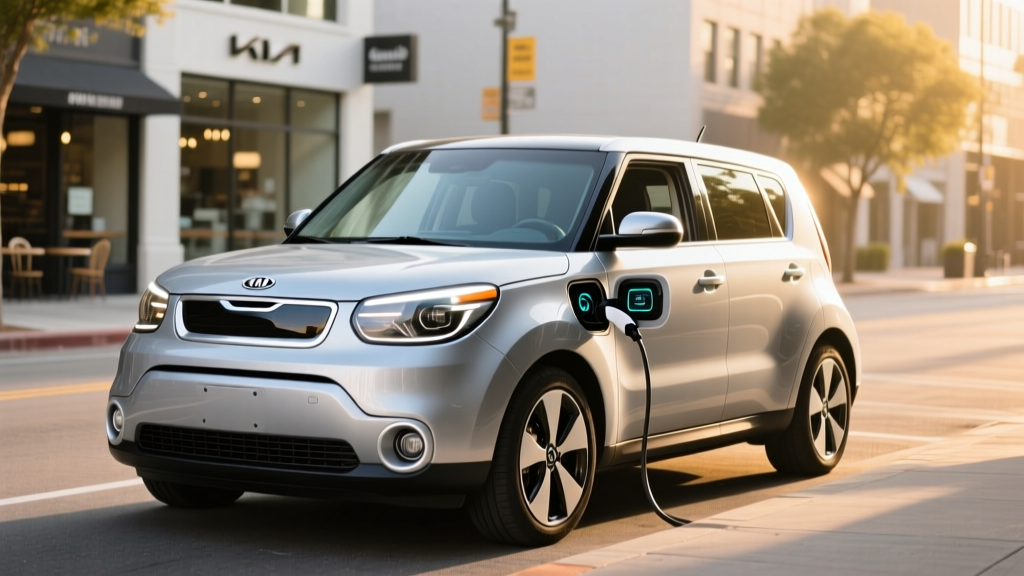
Quick Verdict: Is the 2016 Kia Soul EV Worth Buying Used in 2026?
The 2016 Kia Soul EV is a viable budget EV for short urban commutes under 60 miles round-trip with reliable home Level 2 charging. With an original EPA range of 93 miles, expect 65–80 real-world miles in 2026 due to battery degradation on a now-decade-old pack. Used prices hover between $6,000–$9,500. It's strictly a second car or city runabout — not a road-trip vehicle. The CHAdeMO DC fast-charging standard is increasingly unsupported at new public stations, which limits its long-distance utility.
Range, Battery, and What Degradation Really Looks Like
The 2016 Soul EV came equipped with a 27 kWh usable lithium-ion polymer battery (NMC chemistry, supplied by SK Innovation). When new, the EPA rated it at 93 miles of combined range with an efficiency of 105 MPGe combined (city: 120 / highway: 92), according to fueleconomy.gov.
That was 2016. In 2026, any surviving pack has endured roughly 10 years of calendar aging plus whatever charge cycles the previous owner put it through. Lithium-ion packs degrade from both use and time, and the Soul EV's air-cooled thermal management system is less effective at preserving long-term State of Health (SoH) compared to liquid-cooled systems found in the Chevy Bolt or Tesla Model 3.
Real-World Range Expectations (2026 Used Pack)
| Condition | Estimated Range |
|---|---|
| Mild weather, city driving (SoH ~80%) | 70–80 miles |
| Highway (65–70 mph), mild weather | 60–70 miles |
| Cold weather (below 32°F), mixed driving | 45–55 miles |
| Cold weather, highway, heater on | 35–50 miles |
Cold weather hits older, smaller packs especially hard. The Soul EV uses a resistive PTC heater rather than a heat pump, which draws significant energy from the battery in winter.
Before buying: Ask the seller for a battery State of Health reading. A Kia dealership can pull this via diagnostic scan, or an OBD-II reader with EV-compatible software (like Soul EV Spy via Torque Pro) can give you a rough SoH estimate. A pack below 75% SoH means you're working with roughly 50 miles of real-world range in mixed conditions — a significant practical limitation.
Charging Speeds: Level 1, Level 2, and the CHAdeMO Problem
The 2016 Soul EV supports three charging methods. Here's what each delivers:
| Charging Level | Connector | Max Power | Charge Time (Empty–Full) | Miles Added/Hour |
|---|---|---|---|---|
| Level 1 (120V) | J1772 | ~1.4 kW | ~24 hours | ~4–5 miles |
| Level 2 (240V) | J1772 | 6.6 kW | ~4.5–5 hours | ~22–25 miles |
| DC Fast Charge | CHAdeMO | ~50 kW (peak) | 10–80% in ~33 min | N/A (session-based) |
The CHAdeMO issue is the biggest ownership friction point in 2026. When this car launched, CHAdeMO was one of two dominant DC fast-charging standards (alongside CCS1). Today, the North American market has overwhelmingly consolidated around NACS (Tesla's connector, now adopted by Ford, GM, Hyundai, Rivian, and others) and CCS1. Most new Electrify America, EVgo, and ChargePoint stations prioritize CCS and NACS. CHAdeMO connectors are increasingly scarce at newer installations.
This doesn't make DC fast charging impossible — older stations still have CHAdeMO plugs, and some networks maintain legacy connectors. But your ability to road-trip is constrained by station availability. Use PlugShare or A Better Routeplanner to map CHAdeMO stations along any planned route before relying on this car for longer trips.
Home charging is essential. At Level 1 (a standard 120V outlet), you'll recover only about 4–5 miles per hour of charging. That means a full replenishment takes roughly 24 hours — impractical for daily use if you drive more than 20 miles. A Level 2 home charger (240V, 30–40 amp circuit) is practically mandatory, recovering the full battery in about 5 hours overnight. Expect to spend $500–$1,500 on Level 2 equipment and electrician installation, depending on panel proximity and whether your home needs a panel upgrade.
2016 Soul EV vs. Gas Cars and Modern EVs: The Cost Reality
How does a used 2016 Soul EV stack up economically against a comparable gas car or a modern used EV? Let's run the numbers.
| Factor | 2016 Kia Soul EV (Used) | 2016 Kia Soul Gas (Used) | 2020 Chevy Bolt EV (Used) |
|---|---|---|---|
| Purchase Price (2026) | $6,000–$9,500 | $8,000–$12,000 | $12,000–$16,000 |
| EPA Range | 93 mi (new); ~65–80 mi now | ~380 mi (gas tank) | 259 mi (may be ~220–240 used) |
| Fuel/Energy Cost per Mile | ~$0.04–$0.06 (home L2) | ~$0.12–$0.16 (gas) | ~$0.04–$0.06 (home L2) |
| Annual "Fuel" (12k mi/yr) | $480–$720 | $1,440–$1,920 | $480–$720 |
| Annual Maintenance | ~$200–$400 | ~$600–$1,000 | ~$200–$400 |
| Federal Tax Credit | Eligible for used EV credit (§25E): up to $4,000 | None | Eligible for §25E: up to $4,000 |
| Insurance (avg annual) | ~$1,100–$1,400 | ~$1,000–$1,300 | ~$1,200–$1,600 |
The Used EV Tax Credit (§25E)
Here's where the 2016 Soul EV gets interesting for budget buyers. Under the Inflation Reduction Act's §25E used EV credit, you may qualify for 30% of the sale price, up to $4,000, if specific conditions are met. Per IRS guidelines, key requirements include:
- Sale price must be $25,000 or less (the Soul EV easily qualifies)
- Buyer income must be under $75,000 single / $150,000 married filing jointly
- The vehicle must be at least 2 model years old (2016 qualifies)
- Must be purchased from a licensed dealer (private-party sales don't qualify)
- You can only claim this credit once every 3 years
- Point-of-sale transfer is available — the dealer applies the credit as a discount at purchase
On an $8,000 Soul EV from a dealer, the 30% credit equals $2,400 off — effectively reducing your net cost to around $5,600. Consult a tax professional to confirm your eligibility.
Performance, Interior, and Daily Practicality
The 2016 Soul EV produces 109 horsepower and 210 lb-ft of torque from its front-mounted electric motor. The 0–60 mph time is approximately 11.2 seconds — leisurely by modern EV standards but adequate for city merging. The instant torque delivery makes it feel peppier around town than the 0–60 figure suggests.
Inside, you get the same quirky, boxy utility that made the gas Soul popular: 24.2 cubic feet of cargo space behind the rear seats and 49.5 cu ft with them folded. The EV variant loses a small amount of cargo volume to the battery pack under the floor, but the tall roofline keeps it practical for hauling bulky items.
Tech includes a 8-inch touchscreen with navigation, UVO telematics (now rebranded Kia Connect, though 2016-era connectivity may be degraded or discontinued), heated and ventilated front seats on the EX trim, and a heat-pump-free HVAC system. The instrument cluster features a dedicated EV display showing SoC, estimated range, and energy flow.
No advanced driver-assist features are present. The 2016 Soul EV predates Kia's broader ADAS rollout — expect basic stability control and a backup camera but no lane-keeping, adaptive cruise, or automatic emergency braking. This is an SAE Level 0 vehicle for automation.
Ownership Costs: 5-Year Breakdown
Here's what owning a 2016 Soul EV actually costs over five years, assuming 12,000 miles per year and home Level 2 charging at $0.14/kWh national average:
| Cost Category | 5-Year Total | Notes |
|---|---|---|
| Purchase (dealer, after §25E credit) | $5,600–$7,100 | Assumes $8,000 sticker, $2,400 credit |
| Home Level 2 Charger Install | $500–$1,500 | One-time cost; varies by panel/circuit |
| Electricity (60,000 miles total) | $2,400–$3,600 | ~27 kWh per full charge, ~250 charges |
| Maintenance | $1,000–$2,000 | Tires, cabin filter, brake fluid, wipers; no oil changes |
| Insurance | $5,500–$7,000 | Varies by state and driver profile |
| Estimated Battery Replacement | $0–$8,000 | Only if pack fails out of warranty; see below |
| Total (without battery replacement) | $15,000–$21,200 | Over 5 years, 60,000 miles |
Battery Warranty Status
Kia originally backed the Soul EV's battery with a 10-year/100,000-mile warranty covering capacity loss below approximately 70% SoH. For a 2016 model, this warranty expired in 2026 for most vehicles. If the pack degrades significantly after purchase, replacement costs range from $5,000–$8,000 for a refurbished or aftermarket pack — which can approach or exceed the car's value. This is the single biggest financial risk.
Common Misconceptions About the 2016 Soul EV
| Myth | Fact |
|---|---|
| "It qualifies for the full $7,500 federal tax credit." | The §30D new EV credit applies only to new vehicles. Used buyers qualify for §25E: up to $4,000, with income and dealer-sale requirements. |
| "93 miles of range is enough for anyone." | 93 miles was the EPA sticker when new. A 2026-used pack at ~75–80% SoH delivers 65–80 real miles. Cold weather and highway driving cut that further. |
| "I can charge at any public fast charger." | The Soul EV uses CHAdeMO, not CCS or NACS. Many newer stations no longer include CHAdeMO connectors. Verify station compatibility before relying on public DC charging. |
| "EVs don't need maintenance." | Tires wear faster on EVs due to instant torque and extra weight. Cabin filters, brake fluid, coolant, and 12V auxiliary batteries still need service. But you'll skip oil changes, spark plugs, and transmission fluid. |
| "The battery will definitely need replacing soon." | Not necessarily. Many 10-year-old packs retain 75–85% SoH if well cared for (avoiding frequent DC fast charging and extreme SoC storage). But risk is real — get an SoH reading before purchase. |
Decision Framework: Should You Buy the 2016 Soul EV?
Buy the 2016 Soul EV If:
- Your daily round-trip commute is under 60 miles, even accounting for degradation and weather
- You have (or can install) a Level 2 home charger — this car is impractical on Level 1 alone for daily use
- This is a second vehicle for errands and commuting, not your only car
- You live in a mild climate — cold weather severely limits an already small battery
- You can source one from a licensed dealer to qualify for the §25E used EV credit
- You've confirmed the battery SoH is above 75% via diagnostic scan
- You want the cheapest possible entry into EV ownership with minimal depreciation risk (it's already depreciated)
Look Elsewhere If:
- You need 100+ miles of reliable daily range in all weather conditions
- You don't have access to home or workplace Level 2 charging
- You plan to road-trip — CHAdeMO infrastructure is shrinking
- This will be your only vehicle
- You live in a region with harsh winters where 40–50 miles of cold-weather range won't suffice
- The battery SoH reading comes in below 70%
Consider Instead:
- 2017–2019 Chevy Bolt EV (used, $10,000–$15,000): 238-mile EPA range, CCS charging, liquid-cooled battery with better degradation profile
- 2018–2020 Nissan Leaf (60 kWh) (used, $10,000–$14,000): 226-mile range, though also air-cooled and CHAdeMO-dependent
- Toyota Prius (used hybrid): If range and charging access are dealbreakers, a conventional hybrid eliminates plug-in dependency while delivering 50+ MPG
Frequently Asked Questions
What is the real-world range of a 2016 Kia Soul EV in 2026?
Expect 65–80 miles in mild conditions with a pack at roughly 80% State of Health. Cold weather and highway speeds can drop this to 40–55 miles. The original 93-mile EPA rating applied to a new battery.
Can I charge a 2016 Soul EV at a Tesla Supercharger?
No. The Soul EV uses a J1772 connector for Level 1/2 and CHAdeMO for DC fast charging. Tesla Superchargers use NACS (or CCS with Tesla's Magic Dock at select stations). There is no reliable adapter from CHAdeMO to NACS or CCS for DC fast charging.
Is the 2016 Soul EV eligible for any federal tax credit?
Not the $7,500 new-vehicle credit (§30D). However, it may qualify for the §25E used clean vehicle credit: 30% of the sale price up to $4,000, provided the sale price is under $25,000, you meet income thresholds, and you purchase from a licensed dealer. Consult a tax professional for your situation.
How much does it cost to charge a 2016 Soul EV at home?
A full charge of the ~27 kWh battery at the national average of $0.14/kWh costs approximately $3.78. At 3.5–4 miles per kWh efficiency, that's roughly $0.04–$0.05 per mile — compared to $0.12–$0.16 per mile for a gasoline car at current fuel prices.
Should I be worried about the battery on a 10-year-old EV?
Battery degradation is the primary risk with any older EV. The Soul EV's air-cooled thermal management is less protective than liquid-cooled systems. However, many packs retain 75–85% SoH at the 10-year mark if the previous owner avoided habitual DC fast charging and extreme states of charge. Always verify SoH before purchasing. Budget for the possibility of a $5,000–$8,000 replacement if the pack fails outside warranty.
What should a first-time EV buyer know about the 2016 Soul EV?
Understand that this is a short-range, city-oriented EV with a shrinking fast-charge network (CHAdeMO). Home Level 2 charging is practically mandatory. The purchase price is low, and energy costs are minimal, but you're trading range and charging convenience for that affordability. If your lifestyle fits within its limits, it's one of the cheapest ways to drive electric. If you need flexibility, spend more on a Bolt EV or consider a hybrid.