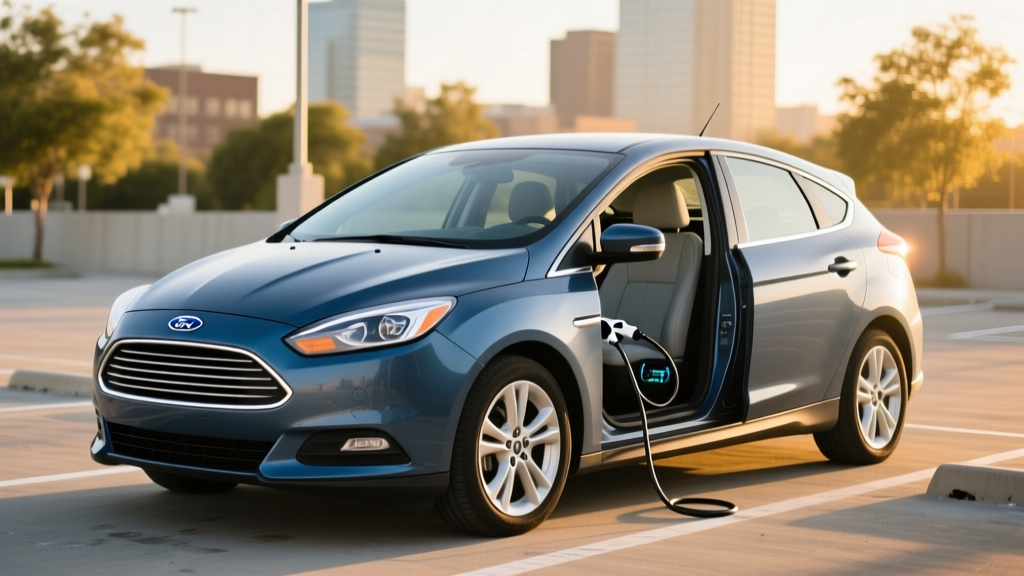
Quick Answer: Should You Buy a 2016 Ford Focus Electric in 2026?
The 2016 Ford Focus Electric delivers just 76 miles of EPA-estimated range from a 23 kWh liquid-cooled lithium-ion battery (NMC chemistry). With DC fast charging limited to roughly 50 kW via CHAdeMO and no modern ADAS suite, it is strictly a local-commuter and second-car EV. Used prices typically range from $5,000–$8,500 depending on mileage and battery State of Health (SoH). It makes sense only if you have reliable Level 2 home charging, a short commute (under 30 miles round-trip), and a second vehicle for longer trips. Anyone needing highway road-trip capability or cold-weather reliability should look elsewhere.
What You're Actually Getting: 2016 Focus Electric Specs
Ford discontinued the Focus Electric after the 2018 model year, so the 2016 version represents the mid-cycle iteration of Ford's first mass-market battery-electric vehicle. It shares the global Ford Focus hatchback platform, meaning interior space and driving dynamics are familiar — but the electric powertrain is a product of early-2010s EV engineering.
| Specification | 2016 Ford Focus Electric |
|---|---|
| EPA Range | 76 miles |
| Battery Capacity (usable) | 23 kWh (NMC chemistry, liquid-cooled) |
| Motor Output | 107 kW (143 hp) / 184 lb-ft torque |
| 0–60 mph | ~8.1 seconds |
| EPA Efficiency | 105 MPGe combined (32 kWh/100 mi) |
| DC Fast Charge (CHAdeMO) | ~50 kW peak; 0–80% in ~36 min |
| Level 2 AC Charging | 6.6 kW onboard charger; 0–100% in ~3.5 hours |
| Level 1 (120V) Charging | ~1.2 kW; ~19+ hours for full charge |
| Cargo Volume | 14.5 cu ft (reduced by battery packaging) |
| Original MSRP (2016) | ~$29,170 (before federal credit) |
| Typical Used Price (2026) | $5,000–$8,500 |
| Battery Warranty (original) | 8 years / 100,000 miles (expired or expiring) |
The 23 kWh battery pack was modest even in 2016 — the contemporaneous Nissan Leaf offered 24 kWh (and later 30 kWh), while the Chevrolet Bolt EV, arriving that same model year, leapfrogged to 60 kWh and 238 miles of range. Ford's decision to liquid-cool the pack, however, gives the Focus Electric a thermal-management advantage over the passively air-cooled Leaf, which suffers more pronounced degradation in hot climates.
Real-World Range: What 76 EPA Miles Means in Practice
EPA vs. Real-World Range Expectations
EPA sticker: 76 miles
Typical mixed driving (55–70°F): 65–75 miles
Highway-heavy (70+ mph): 55–65 miles
Cold weather (below 32°F, cabin heat on): 45–55 miles
The 76-mile EPA figure was measured under ideal conditions. In real-world ownership, expect to plan around 55–70 usable miles in moderate weather. Cold weather hits this small battery especially hard: resistive cabin heating draws directly from the 23 kWh pack, and lithium-ion cells lose charge acceptance at low temperatures. Owners in northern climates have reported effective winter range dropping to 50 miles or less on days below 20°F.
Efficiency of 32 kWh per 100 miles (per fueleconomy.gov) is respectable — comparable to a modern Hyundai Kona Electric — but efficiency alone can't overcome a small battery. The practical takeaway: this car works for commutes under 25 miles each way, with a margin for errands. Anything beyond that requires mid-day charging or a second vehicle.
Charging Reality: CHAdeMO, Speeds, and the 2026 Network Problem
The 2016 Focus Electric uses the CHAdeMO DC fast-charging standard and a J1772 inlet for Level 1 and Level 2 AC. This is a critical ownership consideration in 2026.
| Charging Level | Connector | Max Power | Miles Added per Hour | Full Charge Time |
|---|---|---|---|---|
| Level 1 (120V household) | J1772 | ~1.2 kW | ~4 mi/hr | ~19+ hours |
| Level 2 (240V home/public) | J1772 | 6.6 kW | ~22 mi/hr | ~3.5 hours |
| DC Fast Charge | CHAdeMO | ~50 kW peak | ~150 mi/hr (to 80%) | 0–80% in ~36 min |
The CHAdeMO problem: By 2026, the North American charging infrastructure has overwhelmingly standardized on NACS (Tesla's connector, now SAE J3400) and, to a lesser extent, CCS1. Electrify America, EVgo, and ChargePoint have been deprioritizing CHAdeMO stalls at new installations. While existing CHAdeMO stations still operate, network expansion favors NACS and CCS. A Focus Electric owner relying on public DC fast charging will find fewer compatible stalls over time.
Level 2 is where this car lives. The 6.6 kW onboard charger is adequate for overnight replenishment. A full charge in about 3.5 hours on a home Level 2 station (like a ChargePoint Home Flex or Emporia Level 2) means you wake up to a full 76-mile buffer every morning. Home Level 2 installation typically costs $800–$2,000 depending on electrical panel capacity and conduit run — a worthwhile investment if you plan to keep any EV long-term.
Preconditioning matters: The Focus Electric supports cabin preconditioning while plugged in, warming or cooling the interior on grid power before departure. Use it — it preserves battery charge for actual driving rather than climate control.
EV vs. Gas: Does the Focus Electric Save You Money?
At used prices of $5,000–$8,500, the 2016 Focus Electric is one of the cheapest ways into EV ownership. But savings depend entirely on your driving pattern and electricity rate.
| Cost Factor | 2016 Focus Electric (Used) | 2016 Ford Focus Gas (2.0L, 30 MPG combined) |
|---|---|---|
| Purchase Price (2026 used) | $5,000–$8,500 | $6,000–$10,000 |
| Fuel/Energy Cost per Mile | ~$0.04–$0.06 (at $0.13–$0.18/kWh) | ~$0.10–$0.12 (at $3.00–$3.50/gal) |
| Annual Fuel Cost (10,000 mi/yr) | $400–$600 | $1,000–$1,200 |
| Annual Maintenance | ~$200–$400 (tires, cabin filter, brake fluid) | ~$600–$900 (oil, filters, brakes, spark plugs) |
| Insurance (annual avg.) | $900–$1,300 | $800–$1,100 |
| 5-Year Fuel Savings vs. Gas | ~$3,000–$4,000 saved on energy | |
The math favors the EV on operating costs. At a national average residential electricity rate of roughly $0.16/kWh (EIA data), charging the 23 kWh battery from empty costs about $3.70. That's for 76 miles — roughly the cost of a gallon of gas for less than a third of the distance.
However, the Focus Electric's range limitation means you'll likely still need a gas car (or occasional rental) for road trips. Factor in that second-car cost when evaluating total savings. For a one-car household, a used Chevrolet Bolt EV (238-mile range, typically $9,000–$13,000 used) offers dramatically more versatility for only slightly more upfront.
Battery Health: What to Check Before Buying
The 2016 Focus Electric is now 10 years old. Lithium-ion batteries degrade with time, charge cycles, and temperature exposure. Ford's original battery warranty — 8 years/100,000 miles against capacity loss below 70% — has expired or is expiring for most 2016 examples.
Expected degradation: NMC packs from this era typically lose 10–20% of original capacity after 8–10 years, depending on climate and charging habits. A Focus Electric with 15% degradation effectively has ~65 miles of range instead of 76. In cold weather, that drops further.
Before purchasing, demand:
- OBD-II battery health scan: Use a tool like Leaf Spy (compatible with Focus Electric via FORScan) to read actual battery capacity vs. original. Look for State of Health (SoH) above 85%.
- Full charge test: Charge to 100% and note the displayed estimated range. If it reads below 60 miles, the pack has degraded significantly.
- Charging history: Frequent DC fast charging and habitual 100% SoC storage accelerate degradation. Ask the seller about charging habits.
- Climate history: A car from Phoenix or Las Vegas will typically show more heat-related degradation than one from the Pacific Northwest.
Battery replacement cost: A new or refurbished Focus Electric battery pack, if available, would cost an estimated $6,000–$10,000 including labor — likely exceeding the car's value. This makes a thorough pre-purchase battery inspection essential. If the SoH is below 80%, walk away unless the price reflects an imminent pack replacement.
Common Misconceptions About the 2016 Focus Electric
| Myth | Fact |
|---|---|
| "It qualifies for the $7,500 federal tax credit." | The §30D credit applies only to new EV purchases. Used EVs may qualify for the 4% used-EV credit (up to $4,000) under IRS rules, but only if purchased from a licensed dealer, priced at $25,000 or less, and buyer income is within caps ($75K single / $150K joint). The Focus Electric easily meets the price cap, but income and dealer-sale requirements apply. |
| "76 miles of range is enough for anyone." | The average American drives ~37 miles per day (FHWA data), but that average masks wide variation. Commuters with 40+ mile one-way trips, parents running multiple errands, or anyone in cold weather will find 76 miles insufficient. |
| "CHAdeMO charging works everywhere." | CHAdeMO infrastructure is shrinking relative to NACS and CCS in North America. Check PlugShare or your preferred network app for CHAdeMO station density in your area before committing. |
| "EVs need no maintenance at all." | While EVs eliminate oil changes and spark plugs, the Focus Electric still requires tire rotations, cabin air filter replacement, brake fluid checks, coolant service for the battery thermal-management system, and eventual suspension and brake component wear. |
| "The liquid-cooled battery means no degradation." | Liquid cooling slows degradation compared to passive air cooling (like the first-gen Leaf), but does not prevent it. Calendar aging — degradation from time alone — affects all lithium-ion cells regardless of thermal management. |
Decision Framework: Is the 2016 Focus Electric Right for You?
Choose the 2016 Focus Electric if:
- Your daily round-trip commute is under 40 miles
- You have (or can install) a Level 2 home charger on a 240V circuit
- You live in a moderate climate (rarely below 25°F)
- You already own or have access to a gas/hybrid vehicle for longer trips
- Your budget is strictly under $8,000 for an EV
- You can verify battery SoH above 85% before purchase
Look elsewhere if:
- Your commute exceeds 35 miles one way
- You live in a cold-winter climate and this would be your only car
- You rely on public DC fast charging (CHAdeMO access is declining)
- You need cargo space — the battery intrudes into the hatch area, reducing volume to 14.5 cu ft
- You want modern driver-assist features (the 2016 Focus Electric lacks adaptive cruise, lane-keeping, or automatic emergency braking)
- You want a car you can take on road trips without careful route planning
Better alternatives in the $8,000–$15,000 used-EV range (2026):
- 2017–2018 Chevrolet Bolt EV: 238-mile EPA range, 60 kWh pack, CCS fast charging, far more practical. Used prices: $9,000–$13,000.
- 2018–2019 Nissan Leaf (40 kWh): 151-mile EPA range, widely available, but still air-cooled. Used prices: $8,000–$12,000.
- 2019–2020 Hyundai Kona Electric: 258-mile EPA range, 64 kWh pack, CCS charging. Used prices: $12,000–$16,000.
Frequently Asked Questions
Can I charge the 2016 Focus Electric at a Tesla Supercharger?
Not directly. The Focus Electric uses CHAdeMO for DC fast charging and J1772 for AC. Tesla Superchargers use the NACS connector. While NACS-to-CHAdeMO adapters exist (such as those from Setec), they are expensive ($200–$400), not universally reliable, and may void warranties. For practical purposes, plan to use Electrify America, EVgo, or ChargePoint stations that still maintain CHAdeMO connectors.
What is the real cost of ownership over 5 years?
Assuming a $7,000 purchase, 10,000 miles/year, home Level 2 charging at $0.16/kWh, and standard insurance: expect roughly $500/year in electricity, $300/year in maintenance, $1,100/year in insurance, and minimal depreciation (the car has already depreciated heavily). Total 5-year operating cost: approximately $9,500–$10,000 including purchase price. A comparable gas Focus would cost roughly $12,000–$14,000 over the same period, with the gap driven primarily by fuel savings.
Does the 2016 Focus Electric have regenerative braking?
Yes, but it's modest. The Focus Electric offers regenerative braking that recovers energy during deceleration, but it does not provide true one-pedal driving like a Nissan Leaf's e-Pedal or a Chevrolet Bolt's one-pedal mode. You'll still use the friction brake pedal regularly. Brake pad wear is reduced compared to a gas car, but not eliminated.
Is the battery warranty still valid on a 2016 model?
Ford's original EV battery warranty covers 8 years or 100,000 miles, whichever comes first. For a 2016 model, that warranty expires in 2024 at the latest. As of 2026, virtually all 2016 Focus Electric vehicles are out of factory battery warranty. Any battery failure or significant capacity loss is an out-of-pocket expense. This makes a pre-purchase battery health check non-negotiable.
How does cold weather affect the Focus Electric's range?
Cold temperatures reduce lithium-ion cell efficiency and increase energy demand for cabin heating (which uses a resistive heater, not a more efficient heat pump). Expect 25–40% range loss in sustained temperatures below 32°F. A car rated at 76 miles EPA may deliver only 45–55 miles in January in Chicago or Minneapolis. Preconditioning the cabin while plugged in helps, but the small battery offers little buffer. This is the single biggest practical limitation for northern-climate buyers.
Is the 2016 Focus Electric safe?
The 2016 Ford Focus (gas version) earned an IIHS Top Safety Pick rating when equipped with optional front crash prevention. However, the Focus Electric was not crash-tested separately by IIHS or NHTSA in significant volume. It includes standard stability control, antilock brakes, and six airbags, but lacks the automatic emergency braking, lane-departure warning, and blind-spot monitoring that became common in later model years. By 2026 standards, its active-safety suite is dated.
Bottom Line: A Niche Used EV for the Right Buyer
The 2016 Ford Focus Electric is a relic of early mainstream EV adoption — a competent city commuter hamstrung by a small battery and a dying fast-charge standard. At $5,000–$8,500, it's an inexpensive entry into electric driving, and its liquid-cooled NMC pack has aged better than many contemporaries. But 76 miles of EPA range (often less in reality) and declining CHAdeMO infrastructure make it a strict second-car proposition. Verify battery SoH before purchase, install a Level 2 home charger, and know your commute cold before signing the papers. For a few thousand dollars more, a used Bolt EV or Kona Electric eliminates most of the compromises.