Quick Verdict: Is Leasing the 2025 Kia EV6 the Smartest Move?
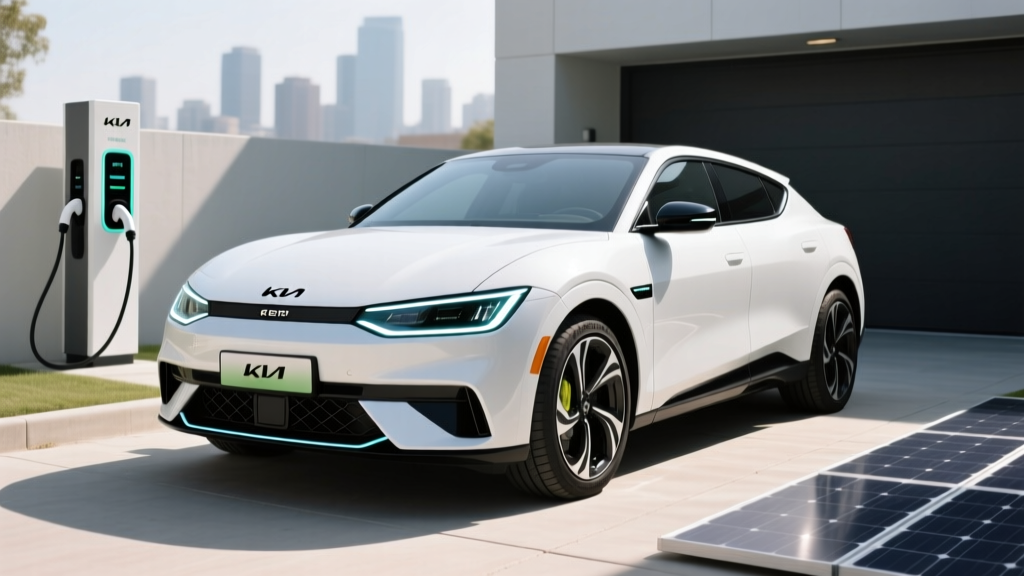
The 2025 Kia EV6 remains one of the most well-rounded electric crossovers on the market, pairing an 800V architecture with up to 310 miles of EPA-estimated range. But for many buyers, the real question isn't whether the EV6 is a good car — it's whether the math works. A 2025 Kia EV6 lease can be an attractive way to access this technology without committing to long-term depreciation risk, while still capturing the $7,500 federal EV tax credit through the point-of-sale lease loophole. This guide breaks down exactly what ownership costs over five years, who qualifies for incentives, and where the hidden savings — and hidden costs — actually live.
| Base MSRP (Light Wind RWD) | $42,900 |
| EPA Range (Wind RWD) | 310 mi (real-world: ~260–280 mi highway) |
| Battery | 77.4 kWh usable, NMC chemistry |
| Peak DC Charge Rate | 240 kW (10–80% in ~18 min) |
| Level 2 Charge Rate | 10.9 kW (7+ hrs 10–100%) |
| 0–60 mph (GT-Line AWD) | 4.5 seconds / 325 HP |
| MPGe (Wind RWD) | 134 MPGe combined |
| Battery Warranty | 10 years / 100,000 miles |
The Lease Loophole: Capturing the $7,500 Federal Tax Credit
One of the most compelling reasons to consider a 2025 Kia EV6 lease rather than a purchase is the so-called "lease loophole" under IRS §30D. Because the EV6 is manufactured in South Korea, it does not meet the North American final-assembly requirement for the federal clean vehicle credit when purchased outright. However, when leased through a dealership, the leasing company (the legal owner) can claim the $7,500 commercial clean vehicle credit under §45W and pass that savings to you as a capitalized-cost reduction on the lease.
- Income caps (purchase only): $150,000 single / $225,000 head of household / $300,000 joint filers — does NOT apply to leases
- MSRP caps (purchase only): $80,000 for SUVs/trucks/vans, $55,000 for sedans — does NOT apply to leases
- North American assembly (purchase only): Required — EV6 is built in Korea, so purchase doesn't qualify
- Battery sourcing / critical minerals: Must meet threshold percentages — does NOT apply to §45W lease credit
- Point-of-sale transfer: Available on both purchase credits and lease pass-throughs, reducing your upfront cost at signing
- Lease-specific: The $7,500 credit goes to the lessor; confirm in writing that the dealer applies it as a cap-cost reduction
Source: IRS.gov — Clean Vehicle Credits. Rules subject to change. Consult a tax professional for your specific situation.
This is a critical distinction. Many buyers assume the EV6 doesn't qualify for any federal incentive. It doesn't qualify for the §30D purchase credit — but the lease pathway through §45W is fully legitimate and widely used. Always verify with your dealer that the $7,500 is explicitly reflected in the lease terms as a cap-cost reduction, not buried in the money factor.
5-Year Total Cost of Ownership: EV6 vs. Comparable Gas Crossover
To understand the true economics of a 2025 Kia EV6 lease or purchase, we need to look beyond the sticker price. Here's a five-year ownership projection comparing the EV6 Wind RWD (MSRP $45,600) against a similarly equipped gas crossover like the Hyundai Tucson Limited AWD (~$38,000 MSRP).
| Category | 2025 Kia EV6 Wind RWD | Gas Crossover (AWD) |
|---|---|---|
| Purchase / Lease Price | $45,600 | $38,000 |
| Federal Tax Credit (lease) | −$7,500 | $0 |
| Effective Vehicle Cost | $38,100 | $38,000 |
| Fuel / Electricity (5 yr, 60k mi) | $3,240 | $8,100 |
| Maintenance (5 yr) | $1,200 | $3,500 |
| Insurance (5 yr) | $11,400 | $9,000 |
| Estimated Depreciation (5 yr) | $18,240 (40%) | $17,100 (45%) |
| 5-Year Total | $72,180 | $75,700 |
Assumptions: 12,000 miles/year, home charging at $0.15/kWh, gas at $3.50/gallon, EV6 efficiency at 26 kWh/100mi, gas crossover at 28 MPG combined. Your actual costs will vary by region, driving habits, and utility rates. The EV6 pulls ahead primarily on fuel and maintenance, partially offset by higher insurance premiums.
Charging vs. Gas: The Per-Mile Cost Reality
The EV6 Wind RWD achieves approximately 134 MPGe combined, which translates to roughly 26 kWh per 100 miles of driving according to fueleconomy.gov. What that means for your wallet depends entirely on where and how you charge.
| Home Level 2 ($0.15/kWh) | $0.039/mile |
| Home Level 2 ($0.25/kWh, high-cost state) | $0.065/mile |
| Public DC Fast ($0.48/kWh avg) | $0.125/mile |
| Gas crossover (28 MPG, $3.50/gal) | $0.125/mile |
At typical home charging rates, the EV6 costs roughly one-third to one-half what a gas crossover costs per mile. However, if you rely exclusively on public DC fast charging, the cost advantage essentially disappears. Home charging access is the single biggest variable in EV ownership economics.
The EV6's 800V architecture enables peak DC charging at 240 kW, adding roughly 100 miles of range in under five minutes at a compatible station. On a 350 kW Electrify America charger, expect a 10–80% charge in approximately 18 minutes. Keep in mind that charge speed tapers significantly above 80% state of charge — a full 10–100% session takes closer to 35–40 minutes. For daily driving, Level 2 home charging at 10.9 kW replenishes the 77.4 kWh battery in roughly seven hours, easily covering overnight needs.
Maintenance Savings: Where the EV6 Pays You Back
Electric vehicles eliminate the single largest recurring maintenance costs of internal-combustion vehicles. The EV6 has no engine oil, no transmission fluid, no spark plugs, no timing belt, and no exhaust system. Here's what five years of maintenance actually looks like:
| Service Item | Kia EV6 | Gas Crossover |
|---|---|---|
| Oil changes (synthetic, ~$60 ea) | $0 | $720 |
| Transmission fluid | $0 | $250 |
| Brake pads (regen extends life 2–3×) | $0–$200 | $600–$900 |
| Coolant / filters / belts | $200 | $500 |
| Tire rotation / replacement | $800 | $600 |
| Cabin air filter | $200 | $200 |
| 5-Year Total | ~$1,200 | ~$2,870–$3,170 |
The EV6's regenerative braking system handles the majority of deceleration, dramatically reducing friction brake wear. Many EV owners report original brake pads lasting well beyond 80,000 miles. The one area where EVs cost slightly more is tires — the EV6's instant torque and heavier curb weight (~4,500 lbs) accelerate tire wear by roughly 10–20% compared to a lighter gas crossover. Budget for a tire replacement around 35,000–40,000 miles.
Insurance Costs: The Uncomfortable Truth
Insurance is where EV ownership costs more than most buyers expect. The 2025 Kia EV6 typically costs 15–25% more to insure than a comparably priced gas crossover. In our research, average annual premiums for the EV6 Wind run between $2,100 and $2,500 depending on state, driving record, and coverage level — compared to roughly $1,600–$1,900 for a gas equivalent.
The reasons are structural, not arbitrary:
- Higher repair costs: EV-specific components (battery modules, power electronics, 800V wiring) require specialized training and parts
- Collision severity: The EV6's 4,500+ lb curb weight causes more damage in multi-vehicle collisions
- Total-loss thresholds: Even minor battery-adjacent damage can trigger a total-loss declaration due to battery safety protocols
- Limited body-shop network: Fewer shops are certified for high-voltage EV repair, increasing labor rates and cycle times
That said, some insurers offer EV-specific discounts. State Farm, Progressive, and GEICO have all introduced reduced-rate programs for electric vehicles in certain states. Always get a quote before signing a lease — the premium difference over five years ($2,000–$3,000) meaningfully affects the total cost equation.
Depreciation and Resale Value: What to Expect
EV depreciation has been one of the most volatile segments in the used-car market. After significant price corrections in 2023–2024 driven by Tesla's aggressive price cuts and a flood of off-lease EVs, the market has stabilized somewhat. However, EVs as a category still tend to depreciate faster than mainstream gas vehicles over the first three to five years.
For the 2025 Kia EV6, expect approximately 40–50% depreciation over five years, depending on trim, mileage, and market conditions. The Wind RWD at $45,600 MSRP might retain roughly $22,800–$27,400 in resale value at the five-year mark. Several factors work in the EV6's favor:
- Kia's 10-year/100,000-mile battery warranty provides strong second-owner confidence
- NACS charging port adoption (the EV6 uses an adapter for Tesla Supercharger access; 2025+ models may include native NACS) improves long-term usability
- 800V architecture remains competitive with newer EVs entering the market
This is precisely why leasing can be advantageous. A well-structured lease transfers depreciation risk to the lessor. If EV resale values continue to soften, you walk away at lease-end with no exposure. If they hold or recover, you can exercise the purchase option at the pre-set residual.
State, Local, and Utility Incentives
While the federal lease credit is available nationwide, state and local incentives can stack on top — or not, depending on where you live. These programs change frequently and often have limited funding. Always check official sources for current availability:
- California: Up to $2,000 Clean Fuel Reward (point-of-sale); additional CVRP rebates for income-eligible buyers
- Colorado: $5,000 state tax credit for new EV purchases/leases (income-capped)
- New York: Drive Clean Rebate up to $2,000 (point-of-sale)
- Utility rebates: Many utilities (PG&E, ConEdison, Xcel Energy, Dominion) offer $500–$1,500 rebates for home Level 2 charger installation or EV purchase
- HOV lane access: Several states (CA, CO, FL, GA, MD, NJ, NY, VA) grant single-occupant HOV access to EVs — a significant non-monetary incentive
Check afdc.energy.gov/laws for a state-by-state database of current incentives, and contact your local utility for charger-installation rebates before purchasing equipment.
Lease vs. Buy: The Decision Framework
- You want access to the $7,500 federal credit despite the EV6's Korean assembly
- You drive under 12,000–15,000 miles per year (typical lease limits)
- You want to avoid long-term depreciation risk in a volatile EV resale market
- You prefer upgrading to newer EV technology every 36 months
- You have reliable home charging and won't depend on public DC fast charging
- You drive more than 15,000 miles per year (excess-mileage penalties add up fast)
- You plan to keep the vehicle 7+ years, amortizing the higher upfront cost
- You want to modify the vehicle (wraps, wheels, suspension — all restricted in leases)
- You live in a state with strong purchase-only incentives that offset the lost federal credit
- You can absorb depreciation risk and want the flexibility to sell at any time
Frequently Asked Questions
How much does it really cost to own a 2025 Kia EV6 over 5 years?
With the $7,500 lease credit applied, home charging at average rates, and typical insurance, expect roughly $70,000–$74,000 in total five-year cost including depreciation. That's competitive with — and often lower than — a similarly equipped gas crossover, primarily due to fuel and maintenance savings.
Do I qualify for the federal tax credit on a 2025 Kia EV6?
If you purchase outright, no — the EV6 is assembled in South Korea and fails the North American final-assembly requirement under §30D. If you lease, the leasing entity can claim the $7,500 commercial credit under §45W and pass it to you as a cap-cost reduction. Income caps, MSRP caps, and battery-sourcing requirements do not apply to the lease pathway.
How much do I save on fuel and maintenance vs. a gas car?
At 12,000 miles/year and $0.15/kWh home charging, expect to spend roughly $650/year on electricity vs. $1,620/year on gas for a 28 MPG crossover — a savings of about $4,850 over five years. Maintenance savings add another $1,600–$2,000, for a combined operational savings of roughly $6,500–$7,000 over five years.
Are EVs more expensive to insure?
Yes, typically 15–25% more expensive than comparable gas vehicles. For the EV6, expect annual premiums of $2,100–$2,500 depending on your state and driving record. Over five years, that's roughly $2,000–$3,000 more than a gas equivalent. Get quotes from multiple insurers before signing.
How well does the Kia EV6 hold its value?
Expect 40–50% depreciation over five years, roughly in line with the EV segment average. Kia's 10-year/100,000-mile battery warranty supports resale confidence. Leasing eliminates depreciation risk entirely — if residual values drop, you simply return the car at lease-end.
What happens if I exceed my lease mileage?
Most EV6 leases set a 10,000, 12,000, or 15,000 mile/year limit. Excess mileage penalties typically run $0.20–$0.30 per mile. If you drive 20,000 miles over the limit across a 36-month lease, expect $4,000–$6,000 in penalties. Choose your mileage allowance carefully at signing, or consider purchasing if you're a high-mileage driver.
Is home charging necessary to make the EV6 economical?
It's not strictly necessary, but it's strongly recommended. Home Level 2 charging at $0.15/kWh costs about $0.04/mile. Public DC fast charging at $0.40–$0.55/kWh costs $0.10–$0.14/mile — approaching gas-car fuel costs. If you can't install a Level 2 charger at home, the economic case for the EV6 weakens considerably, though the driving experience and performance benefits remain.