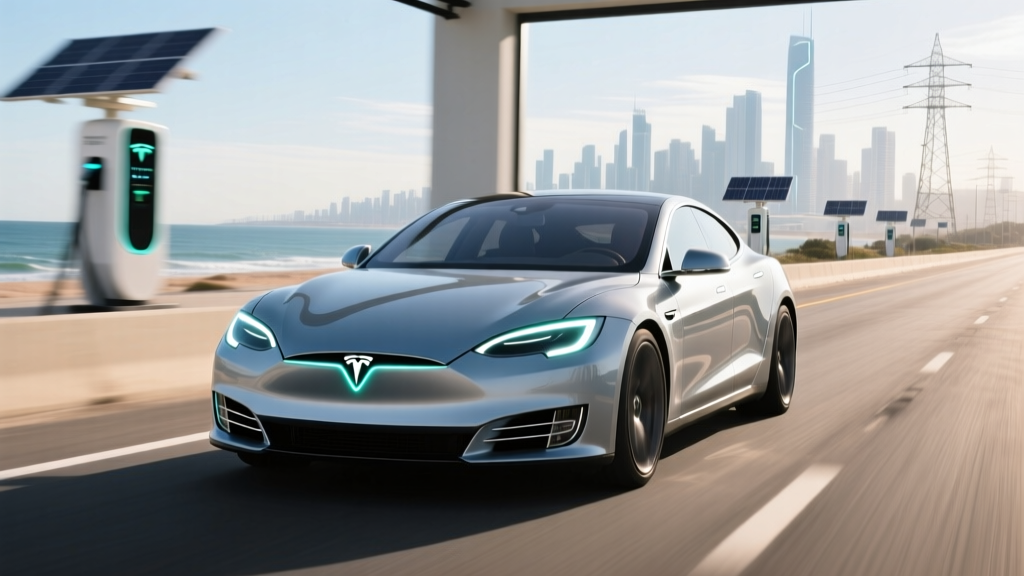
The 2015 Tesla Model S occupies a unique spot in the used-EV market. It was the first sedan to prove that a battery-electric car could deliver 250+ miles of range, over-the-air software updates, and sports-sedan performance — all wrapped in a design that still turns heads a decade later. But buying a ten-year-old EV in 2026 demands hard questions: How much battery capacity has degraded? What are real charging speeds on today's Supercharger network? And what does long-term ownership actually cost?
This profile gives you the exact numbers, real-world caveats, and decision framework you need before signing on a used 2015 Model S.
2015 Tesla Model S Quick Specs at a Glance
| Spec | Model S 60 | Model S 85 | Model S P85D |
|---|---|---|---|
| EPA Range (original) | 208 mi | 265 mi | 253 mi |
| Battery (total / usable) | 60 kWh / ~58 kWh | 85 kWh / ~81 kWh | 85 kWh / ~81 kWh |
| Chemistry | NMC (NCA cathode) | NMC (NCA cathode) | NMC (NCA cathode) |
| Drivetrain | Rear-Wheel Drive | Rear-Wheel Drive | Dual-Motor AWD |
| Horsepower | 302 hp | 362 hp | 691 hp |
| 0–60 mph | 5.5 sec | 5.4 sec | 3.2 sec |
| MPGe (combined) | 95 MPGe | 89 MPGe | 89 MPGe |
| Original Base MSRP | $71,200 | $81,200 | $101,200 |
| Battery Warranty | 8 yr / 125,000 mi | 8 yr / unlimited mi | 8 yr / unlimited mi |
Real-World Range: What the EPA Sticker Doesn't Tell You
Range on a 2015 Model S depends on three variables the EPA sticker ignores: battery degradation, highway speed, and ambient temperature.
Tesla's early 85 kWh packs used Panasonic NCA (nickel-cobalt-aluminum) cells. Data aggregated by TeslaFi and community forums shows average degradation of 8–15% over 10 years and 100,000+ miles. That means an original 265-mile Model S 85 might display 225–240 miles at 100% State of Charge (SoC) today. Some well-maintained packs show as little as 6% loss; heavily Supercharged examples can exceed 15%.
At sustained highway speeds of 75 mph, efficiency drops to roughly 320–350 Wh/mile (compared to the EPA test cycle's mixed-speed average). That translates to roughly 230–250 miles from a healthy 85 kWh pack. In cold weather (below 32°F / 0°C), expect an additional 15–25% range reduction due to battery heating demands and increased cabin HVAC load. The 2015 Model S does not have a heat pump — it uses resistive PTC heating, which draws significantly more energy than the heat pumps found in newer EVs.
Battery Health: What to Check Before You Buy
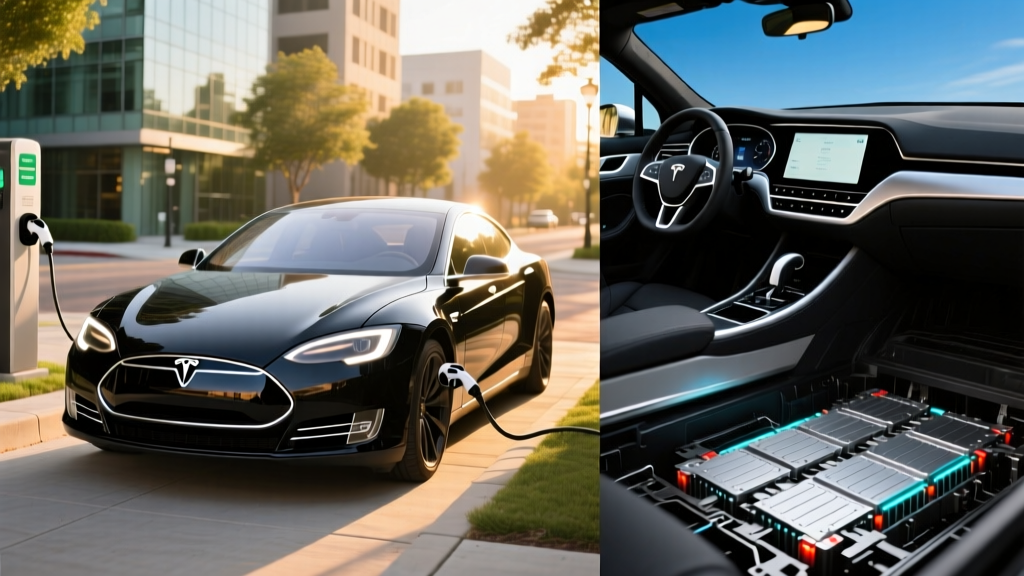
The 2015 Model S battery pack is a skateboard-style lithium-ion unit with NCA chemistry (a variant of NMC). Tesla offered two battery warranty tiers for 2015:
- Model S 60: 8 years / 125,000 miles — meaning the original battery warranty has expired for most examples as of 2026.
- Model S 85 and P85D: 8 years / unlimited miles — meaning the battery warranty expired in 2023 for all 2015 vehicles regardless of mileage.
This is a critical ownership consideration. A replacement battery pack for the 2015 Model S currently costs between $12,000 and $22,000 depending on whether you source a refurbished pack from Tesla or a third-party EV specialist. Tesla's official replacement pricing has historically run $15,000–$20,000+ including labor, according to owner reports.
Before purchasing, request a battery health report. You can check State of Health (SoH) through third-party tools like TeslaFi or by comparing the car's displayed range at 100% SoC against the original EPA rating. A drop of more than 15% suggests significant degradation. Also check for any history of battery replacements — a car with a newer replacement pack may actually be a better buy than one still on its original cells.
Charging Speeds: Supercharger and Home Level 2
| Charging Method | Max Power | Rate | Notes |
|---|---|---|---|
| Level 1 (120V outlet) | ~1.4 kW | ~3–4 mi/hr | Emergency/trickle only |
| Level 2 (240V, single charger) | ~10 kW | ~29 mi/hr | Standard onboard charger |
| Level 2 (240V, dual chargers) | ~20 kW | ~58 mi/hr | Optional dual-charger config |
| DC Fast Charge (Supercharger) | ~120 kW peak | ~170 mi in 30 min | Original V2 Supercharger max; tapers above 60% SoC |
The 2015 Model S uses Tesla's proprietary connector (now called NACS — North American Charging Standard). It charges natively on the Tesla Supercharger network, which has expanded to over 25,000 stalls in North America as of 2026.
On a V2 Supercharger, the 2015 Model S 85 can accept up to roughly 120 kW at low SoC, tapering significantly above 60%. A typical 10–80% charge takes approximately 40–50 minutes — considerably longer than modern 800V-architecture EVs that achieve 10–80% in 18–25 minutes. On Tesla's newer V3 Superchargers (250 kW), the 2015 Model S is hardware-limited and will not exceed its ~120 kW peak.
For home charging, most 2015 Model S vehicles came with a single onboard charger rated at 10 kW (40 amps). Tesla offered an optional dual-charger configuration that doubled this to 20 kW (80 amps), but this requires a 100-amp dedicated circuit — an expensive electrical installation. With the standard 10 kW charger on a typical 48-amp Level 2 home wall connector, expect roughly 29 miles of range per hour of charging, or a full charge in approximately 8–9 hours for the 85 kWh pack.
Performance and Driving Experience
The 2015 Model S lineup offered three performance tiers:
- Model S 60 (RWD): 302 hp, 0–60 in 5.5 seconds. Adequate for daily commuting but the least exciting variant.
- Model S 85 (RWD): 362 hp, 0–60 in 5.4 seconds. The volume seller and best value proposition on the used market.
- Model S P85D (AWD, Dual Motor): 691 hp (combined), 0–60 in 3.2 seconds. This was the car that made headlines for supercar-rivaling acceleration from a four-door sedan. The "Ludicrous Mode" was introduced mid-2015 as an option, dropping 0–60 to 2.8 seconds on P85D models so equipped.
All variants use electric powertrains with single-speed reductions (no multi-gear transmission). The P85D's dual-motor all-wheel-drive system provides excellent traction in rain and light snow. Ride quality is firm but compliant, and the air suspension (standard on most trims) offers adjustable ride height — useful for speed bumps and steep driveways.
Regenerative braking is strong enough for one-pedal driving in most conditions, though it lacks the adjustable regen levels found in competitors like the BMW i3 or Nissan Leaf.
Interior, Cargo, and Technology
The 2015 Model S interior was spacious for its class but drew criticism even at launch for material quality that didn't match its luxury price point. Soft-touch materials are limited; some plastics feel hollow. That said, the cabin offers excellent room:
- Front legroom: 42.7 inches
- Rear legroom: 35.4 inches
- Cargo (rear trunk): 26.3 cu ft
- Frunk (front trunk): 5.3 cu ft
- Total cargo with rear seats folded: ~58 cu ft
An optional third-row rear-facing jump seat (for small children) was available, bringing total seating to 7, though this is rarely found on used examples and is not recommended by most owners for anything beyond short trips.
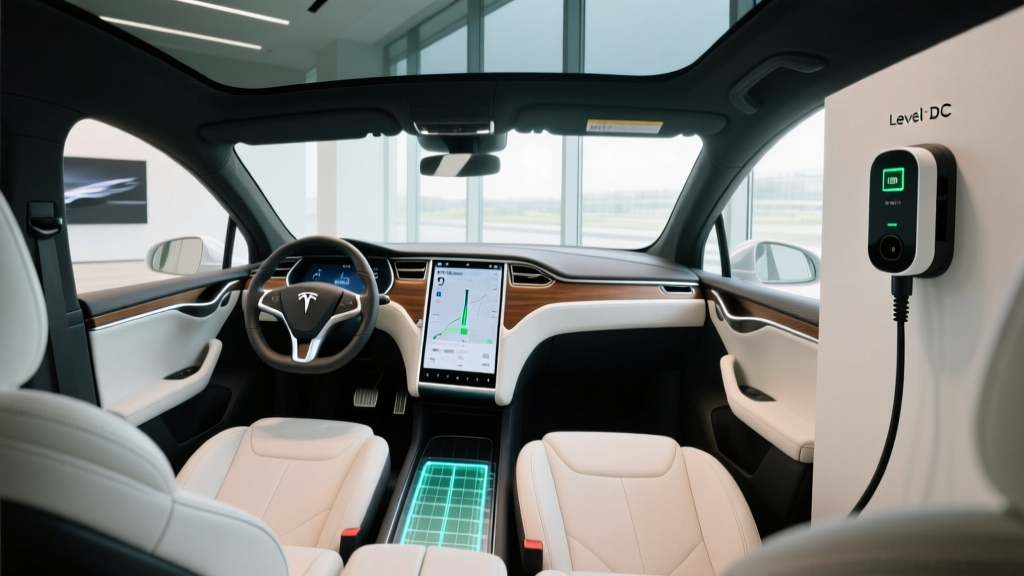
The centerpiece of the interior is the 17-inch touchscreen, which controlled nearly every vehicle function even in 2015 — climate, navigation, media, vehicle settings. The 2015 model year received incremental software updates via Tesla's OTA system, though many features available on newer Teslas (theater mode, advanced navigation visuals, Sentry Mode) were never backported to the older MCU1 (Media Control Unit) hardware. Tesla offered an MCU upgrade program (from the slow NVIDIA Tegra-based MCU1 to the faster Intel Atom-based MCU2) for approximately $1,500–$2,000, and many used examples will have had this upgrade performed. Confirm MCU version before buying — MCU1 is noticeably sluggish by 2026 standards.
Autopilot hardware was introduced on Model S vehicles built after September 2014 ("Hardware 1" or AP1). AP1 includes basic adaptive cruise control and lane-keeping assist — a Level 2 SAE driver-assist system that requires full driver attention at all times. It does not support Tesla's current Full Self-Driving (Supervised) software, which requires Hardware 3 or later. AP1's capabilities are limited compared to modern ADAS: it handles highway cruising adequately but struggles with lane merges, construction zones, and complex intersections.
Pricing, Used Market Value, and Tax Credits
As of early 2026, used 2015 Tesla Model S pricing varies widely by trim, mileage, battery health, and condition:
| Trim | Typical Mileage | Price Range |
|---|---|---|
| Model S 60 | 80,000–130,000 mi | $11,000–$16,000 |
| Model S 85 | 70,000–120,000 mi | $14,000–$21,000 |
| Model S P85D | 60,000–110,000 mi | $18,000–$28,000 |
Does the 2015 Model S Qualify for the Federal EV Tax Credit?
Yes — but only the used-EV credit under IRS §25E, not the new-vehicle §30D credit. The federal used clean vehicle credit offers up to $4,000 or 30% of the sale price (whichever is less) for qualifying used EVs. Here are the requirements:
- Sale price must be $25,000 or less — this eliminates most P85D examples but qualifies many Model S 60 and 85 vehicles.
- Buyer income caps: Modified AGI cannot exceed $75,000 (single), $112,500 (head of household), or $150,000 (joint).
- Vehicle must be at least 2 model years old — the 2015 Model S easily qualifies.
- Must purchase from a licensed dealer — private-party sales do not qualify.
- Buyer can only claim the used-EV credit once every 3 years.
- The credit can be transferred to the dealer at point of sale as a down-payment reduction (as of 2024+ rules).
At a $16,000 purchase price for a Model S 85, the 30% calculation yields $4,800, but the cap limits the credit to $4,000, bringing the effective cost to approximately $12,000. Consult a tax professional and verify eligibility at irs.gov before relying on this credit.
Pros and Cons of the 2015 Model S in 2026
Pros
- Timeless exterior design still looks premium
- Spacious cabin with generous cargo (26.3 cu ft trunk + frunk)
- Access to the Tesla Supercharger network (NACS native)
- P85D acceleration (3.2 sec 0–60) still thrilling
- Air suspension and adjustable ride height
- Low used pricing — potentially under $12K after tax credit
- OTA update history; large enthusiast/owner community
Cons
- Battery warranty expired — replacement risk of $12K–$22K
- DC fast charging limited to ~120 kW; 10–80% takes 40–50 min
- No heat pump — significant winter range loss (15–25%)
- MCU1 infotainment is slow unless upgraded to MCU2
- AP1 Autopilot is outdated; no FSD capability
- Interior materials don't match luxury price positioning
- High insurance premiums relative to vehicle value
- Out-of-warranty air suspension and drive unit repairs are costly
Who Should Buy the 2015 Tesla Model S?
Choose the 2015 Model S if:
- You want a spacious, fast electric sedan for under $20,000 (or under $12K after the used-EV tax credit).
- You have reliable home Level 2 charging and your daily commute is under 100 miles round-trip.
- You value Supercharger network access for occasional road trips.
- You're comfortable with the risk of out-of-warranty battery and drivetrain repairs — or can budget for a potential $15K+ battery replacement.
Look elsewhere if:
- You need modern ADAS features, FSD capability, or the latest infotainment hardware.
- You live in a cold climate and need reliable 250+ mile winter range.
- You want fast DC charging for frequent long-distance travel (consider a 2021+ Model 3/Y or Hyundai Ioniq 5 instead).
- You cannot absorb a potential $12,000–$22,000 battery replacement cost.
2015 Model S vs. Key Used-EV Competitors
At similar used price points ($12,000–$22,000), the 2015 Model S competes with several alternatives:
- 2017–2018 Tesla Model 3 (Long Range): More efficient, faster charging (~170 kW), newer Autopilot hardware (HW2.5/HW3), but less cargo space and a firmer ride. Used prices overlap heavily with the Model S 85.
- 2018–2019 Chevrolet Bolt EV: Far cheaper ($8,000–$13,000 used), 238-mile EPA range, but CCS charging (slower DC speeds and less reliable public network), much smaller cabin, and no frunk.
- 2016–2018 BMW i3 (94 Ah): Unique carbon-fiber construction, fun city car, but only 114-mile range (BEV) and expensive parts. Better as a second car.
The 2015 Model S wins on interior space, ride comfort, and Supercharger access. It loses on charging speed, battery warranty status, and technology freshness compared to a newer Model 3 at a similar price.
Frequently Asked Questions
What is the real-world range of a 2015 Tesla Model S today?
For the 85 kWh variant with average degradation, expect 200–235 miles in mixed driving, 190–220 miles at highway speeds, and 150–185 miles in freezing temperatures. The 60 kWh variant typically delivers 155–180 miles mixed.
How fast does the 2015 Model S charge at home and on road trips?
On a 48-amp Level 2 home charger, the standard 10 kW onboard charger adds roughly 29 miles per hour (full charge in ~8–9 hours for the 85 kWh pack). On a V2 Supercharger, peak draw is ~120 kW with a 10–80% charge taking 40–50 minutes.
How much does a 2015 Model S cost after the used-EV tax credit?
A Model S 85 purchased from a dealer for $16,000 could qualify for the full $4,000 used-EV credit (under IRS §25E), bringing the effective price to approximately $12,000 — assuming you meet income caps and haven't claimed the credit in the past 3 years.
Is the 2015 Model S worth buying over a newer used EV?
It depends on priorities. If space, comfort, and Supercharger access matter most and you can accept battery-replacement risk, it's a strong value. If you want modern tech, fast charging, and warranty coverage, a newer Model 3 or Chevrolet Bolt EUV may be smarter.
Does the 2015 Model S get the $7,500 federal tax credit?
No. The $7,500 credit under IRS §30D applies only to new vehicle purchases. The 2015 Model S qualifies for the used-EV credit under §25E, which provides up to $4,000 or 30% of the sale price (whichever is less), subject to income and price caps.
What are the biggest ownership risks?
Battery replacement ($12K–$22K), air suspension failure ($1,500–$3,000 per corner), drive unit replacement ($3,000–$5,000), and MCU1 sluggishness if not upgraded. Budget $2,000–$4,000 annually for maintenance reserves beyond standard wear items.