Quick Verdict: The P85D That Started the Ludicrous Era
The 2015 Tesla Model S P85D was the car that made the automotive world recalibrate what a sedan could do. With dual-motor all-wheel drive and a combined 691 horsepower (as Tesla originally claimed — later revised to a more realistic 463 hp at the wheels by independent testing), it posted a 3.2-second 0-60 mph time that embarrassed supercars costing three times as much. A decade later, the P85D remains a compelling used EV — but buyers in 2026 need to evaluate it on battery health, degraded range, and charging infrastructure compatibility, not just its headline performance.
This guide covers everything a used-car buyer needs to know: real-world range after years of battery degradation, charging speeds on modern networks, what to look for in a pre-purchase inspection, and how the P85D stacks up against newer used EVs in the $18,000–$28,000 range.
| Spec | Value |
|---|---|
| EPA Range (Original) | 253 miles |
| Battery Capacity | 85 kWh (NMC chemistry, ~77–81 kWh usable) |
| Drivetrain | Dual-motor AWD |
| Power | 691 hp (combined motor rating); ~463 hp measured at wheels |
| Torque | 687 lb-ft (combined motor rating) |
| 0–60 mph | 3.2 seconds |
| Top Speed | 155 mph |
| EPA Efficiency | 93 MPGe combined (36 kWh/100 mi) |
| Max DC Fast Charge | ~120 kW (Tesla Supercharger V2) |
| Level 2 Charge Rate | 10 kW (single onboard charger) or 20 kW (twin charger option) |
| Cargo Volume | 26.3 cu ft (rear trunk) + 5.3 cu ft (frunk) = 31.6 cu ft total |
| Original MSRP | ~$120,000 (as-tested with options: $130,000–$140,000+) |
| 2026 Used Market Price | $18,000–$28,000 (depending on mileage and battery SoH) |
| Battery Warranty (Original) | 8 years / unlimited miles (expired for all P85Ds by end of 2023) |
Real-World Range: What to Expect from a Decade-Old 85 kWh Pack
Real-World Expectation in 2026 (typical 80–90% State of Health): 190–225 miles
Highway (70 mph, mild weather): ~180–210 miles
Cold Weather (below 32°F, highway): ~145–175 miles
The 2015 P85D shipped with Tesla's 85 kWh battery pack using NMC (nickel manganese cobalt) chemistry. When new, the EPA rated it at 253 miles — impressive for 2015, though well below the 300+ mile benchmarks common in 2026 EVs.
After 10–11 years of service, expect battery State of Health (SoH) between 78% and 92%, depending heavily on charging habits, Supercharger frequency, and climate exposure. A P85D with 85% SoH effectively has a ~68–72 kWh usable pack. That translates to roughly 200–215 miles in mixed driving under moderate conditions.
The P85D's efficiency rating of 36 kWh/100 miles (93 MPGe combined per fueleconomy.gov) means it consumes more energy per mile than modern EVs like the Hyundai Ioniq 6 (25 kWh/100 mi) or even the current Model S Long Range (~28 kWh/100 mi). The older powertrain, heavier curb weight (~4,900 lbs), and less advanced thermal management all contribute.
Cold-weather impact is significant. The 2015 Model S lacks a heat pump — it uses resistive cabin heating, which draws heavily from the pack. In sub-freezing temperatures, expect 25–35% range loss versus the EPA sticker. Preconditioning while plugged in is essential to mitigate this.
Charging Speed: Supercharger V2 and Home Level 2 Reality
Charging is where the P85D shows its age most clearly. Modern EVs with 800V architectures charge at 250–350 kW. The P85D, on Tesla's 400V architecture, peaked around 120 kW on V2 Superchargers — and that peak is only sustained briefly before tapering.
| Charging Level | Max Power | Rate / Time |
|---|---|---|
| Level 1 (120V, 12A) | ~1.4 kW | ~3–4 miles per hour |
| Level 2 (240V, single charger) | 10 kW | ~29 miles per hour (~8–9 hrs for full charge) |
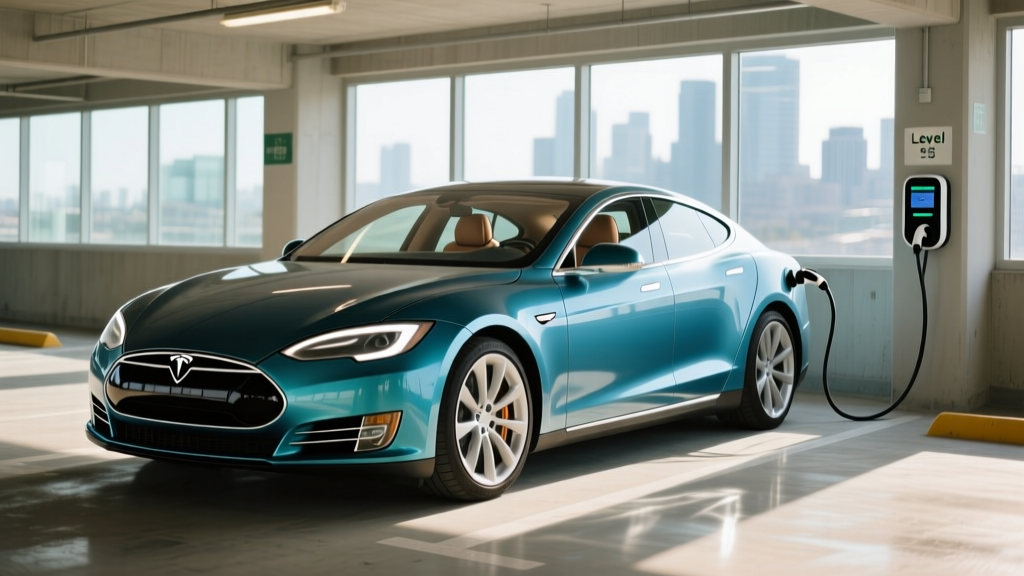
| Level 2 (240V, twin charger option) | 20 kW | ~58 miles per hour (~4–5 hrs for full charge) |
| DC Fast Charge (Supercharger V2) | ~120 kW peak | 10–80% in ~38–45 minutes |
| DC Fast Charge (Supercharger V3/V4) | ~120 kW (car-limited) | No speed benefit over V2 for this model |
Key charging-curve reality: The P85D's charge curve tapers significantly above 80% State of Charge. While 10–50% may sustain near 100–120 kW, charging from 50–80% drops progressively, and 80–100% is slow enough that road-trippers should plan to charge to 80% and drive on. On a road trip, plan stops every 150–170 miles for a 30-minute top-up.
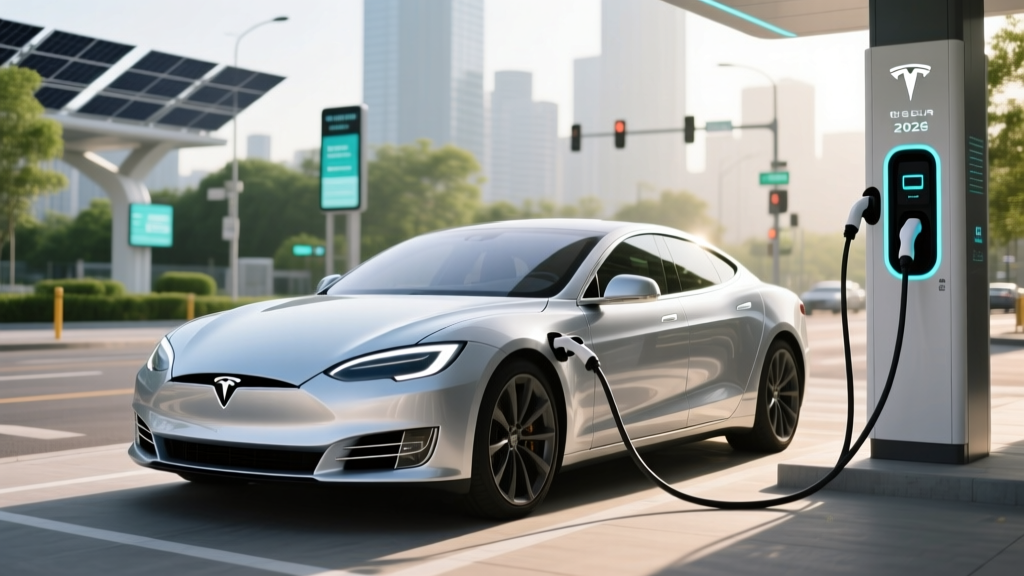
NACS connector: The P85D uses Tesla's proprietary connector, which is now the North American Charging Standard (NACS). This is actually an advantage in 2026 — the P85D has native access to the full Tesla Supercharger network, the most reliable DC fast-charging ecosystem in North America, without any adapter. For non-Tesla CCS networks, you would need a Tesla-to-CCS adapter (available from third-party manufacturers, though verify compatibility with older firmware).
Performance: The Thrill That Still Holds Up
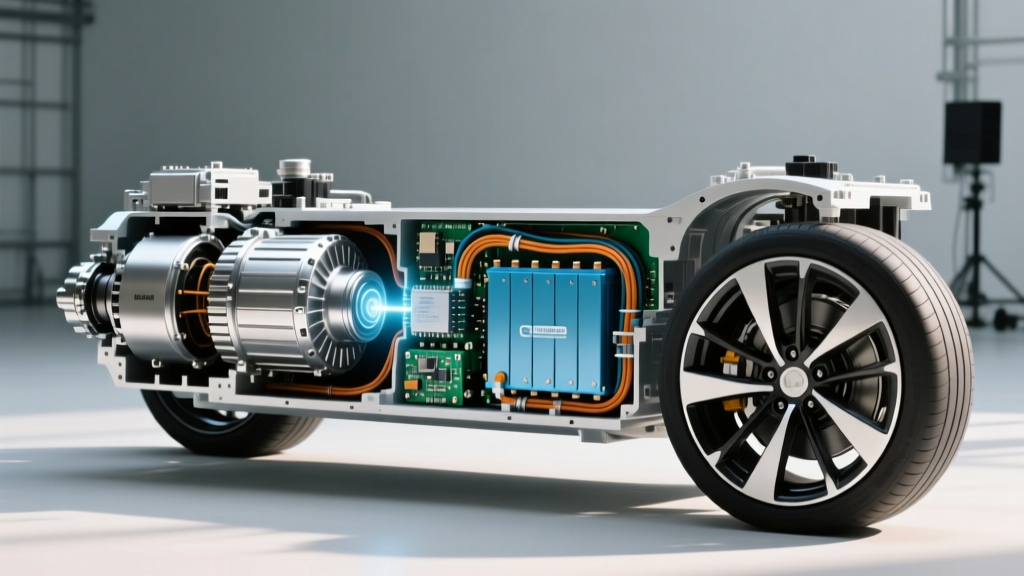
Even a decade later, stepping on the accelerator of a P85D is a visceral experience. The dual-motor setup — a 221 hp front motor and a larger 470 hp rear motor (combined rating of 691 hp, though real-world dynamometer tests measured closer to 463 hp at the wheels) — delivers instant, silent torque that launches the sedan to 60 mph in approximately 3.2 seconds.
The P85D was the first Tesla to feature the now-legendary "Insane Mode" (later renamed and surpassed by "Ludicrous Mode" via a 2015 firmware update). This performance mode preconditions the battery for maximum discharge, sharpening throttle response and acceleration.
Drivetrain note: The dual-motor AWD system provides confident traction in rain and light snow, but the P85D's ~4,900-lb curb weight and performance-oriented tire sizing mean winter tire investment is worthwhile in cold climates. Ground clearance is 6.0 inches — adequate for most roads but not a crossover substitute.
For context, the P85D's 3.2-second 0–60 time still outpaces most 2026 EVs in its price range. A used BMW i4 eDrive40 (5.5s) or Chevrolet Bolt EUV (7.0s) can't match it. Only newer performance EVs like the Tesla Model 3 Performance (2.9s) or Hyundai Ioniq 5 N (3.25s) compete, and those cost significantly more on the used market.
Tech, Interior, and Driver Assistance
The 2015 Model S interior was minimalist before minimalism was a trend — a 17-inch portrait touchscreen dominates the dashboard, controlling nearly every vehicle function. However, by 2026 standards, the infotainment hardware (MCU1 — Media Control Unit version 1) shows its age:
- MCU1 limitations: Slower screen response, no Netflix/YouTube streaming, basic navigation graphics. Many P85D owners have upgraded to MCU2 (a ~$1,500–$2,000 service center upgrade) for modern infotainment features.
- No native Apple CarPlay or Android Auto. Tesla's proprietary system handles phone integration via Bluetooth only.
- Over-the-air updates: The P85D still receives some firmware updates, though feature parity with newer Teslas is not guaranteed.
Autopilot hardware: P85Ds built before October 2016 ship with Hardware 1 (HW1), which supports basic Autopilot features (lane centering, adaptive cruise control) but is not capable of running Tesla's Full Self-Driving (FSD) software. This is an SAE Level 2 driver-assistance system — the driver must remain fully engaged with hands on the wheel and eyes on the road at all times.
Passenger and cargo space: The Model S sedan seats five adults comfortably with 42.7 inches of front legroom and 35.4 inches of rear legroom. The rear trunk offers 26.3 cubic feet, supplemented by a 5.3 cubic-foot front trunk (frunk) — totaling 31.6 cubic feet of cargo space. With the rear seats folded, that expands to approximately 58.1 cubic feet, competitive with midsize SUVs.
Pricing, Tax Credits, and Total Cost of Ownership
The P85D originally stickered at approximately $120,000, with well-optioned examples reaching $130,000–$140,000+ after destination charges, the Tech Package, air suspension, and the Subzero Weather Package.
In the 2026 used market, P85D prices have settled into a much more accessible range:
| Category | Amount |
|---|---|
| Used Market Price (80k–120k miles, average SoH) | $18,000–$24,000 |
| Used Market Price (under 60k miles, high SoH) | $24,000–$28,000 |
| Federal Used EV Tax Credit (§25E) | Up to $4,000 (30% of sale price, max $4,000) |
| Effective Price After §25E Credit | $14,000–$24,000 |
| Federal New EV Credit (§30D) | NOT applicable — vehicle is used |
Tax credit detail: The P85D does NOT qualify for the §30D new-vehicle credit (which applies only to new EV purchases with MSRP, income, and battery-sourcing requirements per IRS guidelines). However, it may qualify for the §25E Previously-Owned Clean Vehicle Credit, which provides 30% of the sale price up to $4,000. Requirements include:
- Sale price must be $25,000 or less (many P85Ds now qualify)
- Buyer income cap: $75,000 (single), $112,500 (head of household), $150,000 (joint)
- Vehicle must be at least two model years old (2015 qualifies)
- Buyer cannot have claimed a used EV credit in the prior 3 years
- Must purchase from a licensed dealer (private-party sales do not qualify)
5-Year Ownership Cost Estimate (Used P85D at $22,000):
| Category | Estimated 5-Year Cost |
|---|---|
| Purchase (after §25E credit) | ~$18,000–$22,000 |
| Electricity (home charging, 12,000 mi/yr) | ~$3,500–$4,500 |
| Insurance | ~$9,000–$12,000 |
| Maintenance (tires, cabin filter, brake fluid) | ~$2,500–$4,000 |
| Potential Battery Replacement (if needed) | $12,000–$20,000 (remanufactured pack) |
The insurance wildcard is real: Tesla Model S insurance premiums run 20–40% higher than comparable sedans due to repair costs and parts pricing. Get quotes before purchasing.
Biggest Pros and Cons of the P85D in 2026
✅ Pros
- Supercar acceleration — 3.2s 0–60 still embarrasses most modern cars
- Native NACS / Supercharger access — no adapter needed for the most reliable US charging network
- Spacious sedan — 31.6 cu ft total cargo, comfortable 5-seat layout
- Over-the-air updates — still receives firmware improvements from Tesla
- Air suspension (if equipped) — adjustable ride height, comfortable highway cruising
- Low running costs — electricity at ~$0.13/kWh means ~$4.70 per 100 miles of driving
- Potential §25E used EV credit — up to $4,000 off purchase price
❌ Cons
- Battery warranty expired — original 8-yr/unlimited-mi coverage ended by 2023; replacement costs $12,000–$20,000
- MCU1 infotainment — sluggish touchscreen unless upgraded to MCU2 ($1,500–$2,000)
- No FSD capability — HW1 Autopilot is basic Level 2 only, not upgradable
- Slow DC charging by 2026 standards — 120 kW peak, 38–45 min for 10–80%
- Reduced real-world range — expect 190–225 mi, not the original 253 mi EPA
- No heat pump — resistive heating cuts range 25–35% in cold weather
- High insurance premiums — 20–40% above comparable non-Tesla sedans
- Door handles, air suspension, and drive unit are known failure points on early Model S vehicles
Who Should Buy the 2015 P85D — And Who Should Look Elsewhere
Choose the P85D if:
- You want supercar acceleration at a sub-$25,000 price point
- You primarily drive in moderate climates (cold-weather range loss is steep)
- Your daily commute is under 120 miles round-trip with home charging
- You value Supercharger network access for occasional road trips
- You're comfortable budgeting $3,000–$5,000 for potential out-of-warranty repairs in the first two years
Look elsewhere if:
- You need 300+ miles of real-world range for frequent long-distance driving
- You live in a cold climate and need maximum winter range (consider a newer EV with a heat pump)
- You want modern FSD or advanced driver-assist capabilities
- You cannot afford the risk of a $12,000–$20,000 battery replacement
- You want Apple CarPlay/Android Auto or a modern infotainment experience
Key competitors in the $18,000–$28,000 used EV market (2026):
- 2018–2020 Tesla Model 3 Long Range AWD: ~310 miles EPA (newer), faster charging (250 kW), HW3 Autopilot with FSD capability, smaller sedan. Often $22,000–$30,000 used.
- 2019–2021 Hyundai Kona Electric: 258 miles EPA, CCS charging, more affordable maintenance, but no DC fast-charge parity. ~$16,000–$22,000.
- 2017–2019 Chevrolet Bolt EV: 238 miles EPA, very affordable ($12,000–$17,000), but slow DC charging (55 kW) and smaller interior.
- 2018–2020 Jaguar I-PACE: 234 miles EPA, premium SUV feel, CCS charging, but poor charging speed (100 kW) and limited Supercharger access. ~$20,000–$26,000.
Pre-Purchase Checklist: What to Inspect Before Buying
Buying a 10-year-old EV requires diligence that gas-car buyers don't face. Prioritize these checks:
- Battery State of Health (SoH): Request a battery health report from a Tesla Service Center or use third-party diagnostic tools. Look for SoH above 82%. Below 78%, budget for imminent cell replacement or pack swap.
- Drive unit history: The large rear drive unit (LDU) on P85Ds is a known wear item. Listen for whining, clunking, or vibration under hard acceleration. Replacement runs $4,000–$7,000.
- Air suspension: If equipped, test all ride-height settings. Air struts commonly fail around 80,000–100,000 miles. Replacement is $1,500–$2,500 per corner (aftermarket options available for less).
- Door handles: The retractable handles are notorious for failure. Test all four multiple times. Replacement: $500–$800 per handle.
- MCU version: Confirm whether the car has MCU1 or the upgraded MCU2. This significantly affects infotainment usability and resale value.
- Service history: Request records from Tesla's service portal. Verify coolant flushes, brake fluid changes, and any recall campaigns (notably the front seat belt tensioner recall and 12V battery replacements).
- 12V battery: The P85D uses a conventional 12V lead-acid battery to power electronics. These typically need replacement every 3–5 years. A failing 12V can brick the car.
Frequently Asked Questions
What is the real-world range of a 2015 Tesla Model S P85D today?
With typical battery degradation (SoH of 80–90%), expect 190–225 miles in mixed driving. Highway driving at 70 mph reduces this to ~180–210 miles, and cold weather (below 32°F) can drop it to 145–175 miles. The original EPA rating of 253 miles assumed a brand-new pack.
How fast does the P85D charge at home and on road trips?
At home on a 240V Level 2 charger, the single onboard charger adds ~29 miles per hour (10 kW). The optional twin charger doubles this to ~58 miles/hr (20 kW). On Tesla Superchargers, the P85D peaks around 120 kW, taking approximately 38–45 minutes to charge from 10% to 80%. Above 80%, charging slows significantly.
Does the 2015 P85D qualify for any federal EV tax credits?
It does NOT qualify for the §30D new-vehicle credit (that applies only to new purchases). However, it may qualify for the §25E Previously-Owned Clean Vehicle Credit — up to $4,000 (30% of the sale price) if the sale price is $25,000 or less, you purchase from a licensed dealer, and your income is below the IRS caps ($75,000 single / $150,000 joint). Consult a tax professional and review IRS §25E guidelines for eligibility.
Is the P85D worth buying over a newer used Tesla Model 3?
It depends on priorities. The P85D offers more interior space, standard AWD, air suspension (if equipped), and a more premium ride. The Model 3 Long Range (2018–2020) offers better range (~310 mi EPA new), much faster charging (250 kW), newer Autopilot hardware (HW3, FSD-capable), and MCU2 infotainment — often at a similar or slightly higher price. For most buyers in 2026, the Model 3 LR is the more practical used EV. The P85D appeals to those who value the larger sedan format, the historical significance, and maximum acceleration.
How much does a replacement battery cost for the P85D?
A remanufactured 85 kWh replacement pack from Tesla typically costs $12,000–$16,000 including labor. Third-party battery repair shops can sometimes replace individual modules for $3,000–$7,000, depending on how many modules have degraded. Note: the original 8-year/unlimited-mile battery warranty expired no later than December 2023 for all P85Ds.
Can the P85D use non-Tesla charging networks?
The P85D uses the NACS (Tesla) connector natively. To use CCS-based networks (Electrify America, EVgo, most non-Tesla chargers), you would need a third-party NACS-to-CCS adapter. Verify firmware compatibility before purchasing an adapter, as some older Tesla hardware may not communicate properly with all CCS stations. The P85D cannot use CHAdeMO chargers without a now-discontinued adapter.
What's the difference between the P85D and the regular 85D?
The 85D has the same 85 kWh battery and dual-motor AWD but uses two smaller motors producing a combined ~518 hp (revised to ~417 hp measured) and a 0–60 time of ~3.8 seconds. The 85D originally had a slightly higher EPA range rating (270 miles) due to a more efficiency-oriented rear motor. It is typically $2,000–$5,000 cheaper on the used market and is the better choice if you prioritize range over maximum acceleration.