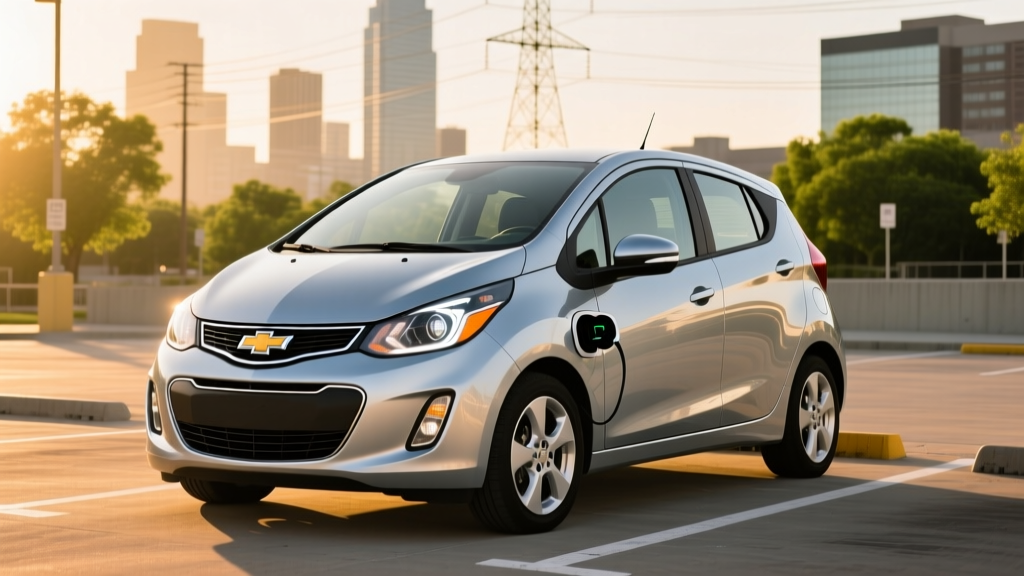
Quick Answer: The 2015 Chevrolet Spark EV is a discontinued, used-only subcompact electric hatchback with an EPA-estimated 82 miles of range from its 19 kWh lithium-ion battery. Expect to pay $6,000–$10,000 on the used market in 2026. It's best suited as a city commuter or second car for drivers with home charging and short daily routes. DC fast charging is limited to ~50 kW (CHAdeMO connector), and real-world highway or cold-weather range drops to roughly 55–70 miles. It does not qualify for the federal §30D new-EV tax credit (discontinued), but may qualify for the up-to-$4,000 used clean vehicle credit if you meet income and dealer requirements.
2015 Spark EV at a Glance: Core Specs
| Specification | 2015 Chevrolet Spark EV |
|---|---|
| EPA Range | 82 miles |
| Real-World Range (highway/cold) | ~55–70 miles |
| Battery Capacity | 19 kWh (usable), lithium-ion (NMC) |
| EPA Efficiency | 119 MPGe combined (28 kWh/100 mi) |
| Motor Output | 140 hp / 400 lb-ft torque |
| 0–60 mph | ~7.2 seconds |
| DC Fast Charge (Peak) | ~50 kW (CHAdeMO) |
| DC 10–80% Time | ~20–25 minutes (estimated) |
| Level 2 Charge Rate | 3.3 kW (J1772) |
| Level 2 Full Charge Time | ~6–7 hours |
| Level 1 (120V) Charge Time | ~17–20 hours |
| Original MSRP (base) | ~$27,170 (before incentives) |
| 2026 Used Price Range | $6,000–$10,000 |
| Battery Warranty (original) | 8 years / 100,000 miles |
Real-World Range: What 82 EPA Miles Actually Means
The EPA rates the 2015 Spark EV at 82 miles on a full charge, per fueleconomy.gov. That figure was competitive for a city-oriented EV in 2015, but it demands careful interpretation for a used buyer in 2026.
EPA Sticker: 82 miles
Real-World Expectation: 65–75 miles in mild city driving; 55–65 miles at sustained highway speeds (65–75 mph); 50–60 miles in freezing temperatures with cabin heat.
Why the gap? The Spark EV lacks a heat pump — it uses resistive cabin heating, which draws heavily from the small 19 kWh battery. Highway driving increases aerodynamic drag disproportionately on a short, tall hatchback. And after 10+ years of battery aging, expect 10–20% capacity degradation depending on climate history and charging habits, further compressing usable range.
For context, a 2026 Chevrolet Equinox EV offers an EPA-estimated 319 miles on its 85 kWh battery — nearly four times the range. The Spark EV was never designed for road trips. It excels at a specific use case: predictable urban commutes under 40 miles round-trip with overnight home charging.
Charging the 2015 Spark EV: Speeds, Connectors, and Limitations
| Charging Level | Connector | Power (kW) | Miles Added per Hour | Full Charge Time |
|---|---|---|---|---|
| Level 1 (120V household) | J1772 | ~1.4 kW | ~4–5 mi/hr | ~17–20 hours |
| Level 2 (240V home/public) | J1772 | 3.3 kW (max onboard) | ~12–14 mi/hr | ~6–7 hours |
| DC Fast Charge | CHAdeMO | ~50 kW peak | N/A (session-based) | ~20–25 min (10–80%) |
A critical detail: the Spark EV's onboard charger maxes out at 3.3 kW on Level 2. Even if you plug into a 7.2 kW or 11.5 kW public Level 2 station, the car will only accept 3.3 kW. That means a full charge always takes 6–7 hours regardless of the station's capability.
The DC fast-charging port uses the CHAdeMO connector, which was standard on the Nissan Leaf and Mitsubishi i-MiEV era but has been largely superseded by CCS1 and NACS (Tesla's standard, now adopted by most major automakers). CHAdeMO stations are increasingly scarce — Electrify America and most newer networks have shifted to CCS1/NACS. Before buying, verify that CHAdeMO chargers exist along your routes using apps like PlugShare or ChargePoint.
On DC fast charging, the 50 kW peak rate is modest by 2026 standards (modern EVs commonly peak at 150–350 kW). However, given the tiny 19 kWh battery, 50 kW is actually a healthy ~2.6C charge rate, and 10–80% in roughly 20–25 minutes is reasonable. Expect the charge curve to taper significantly above 80% State of Charge (SoC) to protect battery health — the last 20% can take as long as the first 80%.
Cost Breakdown: Purchase, Charging, and Maintenance
At $6,000–$10,000 on the used market, the 2015 Spark EV is one of the cheapest ways to get into an electric vehicle. But the purchase price is only part of the ownership equation.
| Cost Category | 2015 Spark EV (Used) | Comparable Gas Car (2015 Chevy Spark Gas) |
|---|---|---|
| Purchase Price | $6,000–$10,000 | $5,000–$8,000 |
| Fuel/Energy Cost per Mile | ~$0.04–$0.05 (home charging at $0.14/kWh) | ~$0.12–$0.14 (at $3.50/gal, 30 MPG combined) |
| Annual Fuel/Energy (12,000 mi) | ~$480–$600 | ~$1,400–$1,680 |
| Annual Maintenance | ~$200–$400 (no oil, fewer brakes) | ~$600–$900 (oil, filters, brakes) |
| Insurance (annual avg) | ~$1,200–$1,600 | ~$1,100–$1,400 |
| Home Charger Install (Level 2) | $500–$2,000 (one-time) | N/A |
| Estimated 5-Year Total Cost | ~$12,000–$20,000 | ~$15,000–$22,000 |
The Spark EV's energy cost advantage is substantial: at the national average electricity rate of ~$0.14/kWh and its consumption of 28 kWh/100 miles, you're paying roughly 4 cents per mile. A gas Spark at 30 MPG combined costs 12–14 cents per mile. Over 12,000 miles annually, that's roughly $800–$1,000 in fuel savings per year.
Maintenance savings compound. There's no engine oil, no spark plugs, no transmission fluid, no exhaust system. Regenerative braking significantly reduces brake pad wear — many EV owners go 80,000+ miles on original brake pads. The primary maintenance items are cabin air filter, tire rotation, windshield washer fluid, and the 12V auxiliary battery (which will likely need replacement if original).
Insurance tends to run slightly higher on EVs due to repair cost structures and battery replacement considerations, though the gap narrows on older, lower-value vehicles.
Federal Tax Credit on a Used Spark EV
The 2015 Spark EV does not qualify for the new-vehicle §30D credit (it was discontinued years ago and Chevrolet's credit allocation was exhausted). However, the IRS used clean vehicle credit (25E) can provide up to $4,000 or 30% of the sale price (whichever is less) if:
- The vehicle is purchased from a licensed dealer (not private party)
- The sale price is $25,000 or less
- Your modified adjusted gross income is under $75,000 (single) / $150,000 (married filing jointly)
- The vehicle is at least two model years old (the 2015 qualifies)
- You haven't claimed the used-EV credit in the prior 3 years
- The dealer registers the sale through the IRS Energy Credits Online portal for point-of-sale transfer
On an $8,000 Spark EV purchase, 30% equals $2,400 — that's your credit amount. Consult a tax professional to confirm eligibility, as rules are subject to change.
EV vs. Gas: Is the Spark EV Right for Your Driving Pattern?
| Factor | 2015 Spark EV | 2015 Spark Gas (1.2L I4) |
|---|---|---|
| EPA Range / Tank Range | 82 miles | ~300 miles (9-gal tank, 34 MPG hwy) |
| Refuel/Recharge Time | 6–7 hours (L2) / 25 min (DC) | ~3 minutes at gas station |
| Cost per Mile (fuel) | ~$0.04 | ~$0.13 |
| 0–60 mph | 7.2 seconds | ~10.5 seconds |
| Cargo Space | 9.6 cu ft (battery reduces space) | 11.4 cu ft |
| Highway Comfort | Limited range, short wheelbase | Better range, similar ride |
| Cold-Weather Impact | 20–30% range loss | Minor MPG reduction |
The Spark EV's instant 400 lb-ft of torque makes it genuinely quick off the line — quicker than many compact cars from the same era. The low center of gravity from the floor-mounted battery gives it surprisingly planted handling for its size.
However, the gas Spark wins decisively on range flexibility and cargo volume. If your commute exceeds 40 miles one way, or if you regularly drive in sub-freezing temperatures, or if you lack reliable home charging, the gas version is the more pragmatic choice.
Used-Buyer Checklist: What to Inspect Before Purchasing
Buying a 10+ year-old EV requires specific due diligence that doesn't apply to gas cars:
1. Battery State of Health (SoH). Ask the seller or dealer for a battery diagnostic. Some Chevrolet dealers can pull SoH data via the onboard telematics. A healthy 2015 Spark EV battery should retain 80–90% of original capacity. Below 75%, range becomes severely limited and replacement cost ($5,000–$8,000+ if available) likely exceeds the car's value.
2. Charging port condition. Inspect both the J1772 (Level 2) and CHAdeMO (DC fast charge) ports for corrosion, bent pins, or loose connections. CHAdeMO port repairs are increasingly difficult as parts become scarce.
3. Original battery warranty status. The 8-year/100,000-mile battery warranty expired no later than 2023 for a 2015 model. Any battery failure is now an out-of-pocket expense.
4. Thermal management system. The Spark EV uses an active liquid cooling/heating system for its battery. Verify the coolant has been serviced and the thermal management system is functional — a failed thermal system accelerates battery degradation.
5. CHAdeMO charging availability in your area. Use PlugShare to confirm that at least one CHAdeMO-equipped DC fast charger is accessible near your home or commute. If not, you'll be limited to 3.3 kW Level 2 charging, which is fine for overnight home charging but impractical for any mid-day top-up.
Common Misconceptions About the 2015 Spark EV
| Myth | Fact |
|---|---|
| "The battery will need replacing soon." | GM's lithium-ion packs have proven durable. Most 2015 Spark EVs retain 80%+ capacity if not exposed to chronic extreme heat or exclusive DC fast charging. Degradation is gradual, not catastrophic. |
| "82 miles is useless." | The average US one-way commute is ~16 miles (US Census Bureau). For a second car or city runabout, 82 miles covers most daily needs with margin. |
| "I can charge it at any public station." | CHAdeMO DC stations are declining. You'll rely primarily on J1772 Level 2 stations and home charging. Verify network compatibility before purchase. |
| "It qualifies for the $7,500 federal tax credit." | The new-vehicle §30D credit is not available on discontinued models. The used-vehicle credit (25E) offers up to $4,000 with income and dealer requirements. |
| "EV maintenance is zero." | Tires, cabin filters, wipers, brake fluid, 12V battery, and suspension components still require service. But powertrain maintenance is dramatically reduced. |
Decision Framework: Should You Buy a 2015 Spark EV?
Buy the 2015 Spark EV if:
- Your daily driving is under 40 miles round-trip
- You have access to Level 2 home charging (garage or driveway with a 240V outlet)
- You live in a mild climate (rarely below 20°F / -7°C)
- You want the cheapest possible entry into EV ownership
- This will be a second vehicle — not your only car
- You value quick acceleration and low running costs over range and cargo space
Look elsewhere if:
- Your commute exceeds 50 miles round-trip
- You lack home charging access and would rely on public infrastructure
- You live in a cold climate with extended sub-freezing winters
- You need a primary vehicle for highway travel or road trips
- You require more than 9.6 cu ft of cargo space
- CHAdeMO chargers are unavailable in your area and you need DC fast charging
Consider these alternatives instead:
- 2017–2019 Chevy Bolt EV: 238-mile EPA range, CCS1 charging, ~$12,000–$18,000 used — the best value upgrade if budget allows
- 2016–2019 Nissan Leaf (30 kWh): 107-mile range, more cargo space, but CHAdeMO dependency and passive battery cooling (degradation risk in hot climates)
- Used Toyota Prius (hybrid): No charging needed, 50+ MPG, ~$10,000–$15,000 — ideal if you can't charge at home
Frequently Asked Questions
How long does the 2015 Spark EV battery last?
GM's lithium-ion battery packs have demonstrated strong longevity. With proper care (avoiding chronic 100% charges, minimizing DC fast charging, and keeping the thermal management system maintained), these batteries commonly reach 100,000–150,000 miles while retaining 75–85% of original capacity. The original 8-year/100,000-mile warranty has expired on all 2015 models, so any battery issues are now the owner's responsibility.
Can I charge a 2015 Spark EV at a Tesla Supercharger?
No. The Spark EV uses J1772 (Level 2) and CHAdeMO (DC fast charge) connectors. Tesla Superchargers use NACS connectors, and no safe, certified adapter exists to convert CHAdeMO to NACS for DC fast charging. You can use a J1772 adapter to charge at Tesla Destination Chargers (Level 2), but not at Superchargers.
Is the 2015 Spark EV safe?
The 2015 Spark EV received a 4-star overall safety rating from NHTSA (out of 5 stars). It includes standard stability control, antilock brakes, and 10 airbags. However, it lacks modern ADAS features like automatic emergency braking, lane-keeping assist, or blind-spot monitoring — these were not common in subcompacts of this era.
What happens if the battery fails completely?
A complete battery replacement for the Spark EV is estimated at $5,000–$8,000+ depending on parts availability and labor. Given the car's used value of $6,000–$10,000, a total battery failure would likely total the vehicle from an economic standpoint. This is the primary financial risk of buying an older EV with an expired battery warranty. Before purchasing, get a battery SoH reading to assess remaining capacity.
How does cold weather affect the Spark EV's range?
Expect 20–30% range loss in freezing temperatures (below 32°F / 0°C). The resistive cabin heater draws 2–4 kW continuously, which is a massive load on a 19 kWh battery. At 20°F with heat running, real-world range can drop to 50–60 miles. Preconditioning the cabin while still plugged in (using the car's timer or app) can mitigate this by warming the car on grid power before departure.
Is the Spark EV a good first EV?
It can be — but only for the right buyer. If you have home charging, a short commute, and a second gas car for longer trips, the Spark EV is an affordable, fun, and economical introduction to electric driving. If it will be your only vehicle, or if you can't charge at home, start with a longer-range EV like a used Chevy Bolt or a plug-in hybrid like the Chevy Volt instead.