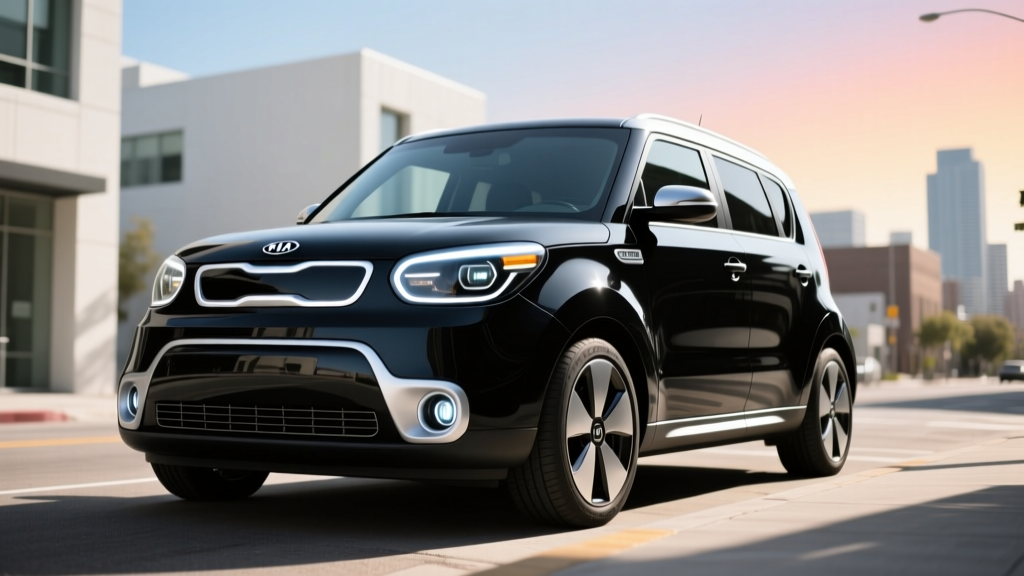
The Quick Verdict on the 2015 Kia Soul EV in 2026
Bottom line: The 2015 Kia Soul Electric Car delivers an EPA-estimated 93 miles of range from its 27 kWh battery, charges at up to 50 kW on CHAdeMO DC fast chargers, and can be found on the used market for roughly $6,000–$10,000 depending on battery health and mileage. It remains a practical short-commute EV in 2026, but its limited range, CHAdeMO-only fast charging, and aging battery make it best suited as a city runabout or second car — not a primary vehicle for highway-heavy or cold-climate drivers.
When the 2015 Kia Soul EV launched, it was one of the most practical affordable EVs on the market, offering a roomy hatchback body and genuine everyday usability. More than a decade later, prospective used buyers need to weigh its charm against real limitations that modern EVs have long surpassed. This guide breaks down exactly what to expect.
Battery, Range, and What You'll Actually Get Per Charge
The 2015 Soul EV uses a 27 kWh lithium-ion polymer battery pack (approximately 24.2 kWh usable) with NMC (nickel-manganese-cobalt) chemistry. The EPA rated it at 93 miles of combined range when new, with an efficiency of 105 MPGe combined (city 120 / highway 92), according to fueleconomy.gov.
EPA Range: 93 miles (combined)
Real-World Expectation in 2026: Expect 70–85 miles in mild weather on a mixed city/highway cycle. In cold weather (below 30°F), plan for 50–65 miles due to battery chemistry limitations and cabin heating draw. After 10+ years, battery degradation of 15–25% is common, further reducing effective range.
| Spec | Value |
|---|---|
| Battery (total / usable) | 27 kWh / ~24.2 kWh |
| Chemistry | NMC (lithium-ion polymer) |
| EPA Range (new) | 93 miles |
| MPGe (city / hwy / combined) | 120 / 92 / 105 |
| Motor Output | 109 hp / 210 lb-ft torque |
| 0–60 mph | ~11.2 seconds |
| DC Fast Charge (max) | 50 kW (CHAdeMO only) |
| Level 2 Charge Rate | 6.6 kW (J1772) |
| Level 2 Time (full) | ~4.5 hours (0–100%) |
| DC Fast 10–80% | ~30–33 minutes |
| Original MSRP | $33,700 (before incentives) |
| Used Price Range (2026) | $6,000–$10,000 |
| Battery Warranty (original) | 10 years / 100,000 miles (capacity ≥70%) |
Charging: The CHAdeMO Problem in 2026
The 2015 Kia Soul EV charges through three methods, but one of them is becoming a serious liability.
| Level | Connector | Max Power | Speed (approx.) |
|---|---|---|---|
| Level 1 (120V) | J1772 | 1.2 kW | ~4 miles/hour |
| Level 2 (240V) | J1772 | 6.6 kW | ~22 miles/hour |
| DC Fast | CHAdeMO | 50 kW | ~30 min (10–80%) |
The CHAdeMO challenge: The North American charging infrastructure has overwhelmingly adopted CCS and, increasingly, Tesla's NACS connector as standard. Electrify America, the largest DC fast-charging network in the U.S., began phasing out CHAdeMO connectors at new stations after 2022. As of 2026, finding a functioning CHAdeMO plug on a road trip requires careful planning. Check PlugShare or ChargeHub before relying on DC fast charging away from home.
At home, Level 2 charging at 6.6 kW is perfectly adequate. A full charge takes about 4.5 hours, meaning an overnight session easily refills the pack. If you have access to a standard 120V outlet, Level 1 charging adds roughly 4 miles per hour — slow, but workable for topping off a low battery overnight if your daily driving stays under 30 miles.
Used EV Cost Breakdown: Purchase, Charging, Maintenance, and Insurance
The economics of a used 2015 Soul EV are where it shines — or at least where the argument for it gets strongest.
| Cost Category | 2015 Soul EV | Gas Hatchback (e.g., 2015 Soul 2.0L) |
|---|---|---|
| Purchase Price (avg.) | $8,000 | $9,500 |
| Fuel / Electricity (annual) | $350–$550* | $1,200–$1,500** |
| Maintenance (annual) | $200–$400 | $600–$900 |
| Insurance (annual) | $1,100–$1,400 | $1,000–$1,300 |
| Estimated Year-1 Total | $9,650–$10,350 | $12,300–$13,200 |
*Based on $0.14–$0.22/kWh home electricity rates. **Based on $3.20–$3.80/gallon at 28 MPG combined.
The Soul EV eliminates oil changes, spark plugs, transmission fluid, and exhaust repairs. Regenerative braking extends pad life significantly. However, budget for two age-related items: the 12V auxiliary battery (replacement every 3–5 years, ~$150–$250) and potential tire wear from the EV's instant torque and heavier curb weight (~3,300 lbs).
Tax credit note: The federal §30D new-vehicle credit does not apply to a 2015 purchase today. The used-EV credit (up to $4,000 or 30% of sale price, whichever is less, under IRS rules) may apply if you buy from a licensed dealer, your income falls below the cap ($75,000 single / $150,000 joint), and the sale price is $25,000 or less. At typical 2015 Soul EV prices, the credit would likely max out around $1,800–$2,400. Confirm eligibility with a tax professional.
How the 2015 Soul EV Compares to Gas and Other Used EVs
| Vehicle | EPA Range / MPG | Used Price (2026) | DC Fast Charging | Cargo (cu ft) |
|---|---|---|---|---|
| 2015 Kia Soul EV | 93 mi (105 MPGe) | $6,000–$10,000 | 50 kW CHAdeMO | 28.0 / 49.5 |
| 2015 Kia Soul (gas, 2.0L) | 27 MPG combined | $8,000–$12,000 | N/A | 24.2 / 61.3 |
| 2015 Nissan Leaf (24 kWh) | 84 mi (114 MPGe) | $5,000–$8,000 | 50 kW CHAdeMO | 24.0 / 30.0 |
| 2017 Chevy Bolt EV | 238 mi (119 MPGe) | $12,000–$16,000 | 55 kW CCS | 23.6 / 56.6 |
| 2018 Hyundai Ioniq Electric | 124 mi (136 MPGe) | $10,000–$14,000 | 50 kW CCS (later yrs) | 23.0 / 43.8 |
The Soul EV's cargo space and upright seating position are genuine advantages over the Leaf. But the 2017 Bolt EV's 238-mile range makes it a fundamentally more capable vehicle for just a few thousand dollars more. If your budget allows stretching to $12,000–$16,000, the Bolt is a dramatically better long-term proposition.
Real-World Ownership: What First-Time EV Buyers Must Know
Before signing for a used 2015 Soul EV, address these practical realities:
Home charging is nearly essential. With only 70–85 real-world miles, you'll need reliable overnight Level 2 charging to make this car workable day-to-day. If you live in an apartment without charging access or rely on street parking, this EV will be a constant source of stress.
Cold weather cuts range hard. The Soul EV lacks a heat pump — it uses a resistive PTC heater that draws significant power from the traction battery. In sub-freezing temperatures, expect a 30–40% range reduction. A 93-mile EPA car becomes a 55–65-mile car in a Minnesota winter.
Check battery health before buying. Request a State of Health (SoH) reading from a Kia dealer or use an OBD-II reader with an app like SoulEVO or Torque Pro. A battery below 80% SoH means your already-limited range shrinks further. The original 10-year/100,000-mile battery warranty may still have residual coverage on low-mileage examples — verify with Kia using the VIN.
CHAdeMO is a dying standard. Plan your routes around home and work charging. DC fast charging on road trips will require hunting for the few remaining CHAdeMO stations, many of which are older and less reliable.
| Myth | Fact |
|---|---|
| "The battery will need replacement soon." | NMC batteries from this era typically retain 75–85% capacity at 10 years. Full replacement ($8,000–$12,000) is rarely needed; module-level repairs are possible. |
| "I can use any DC fast charger." | The Soul EV uses CHAdeMO only — not CCS, not NACS. Many modern charging stations don't include CHAdeMO connectors. |
| "93 miles of range is enough for anyone." | It covers most commutes, but highway driving at 70 mph, cold weather, and hills can reduce that to 55–70 miles. Plan conservatively. |
| "It qualifies for the $7,500 tax credit." | The new-vehicle §30D credit expired for this model years ago. Only the used-EV credit (up to $4,000) may apply under strict conditions. |
Decision Framework: Should You Buy the 2015 Kia Soul EV?
Choose the 2015 Kia Soul EV if:
- Your round-trip commute is under 50 miles and you can charge at home every night
- You live in a mild climate (rarely below freezing for extended periods)
- You need a second car for errands, school runs, and local driving
- Your budget is under $10,000 and you want the lowest possible operating costs
- You have a CHAdeMO-compatible DC fast charger within 10 miles of home or work
Look elsewhere if:
- You regularly drive more than 60 miles in a day without guaranteed charging at your destination
- You experience harsh winters — the range loss is severe and the PTC heater is inefficient
- You need a primary vehicle for road trips or highway commuting
- You can stretch your budget to $12,000+ — a used 2017+ Bolt EV (238 mi) or 2018+ Leaf (150 mi) is a far better investment
- You have no access to home or workplace charging
Frequently Asked Questions
How much does it cost to charge the 2015 Kia Soul EV at home?
A full charge from near-empty (~24 kWh usable) costs roughly $3.36–$5.28 at residential electricity rates of $0.14–$0.22/kWh. For a typical daily top-up of 15 kWh (about 50 miles), expect $2.10–$3.30 per day, or around $50–$75 per month if you drive 10,000 miles per year.
Can the 2015 Soul EV's battery be replaced, and what does it cost?
Yes, but a full OEM battery replacement from Kia typically costs $8,000–$12,000 installed — which often exceeds the car's value. Independent EV shops sometimes offer refurbished packs or module-level repairs for $3,000–$5,000. Before buying, always get an SoH reading and check remaining warranty coverage via the VIN.
Is the 2015 Kia Soul EV safe?
The 2015 Soul EV earned a 5-star overall rating from NHTSA, with 5 stars in frontal crash, 5 stars in side crash, and 4 stars in rollover. It includes standard stability control, antilock brakes, and a rearview camera. It does not include modern ADAS features like automatic emergency braking or lane-keeping assist.
Does the 2015 Soul EV support Apple CarPlay or Android Auto?
No. The 2015 model year predates Kia's integration of smartphone mirroring. It includes an 8-inch touchscreen with navigation, Bluetooth, and USB, but you'll need an aftermarket head unit for CarPlay or Android Auto.
What should I inspect on a used 2015 Soul EV before buying?
Prioritize: (1) battery State of Health via OBD-II scan — aim for ≥80% SoH; (2) charging port condition on both J1772 and CHAdeMO inlets; (3) service records confirming software updates and coolant checks on the battery thermal management system; (4) tire wear patterns, as the EV's instant torque and weight accelerate front-tire wear; (5) 12V auxiliary battery age — if it's over 3 years old, budget for replacement.