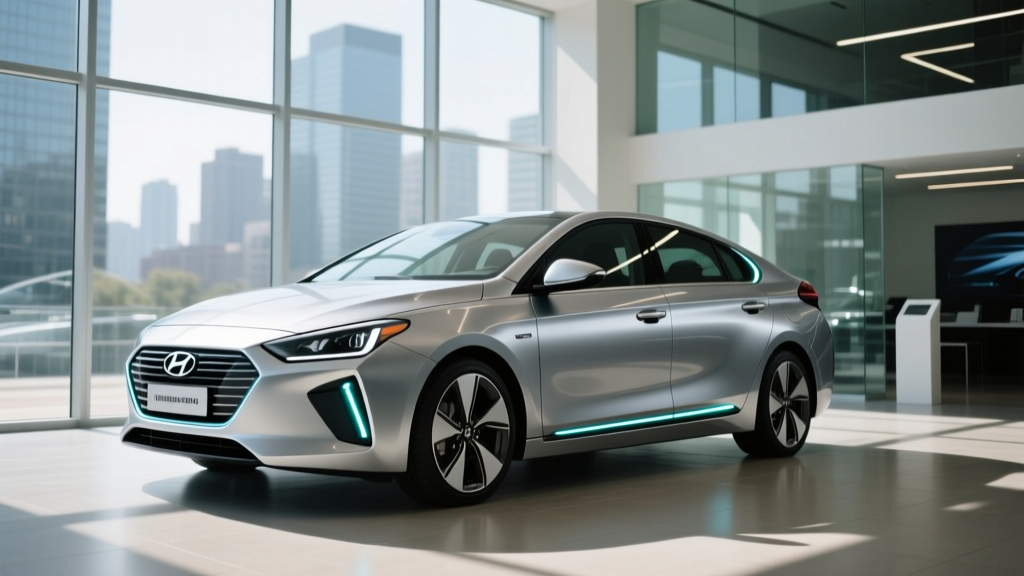
If you've been searching for a 2015 Hyundai Ioniq 6 Limited Sedan 4D, you've likely encountered a listing error, a mislabeled VIN, or a data-aggregator glitch. The Hyundai Ioniq 6 did not exist in 2015 — not as a concept, not as a prototype available to consumers, and certainly not as a production sedan. The Ioniq 6 debuted for the 2023 model year and remains in Hyundai's lineup as of 2026.
This article exists to clear up the confusion, explain where the "2015" designation likely comes from, and give you the actual specs, pricing, and ownership data for the current-generation Hyundai Ioniq 6 Limited — so you can make a real purchase decision with real numbers.
Why Does "2015 Hyundai Ioniq 6" Appear in Search Results?
Several factors create this phantom listing:
- Dealer data-entry errors: Third-party listing sites (Cars.com, AutoTrader, CarGurus) sometimes assign incorrect model years when a VIN is entered manually or when a dealer uploads inventory with a typo.
- Ioniq nameplate confusion: Hyundai launched the original Ioniq (a hatchback available as hybrid, plug-in hybrid, and full EV) for the 2017 model year. Some databases backfill "Ioniq" entries to earlier years incorrectly.
- Concept-to-production lag: Hyundai's Prophecy concept (which previewed the Ioniq 6) wasn't shown until 2020. No Ioniq-badged vehicle of any kind existed in 2015.
The Real Hyundai Ioniq 6 Limited: 2026 Specs at a Glance
Since the car you're actually looking for is the current-generation Ioniq 6 Limited, here are the precise specifications for the 2026 model year.
| Attribute | RWD | AWD (Dual Motor) |
|---|---|---|
| EPA Range | 361 miles | 316 miles |
| Battery (usable) | 77.4 kWh | 77.4 kWh |
| Chemistry | NMC (Nickel Manganese Cobalt) | NMC |
| Horsepower | 225 hp | 320 hp |
| Torque | 258 lb-ft | 446 lb-ft |
| 0-60 mph | 7.0 sec | 5.1 sec |
| Drivetrain | Rear-Wheel Drive | Dual-Motor AWD |
| Max DC Fast Charge | ~240 kW (peak) | ~240 kW (peak) |
| 10-80% DCFC Time | ~18 min (ideal) | ~18 min (ideal) |
| Level 2 (Home) Rate | 10.9 kW / ~36 mi/hr | 10.9 kW / ~36 mi/hr |
| MPGe (Combined) | 140 MPGe | 117 MPGe |
| kWh/100 mi | 24 kWh | 29 kWh |
| Cargo Volume | 12.3 cu ft (trunk) | 12.3 cu ft (trunk) |
| Rear Legroom | 37.2 in | 37.2 in |
| Battery Warranty | 10 yr / 100,000 mi | 10 yr / 100,000 mi |
| Limited Warranty | 5 yr / 60,000 mi | 5 yr / 60,000 mi |
Source: fueleconomy.gov, Hyundai Motor America spec sheets.
Real-World Range: What You'll Actually Get
Real-World Highway (70-75 mph, moderate temps): ~280-310 mi (RWD) / ~245-275 mi (AWD)
Cold Weather (below 32°F, highway): ~220-260 mi (RWD) / ~190-220 mi (AWD)
The Ioniq 6's aerodynamic shape (drag coefficient of 0.21) is a genuine advantage at highway speeds, helping it retain efficiency better than boxier EVs like the Ioniq 5 or Ford Mustang Mach-E. However, the NMC battery chemistry is sensitive to cold — expect 25-35% range reduction in sub-freezing conditions, consistent with industry norms for liquid-cooled NMC packs.
The RWD model's 140 MPGe combined is among the highest of any EV sold in the US, rivaling the Tesla Model 3 Long Range and the Lucid Air Pure. In practical terms, that's roughly 3.5-4.0 miles per kWh in mixed driving.
Charging Speed: The 800-Volt Advantage
Hyundai's E-GMP platform uses an 800-volt architecture (shared with the Kia EV6 and Genesis Electrified G80), which allows peak DC fast-charging rates near 240 kW on compatible 350 kW chargers.
| Level | Power | Connector | Rate (mi/hr added) | Notes |
|---|---|---|---|---|
| Level 1 (120V) | ~1.4 kW | J1772 / NACS (2025+) | ~4-5 mi/hr | Emergency/trickle only |
| Level 2 (240V, 48A) | 10.9 kW | J1772 / NACS (2025+) | ~36 mi/hr | Full charge in ~8-9 hours |
| DC Fast (350 kW station) | ~240 kW peak | CCS1 / NACS (2025+) | ~650+ mi/hr (peak) | 10-80% in ~18 min |
| DC Fast (150 kW station) | ~150 kW sustained | CCS1 / NACS | ~400 mi/hr | 10-80% in ~25 min |
Charging curve reality check: The 240 kW peak is achieved between roughly 10-55% State of Charge (SoC). Above 55%, the rate tapers to ~150 kW, and above 80% it drops to ~50-60 kW. This is normal for NMC chemistry but means a 10-90% session takes closer to 28-32 minutes, not 18. Hyundai's battery preconditioning feature (activated when you navigate to a DC fast charger in the infotainment) warms the pack to optimize charge acceptance — always use it in cold weather.
Connector note for 2026: Starting with the 2025 model year, Hyundai transitioned the Ioniq 6 to the NACS (Tesla-style) charge port. If you're buying a 2023-2024 model, it has CCS1 and will need an adapter for Tesla Superchargers. The Hyundai spec page confirms NACS as standard on 2025+ models.
Pricing, Trims, and Federal Tax Credit Eligibility
| Trim | Drivetrain | MSRP | Est. After §30D Credit* |
|---|---|---|---|
| SE Standard Range | RWD | ~$38,650 | ~$31,150 |
| SEL | RWD | ~$43,100 | ~$35,600 |
| SEL | AWD | ~$47,100 | ~$39,600 |
| Limited | RWD | ~$48,500 | ~$41,000 |
| Limited | AWD | ~$52,500 | ~$45,000 |
*Tax credit estimates assume full $7,500 eligibility under IRS §30D. Actual eligibility depends on buyer income, battery sourcing, and MSRP caps. See checklist below.
Federal EV Tax Credit (§30D) — Eligibility Checklist
- MSRP Cap: Sedans must be ≤ $55,000 MSRP. The Ioniq 6 Limited RWD (~$48,500) qualifies; Limited AWD (~$52,500) qualifies. (SUVs/vans have an $80,000 cap — the Ioniq 6 is classified as a sedan.)
- Buyer Income Cap: Modified AGI must not exceed $150,000 (single), $225,000 (head of household), or $300,000 (joint filers).
- Battery Sourcing: Critical minerals and battery components must meet escalating US/free-trade-agreement thresholds. Hyundai has shifted significant battery sourcing to the SK On Georgia plant, but eligibility can change quarterly. Verify current status at IRS.gov clean vehicle list.
- Point-of-Sale Transfer: As of 2024, the credit can be transferred to the dealer at purchase, reducing your out-of-pocket cost immediately (rather than waiting for a tax refund).
- Cannot exceed tax liability if claimed on your return (non-refundable), but the point-of-sale transfer bypasses this limitation.
Limited Trim: What You Get (and What's Missing)
The Limited is the top-tier Ioniq 6 and includes a substantial feature set:
Standout Features
- Dual 12.3-inch displays: A curved panoramic screen combining the digital cluster and infotainment — responsive, with native EV-specific menus (charging stations, energy flow, preconditioning timer).
- Hyundai SmartSense (Level 2 ADAS): Highway Driving Assist 2 (HDA2) with lane-centering, adaptive cruise, and lane-change assist. This is not self-driving — it's a SAE Level 2 system requiring continuous driver supervision.
- Digital side mirrors (Camera Monitoring System): Replaces traditional mirrors with cameras and interior OLED displays. Reduces drag; takes adjustment. Available on Limited only.
- Vehicle-to-Load (V2L): Powers external devices up to 3.6 kW via an interior outlet and an exterior adapter — useful for camping or emergency backup.
- Heat pump (standard on Limited): Improves cold-weather range by 10-15% compared to resistive cabin heating.
- Relaxation seats: Front seats with powered leg rests and zero-gravity recline — excellent for charging-stop rests.
Notable Drawbacks
- Trunk space is tight: 12.3 cu ft is smaller than a Toyota Camry's trunk (15.1 cu ft). The sloping roofline cuts into cargo height. No hatchback opening — this is a traditional sedan trunk.
- Rear headroom: The fastback roofline limits rear headroom to 37.3 inches — tall passengers will notice it on longer trips.
- No frunk (AWD models): The dual-motor AWD eliminates the front trunk. RWD models have a small 0.4 cu ft frunk — barely enough for a charging cable.
- Infotainment learning curve: Hyundai's capacitive-touch climate controls (no physical buttons) frustrate some drivers, especially while wearing gloves.
- Insurance costs: EV insurance premiums for the Ioniq 6 Limited average 15-25% higher than a comparable gas sedan due to repair costs and battery replacement risk.
- Best-in-class efficiency (140 MPGe RWD)
- 800V ultra-fast DC charging
- Sleek aerodynamic design (0.21 Cd)
- 10-year/100,000-mi battery warranty
- V2L capability
- Heat pump standard on Limited
- Small 12.3 cu ft trunk
- Cramped rear headroom
- No frunk on AWD
- Capacitive climate controls
- Higher insurance premiums
- NACS transition creates adapter confusion for 2023-2024 models
Who Should Buy the Ioniq 6 Limited?
The Ioniq 6 Limited is best suited for:
- Efficiency-focused commuters: If you drive 30-80 miles daily and want the lowest kWh/mile consumption in a midsize sedan, the RWD Limited is hard to beat.
- Design-conscious buyers: The Prophecy-inspired silhouette is polarizing but distinctive — it turns heads in a way few sedans do.
- Tech adopters: Digital mirrors, V2L, and 800V charging appeal to early adopters who want features beyond the mainstream.
It is not ideal for:
- Families needing cargo space: The Ioniq 5 or Kia EV6 offer hatchback practicality. The Ioniq 6's trunk is a genuine limitation.
- Heavy towing: The Ioniq 6 is not rated for towing. If you need to pull a trailer, look at the Hyundai Ioniq 5 (up to 1,650 lbs with AWD) or a truck-based EV.
- Buyers in extreme-cold climates without garage charging: NMC range loss in sustained sub-zero temps is significant. Consider a heated garage or an LFP-equipped competitor.
Is It Worth Buying vs. Key Competitors?
| Attribute | Hyundai Ioniq 6 Limited RWD | Tesla Model 3 Long Range | BMW i4 eDrive40 |
|---|---|---|---|
| EPA Range | 361 mi | 363 mi | 301 mi |
| Battery | 77.4 kWh (NMC) | ~79 kWh (NMC/LFP varies) | 81.5 kWh (NMC) |
| Peak DC Charge | ~240 kW | ~250 kW | ~205 kW |
| 0-60 mph | 7.0 sec | 4.2 sec | 5.5 sec |
| MSRP | ~$48,500 | ~$47,740 | ~$57,900 |
| §30D Credit Eligible | Yes (verify sourcing) | Yes (verify sourcing) | No (exceeds MSRP cap for sedans) |
| Cargo | 12.3 cu ft | 23 cu ft (hatchback) | 16.6 cu ft (hatchback) |
| ADAS | HDA2 (Level 2) | Autopilot (Level 2) | Driving Assistant Pro (Level 2) |
- Choose the Ioniq 6 Limited if: You prioritize efficiency, 800V charging speed, and distinctive design — and you don't need hatchback cargo space.
- Choose the Tesla Model 3 if: You want Supercharger network access (though NACS adoption is closing this gap), more cargo room, and faster acceleration.
- Choose the BMW i4 if: You prefer a luxury badge, superior driving dynamics, and hatchback utility — and the higher price (and lack of §30D credit) is acceptable.
Frequently Asked Questions
Does a 2015 Hyundai Ioniq 6 exist?
No. The Hyundai Ioniq 6 debuted for the 2023 model year. Any listing showing a "2015 Ioniq 6" contains a data error. The original Ioniq hatchback (a different vehicle entirely) launched for 2017. Always verify the VIN via NHTSA.
What is the real-world range of the 2026 Ioniq 6 Limited?
Expect 280-310 miles on highway drives in moderate temperatures (RWD). In cold weather below freezing, plan for 220-260 miles. City driving with regenerative braking can exceed the EPA estimate slightly.
How fast does the Ioniq 6 charge at home and on the road?
At home on a Level 2 (240V, 48A) charger, it adds ~36 miles per hour and fully charges in ~8-9 hours. On a 350 kW DC fast charger, it peaks at ~240 kW and charges 10-80% in ~18 minutes. On a more common 150 kW station, expect 10-80% in ~25 minutes.
Does the Ioniq 6 qualify for the $7,500 federal tax credit?
The Ioniq 6 has qualified for the full §30D credit at various points, but eligibility depends on your income (≤$150K single / ≤$300K joint), the MSRP (must be ≤$55K for sedans), and current battery-sourcing compliance. Always verify at IRS.gov before purchasing.
Is the Ioniq 6 Limited worth buying over the Ioniq 5?
If cargo space matters, the Ioniq 5's hatchback (23.7 cu ft behind rear seats) is far more practical. The Ioniq 6 wins on efficiency (140 vs. 114 MPGe), range (361 vs. 303 mi), and aerodynamic highway performance. They share the same E-GMP platform and 800V charging.
What battery warranty does Hyundai offer?
Hyundai covers the Ioniq 6's high-voltage battery for 10 years or 100,000 miles (whichever comes first), with a capacity-retention threshold of 70%. The basic vehicle warranty is 5 years/60,000 miles, and the powertrain warranty is 10 years/100,000 miles.
Can I use Tesla Superchargers with the Ioniq 6?
2025 and newer Ioniq 6 models come with a native NACS port and can use Tesla Superchargers directly. For 2023-2024 models (CCS1 port), Hyundai provides a NACS adapter, and Tesla has opened portions of its Supercharger network to non-Tesla EVs via the Magic Dock or adapter.