2026 Ford Mustang Mach-E: The Lease Case at a Glance
Leasing has become one of the smartest paths into a Ford Mustang Mach-E in 2026. With aggressive manufacturer incentives, shifting federal tax-credit rules, and rapidly evolving battery chemistry, a lease lets you lock in monthly payments while sidestepping depreciation risk and battery-sourcing uncertainty. The Mach-E itself remains one of the most well-rounded electric crossovers on the market — blending usable range, competitive DC fast-charging speeds, and a practical interior that works for families and commuters alike.
This review covers the 2026 Mach-E lineup with exact figures: EPA range, battery capacity and chemistry, charging curves, real-world efficiency, and what you'll actually pay after incentives. Whether you're comparing it against a Tesla Model Y, Hyundai IONIQ 5, or Volkswagen ID.4, the data below will tell you whether a Mach-E lease makes financial sense for your driving profile.
Range, Battery, and Real-World Efficiency
The 2026 Mach-E is available with two battery packs across multiple trims. Ford continues to offer both a Standard Range pack and an Extended Range pack, with chemistry varying by configuration.
| Spec | Standard Range (RWD) | Extended Range (RWD) | Extended Range (AWD) | GT (AWD) |
|---|---|---|---|---|
| Battery Capacity (usable) | 70 kWh (LFP) | 91 kWh (NMC) | 91 kWh (NMC) | 91 kWh (NMC) |
| EPA Range | 230 mi | 320 mi | 290 mi | 280 mi |
| Efficiency (MPGe) | 101 MPGe | 101 MPGe | 96 MPGe | 88 MPGe |
| Efficiency (kWh/100 mi) | 33 kWh | 33 kWh | 35 kWh | 38 kWh |
| Horsepower | 266 hp | 266 hp | 325 hp | 480 hp |
| 0-60 mph | 6.1 sec | 6.1 sec | 5.1 sec | 3.5 sec |
| Drivetrain | RWD | RWD | Dual-Motor AWD | Dual-Motor AWD |
Ford's use of LFP (lithium iron phosphate) chemistry on the Standard Range pack is a deliberate trade-off. LFP offers slower energy density (hence the lower range) but delivers superior cycle life, lower degradation over time, and the ability to charge to 100% daily without accelerating wear. If your commute is under 60 miles round-trip and you want a battery that degrades minimally over a 5-year lease, the LFP pack is arguably the smarter pick — even with the range penalty.
Charging Speed: DC Fast Charging and Home Level 2
Charging speed is where lease buyers need to look past peak kW numbers and understand the actual charge curve. The Mach-E's DC fast-charging performance varies significantly between the LFP and NMC packs.
| Charging Level | Standard Range (LFP) | Extended Range (NMC) |
|---|---|---|
| Max DC Fast Charge (peak kW) | 115 kW | 150 kW |
| 10-80% DC Fast Charge Time | ~38 min | ~33 min |
| Sustained DC Rate (10-60%) | ~95 kW avg | ~130 kW avg |
| Level 2 Home Charging (kW) | 10.5 kW (48A) | 10.5 kW (48A) |
| Level 2 Miles Added per Hour | ~30 mi/hr | ~30 mi/hr |
| Level 1 (120V) Miles per Hour | ~3 mi/hr | ~3 mi/hr |
On a 150 kW Electrify America or Tesla Supercharger (with NACS adapter), the Extended Range Mach-E pulls peak power only between roughly 15% and 45% State of Charge. Above 80%, the charge rate tapers sharply — a 60% to 100% session can take as long as the initial 10-60%. This is standard behavior for NMC chemistry with active thermal management, but it means you should plan road-trip stops around 10-80% sessions rather than full fills.
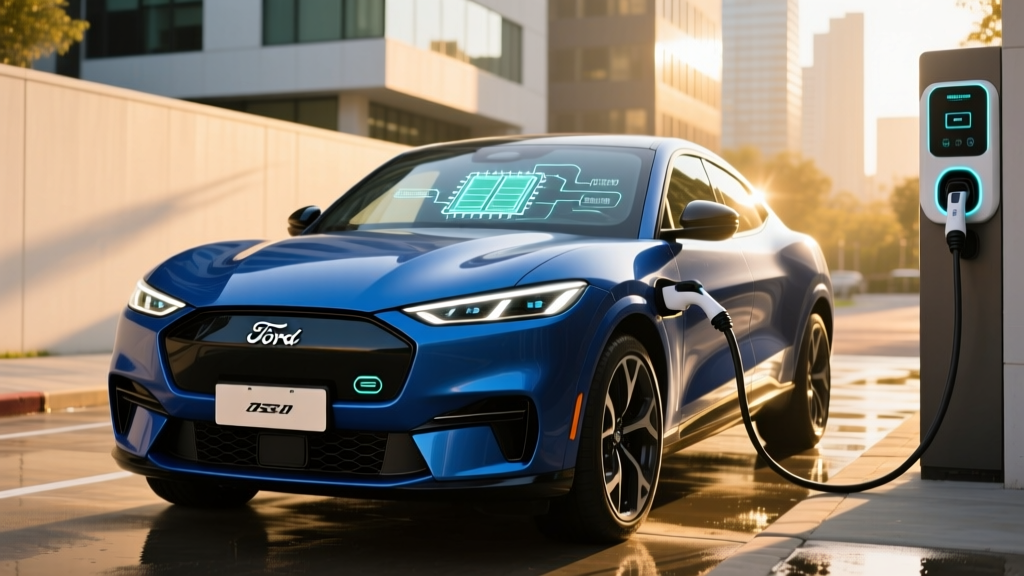
For home charging, the onboard 10.5 kW charger is competitive. On a 48-amp Level 2 circuit (requiring a 60-amp breaker), you'll add roughly 30 miles of range per hour — enough to fully replenish even the Extended Range pack overnight. Installation costs for a dedicated 240V/60A circuit typically run $800–$2,000 depending on panel proximity and local permitting, according to fueleconomy.gov home-charging guidelines. Factor this into your lease budget if you don't already have Level 2 infrastructure.
Pricing, Lease Deals, and Federal Tax Credit Eligibility
The 2026 Mach-E lineup spans four primary trims. Pricing below reflects MSRP before any incentives, destination charges included.
| Trim | MSRP (incl. destination) | Est. Lease (36 mo / 10.5k mi/yr) | §30D Credit Eligibility |
|---|---|---|---|
| Select RWD (Std Range) | $39,995 | $299–$369/mo | Likely eligible (LFP sourcing TBD) |
| Premium RWD (Ext Range) | $47,995 | $399–$479/mo | Check battery-sourcing compliance |
| Premium AWD (Ext Range) | $50,995 | $439–$519/mo | Check battery-sourcing compliance |
| GT (AWD, Ext Range) | $59,995 | $549–$649/mo | Check battery-sourcing compliance |
Federal tax credit under IRS §30D: The Mach-E is assembled in Cuautitlán, Mexico — which previously disqualified it under final-assembly rules. However, Ford restructured battery sourcing for 2026, and certain trims may now qualify for partial or full credits. The critical variables:
- MSRP cap: SUVs/crossovers must be under $80,000 — all Mach-E trims clear this.
- Buyer income cap: AGI must not exceed $150,000 (single) / $300,000 (joint) — verify against IRS §30D guidelines.
- Battery sourcing: Critical minerals and battery components must meet phased-in percentages from US/free-trade-agreement partners. Ford's LFP packs (sourced from CATL) may face restrictions; NMC packs with LG Energy cells are more likely to comply.
- Point-of-sale transfer: If eligible, the credit can be applied at purchase as a down-payment reduction — but for leases, the lessor (Ford Credit) claims the credit and may pass savings through as a capitalized-cost reduction. Always confirm with the dealer whether the lease quote reflects the credit.
Lease-specific advantage: Under the commercial clean vehicle credit (§45W), leasing companies can claim a separate credit on leased EVs even when the purchase credit is restricted by sourcing rules. Many Ford dealers apply this as a "lease cash" incentive of $3,000–$7,500 off the capitalized cost — effectively passing the benefit through regardless of §30D eligibility. Ask your dealer specifically about Ford Credit's current lease incentive structure.
Interior, Cargo, and Daily Practicality
The Mach-E's cabin prioritizes function over flair. The 15.5-inch vertical touchscreen running SYNC 4A dominates the dashboard and handles climate, navigation, and vehicle settings. Wireless Apple CarPlay and Android Auto are standard across all trims. Physical buttons are minimal — even the glovebox opens via the touchscreen, which draws consistent criticism for adding friction to a simple action.
Passenger and cargo dimensions:
- Front legroom: 43.3 inches
- Rear legroom: 38.9 inches
- Cargo (behind rear seats): 29.7 cu ft
- Cargo (rear seats folded): 59.7 cu ft
- Front trunk (frunk): 4.7 cu ft (drainable — useful for wet gear or tailgate ice chests)
The rear seat accommodates two adults comfortably on longer trips, though the sloping roofline cuts into headroom for passengers over 6 feet. Cargo volume trails the Hyundai IONIQ 5 (behind rear seats: 27.2 cu ft, but with a boxier shape that swallows bulkier items) and the Tesla Model Y (30.2 cu ft). The frunk is a genuine differentiator — few competitors offer a drainable front trunk at this price point.
Driver Assistance and Technology
Ford's BlueCruise hands-free driving system is available on Premium and GT trims (included or as part of a technology package). BlueCruise operates on pre-mapped divided highways — approximately 130,000 miles of compatible roads in the US and Canada as of 2026.
In real-world use, BlueCruise handles lane centering, adaptive cruise, and lane changes (on higher trims with Lane Change Assist) competently on well-marked interstates. It struggles with faded lane markings, tight construction-zone merges, and sudden cut-offs — situations where you must be ready to resume steering instantly. Compared to GM's Super Cruise, BlueCruise offers broader road coverage but slightly less confident lane-centering in crosswinds. Compared to Tesla Autopilot, it's more geofenced but has clearer driver-engagement expectations.
Standard safety features across all trims include automatic emergency braking with pedestrian detection, blind-spot monitoring, rear cross-traffic alert, and evasive steering assist. The Mach-E earned a 5-star overall rating from NHTSA and a Top Safety Pick designation from IIHS in prior model years.
Warranty and Long-Term Ownership
| Coverage | Term |
|---|---|
| Bumper-to-Bumper | 3 years / 36,000 miles |
| Powertrain | 5 years / 60,000 miles |
| EV Battery | 8 years / 100,000 miles (retains ≥70% capacity) |
| Corrosion Perforation | 5 years / unlimited miles |
| Roadside Assistance | 5 years / 60,000 miles |
The 8-year/100,000-mile battery warranty with a 70% capacity-retention threshold is industry-standard, matching most competitors. For lease buyers on a 36-month term, battery degradation is largely a non-issue — most Mach-E batteries lose 5–8% capacity in the first three years based on fleet data, well within the warranty threshold. If you're considering a longer 48-month lease, the LFP Standard Range pack offers more predictable long-term degradation (typically under 5% over 4 years with normal use).
Pros, Cons, and Who Should Lease the Mach-E
- Strong real-world range on Extended RWD (265–285 mi highway)
- LFP battery option for daily-charging commuters (100% SoC safe)
- Competitive lease incentives via §45W commercial credit passthrough
- BlueCruise hands-free driving on 130,000+ miles of highways
- Drainable frunk and practical cargo layout
- Strong NHTSA 5-star safety rating
- DC fast-charging (150 kW peak) trails Hyundai/Kia's 800V platforms (240+ kW)
- Touchscreen-only glovebox and climate controls frustrate some drivers
- Rear headroom limited for tall passengers due to roofline slope
- Standard Range pack's 230-mi EPA range is tight for road-trip use
- Mexico assembly complicates §30D purchase credit (less relevant for leases)
- Commuters (30-60 mi round-trip): The Select RWD with LFP battery is ideal — charge to 100% nightly, minimal degradation worry, lowest monthly payment.
- Families needing one-car versatility: Premium AWD with Extended Range balances 290 miles of range, dual-motor traction, and enough cargo space for strollers and groceries.
- Road-trip enthusiasts: Consider the IONIQ 5 or Model Y instead — faster DC charging (18-20 min 10-80%) makes multi-state trips less time-consuming.
- Performance seekers: The GT's 3.5-second 0-60 is thrilling, but the 280-mile range and 88 MPGe mean more frequent charging. Lease only if daily driving is under 80 miles.
Frequently Asked Questions
What is the real-world range of the Ford Mustang Mach-E?
The Extended Range RWD model delivers approximately 265–285 miles in highway driving at moderate temperatures, versus its 320-mile EPA sticker. In winter conditions below 30°F, expect 210–230 miles highway. The Standard Range LFP model achieves roughly 195–210 miles highway in fair weather, dropping to 185–200 in cold conditions.
How fast does the Mach-E charge at home and on DC fast chargers?
On a 48-amp Level 2 home charger (10.5 kW), the Mach-E adds approximately 30 miles of range per hour — a full charge takes 7–9 hours depending on pack size. On DC fast chargers, the Extended Range pack peaks at 150 kW and charges 10-80% in about 33 minutes. The Standard Range LFP pack peaks at 115 kW with a 10-80% time of roughly 38 minutes.
How much does a 2026 Mach-E lease cost after incentives?
Lease payments typically range from $299/month (Select RWD with incentives) to $649/month (GT AWD). Ford Credit frequently applies lease cash incentives derived from the §45W commercial clean vehicle credit — often $3,000–$7,500 off the capitalized cost — which can reduce monthly payments by $75–$175 depending on the trim and term. Always confirm the exact incentive amount with your dealer before signing.
Does the Ford Mustang Mach-E qualify for the federal EV tax credit?
For purchase, §30D eligibility depends on battery-sourcing compliance, which varies by trim and pack chemistry. However, for leases, the commercial vehicle credit (§45W) allows Ford Credit to claim a credit and pass savings through as a capitalized-cost reduction — often regardless of the sourcing restrictions that limit the purchase credit. Consult IRS clean vehicle credit resources and confirm with your dealer how the credit is applied to your specific lease structure.
Is the Mach-E worth leasing versus the Tesla Model Y or Hyundai IONIQ 5?
The Mach-E wins on BlueCruise highway coverage, frunk practicality, and often on lease pricing with incentives. The Model Y offers superior DC charging speed and Supercharger network access (though NACS adapters have narrowed this gap). The IONIQ 5 charges significantly faster (800V architecture, ~18 min 10-80%) and has a more spacious rear seat. If fast-charging speed on road trips is your top priority, the IONIQ 5 edges ahead. If you value hands-free highway driving and competitive lease rates, the Mach-E is the stronger pick.
What are the biggest drawbacks of the Mach-E?
The most common complaints are the touchscreen-only glovebox and climate controls (distracting while driving), DC charging speeds that lag behind 800V competitors, and limited rear headroom for tall passengers. The Standard Range model's 230-mile EPA range is also tight for buyers who regularly drive more than 150 miles between charging opportunities.