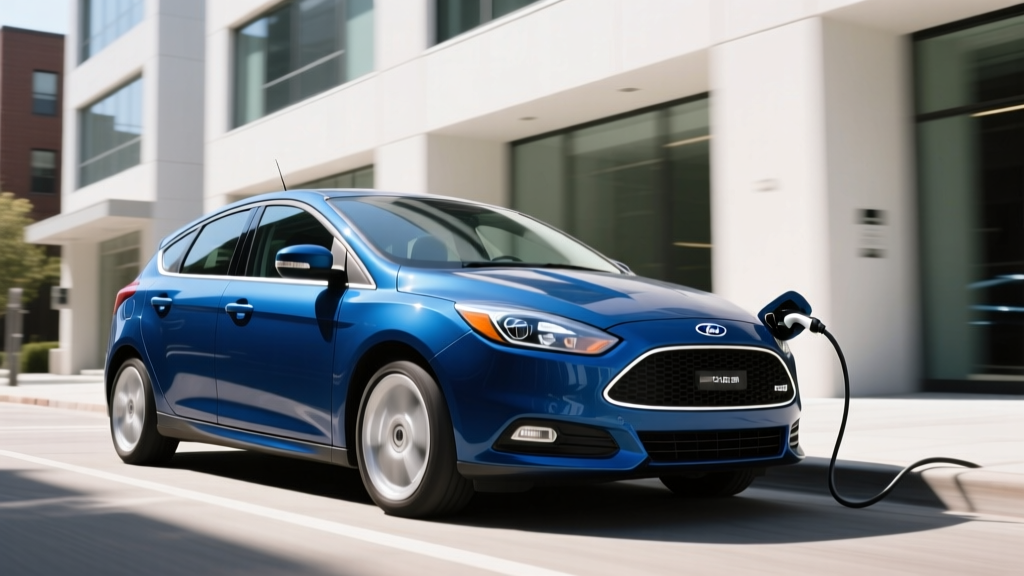
Quick Answer: Should You Buy a Used 2015 Ford Focus Electric in 2026?
The 2015 Ford Focus Electric delivers an EPA-estimated 76 miles of range from a 23 kWh usable liquid-cooled lithium-ion battery, with Level 2 charging at 6.6 kW (full charge in ~3.5 hours). It qualifies for the used EV tax credit (§25E) of up to $4,000 if the sale price is $25,000 or less and your income falls within IRS limits. With used prices typically between $6,000–$10,000 in 2026, it's one of the cheapest ways into EV ownership — but only if your daily driving stays under 50–60 miles round-trip, you have home Level 2 charging, and you live in a moderate climate. For longer commutes or cold-weather regions, modern used EVs like the Chevy Bolt EV (238+ miles) are a far better fit.
2015 Ford Focus Electric: Key Specs at a Glance
| Specification | Value |
|---|---|
| EPA Range | 76 miles |
| Battery Capacity (usable) | 23 kWh (liquid-cooled, LG Chem NMC) |
| EPA Efficiency | 105 MPGe combined (city 110 / hwy 99) |
| Energy Consumption | 32 kWh/100 miles |
| Level 2 Charging (AC) | 6.6 kW onboard charger — 0–100% in ~3.5 hours |
| DC Fast Charging | Not available (no DCFC port) |
| Motor Output | 107 kW (143 hp), 184 lb-ft torque |
| 0–60 mph | ~9.5 seconds |
| Top Speed | 84 mph (electronically limited) |
| Cargo Volume | 14.5 cu ft (reduced by battery packaging) |
| Original MSRP (2015) | $29,170 (before federal credit) |
| Typical Used Price (2026) | $6,000–$10,000 |
| Battery Warranty (original) | 8 years / 100,000 miles (expired for most) |
Source: fueleconomy.gov and Ford Motor Company specifications.
Real-World Range: What 76 EPA Miles Actually Means
EPA Sticker: 76 miles
Real-World Expectation: 55–70 miles in mixed driving; as low as 40–50 miles in cold weather (below 32°F) or sustained highway speeds above 65 mph.
The 76-mile EPA figure was modest even in 2015, and a decade of battery aging compresses it further. Expect State of Health (SoH) between 80–90% on most surviving examples, meaning effective capacity may be closer to 18–20 kWh. That translates to roughly 60–68 miles of usable range in mild conditions.
In cold weather, lithium-ion cells suffer increased internal resistance, and cabin heating draws heavily from the traction battery (the Focus Electric uses a resistive PTC heater, not a heat pump). Owners in northern climates commonly report 30–40% range loss in sub-freezing temperatures — bringing real range down to 40–50 miles. If your round-trip commute exceeds that, this car is not viable as a daily driver without mid-day charging access.
For context, the average American drives roughly 37 miles per day (FHWA data), which technically fits within the Focus Electric's envelope — but leaves virtually no buffer for detours, errands, or climate extremes.
Charging: No DC Fast Charging Is the Biggest Limitation
| Charging Level | Power (kW) | Time (0–100%) | Miles Added per Hour |
|---|---|---|---|
| Level 1 (120V household) | ~1.2 kW | ~20 hours | ~4 miles/hr |
| Level 2 (240V, 30A circuit) | 6.6 kW | ~3.5 hours | ~22 miles/hr |
| DC Fast Charge | N/A | N/A | N/A |
The 2015 Focus Electric has a J1772 connector for Level 1 and Level 2 AC charging only. There is no CHAdeMO, CCS, or NACS DC fast-charging capability. This is the single biggest practical limitation for used buyers. It means:
- Road trips are impractical. A 150-mile drive requires a multi-hour stop at a Level 2 charger.
- Public charging is slow. Even at a 50+ kW Electrify America or EVgo station, you can only pull 6.6 kW through the onboard charger.
- Home Level 2 is essential. Relying on Level 1 (120V) means ~20 hours for a full charge — barely enough to replenish a daily commute overnight.
A quality Level 2 home charger (such as a ChargePoint Home Flex or Emporia Level 2) costs $400–$700 for the unit, with professional installation running $500–$2,000 depending on your panel capacity and wiring distance. If your home has a 200-amp electrical panel with spare capacity, expect the total to land around $1,000–$1,800. Older homes with 100-amp panels may need a $2,000–$4,000 panel upgrade — a cost that can exceed the car's value.
Used EV Costs vs. a Comparable Gas Car
| Cost Factor | 2015 Focus Electric (Used) | 2015 Ford Focus Gas (1.0L EcoBoost) |
|---|---|---|
| Purchase Price (2026 used) | $6,000–$10,000 | $6,000–$9,000 |
| Used EV Tax Credit (§25E) | Up to $4,000 (40% of sale price ≤$25K) | $0 |
| Effective Purchase (after credit) | $3,600–$6,000 | $6,000–$9,000 |
| Fuel / Electricity Cost per Mile | ~$0.04–$0.06 (at $0.13–$0.18/kWh) | ~$0.11–$0.14 (at $3.20–$3.80/gal, 30 MPG) |
| Annual Fuel/Energy (12,000 mi) | ~$480–$720 | ~$1,280–$1,680 |
| Annual Maintenance | ~$200–$400 (tires, cabin filter, wipers) | ~$600–$1,000 (oil, filters, belts, spark plugs) |
| Insurance (annual avg) | ~$1,100–$1,500 | ~$900–$1,300 |
| Battery Replacement Risk | $5,000–$8,000 (if needed out of warranty) | N/A |
The math is compelling if you qualify for the §25E used EV credit. At a $7,000 sale price, the credit is $2,800 (40% of sale price), dropping your effective cost to $4,200. Annual energy savings of $600–$1,000 over the gas Focus pay that back quickly. However, the battery replacement risk is real — the original 8-year/100,000-mile battery warranty has expired on all 2015 models. A replacement pack, if available, can cost $5,000–$8,000 installed, potentially exceeding the vehicle's value.
Source: IRS §25E Used Clean Vehicle Credit
Battery Health: The #1 Thing to Check Before Buying
With the original battery warranty expired, battery State of Health (SoH) is the single most important pre-purchase inspection item. Here's what to evaluate:
- OBD2 battery scan: Use a tool like LeafSpy (adapted for Ford) or have a Ford dealer pull the battery health report. Look for SoH above 85%. Below 80% means noticeable range loss and potential replacement within a few years.
- Charging behavior: A healthy pack charges smoothly to 100%. Cells that won't balance, or a charge that stalls below full, signal degradation.
- Range test: Fully charge the vehicle and drive a measured route. If the car shows 65+ miles at 100% SoC in moderate weather, the pack is in acceptable shape.
- Climate history: Vehicles from hot climates (Arizona, Texas) may show accelerated degradation from heat exposure. The Focus Electric's liquid cooling helps, but prolonged high-SoC storage in heat is damaging.
The 23 kWh LG Chem NMC pack is liquid-cooled — a significant advantage over the passively cooled Nissan Leaf of the same era, which suffers well-documented heat-related degradation. However, 11-year-old NMC cells will have lost 10–20% of original capacity through normal calendar aging alone.
Common Misconceptions About the Focus Electric
| Myth | Fact |
|---|---|
| "It qualifies for the $7,500 federal tax credit." | The §30D new EV credit does not apply to used purchases. The §25E used EV credit offers up to $4,000 (40% of sale price), subject to income caps ($75K single / $150K joint) and a $25,000 max sale price. |
| "76 miles of range is enough for anyone." | 76 EPA miles translates to 55–70 real-world miles, dropping to 40–50 in cold weather. It works for short commutes but fails for errands, detours, or multi-stop days. |
| "I can fast-charge it on road trips." | The Focus Electric has no DC fast-charging port. Maximum charge rate is 6.6 kW on Level 2 — adding about 22 miles per hour. |
| "The battery will need replacing soon." | Liquid-cooled NMC packs from LG Chem have proven durable. Many 2012–2015 Focus Electrics still show 80–90% SoH. But it's not guaranteed — always scan before buying. |
| "It's just a regular Focus with a battery." | The battery pack intrudes into the cargo area, reducing trunk space to 14.5 cu ft (vs. 23.8 cu ft in the gas Focus). Rear-seat space is also slightly compromised. |
Who Should (and Shouldn't) Buy a 2015 Focus Electric
Buy It If:
- Your daily round-trip driving is under 50 miles with predictable routes
- You have home Level 2 charging (or can install it on a 200-amp panel without upgrade costs)
- You live in a moderate climate (rarely below 25°F in winter)
- You want the lowest possible cost of EV entry — under $5,000 after tax credit
- You need a second car for commuting and already own a gas/hybrid vehicle for longer trips
- You can verify battery SoH above 85% via pre-purchase scan
Skip It If:
- Your commute exceeds 50 miles round-trip or includes significant highway driving
- You live in a cold climate (consistent sub-freezing winters)
- You lack home charging access and would rely on public Level 2 stations
- You need this as your only vehicle — no DCFC means road trips are impractical
- You need cargo space — the battery hump compromises trunk utility
- Battery SoH scans below 80%, or the dealer cannot provide a health report
How It Compares to Other Used EVs in 2026
| Spec | 2015 Ford Focus Electric | 2017 Chevy Bolt EV | 2015 Nissan Leaf (30 kWh) |
|---|---|---|---|
| EPA Range | 76 mi | 238 mi | 107 mi |
| Battery (usable) | 23 kWh (NMC, liquid) | 60 kWh (NMC, liquid) | 30 kWh (NMC, passive air) |
| DC Fast Charging | None | 55 kW CCS | 50 kW CHAdeMO |
| Level 2 Rate | 6.6 kW | 7.2 kW | 6.6 kW |
| Typical Used Price (2026) | $6K–$10K | $10K–$15K | $6K–$10K |
| Battery Thermal Mgmt | Liquid cooled | Liquid cooled | Passive air (degrades in heat) |
The Chevy Bolt EV (2017+) is the clear upgrade path if your budget allows — 3x the range and DCFC capability for roughly $4,000–$6,000 more. The Nissan Leaf offers slightly more range but suffers from passive air cooling, making its battery more vulnerable to heat degradation and rapid-charge throttling. The Focus Electric's liquid cooling is a genuine advantage over the Leaf, but the lack of DCFC and lower range limit its utility.
Frequently Asked Questions
What is the real-world range of a 2015 Ford Focus Electric in 2026?
Expect 55–70 miles in moderate weather with a healthy battery (85%+ SoH). In cold weather below 32°F, plan for 40–50 miles. Battery degradation over 11 years typically reduces the original 76-mile EPA range by 10–20%.
Does the 2015 Ford Focus Electric qualify for any tax credits?
It does not qualify for the §30D new vehicle credit. However, it may qualify for the §25E Used Clean Vehicle Credit: up to $4,000 (40% of sale price), provided the sale price is ≤$25,000, the buyer's AGI is under $75,000 (single) or $150,000 (joint), and the vehicle is purchased from a licensed dealer. Check current rules at irs.gov.
Can I take the 2015 Focus Electric on road trips?
Practically, no. Without DC fast charging, a 150-mile trip requires stopping for 3+ hours at a Level 2 station. It's strictly a local commuter and errand vehicle.
How much does it cost to charge at home?
A full 23 kWh charge at the US average electricity rate of ~$0.16/kWh costs approximately $3.68. That delivers roughly 65 real-world miles, equating to about $0.057 per mile — roughly one-third the per-mile cost of a 30 MPG gas car at $3.50/gallon.
What should I check before buying a used 2015 Focus Electric?
Priority items: (1) Battery SoH scan via OBD2 or dealer tool — target 85%+. (2) Full charge test — does it reach 100% and display 70+ miles? (3) Verify Level 2 charging works with a known-good station. (4) Check for any outstanding recalls via NHTSA. (5) Inspect for coolant leaks around the battery thermal management system.
Is the 2015 Focus Electric a good first EV?
It can be — at the right price, with home charging and a short commute. It's one of the most affordable entries into EV ownership, with low running costs and simple mechanics. But its limitations (76-mile range, no DCFC) mean it works best as a second car or for drivers with very predictable, short routes. If you can stretch your budget to $10,000–$15,000, a used Chevy Bolt EV or 2018+ Nissan Leaf (40 kWh) offers dramatically more versatility.