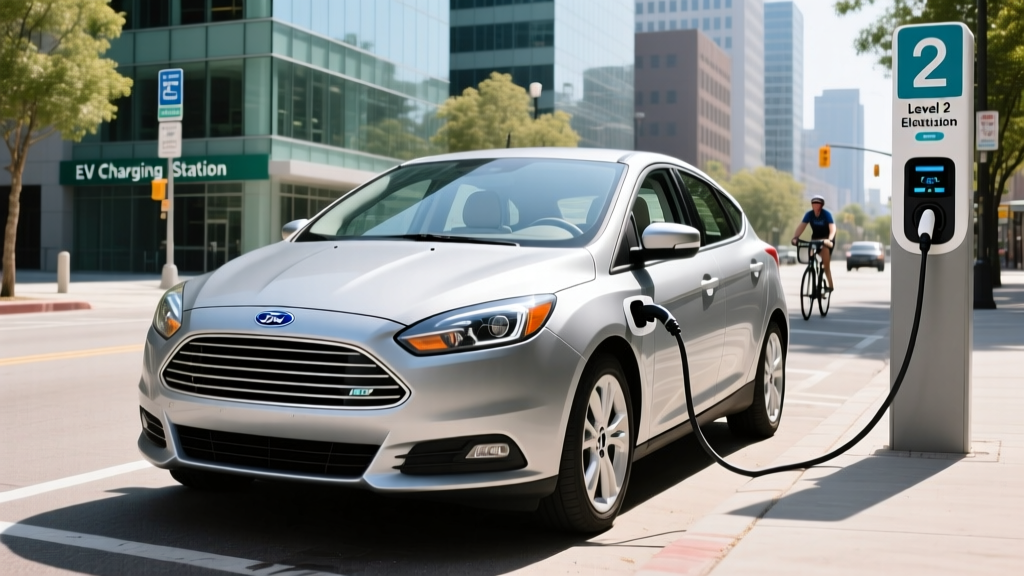
Quick Answer: Is the 2015 Ford Focus Electric Worth Buying in 2026?
The 2015 Ford Focus Electric delivers just 76 miles of EPA-estimated range from its 23 kWh usable liquid-cooled lithium-ion battery — a figure that feels severely limited by today's standards. On the used market in 2026, examples typically trade between $5,000 and $8,500 depending on mileage and battery state of health. It remains a viable second car for short urban commutes (under 30 miles round-trip) if you have reliable home Level 2 charging and live in a mild climate. For anything beyond that — highway driving, cold weather, or single-car households — modern used EVs like the Chevrolet Bolt EV or Nissan Leaf Plus offer vastly more capability for a similar budget.
2015 Focus Electric: Core Specifications at a Glance
Before evaluating this car as a used purchase, here are the hard numbers you need. Ford built the 2015 Focus Electric on the same global C-platform as the gasoline Focus, stuffing a 107 kW (143 hp) electric motor under the hood and a 23 kWh usable battery pack beneath the cargo floor. The result was competent city driving dynamics compromised by severely limited range and cargo space.
| Specification | Value |
|---|---|
| EPA Range | 76 miles |
| Battery (Usable) | 23 kWh, liquid-cooled lithium-ion |
| Motor Output | 107 kW / 143 hp / 184 lb-ft torque |
| 0-60 mph | ~9.2 seconds |
| EPA Efficiency | 105 MPGe combined (32 kWh/100 mi) |
| Level 2 AC Charging | 6.6 kW onboard charger (~3.5 hours 0-100%) |
| DC Fast Charging | Not available |
| Cargo Volume | 14.5 cu ft (reduced by battery pack) |
| Original MSRP (2015) | $29,170 (before $7,500 federal credit) |
| Typical Used Price (2026) | $5,000–$8,500 |
Source: EPA fueleconomy.gov
Real-World Range: What 76 EPA Miles Actually Means
EPA Sticker vs. Reality
EPA Estimated: 76 miles
Real-World Expectations:
- Mild weather, city driving: 70–80 miles
- Highway (65-70 mph): 55–65 miles
- Cold weather (below 40°F) with heat: 45–55 miles
- Hot weather (above 90°F) with A/C: 60–70 miles
The Focus Electric's liquid-cooled battery management system was one of its advantages over the air-cooled Nissan Leaf of the same era, meaning it suffers less from rapid thermal degradation during repeated charging or hot-weather driving. However, the small 23 kWh pack means you're working with a razor-thin energy margin.
After 10+ years of service, expect battery degradation of 15-25% depending on climate history and charging habits. A 2015 Focus Electric that originally delivered 76 miles may now realistically provide 55-65 miles on a full charge in ideal conditions, and as little as 40-45 miles in winter. Before purchasing any used example, request a battery state-of-health (SoH) reading from a Ford dealer or use an OBD-II reader with compatible software to check capacity retention.
Charging: No DC Fast Charging Is the Dealbreaker
The most significant limitation of the 2015 Focus Electric for modern buyers is the complete absence of DC fast charging capability. Ford equipped the car with a 6.6 kW onboard charger for Level 2 AC charging, which is adequate for overnight replenishment but makes road trips impractical.
| Charging Level | Power | Time (0-100%) | Miles Added per Hour |
|---|---|---|---|
| Level 1 (120V household) | ~1.2 kW | ~20 hours | ~3-4 miles |
| Level 2 (240V, 6.6 kW onboard) | 6.6 kW | ~3.5 hours | ~22 miles |
| DC Fast Charging | Not supported | N/A | N/A |
Without DC fast charging, this vehicle is strictly a home-base commuter. You cannot meaningfully use public fast-charging networks like Electrify America or Tesla Supercharger (with adapter). Every trip must begin with a full or near-full charge, and any detour that exceeds your remaining range becomes a multi-hour stranding event.
Home charging requirement: A Level 2 home charger is effectively mandatory. Relying on Level 1 (standard 120V outlet) means 20 hours for a full charge — impractical for daily driving if you use more than 30-40 miles of range per day. Budget $500-$1,500 for a quality Level 2 station (e.g., ChargePoint Home Flex, Emporia Vue) and $500-$2,000 for electrician installation, depending on whether your electrical panel needs an upgrade to support a 40-amp circuit.
Cost Breakdown: Used Focus Electric vs. Comparable Gas Car
Let's compare the real costs of owning a used 2015 Focus Electric against a comparable used 2015 Ford Focus gasoline model over a 3-year ownership period, assuming 8,000 miles driven per year (appropriate given the EV's range limitations).
| Cost Category (3 Years) | 2015 Focus Electric | 2015 Focus Gas (2.0L) |
|---|---|---|
| Purchase Price (avg. used) | $6,500 | $7,500 |
| Fuel/Energy (8,000 mi/yr) | $1,152 ($0.048/mi*) | $3,600 ($0.15/mi**) |
| Maintenance | $450 | $1,350 |
| Insurance (avg.) | $3,900 | $3,600 |
| Home Charger Install (one-time) | $1,500 | $0 |
| 3-Year Total | $13,502 | $16,050 |
*Based on $0.16/kWh national average electricity rate and 32 kWh/100 mi efficiency.
**Based on $3.00/gallon and 30 MPG combined.
The Focus Electric saves roughly $2,500 over three years despite the home charger investment — but only if you stay within its range envelope. If your commute occasionally exceeds 60 miles round-trip, you'll need a second vehicle anyway, which changes the economics entirely.
Maintenance Reality
The EV's maintenance advantage is genuine: no oil changes, no spark plugs, no transmission fluid, and regenerative braking extends brake pad life significantly (many owners report original pads at 80,000+ miles). Budget for cabin air filter replacement ($30-50/year), tire rotation, and eventual tire replacement. The electric motor and power electronics have proven reliable in this generation.
Insurance Considerations
Used EV insurance premiums are often 5-10% higher than equivalent gas cars due to higher repair costs for battery-adjacent damage and specialized technician requirements. Get quotes before purchasing.
Battery Health and Longevity: What to Watch For
The 2015 Focus Electric uses a liquid-cooled lithium-ion pack, which has aged better than the air-cooled packs in contemporary Nissan Leafs. Most examples on the road in 2026 show 75-85% of original capacity — meaning roughly 57-65 miles of usable range from the original 76-mile sticker.
Red flags to avoid:
- Battery SoH below 70% (range under ~53 miles when new equivalent)
- Vehicles from extremely hot climates (Arizona, Texas) with documented fast-charging-heavy history — though the lack of DCFC on this model limits this risk
- Examples that sat unused for extended periods at low or high state of charge
Warranty status: Ford's original battery warranty was 8 years/100,000 miles (capacity retention above 60%). Every 2015 Focus Electric is now outside this warranty window. A battery replacement, if needed, would cost $5,000-$8,000 — effectively totaling the vehicle. This is the single biggest financial risk of purchasing this car.
Federal Tax Credits and Incentives (2026 Rules)
The 2015 Focus Electric originally qualified for the full $7,500 federal tax credit when new. As a used vehicle purchased in 2026, it may qualify for the Used Clean Vehicle Credit under IRS §25E, which provides up to $4,000 or 30% of the sale price (whichever is lower).
Key eligibility requirements for the used-EV credit:
- Sale price must be $25,000 or less (easily met at $5,000-$8,500)
- Buyer income caps: $75,000 single / $112,500 head of household / $150,000 joint
- Vehicle must be at least 2 model years old (met)
- Must purchase from a licensed dealer (private-party sales do not qualify)
- Credit can be transferred to the dealer as a point-of-sale discount
- You can only claim this credit once every 3 years
At a $6,500 purchase price, the credit would be $1,950 (30% of sale price), bringing your effective cost to roughly $4,550. Consult a tax professional and verify current rules at IRS.gov, as incentive programs are subject to legislative change.
Note: Some states and utilities offer additional rebates for used EV purchases. Check your state energy office and local utility for current programs.
Decision Framework: Who Should Buy a 2015 Focus Electric?
Buy the 2015 Focus Electric If:
- Your daily round-trip commute is under 35 miles, even accounting for weather and detours
- You have access to reliable Level 2 home charging
- This is a second vehicle in a multi-car household
- You live in a mild climate (rarely below 35°F or above 95°F)
- You want the lowest possible entry price into EV ownership
- You can verify battery SoH above 75% before purchase
Look at Other Used EVs If:
- Your commute exceeds 40 miles round-trip
- You need DC fast charging for any road trips
- You live in a region with harsh winters (regular sub-30°F temperatures)
- This would be your only vehicle
- You cannot install a Level 2 home charger
- You need cargo space (the battery pack cuts trunk volume significantly)
Better Alternatives in the $7,000-$12,000 Used EV Market
| Vehicle | EPA Range | DC Fast Charging | Typical Used Price (2026) |
|---|---|---|---|
| 2017-2018 Chevrolet Bolt EV | 238 miles | Yes (CCS, ~55 kW) | $10,000–$14,000 |
| 2018-2019 Nissan Leaf Plus | 226 miles | Yes (CHAdeMO, ~50 kW) | $9,000–$13,000 |
| 2016-2017 BMW i3 (94 Ah) | 114 miles | Yes (CCS, ~50 kW) | $9,000–$12,000 |
| 2015 Ford Focus Electric | 76 miles | No | $5,000–$8,500 |
The Bolt EV in particular offers 3x the range, DC fast charging, and similar or better cargo space for roughly double the price — a worthwhile trade-off for most buyers.
Common Misconceptions About the 2015 Focus Electric
| Myth | Fact |
|---|---|
| "The battery will need expensive replacement soon" | Liquid-cooled packs from this era are lasting 10+ years with gradual degradation. Budget for eventual replacement, but it's not imminent on most examples. |
| "It can use Tesla Superchargers with an adapter" | DC fast charging hardware was never installed in this vehicle. No adapter can add this capability. It can use Level 2 J1772 public chargers, and Tesla Level 2 destination chargers with a J1772 adapter. |
| "76 miles is enough for most commutes" | The average US commute is ~32 miles round-trip, but real-world range in cold weather drops to 45-55 miles, leaving a dangerously thin margin for detours, errands, and climate control use. |
| "Used EVs don't qualify for any tax credits" | The §25E Used Clean Vehicle Credit offers up to $4,000 (30% of sale price) for qualified buyers purchasing from dealers. |
| "It charges fast at home" | 6.6 kW Level 2 charging adds about 22 miles per hour. A full 0-100% charge takes ~3.5 hours. This is average for the era but slow compared to modern 11+ kW onboard chargers. |
Frequently Asked Questions
Can I take a 2015 Focus Electric on a road trip?
Realistically, no. Without DC fast charging, every stop requires 3-4 hours at a Level 2 charger. A 200-mile trip would require at least two lengthy charging stops and careful planning around charger availability. This is a local commuter, not a travel vehicle.
How do I check the battery health before buying?
Ask a Ford dealer to run a battery health diagnostic, or use an OBD-II dongle with apps like Torque Pro or LeafSpy (with appropriate Ford-compatible adapters) to read the battery's state of health percentage. Anything below 75% SoH should be a negotiation point or a walk-away.
Does the 2015 Focus Electric qualify for HOV lane access?
HOV lane sticker programs vary by state and most have expired for vehicles of this model year. Check your state DMV for current rules — California's Clean Air Vehicle decals, for example, have limited transferability for used EV purchases.
What happens if the battery fails out of warranty?
A replacement battery pack costs $5,000-$8,000 installed, which exceeds the vehicle's value. Some independent EV shops offer cell-level repairs or refurbished packs at lower cost ($3,000-$5,000). Factor this risk into your purchase decision — if you can't absorb a potential $5,000 repair, this car may not be right for you.
Is the 2015 Focus Electric safe?
The Focus Electric shares the gasoline Focus's structure. The 2015 model received a "Good" rating in most IIHS crash tests, though it predates modern automatic emergency braking and advanced driver-assistance features. It has standard stability control, antilock brakes, and six airbags. See IIHS.org for detailed crash test results.
How does cold weather affect range?
Expect 25-40% range loss in sustained below-freezing temperatures. The Focus Electric uses a resistive heater (not a heat pump), which draws significant power from the already small battery. In 20°F weather, your 76-mile EPA range may shrink to 45-50 miles. Preconditioning the cabin while plugged in helps preserve range.
What's the difference between kW and kWh on this car?
The battery stores 23 kWh of energy (think of it as the "fuel tank size"). The motor produces up to 107 kW of power (the "engine output"). The onboard charger accepts up to 6.6 kW of power from a Level 2 station (the "fill speed"). Keeping these distinct prevents the most common EV confusion.
Final Verdict
The 2015 Ford Focus Electric is a budget-priced entry into EV ownership that demands you accept severe range limitations, no fast-charging capability, and an aging battery outside warranty. For the right buyer — short commute, home charging, mild climate, second-car use — it delivers low operating costs and a smooth, quiet electric driving experience at a rock-bottom price. For everyone else, spending $3,000-$5,000 more on a used Chevrolet Bolt EV or Nissan Leaf Plus provides exponentially more daily usability and long-term peace of mind.