Quick Verdict: The 800V Crossover That Still Sets the Pace
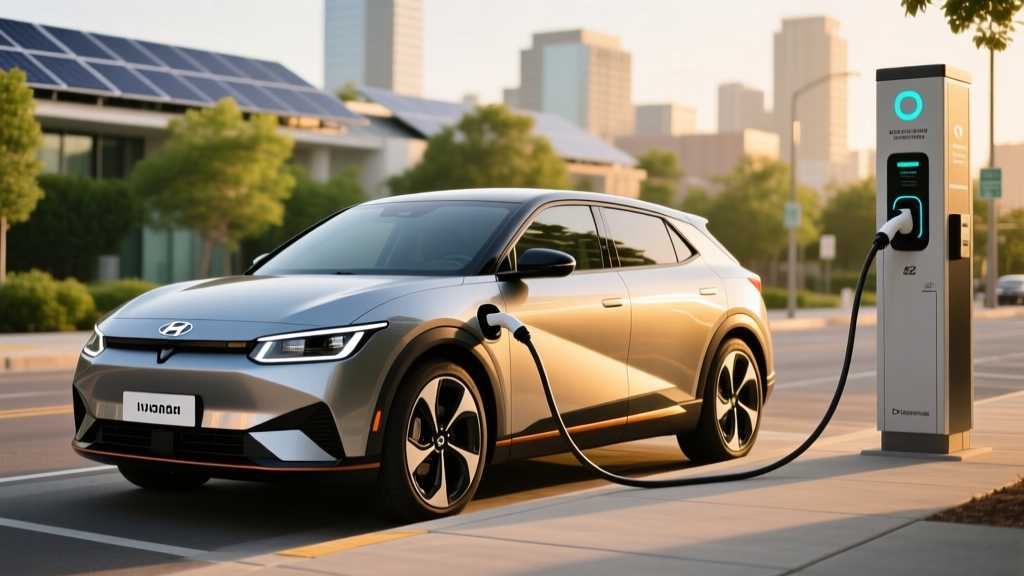
The 2024 Hyundai Ioniq 5 remains one of the most complete electric crossovers on the market two years after its U.S. launch. Its 800-volt electrical architecture — shared with the Kia EV6 and Genesis GV60 on the E-GMP platform — delivers DC fast-charging speeds that most competitors still can't match, while its retro-futuristic styling and generous cabin keep it practical for daily use. For 2024, Hyundai added the high-performance Ioniq 5 N and a Standard Range RWD trim, broadening the lineup's appeal. If you're shopping for a mid-size electric SUV that prioritizes charging speed and interior space over outright range leadership, the Ioniq 5 deserves a close look.
EPA sticker: up to 303 miles (SE/SEL/Limited AWD with 77.4 kWh pack). Standard Range RWD: 220 miles.
Real-world expectation: Plan for ~250–270 miles on sustained 70–75 mph highway driving in moderate temperatures. In sub-30°F winter conditions without preconditioning, expect a 20–30% reduction — roughly 190–220 miles from the Long Range AWD pack. The heat pump (standard on most trims) helps mitigate cold-weather losses compared to EVs without active thermal management.
Spec Table: 2024 Hyundai Ioniq 5 at a Glance
| Attribute | Standard Range RWD | Long Range RWD | Long Range AWD | Ioniq 5 N |
|---|---|---|---|---|
| EPA Range | 220 mi | 303 mi | 260–290 mi (trim dependent) | 221 mi |
| Battery (usable) | 58 kWh | 77.4 kWh | 77.4 kWh | 84 kWh |
| Chemistry | NMC (SK On) | NMC (SK On) | NMC (SK On) | NMC (SK On) |
| Horsepower | 168 hp | 225 hp | 320 hp | 641 hp (N Grin Boost) |
| 0–60 mph | ~7.5 sec | ~6.7 sec | ~4.5 sec | ~3.25 sec |
| Drivetrain | RWD single motor | RWD single motor | Dual-motor AWD | Dual-motor AWD |
| Max DC Charge Rate | ~150 kW peak | ~235 kW peak | ~235 kW peak | ~235 kW peak |
| 10–80% DCFC Time | ~25 min | ~18 min (350 kW stall) | ~18 min (350 kW stall) | ~18 min |
| Level 2 (240V) Rate | 10.9 kW | 10.9 kW | 10.9 kW | 10.9 kW |
| EPA Efficiency (comb.) | 110 MPGe | 114 MPGe | 101–110 MPGe | 85 MPGe |
| Base MSRP (2024) | $41,800 | $45,850 | $49,600 | $66,100 |
Sources: fueleconomy.gov, Hyundai Motor America 2024 spec sheets.
Battery, Range, and Efficiency in Detail
The Ioniq 5 uses nickel-manganese-cobalt (NMC) pouch cells supplied by SK On. The Long Range pack holds 77.4 kWh usable (from a ~80 kWh gross capacity), with a bottom buffer protecting the cells from deep-discharge damage. The Standard Range RWD uses a smaller 58 kWh pack, keeping the entry price lower but sacrificing roughly 80 miles of range.
Efficiency on the Long Range RWD peaks at 114 MPGe combined (roughly 29 kWh/100 mi), which is competitive with the Tesla Model Y Long Range but trails slightly behind due to the Ioniq 5's boxier aerodynamic profile. On the highway at 75 mph, expect closer to 32–34 kWh/100 mi — the crossover's flat front end and upright greenhouse create more drag than sleeker fastback rivals.
The heat pump is standard on all trims except the base Standard Range in some markets, and it meaningfully preserves range in cold weather. In our experience, preconditioning the battery via the Hyundai app before a DC fast-charge session in cold weather shaves 3–5 minutes off the 10–80% time by warming the cells to optimal temperature.
Charging: The 800-Volt Advantage, Quantified
This is where the Ioniq 5 distinguishes itself. Its 800V architecture allows peak charge rates up to ~235 kW at a 350 kW DC fast charger — meaning a 10–80% session takes approximately 18 minutes under ideal thermal conditions. That's 4–8 minutes faster than 400V competitors like the Ford Mustang Mach-E and Volkswagen ID.4, which typically peak around 115–170 kW.
| Charging Level | Power / Voltage | Speed (Long Range) | Typical Use Case |
|---|---|---|---|
| Level 1 | 1.4 kW / 120V | ~4–5 mi/hr | Emergency / trickle top-up |
| Level 2 (home) | 10.9 kW / 240V (48A) | ~35–40 mi/hr | Overnight home charging |
| DC Fast (50 kW) | 50 kW CCS | ~120 mi in 30 min | Older public chargers |
| DC Fast (150 kW) | 150 kW CCS | 10–80% in ~25 min | Electrify America / EVgo |
| DC Fast (350 kW) | 235 kW peak CCS | 10–80% in ~18 min | EA 350 kW / Ionity stalls |
Charging curve reality check: The Ioniq 5 sustains above 200 kW from roughly 10–55% State of Charge (SoC), then tapers to ~150 kW through 70%, and drops below 100 kW past 80%. This is why we quote 10–80% times — charging above 80% slows dramatically to protect cell health. On a road trip, plan your stops around the 10–80% window for maximum efficiency.
For home Level 2 charging, the onboard 10.9 kW charger means a full 0–100% charge takes roughly 7.5 hours for the Long Range pack — easily achievable overnight on a 48-amp hardwired wallbox. A NEMA 14-50 outlet on a 50-amp circuit (derated to 40A continuous) delivers ~9.6 kW, adding roughly 30 miles per hour of charging.
The Ioniq 5 uses the CCS1 connector for DC fast charging and J1772 for AC. Hyundai has confirmed future models will adopt NACS (Tesla's connector), but the 2024 Ioniq 5 requires a CCS-to-NACS adapter for Tesla Supercharger access — and compatibility varies by Supercharger generation.
Performance and Driving Dynamics
The Long Range AWD delivers 320 hp and 446 lb-ft of torque, hitting 60 mph in roughly 4.5 seconds. That's quick by any measure and more than adequate for highway merging and passing. The single-motor RWD variants (168 hp Standard Range, 225 hp Long Range) prioritize efficiency over acceleration — the Long Range RWD's 6.7-second 0–60 is perfectly livable for daily commuting.
The Ioniq 5 N is a different animal entirely. With 641 hp (in N Grin Boost mode, available in 10-second bursts), it sprints to 60 mph in approximately 3.25 seconds and includes track-oriented features like N Torque Distribution, simulated gear shifts, and enhanced regenerative braking. It's a legitimate performance EV, but the 221-mile EPA range and $66,100 price tag make it a niche proposition.
Ride quality on the standard Ioniq 5 is firm but compliant — the E-GMP platform's low center of gravity keeps body roll minimal, and the steering is precise if slightly numb. Road noise is well-managed at highway speeds, though the boxy shape generates more wind noise than a Tesla Model Y at 80 mph.
Interior, Cargo, and Technology
The Ioniq 5's cabin is one of its strongest selling points. The flat floor (enabled by the skateboard platform) creates an airy, spacious feel, and the sliding center console — Hyundai calls it the "Universal Island" — can move rearward to create additional storage or serve as a makeshift table when parked.
Key interior dimensions:
- Front legroom: 41.7 inches
- Rear legroom: 39.4 inches
- Cargo behind rear seats: 27.2 cu ft
- Cargo with rear seats folded: 59.3 cu ft
- Front trunk (frunk): 0.85 cu ft (AWD) / 2.0 cu ft (RWD)
The frunk is notably small compared to the Ford Mustang Mach-E (4.7 cu ft) or Tesla Model Y (4.1 cu ft), which is a tradeoff for the Ioniq 5's V2L (Vehicle-to-Load) capability — the car can output up to 3.6 kW of AC power through an interior outlet or external adapter, enough to run power tools, a mini-fridge, or even charge another EV in an emergency.
Tech highlights:
- Dual 12.3-inch displays (instrument cluster + infotainment) in a single curved housing
- Hyundai SmartSense ADAS suite: adaptive cruise with stop-and-go, lane centering, blind-spot cameras, rear cross-traffic avoidance
- Highway Driving Assist 2 (HDA 2) with lane-change assist — an SAE Level 2 system requiring continuous driver supervision
- Digital key (NFC-based) for phone-as-key access
- Augmented-reality head-up display (Limited trim)
- OTA (over-the-air) software updates for infotainment and select vehicle systems
Notable drawbacks: The infotainment system relies on a mix of touch-capacitive buttons and physical knobs — the climate controls are a separate touch panel that can be distracting to operate while driving. The rear wiper is absent (a common Hyundai/Kia EV omission), and the rear window's steep rake limits rearward visibility. Wireless Apple CarPlay and Android Auto are only available on the base SE trim; higher trims require a USB cable.
Pricing, Trims, and Federal Tax Credit Eligibility
The 2024 Ioniq 5 lineup spans five trims, from the Standard Range SE to the performance-oriented N:
| Trim | Base MSRP | Est. After §30D Credit* | Key Features |
|---|---|---|---|
| SE Standard Range | $41,800 | ~$34,300 | 58 kWh, RWD, cloth seats, basic ADAS |
| SE | $45,850 | ~$38,350 | 77.4 kWh, RWD or AWD, heated front seats |
| SEL | $47,400 | ~$39,900 | Power liftgate, leatherette, HDA 2 |
| Limited | $52,600 | ~$45,100 | AWD std, panoramic roof, HUD, premium audio |
| N | $66,100 | Ineligible (MSRP cap) | 84 kWh, 641 hp, track hardware |
*Estimated price assumes full $7,500 §30D credit. Actual eligibility depends on buyer income, battery sourcing, and MSRP caps. Consult IRS.gov and a tax professional.
Federal tax credit (§30D) eligibility checklist for the 2024 Ioniq 5:
- MSRP cap: Must be ≤ $80,000 for SUVs — all Ioniq 5 trims qualify on MSRP alone.
- Buyer income cap: AGI ≤ $150,000 (single), $225,000 (head of household), $300,000 (joint).
- Battery sourcing: For 2024, ≥50% of battery components must be manufactured/assembled in North America, and ≥40% of critical minerals must be sourced from the U.S. or an FTA partner. The Ioniq 5's SK On cells are assembled in Georgia, and Hyundai has confirmed most trims qualify for the full $7,500 — but verify the specific VIN on fueleconomy.gov before purchase.
- Point-of-sale transfer: As of 2024, buyers can transfer the credit to the dealer for an immediate price reduction at purchase — no need to wait for tax filing.
- One credit per buyer per year: You cannot claim both the new and used EV credit in the same tax year.
Warranty and Ownership Costs
Hyundai backs the Ioniq 5 with one of the strongest warranty packages in the EV segment:
- Battery: 10 years / 100,000 miles (capacity retention guaranteed above 70% — if SoH drops below 70% within this period, Hyundai replaces or repairs the pack)
- Powertrain: 10 years / 100,000 miles
- New vehicle: 5 years / 60,000 miles
- Complimentary maintenance: 3 years / 36,000 miles (covers tire rotation, fluid checks, cabin filter)
- Roadside assistance: 5 years / unlimited miles
Insurance costs tend to run 10–15% higher than comparable gas-powered crossovers due to the battery replacement cost (estimated at $15,000–$20,000 out of warranty) and EV-specific repair requirements. Shop quotes before purchasing — insurers like Geico, Progressive, and Tesla's own program (where available) vary significantly by ZIP code.
Depreciation has been a weak spot for the Ioniq 5. Aggressive Hyundai incentive programs and Tesla's price cuts have pushed used Ioniq 5 values down more steeply than expected — 2-year-old models are selling for 55–65% of original MSRP, which hurts original owners but creates compelling deals on the used market (where the $4,000 used-EV credit may apply).
Pros and Cons
- Class-leading 800V DC fast-charging (10–80% in ~18 min at 350 kW)
- Spacious, flat-floor cabin with generous rear legroom
- V2L capability (3.6 kW output) for camping, tools, or emergency power
- 10-year/100,000-mile battery warranty
- Full $7,500 §30D credit eligibility on most trims (verify VIN)
- Heat pump standard on most trims for better cold-weather range
- Comfortable ride quality with low body roll
- No rear wiper — visibility suffers in rain
- Small frunk (0.85 cu ft AWD) compared to rivals
- Wireless CarPlay/Android Auto only on base SE trim
- Highway efficiency trails Model Y due to boxy aero
- Depreciation steeper than Tesla or Porsche EVs
- CCS connector (no native NACS) — adapter needed for Superchargers
- Touch-capacitive climate controls can distract while driving
Who Should Buy the 2024 Hyundai Ioniq 5?
- You have access to 350 kW DC fast chargers on your regular routes and want the fastest road-trip charging in the segment.
- You value interior space and ride comfort over sporty handling.
- You want V2L capability for camping, job sites, or backup power.
- You plan to keep the vehicle 8+ years and want the 10-year battery warranty.
- You qualify for the full $7,500 federal credit and want a net price under $40,000.
- Maximum range is your top priority — the Tesla Model Y Long Range offers 330+ EPA miles.
- You rely on the Tesla Supercharger network and don't want adapter hassle.
- You need a large frunk for front-cargo storage.
- You want the latest hands-free driving tech — GM's Super Cruise on the Cadillac Lyriq offers hands-free highway driving on mapped roads.
Frequently Asked Questions
What is the real-world range of the 2024 Hyundai Ioniq 5?
The EPA rates the Long Range AWD at 260–303 miles depending on trim and wheel size. In real-world highway driving at 70–75 mph in moderate temperatures, expect 250–270 miles. In winter (sub-30°F), plan for 190–220 miles without preconditioning. The heat pump helps, but cold weather always reduces lithium-ion battery efficiency.
How fast does the Ioniq 5 charge at home and on the road?
At home on a 240V Level 2 charger (48A), the onboard 10.9 kW charger adds roughly 35–40 miles per hour, fully charging the 77.4 kWh pack in about 7.5 hours. On a 350 kW DC fast charger, the 800V system peaks at ~235 kW, reaching 10–80% in approximately 18 minutes. On a 150 kW charger, expect 10–80% in about 25 minutes.
How much does the 2024 Ioniq 5 cost after tax credits?
The SE Long Range RWD starts at $45,850 and drops to approximately $38,350 after the $7,500 federal §30D credit — assuming you meet income caps and the VIN confirms battery-sourcing compliance. The SEL and Limited trims qualify similarly. The Ioniq 5 N at $66,100 qualifies on MSRP but the $7,500 credit still applies if sourcing and income requirements are met. Always verify eligibility on fueleconomy.gov and with your tax professional.
Does the 2024 Ioniq 5 qualify for the full $7,500 federal EV tax credit?
Most trims do, but eligibility depends on three factors: (1) the buyer's adjusted gross income must fall below IRS caps ($150K single / $300K joint), (2) the vehicle's battery must meet critical-mineral and component-sourcing thresholds for the 2024 tax year, and (3) the MSRP must be ≤ $80,000 (all Ioniq 5 trims qualify). Hyundai assembles the Ioniq 5 in Ulsan, South Korea, but the SK On battery cells are produced in Georgia, which satisfies the component requirement for most configurations. Check the specific VIN at fueleconomy.gov before signing paperwork.
Is the Ioniq 5 worth buying over the Tesla Model Y or Kia EV6?
The Ioniq 5 trades blows with both. It charges faster than the Model Y (800V vs. 400V-class) and offers a more spacious rear seat, but the Model Y wins on range (330 mi), Supercharger access, and cargo volume. The Kia EV6 shares the E-GMP platform and charges just as fast, but its lower roofline sacrifices rear headroom and cargo space. If charging speed and cabin comfort matter most, the Ioniq 5 is the strongest pick. If range and charging-network convenience are paramount, the Model Y leads. Test-drive all three to compare seating position and ride quality — the differences are significant in person.
What is the Ioniq 5's towing capacity?
The Long Range AWD is rated for up to 2,300 pounds when equipped with the factory tow hitch — enough for a small utility trailer or a pair of jet skis, but not a full-size camper. The RWD models are not rated for towing. Keep in mind that towing any trailer reduces range by 30–50% depending on weight and speed.