Real-World Range Reality Check
EPA Estimated Range: 238 miles
What to Actually Expect: Plan for 190-210 miles on highway trips at 70+ mph, and 150-170 miles in freezing weather with heat running. City driving with regen braking gets you closest to the EPA number.
Quick Verdict: Is the 2015 Chevy Bolt Worth It?
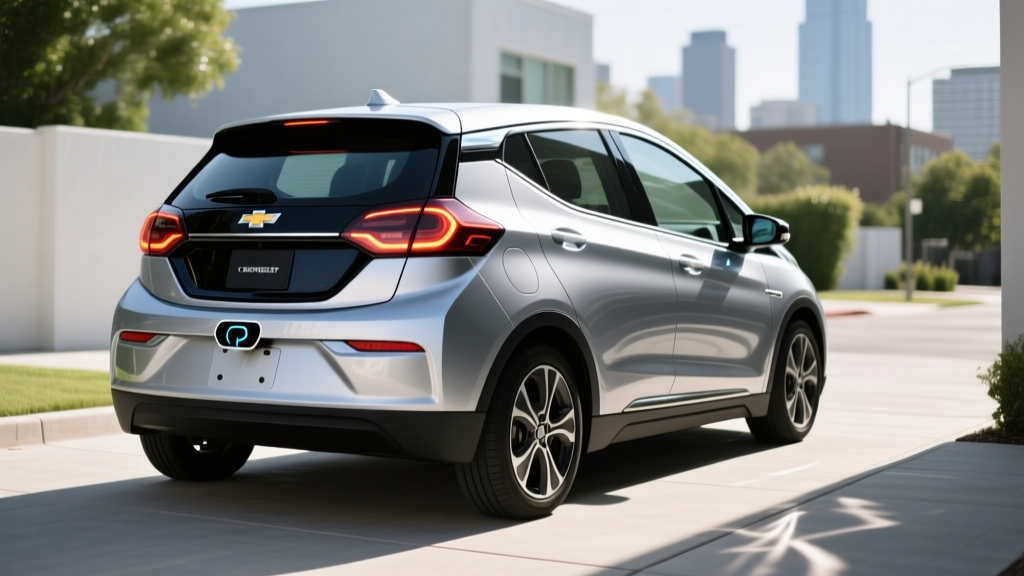
The 2015 Chevy Bolt EV was ahead of its time—a 238-mile range electric car starting around $37,500 when most competitors offered under 100 miles. But here's the catch: there was no 2015 model year Bolt. Chevrolet launched the Bolt EV as a 2017 model in late 2016. If you're searching for a "2015 Chevy Bolt," you're likely looking at early Bolt EVs from 2017-2018, or possibly confusing it with the Chevy Spark EV (discontinued in 2016).
For this review, we'll cover the 2017-2018 Bolt EV—the earliest model years that established this platform's reputation as a practical, affordable long-range EV.
| Spec | 2017-2018 Bolt EV |
|---|---|
| EPA Range | 238 miles |
| Battery Capacity | 60 kWh (usable ~57 kWh) |
| Battery Chemistry | NMC (Nickel Manganese Cobalt) |
| DC Fast Charge (Peak) | 55 kW (CCS) |
| 10-80% DC Charge Time | ~60 minutes |
| Level 2 Home Charging | 7.2 kW (25 miles/hour) |
| 0-60 mph | 6.5 seconds |
| Horsepower | 200 hp |
| Drivetrain | FWD (single motor) |
| Efficiency | 119 MPGe combined / 28 kWh/100mi |
| Cargo Volume | 16.9 cu ft (rear seats up) / 56.6 cu ft (folded) |
| Original MSRP (2017) | $37,495 (LT) / $43,995 (Premier) |
| Battery Warranty | 8 years / 100,000 miles |
Real-World Range: What You'll Actually Get
The EPA's 238-mile estimate assumes mixed driving with moderate temperatures and conservative speeds. Here's what owners report in real conditions:
- City driving (45-55 mph, lots of regen): 230-250 miles possible
- Highway cruising (70-75 mph): 190-210 miles
- Cold weather (below 40°F) with heat: 150-180 miles
- Hot weather (90°F+) with A/C: 200-220 miles
The Bolt EV lacks a heat pump, relying on resistive heating that draws significant battery power. If you live in a cold climate, expect 25-35% range loss in winter. Preconditioning while plugged in helps preserve range by warming the battery and cabin using grid power.
According to fueleconomy.gov, the Bolt EV achieves 119 MPGe combined, which translates to roughly 28 kWh per 100 miles—solid efficiency for its era.
Charging Speed: The Bolt's Biggest Weakness
| Charging Level | Power | Charge Rate | Time to Full |
|---|---|---|---|
| Level 1 (120V outlet) | 1.4 kW | ~4 miles/hour | ~60 hours |
| Level 2 (240V home) | 7.2 kW | ~25 miles/hour | ~9.5 hours |
| DC Fast (CCS) | 55 kW peak | ~90 miles in 30 min | 10-80% in ~60 min |
The 2017-2018 Bolt EV's charging speed is its most significant limitation. While competitors like the Tesla Model 3 and later EVs charge at 150-250 kW, the early Bolt tops out at just 55 kW on DC fast chargers.
Here's the charging curve reality: The Bolt charges at its peak 55 kW rate only from about 10-50% state of charge. Above 50%, the rate tapers to 40 kW, then drops further to 20-25 kW past 80%. A 10-80% session takes roughly 60 minutes—painfully slow by today's standards.
For road trips, plan charging stops around 60-75 minutes if you're starting near empty. The CCS connector is standard, and you'll find compatible chargers on Electrify America, EVgo, and ChargePoint networks.
At home, a 7.2 kW Level 2 charger (requiring a 32-amp circuit) adds about 25 miles per hour—enough to fully recharge overnight. Installation typically costs $500-1,500 depending on your electrical panel capacity.
Performance and Driving Experience
The Bolt EV's 200-horsepower electric motor delivers instant torque, launching from 0-60 mph in 6.5 seconds. That's quick for a compact hatchback, though the front-wheel-drive layout can struggle with traction during hard launches, especially in wet conditions.
Driving dynamics are competent but not sporty. The 3,500-pound curb weight (mostly from the battery pack) is well-managed, and the low center of gravity minimizes body roll. Regenerative braking offers two modes: "L" mode provides aggressive regen for near one-pedal driving, while "D" mode feels more like coasting in a gas car.
Ride quality is firm but compliant, with some road noise at highway speeds. The steering is light and numb—fine for commuting, uninspiring on back roads.
Interior, Tech, and Practicality
The Bolt EV's interior is functional but plasticky. Hard surfaces dominate, and the seats are flat and unsupportive on long trips. However, the hatchback body style delivers impressive cargo space:
- Rear seats up: 16.9 cubic feet (larger than most sedans' trunks)
- Rear seats folded: 56.6 cubic feet (rivaling small SUVs)
- Rear legroom: 36.5 inches (adequate for adults)
The 8-inch touchscreen infotainment system supports Apple CarPlay and Android Auto—a must-have feature that ages better than proprietary systems. The available DC fast charging, heated seats, and Bose audio are worthwhile options.
Driver assists are basic by modern standards: forward collision warning, automatic emergency braking, and lane keep assist are available but not standard. There's no adaptive cruise control or semi-autonomous driving features.
Pricing and Tax Credit Eligibility
| Trim | Original MSRP (2017) | Used Price Range (2026) | Used EV Credit (up to) |
|---|---|---|---|
| LT | $37,495 | $12,000-$16,000 | $4,000 |
| Premier | $43,995 | $14,000-$18,000 | $4,000 |
Since the Bolt EV is no longer new, the federal §30D new EV tax credit doesn't apply. However, you may qualify for the used EV tax credit—up to $4,000 or 30% of the sale price (whichever is lower) for vehicles under $25,000.
Used EV credit requirements (per IRS guidelines):
- Vehicle must be at least 2 model years old (2017-2018 Bolts qualify)
- Sale price must be $25,000 or less
- Buyer income limits: $75,000 single / $112,500 head of household / $150,000 joint
- Credit is 30% of sale price, max $4,000
- Must purchase from a licensed dealer (private sales don't qualify)
For a $14,000 used Bolt EV, the credit would be $4,000 (30% of $14,000 = $4,200, but capped at $4,000). That brings your effective cost down to $10,000—an exceptional value for a 238-mile EV.
Note: The Bolt EV was subject to a major battery recall in 2021-2022 due to fire risk. Chevrolet replaced battery modules in affected vehicles. Before buying used, verify the recall work was completed by checking the VIN on NHTSA's recall database.
Battery Longevity and Warranty
The Bolt EV's 60 kWh NMC (nickel manganese cobalt) battery pack carries an 8-year/100,000-mile warranty against defects and excessive degradation (below 60% capacity). In California and CARB states, the warranty extends to 10 years/150,000 miles.
Real-world degradation data from early Bolt owners shows 5-10% capacity loss after 100,000 miles—better than expected for NMC chemistry. However, frequent DC fast charging and regular charging to 100% accelerate degradation. For longevity, charge to 80% daily and save 100% sessions for road trips.
If the battery needs replacement out of warranty (after 8-10 years), expect to pay $8,000-12,000 for a refurbished pack. Given the vehicle's low used value, a battery failure could total the car economically.
Who Should Buy the 2017-2018 Bolt EV?
Buy the Bolt EV if:
- You need an affordable EV with 200+ mile range for commuting
- You can charge at home and rarely take road trips over 150 miles
- You want hatchback cargo space without SUV pricing
- You qualify for the used EV tax credit
Look elsewhere if:
- You frequently drive long distances (slow charging is frustrating)
- You live in a cold climate without garage parking (no heat pump = major range loss)
- You want modern driver assists or premium interior quality
- You need all-wheel drive or towing capability
Pros and Cons
Pros
- 238-mile EPA range (excellent for the price)
- Spacious hatchback cargo area
- Quick acceleration (200 hp, 6.5-second 0-60)
- Affordable used pricing with tax credit potential
- Apple CarPlay/Android Auto standard
- Proven reliability (post-recall)
Cons
- Slow DC fast charging (55 kW peak, 60-min 10-80%)
- No heat pump (major cold-weather range loss)
- Plasticky interior with unsupportive seats
- Front-wheel drive only (no AWD option)
- Basic driver assists by modern standards
- Battery recall history (verify completion)
Competition: Bolt EV vs. Alternatives
In the used EV market around $12,000-18,000, the Bolt EV competes with:
- 2018-2019 Nissan Leaf (40 kWh): 151-mile range, even slower charging, but more comfortable interior
- 2016-2018 Tesla Model S (60-75 kWh): 200-250 mile range, Supercharger network access, but higher maintenance costs and older tech
- 2018-2019 Hyundai Kona Electric: 258-mile range, faster charging (75 kW), but less cargo space and higher used prices
The Bolt EV wins on range-per-dollar and cargo practicality, but loses on charging speed and interior quality.
FAQ: 2017-2018 Chevy Bolt EV
Was there a 2015 Chevy Bolt?
No. The Chevrolet Bolt EV launched as a 2017 model in late 2016. If you're searching for a "2015 Chevy Bolt," you're likely looking at 2017-2018 model years or confusing it with the discontinued Chevy Spark EV (82-mile range).
What's the real-world range?
Expect 190-210 miles on highway trips, 150-180 miles in cold weather, and up to 250 miles in city driving with regenerative braking. The EPA's 238-mile estimate is achievable only in ideal conditions.
How fast does it charge?
DC fast charging peaks at 55 kW, taking about 60 minutes for a 10-80% charge. Home Level 2 charging at 7.2 kW adds 25 miles per hour, fully recharging in ~9.5 hours. This is significantly slower than modern EVs.
Do I qualify for a tax credit?
The new EV credit doesn't apply, but you may qualify for the used EV credit (up to $4,000) if you buy from a dealer for under $25,000 and your income is below $75,000 (single) or $150,000 (joint). Check IRS rules for details.
Is the battery recall fixed?
Chevrolet issued a recall in 2021-2022 for battery fire risk and replaced modules in affected vehicles. Before buying, verify the recall work was completed by checking the VIN on NHTSA.gov.
How long will the battery last?
Early Bolt owners report 5-10% degradation after 100,000 miles. The battery warranty covers 8 years/100,000 miles (10/150,000 in CARB states). Avoid frequent DC fast charging and daily 100% charges for best longevity.
Is it worth buying vs. competitors?
The Bolt EV offers the best range-per-dollar in the used EV market, but its slow charging makes road trips frustrating. If you mostly commute and charge at home, it's an excellent value. If you need fast charging or AWD, consider a used Tesla Model 3 or Hyundai Kona Electric instead.