The 2015 BMW i3 Electric at a Glance
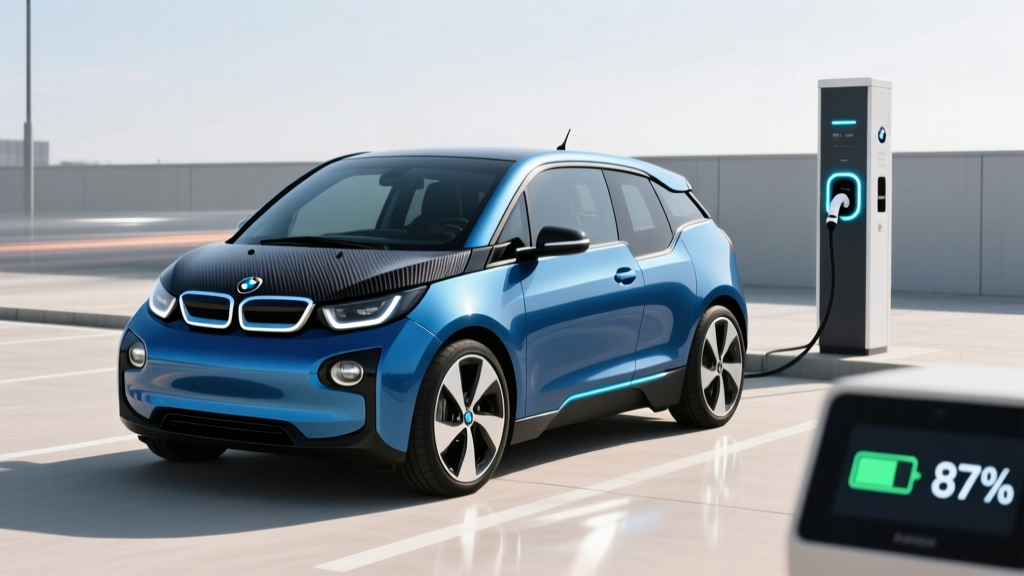
The 2015 BMW i3 electric was one of the most unconventional EVs of its era — a carbon-fiber-reinforced plastic (CFRP) passenger cell, skinny low-rolling-resistance tires, and a rear-mounted electric motor that made it feel like a city go-kart. More than a decade later, it remains a popular used EV find, often priced between $8,000 and $14,000 depending on mileage and battery health. But with an EPA-rated range of just 81 miles, it demands a clear-eyed look at what it can and cannot do in 2026.
This review covers the pure battery-electric version (BEV), not the Range Extender (REx) variant that paired a small gasoline generator with the electric drivetrain. If you're considering a used 2015 i3, here are the exact numbers and ownership realities you need.
| Spec | Value |
|---|---|
| EPA Range | 81 miles |
| Battery (Gross / Usable) | 22 kWh gross / ~18.8 kWh usable |
| Battery Chemistry | NMC (Nickel Manganese Cobalt) — Samsung SDI cells |
| MPGe (City / Hwy / Combined) | 137 / 111 / 124 MPGe |
| Energy Consumption | 27 kWh / 100 miles |
| Motor Output | 170 hp (125 kW) / 184 lb-ft torque |
| Drivetrain | Rear-wheel drive (RWD) |
| 0-60 mph | 7.0 seconds |
| Top Speed | 93 mph (electronically limited) |
| DC Fast Charge (CCS) | 50 kW peak |
| Level 2 Charge Rate | 7.4 kW (onboard charger) |
| Cargo Volume (rear seats up / folded) | 15.1 / 36.9 cu ft |
| Battery Warranty (original) | 8 years / 100,000 miles (70% capacity retention) |
| Original Base MSRP | $42,275 (before incentives) |
Real-World Range: What 81 EPA Miles Actually Means
EPA sticker: 81 miles. Real-world city driving in mild weather: 75–90 miles (the i3's aggressive regen and low weight help in stop-and-go traffic). Highway driving at 70 mph: 60–70 miles. Cold weather (below 32°F) with cabin heat: 45–60 miles. The 2015 i3 lacks a heat pump — it uses resistive cabin heating, which draws heavily from the ~18.8 kWh usable battery.
The 2015 BMW i3 electric carries a 22 kWh gross battery pack, but BMW reserved a substantial buffer to protect longevity. Usable capacity is approximately 18.8 kWh when new. After 10+ years of service, expect some degradation. BMW's battery warranty guaranteed at least 70% of original capacity for 8 years or 100,000 miles — meaning a warranted pack would still hold roughly 13.2 kWh usable, translating to around 55–60 miles of mixed driving.
When shopping for a used 2015 i3, request a battery State of Health (SoH) reading. Many owners report SoH between 75% and 88% at the 8–10 year mark, depending on climate and charging habits. An i3 with 82% SoH would offer approximately 15.4 kWh usable — roughly 60–68 miles of real-world range in moderate conditions. This is adequate for a city commuter with home charging but disqualifies the car from any role as a primary long-distance vehicle.
The i3's efficiency is genuinely impressive: at 124 MPGe combined (27 kWh/100 mi), it was one of the most efficient EVs sold in the U.S. Its lightweight CFRP structure (curb weight around 2,799 lbs) and narrow 155/70R19 tires minimize energy waste. According to fueleconomy.gov, the 2015 i3 BEV achieves 137 MPGe city and 111 MPGe highway.
Charging Speed: DC Fast, Level 2, and Level 1
Charging is where the 2015 i3's age shows most clearly. Modern EVs routinely accept 150–250 kW on DC fast chargers; the i3 peaks at 50 kW. Here's the full breakdown:
| Charging Level | Power / Rate | Time (Approx.) | Miles Added per Hour |
|---|---|---|---|
| Level 1 (120V household) | ~1.4 kW | ~14 hours (empty to full) | ~5 mi/hr |
| Level 2 (240V, 32A) | 7.4 kW (onboard limit) | ~3 hours (empty to full) | ~25 mi/hr |
| DC Fast Charge (CCS) | 50 kW peak | ~25–30 min (0–80%) | N/A (session-based) |
DC fast charging reality: The 50 kW peak rate only holds from roughly 0% to 50% State of Charge (SoC). Above 50%, the charge curve tapers significantly — by 80%, the rate drops to approximately 20–25 kW. A 10–80% session on a 50 kW CCS charger takes about 25–30 minutes. The i3 uses the CCS1 connector standard, which remains widely supported at Electrify America, EVgo, and ChargePoint stations in 2026.
Level 2 home charging: The onboard charger accepts up to 7.4 kW (32 amps at 240V). This means a standard 40-amp Level 2 home station (like a ChargePoint Home Flex or Emporia Level 2) will fully replenish the small battery in roughly 3 hours. For a daily commuter adding 30–40 miles per day, a nightly Level 2 session takes under 90 minutes — perfectly practical.
Preconditioning note: The 2015 i3 supports battery preconditioning when connected to a charger and using the departure timer. This warms the battery before a DC fast-charge session or a timed departure, improving charge acceptance in cold weather. Always precondition in winter if fast-charging.
Performance and Driving Dynamics
The rear-mounted synchronous electric motor produces 170 horsepower and 184 lb-ft of torque, available instantly from 0 rpm. The 0–60 mph sprint takes 7.0 seconds — respectable for a 2015 subcompact and genuinely quick off the line in city traffic. The i3's single-speed transmission and instant torque make it feel faster than the number suggests up to about 45 mph.
Driving dynamics are unique. The tall, narrow body and skinny tires prioritize efficiency over cornering grip, but the low center of gravity (battery pack under the floor) and rear-wheel drive give it a playful, tossable character. The steering is light and direct. Visibility is excellent thanks to the upright greenhouse and thin A-pillars.
Regenerative braking is aggressive — lift off the accelerator and the i3 decelerates briskly, enabling one-pedal driving in most city conditions. The brake pedal feel is somewhat artificial (a common EV trait from the era), but the friction brakes rarely engage in normal driving, which extends pad and rotor life considerably.
Interior, Cargo, and Technology
The i3's interior was radical for 2015 and still looks distinctive. The dashboard uses eucalyptus wood trim and recycled materials. The freestanding 6.5-inch iDrive display (BMW's iDrive 4.0 generation) handles infotainment, navigation, and vehicle settings. It lacks Apple CarPlay and Android Auto — a notable omission for 2026 daily use, though aftermarket solutions exist.
Passenger space: The i3 seats four (not five). Front legroom is 40.5 inches; rear legroom is 31.9 inches — tight for adults on longer trips. The rear-hinged "coach doors" (suicide doors) require the front door to open first for rear access, which is clever but awkward in tight parking spots.
Cargo: With rear seats upright, you get 15.1 cubic feet — comparable to a small hatchback. Fold the rear seats flat and capacity expands to 36.9 cu ft. There is no frunk (front trunk); the space under the hood houses the motor and power electronics.
Driver assistance: The 2015 i3 offers basic features: forward collision warning, city collision mitigation (automatic emergency braking at low speeds), and park distance control. It does not include adaptive cruise control, lane-keeping assist, or any Level 2 driver-assist system. By 2026 standards, the safety tech is minimal.
Pricing, Tax Credits, and Used-EV Economics
The 2015 BMW i3 originally started at $42,275 (base Mega World trim) before any incentives, climbing to over $50,000 for a fully loaded Giga World or Tera World model. In 2026's used market, expect to pay between $8,000 and $14,000 depending on mileage, condition, trim, and battery SoH.
| Item | Amount |
|---|---|
| Original Base MSRP (Mega World) | $42,275 |
| Original As-Tested (Giga World, options) | $48,000–$51,000 |
| 2026 Used Market Range | $8,000–$14,000 |
| Federal Used EV Tax Credit (§25E) | Up to $4,000 (30% of sale price, max $4,000) |
| Credit-Adjusted Price (best case) | As low as ~$4,000–$10,000 |
Federal tax credit for used EVs: The 2015 i3 does NOT qualify for the new-vehicle §30D credit (production ended years ago and the credit was non-transferable at point of sale in 2015). However, under the Inflation Reduction Act's §25E Used Clean Vehicle Credit, a used i3 purchased from a licensed dealer for $25,000 or less may qualify for 30% of the sale price, up to $4,000. Income caps apply: modified adjusted gross income (MAGI) must not exceed $75,000 (single), $112,500 (head of household), or $150,000 (joint). The vehicle must be at least two model years old and purchased from a dealer — private-party sales do not qualify. Consult a tax professional for your specific situation.
Insurance and maintenance: Insurance premiums for a used i3 are generally low given its value, though BMW parts can be expensive if bodywork is needed (the CFRP structure requires specialized repair facilities). Maintenance costs are minimal — no oil changes, minimal brake wear, and cabin air filter replacement are the primary recurring items. Tires are a specialty size (155/70R19) and can cost $200–$300 each; budget for this.
Pros, Cons, and Who Should Buy
- Exceptional efficiency: 124 MPGe combined, 27 kWh/100 mi
- Lightweight and nimble — genuinely fun city car
- Fast Level 2 charging (~3 hours full) due to small battery
- Unique CFRP construction — no rust concerns on the body structure
- One-pedal driving with strong regenerative braking
- Eligible for up to $4,000 used-EV federal tax credit (§25E)
- Low used-market entry price ($8K–$14K)
- 81-mile EPA range — severely limits trip flexibility
- 50 kW DC fast charging is slow by 2026 standards
- No Apple CarPlay or Android Auto
- Rear-hinged coach doors are impractical in tight spaces
- Rear seat is tight (31.9" legroom) — not family-friendly
- No heat pump — significant range loss in cold weather
- Specialty tire size is expensive to replace
- Battery degradation reduces already-limited range
Best suited for: A solo commuter or two-person household with reliable home Level 2 charging, a round-trip commute under 40 miles, and access to a second vehicle for longer trips. The i3 excels as a city runabout — parking is effortless, efficiency is outstanding, and the quirky interior makes every short trip enjoyable.
Not suited for: Families needing rear-seat space, anyone without home charging, drivers in extreme cold climates (without preconditioning discipline), or anyone expecting to road-trip regularly. The 81-mile range and 50 kW charging make highway travel stressful.
2015 BMW i3 vs. Key Used-EV Competitors
| Vehicle | EPA Range | Battery | DC Fast kW | Used Price (2026) |
|---|---|---|---|---|
| 2015 BMW i3 BEV | 81 mi | 22 kWh (18.8 usable) | 50 kW | $8K–$14K |
| 2015 Nissan Leaf (24 kWh) | 84 mi | 24 kWh (~21 usable) | 50 kW (CHAdeMO) | $6K–$11K |
| 2015 Fiat 500e | 87 mi | 24 kWh (~19 usable) | No DC fast charge | $7K–$11K |
| 2015 VW e-Golf | 83 mi | 24.2 kWh (~20 usable) | 50 kW (CCS) | $8K–$13K |
| 2016 Chevrolet Spark EV | 82 mi | 19 kWh (~17 usable) | 50 kW (CCS/CHAdeMO) | $6K–$9K |
Among 2015-era used EVs, the i3 stands out for efficiency and build quality but trails in practicality. The Leaf offers slightly more range and a larger cabin (though its CHAdeMO connector is becoming less common at new U.S. charging stations). The e-Golf provides a more conventional hatchback shape with similar range. The i3's CFRP body and BMW driving dynamics justify a modest price premium if range needs are modest.
Frequently Asked Questions
What is the real-world range of the 2015 BMW i3 electric?
In mild weather with city driving, expect 75–90 miles. Highway driving at 70 mph drops this to 60–70 miles. In freezing temperatures with resistive cabin heat, range can fall to 45–60 miles. Battery degradation (typical 12–25% loss after 10 years) further reduces these figures. Always check the specific vehicle's State of Health before purchasing.
How fast does the 2015 BMW i3 charge?
On a 50 kW CCS DC fast charger, 0–80% takes approximately 25–30 minutes, though the rate tapers significantly above 50% SoC. On a 7.4 kW Level 2 home charger, a full charge takes about 3 hours. On a standard 120V outlet (Level 1), expect roughly 14 hours for a full charge — impractical for daily use if you drive more than 20 miles per day.
Does the 2015 BMW i3 qualify for the federal EV tax credit?
Not the new-vehicle §30D credit, which is no longer available for discontinued models. However, under §25E, you may qualify for up to $4,000 (30% of the purchase price) when buying a used i3 from a licensed dealer for $25,000 or less. Buyer income caps apply ($75K single / $150K joint MAGI). See IRS guidelines on the used clean vehicle credit and consult a tax professional.
Is the 2015 BMW i3 worth buying in 2026?
Yes — but only for the right buyer. If you need a cheap, efficient city commuter with home charging and a sub-40-mile daily drive, the i3 is an excellent value, especially with the $4,000 used-EV credit. If you need highway range, family space, or fast road-trip charging, look at a used Chevrolet Bolt EV (238-mile range) or a newer Hyundai Kona Electric instead.
What should I check before buying a used 2015 i3?
Prioritize three items: (1) Battery State of Health — request a SoH reading from a BMW dealer or use an OBD2 reader with the appropriate app; aim for 80% or higher. (2) Service history — confirm the brake fluid has been flushed (BMW recommends every 2 years) and check for any recall completions. (3) Tire condition — the 155/70R19 tires are expensive and not all tire shops stock them.
Does the 2015 i3 have a range extender option?
Yes — BMW sold the i3 REx (Range Extender) alongside the pure BEV. The REx adds a 647cc two-cylinder gasoline engine that acts as a generator, extending total range to roughly 150–180 miles combined. The REx has a smaller fuel tank (about 2.4 gallons) and is not a plug-in hybrid in the traditional sense — the engine never directly drives the wheels. This review covers the BEV only.