Quick Verdict: A Performance Bargain With Battery Caveats
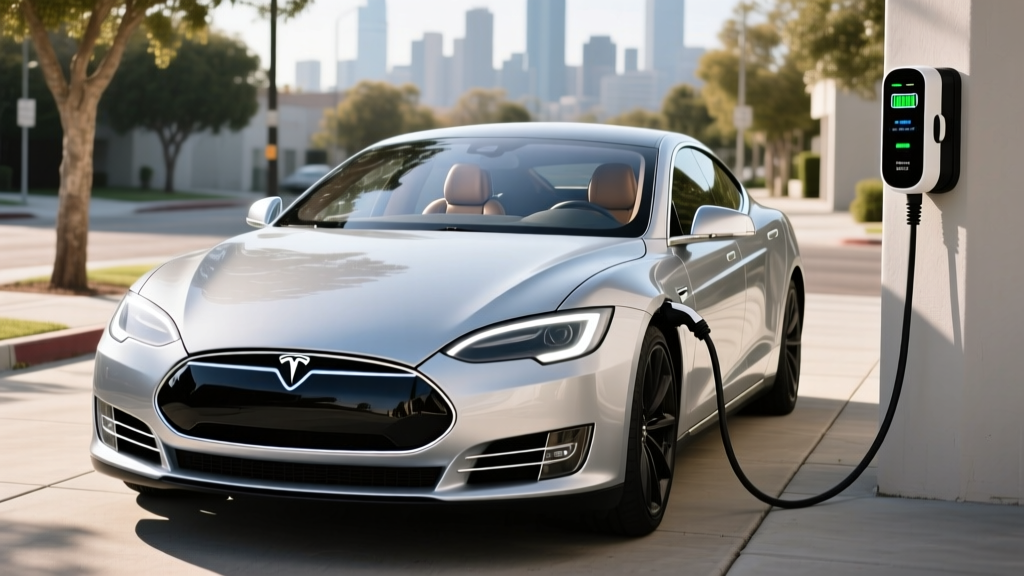
The 2014 Tesla Model S P85 remains one of the most compelling used electric vehicles on the market. Originally priced around $101,000 new, examples now trade between $18,000 and $30,000 depending on mileage, battery health, and condition. The P85's 416-horsepower rear-wheel-drive powertrain still delivers supercar-rivaling acceleration, and access to Tesla's Supercharger network gives it a practical edge over other 2014-era EVs.
But buying a decade-old EV hinges almost entirely on one component: the battery. The 85 kWh NMC pack has proven reasonably durable, but most 2014 P85s will show 10–20% degradation by now, and some may need a replacement that costs $12,000–$20,000. This review breaks down exactly what to expect from range, charging, ownership costs, and whether the P85 still makes sense against modern alternatives.
Range, Efficiency & the Battery Degradation Reality
Real-World Range Today: Expect 200–235 miles with a healthy battery. Highway driving at 75 mph reduces this to ~180–200 miles. In cold weather (below 32°F), plan on 150–180 miles due to battery resistance and cabin heating demands.
The 2014 P85 carries an 85 kWh lithium-ion battery pack using NMC (nickel-manganese-cobalt) chemistry. When new, the EPA rated it at 265 miles of combined range — impressive for 2014 and still respectable today.
However, NMC batteries degrade with time, heat exposure, and charge cycles. Based on long-term fleet data and owner surveys, a typical 2014 P85 battery retains roughly 80–90% of its original capacity after 100,000–120,000 miles. That translates to roughly 210–240 miles of usable range on a full charge for a well-maintained example.
Efficiency was rated at 89 MPGe combined (38 kWh per 100 miles) when new. Real-world efficiency varies: expect 34–40 kWh/100 mi depending on driving style, climate control use, and ambient temperature. The P85's single rear motor and heavy curb weight (~4,600 lbs) make it less efficient than modern dual-motor EVs with heat pumps and silicon-carbide inverters.
| Spec | Value |
|---|---|
| Battery Capacity | 85 kWh (NMC chemistry) |
| EPA Range (New) | 265 miles |
| Real-World Range (2026, ~80-90% SoH) | 200–235 miles |
| Motor | Single rear motor (RWD) |
| Horsepower | 416 hp |
| Torque | 443 lb-ft |
| 0–60 mph | 4.2 seconds |
| EPA Efficiency | 89 MPGe / 38 kWh/100 mi |
| Curb Weight | ~4,643 lbs |
| Cargo Volume | 26.3 cu ft (rear) + 5.3 cu ft (frunk) |
| Seating | 5 adults (optional rear-facing 3rd row for children) |
Charging Speeds: Supercharger Access Is the P85's Trump Card
Charging infrastructure separates the 2014 P85 from nearly every other used EV of its era. Tesla's proprietary Supercharger network — now increasingly open to other brands via NACS adoption — remains the most reliable DC fast-charging network in the U.S.
| Charging Level | Power / Rate | Time / Range Added |
|---|---|---|
| Level 1 (120V household) | ~1.4 kW | ~3 miles per hour |
| Level 2 (240V, 40A onboard charger) | ~10 kW | ~29 miles per hour; full charge in ~9 hours |
| Level 2 (240V, optional dual chargers) | ~20 kW | ~58 miles per hour; full charge in ~4.5 hours |
| DC Fast Charge (Tesla Supercharger V2) | Peak ~120 kW | 10–80% in ~40 minutes; ~170 miles in 30 min |
| DC Fast Charge (CHAdeMO adapter) | Peak ~50 kW | 10–80% in ~90 minutes (adapter required, ~$400) |
The P85's onboard charger accepts up to 10 kW on Level 2 (single charger) or 20 kW with the optional dual-charger configuration. Most 2014 P85s were ordered with dual chargers, but verify this before purchase — it significantly impacts home charging speed.
On Tesla Superchargers, the P85 peaks around 120 kW but sustains that rate only briefly. The charge curve tapers noticeably above 60% state of charge (SoC), and you'll see rates drop to 40–60 kW above 80%. A typical 10–80% session takes about 40 minutes. This is slower than modern 800V EVs that achieve 10–80% in 18 minutes, but it's adequate for road-trip stops.
Important note: The 2014 P85 uses Tesla's proprietary connector (now called NACS). It can charge at any Tesla Supercharger and any destination charger with the Tesla connector. For CCS-based public chargers (Electrify America, EVgo CCS stalls), you'll need an adapter — and DC fast charging via CCS adapters on older Teslas has limited compatibility. CHAdeMO adapters exist but are slow and increasingly obsolete.
Performance: Still Quick, Still Refined
The "P" in P85 stands for Performance, and the numbers back it up. The single rear-mounted AC induction motor produces 416 horsepower and 443 lb-ft of torque, delivering instant, linear acceleration that still feels urgent in 2026.
The 0–60 mph sprint takes 4.2 seconds — quick enough to embarrass most gas-powered sedans from the same era. The P85 lacks the dual-motor all-wheel-drive traction of later P85D and P90D models, so launch grip depends on tire condition and road surface. On wet pavement, you'll feel the rear wheels break traction before the electronic stability control intervenes.
Ride quality is a highlight. The 2014 Model S uses a sophisticated multi-link rear suspension and adaptive air suspension (standard on P85). At highway speeds, it settles into a comfortable, quiet cruise. The air suspension can raise for driveways and speed bumps or lower for aerodynamic efficiency. However, air suspension failures are a known issue on 2012–2016 Model S vehicles — budget $1,500–$2,500 per corner if struts need replacement.
Interior, Tech & Driver Assistance
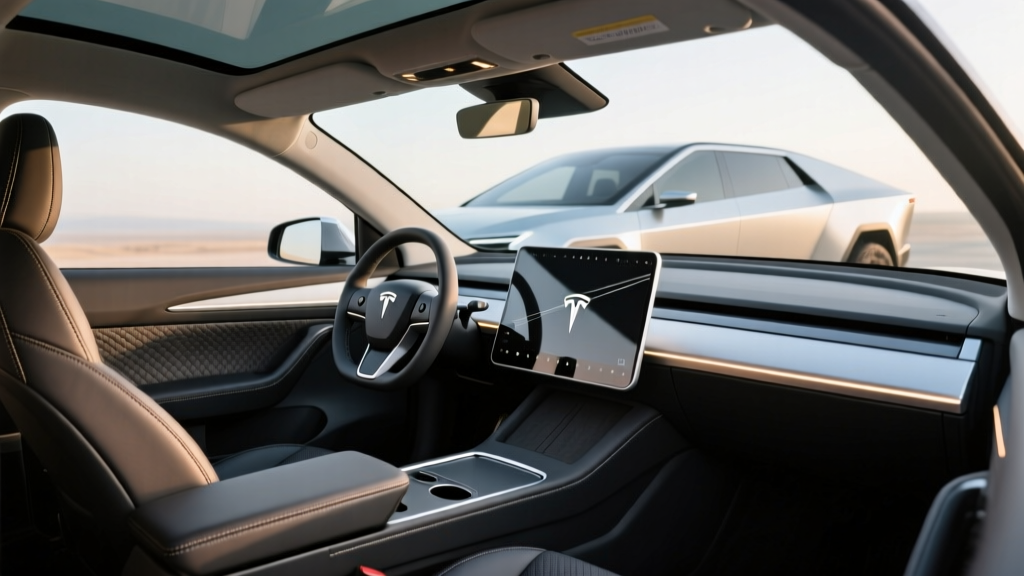
The 2014 Model S interior was ahead of its time with the massive 17-inch touchscreen that controls nearly every vehicle function — climate, navigation, media, suspension settings, and software updates. The minimalist design has aged well visually, though the hardware underneath is now dated.
Infotainment and software: Early 2014 P85s shipped with the MCU1 (NVIDIA Tegra 3) processor, which feels sluggish by modern standards. Tesla offered an MCU2 upgrade (Intel Atom) for ~$2,000–$2,500, which dramatically improves responsiveness and enables newer software features. Many 2014 P85s have received this upgrade — confirm with the seller. Without MCU2, you won't get features like Sentry Mode dashcam recording, Theater mode, or the latest navigation visuals.
Driver assistance: The 2014 P85 predates Tesla's Autopilot hardware suite (introduced late 2014 for 2015 models). Most 2014 P85s have no advanced driver assistance beyond basic cruise control, ABS, and stability control. A few late-2014 build P85s may have the first-generation Autopilot hardware (AP1), but this is rare. If you want Autopilot or FSD capability, look at a 2015+ Model S instead.
Passenger and cargo space: The Model S seats five adults comfortably, with 38.1 inches of rear legroom. The rear hatch opens to 26.3 cubic feet of cargo space, expanding to 58.1 cu ft with rear seats folded. The front trunk (frunk) adds 5.3 cu ft. Some 2014 models were optioned with rear-facing jump seats in the cargo area for two small children, making it a 7-seater — a rare and desirable configuration for families.
Pricing, Tax Credits & Ownership Costs
The 2014 Tesla Model S P85 originally carried an MSRP of approximately $101,000 (before any incentives). In the 2026 used market, prices have settled into a far more accessible range:
| Condition / Mileage | Typical Price Range |
|---|---|
| Excellent (<60k miles, battery >90% SoH) | $26,000–$32,000 |
| Good (60k–100k miles, battery 80–90% SoH) | $20,000–$26,000 |
| Fair (100k+ miles, battery 70–80% SoH) | $15,000–$20,000 |
| Battery replacement needed | Subtract $12,000–$20,000 from above |
Federal tax credit eligibility: Under IRS §30D rules, the federal clean vehicle credit applies only to new qualifying vehicles or to used EVs under the separate §25E used clean vehicle credit. Here's how that applies to a 2014 P85:
- §30D New Vehicle Credit ($7,500): Not applicable — this is a used vehicle.
- §25E Used Clean Vehicle Credit (up to $4,000): Potentially eligible. Requirements include: sale price under $25,000, purchased from a licensed dealer, buyer income under $75,000 (single) / $150,000 (joint), and the vehicle must be at least two model years old (the 2014 qualifies). The credit equals 30% of the sale price, capped at $4,000. A P85 purchased for $18,000 from a dealer could yield a $4,000 credit; one purchased for $28,000 would not qualify due to the $25,000 price cap.
- Point-of-sale transfer: The §25E credit can be transferred to the dealer at the point of sale, reducing your out-of-pocket cost immediately.
- State incentives: Vary by jurisdiction — check your state's energy office or DSIRE database for local rebates.
Insurance costs: Expect $1,800–$3,000 annually for a 2014 P85, depending on your driving record, location, and coverage level. Tesla vehicles generally carry higher premiums due to repair costs and aluminum body panels. Get quotes before purchasing.
Maintenance and common repairs: The P85 has no engine oil, transmission fluid, or spark plugs, but it isn't maintenance-free. Budget for: tire replacement every 20,000–30,000 miles ($800–$1,400 for a set), brake fluid flush every 2 years, cabin air filter replacement, 12V battery replacement every 3–5 years (~$300), and potential air suspension repair ($1,500–$2,500 per corner). The drive unit (motor) has proven reliable but can fail — replacement runs $3,000–$5,000.
Warranty Status in 2026
The 2014 P85 originally came with a 4-year/50,000-mile basic warranty and an 8-year/unlimited-mile battery and drive unit warranty. Tesla's 8-year battery warranty on 85 kWh models guaranteed the battery would retain at least 70% of its original capacity.
By 2026, virtually all 2014 P85s have exceeded both warranty periods. The 8-year battery warranty expired in 2022 at the latest. Any battery failure or significant degradation is now an out-of-pocket expense unless you purchase an extended warranty from a third-party provider (availability varies).
Tesla offers battery replacement services at its service centers. A refurbished 85 kWh pack currently costs $12,000–$16,000 installed, while a new or higher-capacity pack (if available) can cost $18,000–$22,000. Some third-party EV shops also perform battery replacements or module-level repairs at lower cost.
2014 P85 vs. the Competition: What Else Can You Buy?
At $18,000–$30,000, the 2014 P85 competes with newer used EVs and even some new budget EVs. Here's how it compares:
| Spec | 2014 Tesla P85 | 2017 Chevrolet Bolt EV | 2018 Nissan Leaf (60 kWh) | 2024 Nissan Leaf SV Plus (New) |
|---|---|---|---|---|
| Used Price (2026) | $18k–$30k | $12k–$18k | $12k–$17k | ~$36,000 new |
| EPA Range | 265 mi | 238 mi | 226 mi | 212 mi |
| 0–60 mph | 4.2 sec | 6.5 sec | 6.9 sec | 6.8 sec |
| DC Fast Charging | ~120 kW (NACS) | ~55 kW (CCS) | ~50 kW (CHAdeMO) | ~50 kW (CHAdeMO) |
| Charging Network | Tesla Supercharger | CCS networks | CHAdeMO (declining) | CHAdeMO (declining) |
| Driver Assist | None (most) | None | ProPILOT (rare) | ProPILOT Assist |
| Cargo Space | 26.3 + 5.3 cu ft | 16.9 cu ft | 23.6 cu ft | 23.6 cu ft |
Pros
- 4.2-second 0–60 mph still feels thrilling
- Tesla Supercharger access — best charging network
- Premium sedan with air suspension and 17-inch touchscreen
- Spacious: 26.3 cu ft cargo + frunk, seats 5 (or 7 with jump seats)
- Over-the-air software updates (with MCU2 upgrade)
- Strong depreciation already absorbed — value is stable
Cons
- Battery degradation is a real risk; replacement costs $12k–$20k
- No Autopilot or modern driver assistance on most examples
- Air suspension failures are common and expensive
- Outdated MCU1 processor (unless upgraded to MCU2)
- No DC fast charging on non-Tesla networks without adapters
- Higher insurance premiums than comparable gas sedans
- Out of warranty — all repairs are out of pocket
Who Should Buy the 2014 Tesla P85?
Buy the P85 if:
- You want a fast, premium electric sedan for under $25,000 and accept the risk of battery degradation
- You take regular road trips and value Tesla Supercharger access
- You can verify battery State of Health (SoH) above 85% before purchase
- You have a budget set aside for potential air suspension or drive unit repairs
- You appreciate the Model S design and don't need modern driver-assist features
Skip the P85 if:
- You want a worry-free, warranty-covered EV — consider a new or certified pre-owned Tesla Model 3 or Hyundai Ioniq 5
- You need Autopilot or adaptive cruise control for your commute
- You lack access to a Tesla Supercharger or Level 2 home charging
- You're uncomfortable with the financial risk of a $15,000+ battery replacement
The 2014 P85 is best suited as an enthusiast's daily driver or a second car for someone who understands EV ownership. It rewards buyers who do their homework — get a pre-purchase inspection at a Tesla Service Center, pull battery health logs from the car's diagnostic menu, and budget for the inevitable age-related repairs.
Frequently Asked Questions
What is the real-world range of the 2014 Tesla P85 in 2026?
With a battery at 80–90% State of Health, expect 200–235 miles in mixed driving. Highway cruising at 75 mph drops this to roughly 180–200 miles. Cold weather (below freezing) can reduce range by 20–30%, bringing it to 150–180 miles. Always check the car's rated range display at full charge and compare it to the original 265-mile EPA figure to estimate battery health.
How fast does the 2014 P85 charge on Superchargers and at home?
On a Tesla V2 Supercharger, the P85 peaks at roughly 120 kW and achieves a 10–80% charge in about 40 minutes. At home on a 240V Level 2 charger with the standard single onboard charger, it adds about 29 miles per hour (~10 kW). With the optional dual chargers, it adds roughly 58 miles per hour (~20 kW).
Does the 2014 P85 qualify for any federal EV tax credit?
It does not qualify for the $7,500 §30D new vehicle credit. However, it may qualify for the §25E used clean vehicle credit of up to $4,000 if the sale price is under $25,000, you buy from a licensed dealer, and your income is under $75,000 (single) or $150,000 (joint). Confirm eligibility with a tax professional before relying on the credit.
Is the 2014 P85 worth buying vs. a newer used EV?
It depends on your priorities. The P85 offers more power, more cargo space, and Supercharger access than a similarly priced 2017 Bolt or 2018 Leaf. But it's older, out of warranty, and carries battery replacement risk. If you value performance and road-trip capability and can absorb repair costs, the P85 is compelling. If you want reliability and lower risk, a newer, lower-mileage used EV or a new budget EV may be wiser.
How do I check the battery health on a used 2014 P85?
Charge the car to 100% and note the "rated range" displayed on the instrument cluster. Divide that number by 265 (the original EPA range) to estimate the battery's State of Health percentage. For example, a rated range of 230 miles suggests ~87% SoH. You can also access more detailed battery data through the car's service menu or have a Tesla Service Center run a battery health diagnostic.
Can I charge a 2014 P85 at non-Tesla charging stations?
For Level 2 public charging, you'll need a J1772-to-Tesla adapter (Tesla includes one with every car, and replacements cost ~$100). For DC fast charging outside the Tesla network, options are limited: a CHAdeMO adapter (~$400 used) works at older CHAdeMO stations, but CCS compatibility is unreliable on 2014-era Teslas. In practice, most P85 owners rely primarily on Tesla Superchargers and Level 2 destination chargers.