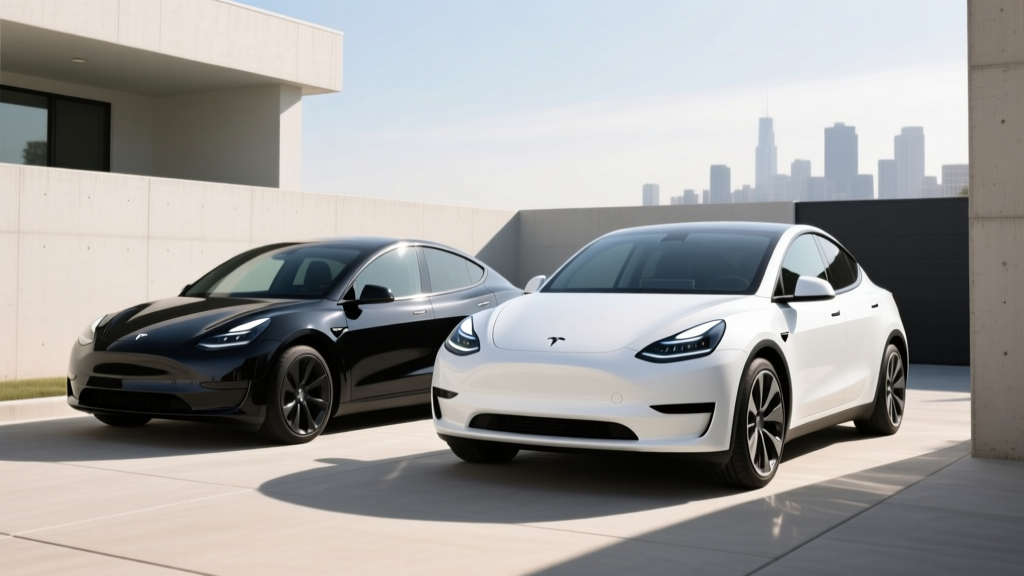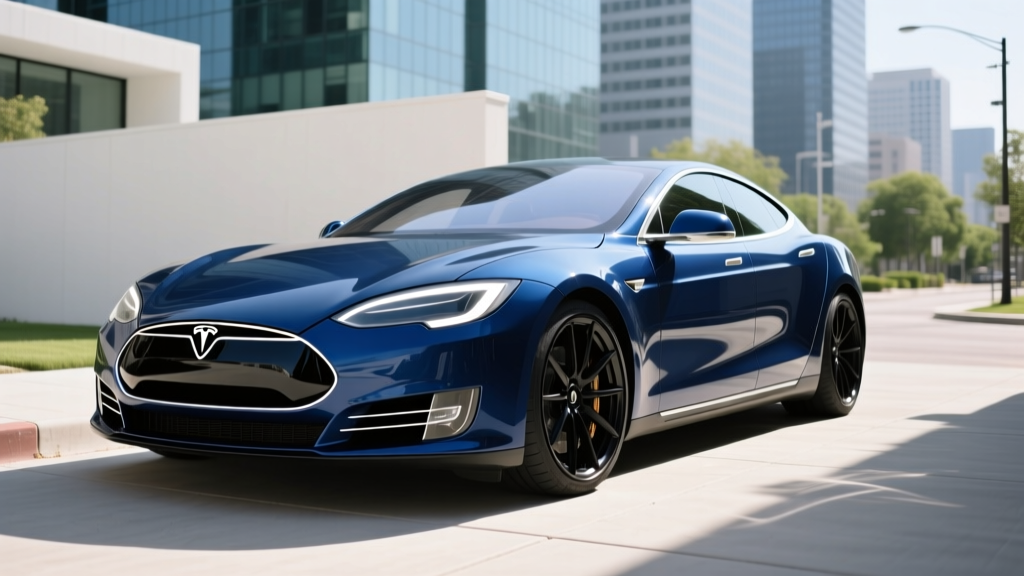
The 2014 Tesla Model S P85 was the car that proved electric sedans could be fast, luxurious, and practical. More than a decade later, it remains one of the most searched used EVs on the market — and for good reason. With a 381-horsepower rear-mounted motor, air suspension, and a cavernous liftback, the P85 still feels modern in ways that surprise first-time drivers. But buying a 12-year-old luxury EV in 2026 requires a clear-eyed look at battery health, charging limitations, and the realities of owning a vehicle well past its original warranty.
This review breaks down every spec a used buyer needs — from real-world range expectations to DC fast-charge taper curves — so you can decide whether a 2014 Model S P85 is a brilliant bargain or a money pit.
2014 Tesla Model S P85: Core Specifications
| Spec | Value |
|---|---|
| EPA Range (original) | 265 miles |
| Battery Capacity (gross / usable) | ~85 kWh / ~81 kWh |
| Battery Chemistry | NMC (Nickel Manganese Cobalt) — Panasonic 18650 cells |
| Drivetrain | Rear-Wheel Drive (single motor) |
| Horsepower / Torque | 381 hp / 443 lb-ft (peak, with Performance Plus) |
| 0–60 mph | 4.2 seconds (Performance Plus: ~3.9 sec) |
| MPGe (combined) | 89 MPGe |
| Efficiency | 38 kWh / 100 mi |
| Max DC Fast Charge | ~120 kW (V2 Supercharger peak) |
| Level 2 Charge Rate | Up to 10 kW (single onboard charger); 20 kW with dual chargers |
| Cargo Volume | 26.3 cu ft (rear seats up); 58.1 cu ft (folded) |
| Frunk (front trunk) | 5.3 cu ft |
| Rear Legroom | 35.4 inches |
| Original Base MSRP | ~$93,400 (before incentives) |
| 2026 Used Market Price | $12,000 – $22,000 (varies by mileage, battery SoH) |
| Battery Warranty (original) | 8 years / 125,000 miles (expired) |
Real-World Range: What the EPA Sticker Doesn't Tell You
Real-World Expectation (2026): 175 – 220 miles depending on battery State of Health (SoH), driving style, and temperature.
The original 265-mile EPA estimate applied to a brand-new 85 kWh pack in 2014. Twelve years and potentially 100,000+ miles later, degradation is the single biggest variable in a used P85 purchase. Most well-maintained 85 kWh packs retain between 75% and 88% of original capacity in 2026, according to owner-sourced data from TeslaFi and Recurrent Auto. That translates to roughly 195–230 miles if the pack is in the upper range of health, or as little as 160–175 miles for a pack with significant degradation.
Highway driving at 75 mph will cost you roughly 10–15% compared to the car's combined rating. Cold weather (below 32°F) can reduce usable range by an additional 20–30%, primarily because the 2014 Model S lacks a heat pump — it uses resistive cabin heating, which draws heavily from the traction battery. If you live in a northern climate and commute 80+ miles round trip in winter, a degraded P85 pack may not cover your needs without a midday charge.
Buyer tip: Request a battery health report from the seller. You can check approximate SoH by charging to 100% and noting the rated range displayed. A reading below 190 rated miles signals more than ~28% degradation and warrants caution.
Charging Speed: Supercharger and Home Charging
The 2014 P85 uses Tesla's proprietary connector (now being phased in favor of NACS industry-wide) and charges on the V2 Supercharger network. Here's what to expect:
| Charging Level | Power (kW) | Speed | Notes |
|---|---|---|---|
| Level 1 (120V household) | ~1.4 kW | ~3–4 miles per hour | Emergency/trickle only |
| Level 2 (240V, single charger) | 10 kW | ~29 miles per hour | Full charge in ~8.5 hours |
| Level 2 (240V, dual chargers) | 20 kW | ~58 miles per hour | Optional; full charge in ~4.5 hours |
| DC Fast (V2 Supercharger) | Peak ~120 kW | 10–80% in ~40 minutes | Tapers significantly above 60% |
| DC Fast (CHAdeMO adapter) | ~50 kW | 10–80% in ~70 minutes | Requires optional adapter; rare |
The 2014 P85's charge curve is far less aggressive than modern EVs. Peak draw of ~120 kW is only sustained between roughly 10% and 40% State of Charge. Above 60%, the rate drops steeply — often below 40 kW — making the 80–100% top-off painfully slow. For road trips, plan to charge from 10% to 70% and move on rather than waiting for a full battery.
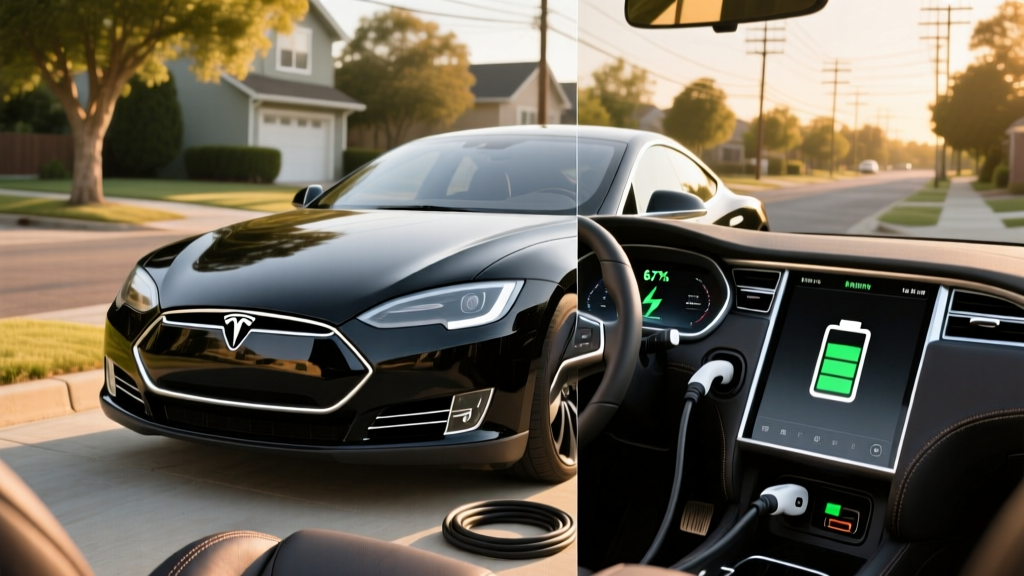
For home charging, a standard NEMA 14-50 outlet with a Tesla Mobile Connector delivers about 10 kW (29 miles of range per hour). If the car is equipped with the optional Dual Onboard Chargers (a $3,600 option when new), you can accept up to 20 kW from a high-amperage Wall Connector, cutting overnight charge time in half. Verify whether a used P85 has dual chargers — it's not visible from the exterior.
NACS/CCS compatibility note: Tesla has opened its Supercharger network to non-Tesla EVs via NACS, but older Model S vehicles retain the original Tesla connector. No adapter is needed for Tesla Superchargers. For CCS-based public chargers (Electrify America, etc.), you would need a third-party CCS-to-Tesla adapter — availability and reliability vary.
Performance and Driving Experience
The P85's single rear-mounted AC induction motor produces 381 horsepower and an instantaneous 443 lb-ft of torque. With the Performance Plus package (which included a slightly uprated motor and firmer suspension tuning), the 0–60 mph sprint drops to approximately 3.9 seconds — seriously quick even by 2026 standards.
What still impresses is the seamlessness. There's no gear hunting, no turbo lag, just a relentless wave of torque from 0 rpm. The air suspension (standard on P85) provides a compliant ride and adjustable ground clearance — useful for steep driveways or speed bumps. Steering is precise but numb, a common criticism of early Model S vehicles.
The 2014 P85 is Rear-Wheel Drive only. Tesla didn't introduce Dual Motor All-Wheel Drive until late 2014 (as the P85D). If you need AWD for snow-belt commuting, this isn't the trim for you.
Interior, Technology, and Driver Assistance
The 2014 Model S interior was praised at launch for its minimalist design and massive 17-inch touchscreen — still one of the largest in any production car. However, the 2014 hardware is showing its age:
- MCU1 (first-gen Media Control Unit): The original Tegra 3 processor is sluggish by 2026 standards. Map rendering lags, the browser is nearly unusable, and the eMMC flash storage in MCU1 units is known to fail. Many owners have upgraded to the MCU2 (Intel Atom-based) through Tesla's ~$1,500 retrofit program, which dramatically improves responsiveness. Confirm whether this has been done.
- Autopilot hardware: The 2014 P85 left the factory without Autopilot hardware (Tesla introduced Hardware 1 in late September 2014). Most 2014 P85s do NOT have Autopilot. Some very late 2014 builds may have HW1, but it is not upgradeable to modern FSD (Supervised) capabilities. This is a Level 0 vehicle — no adaptive cruise, no lane-keeping assist.
- Over-the-air updates: The 2014 P85 still receives basic OTA updates, but many newer features (theater mode, advanced navigation, Sentry Mode) require MCU2 or later hardware.
- Build quality: Early Model S vehicles had inconsistent panel gaps, creaky interior trim, and door handle mechanisms prone to failure. Inspect these carefully on any used example.
On the practical side, the liftback design provides 26.3 cubic feet of cargo space with rear seats up and 58.1 cu ft folded — more than many midsize SUVs. The 5.3 cu ft frunk adds secure storage for charging cables or a small bag. Rear legroom is 35.4 inches, adequate for adults on shorter trips but tighter than a modern BMW i5 or Mercedes EQE.
Pricing, Tax Credits, and Total Ownership Cost
Here's the critical financial picture for buying a 2014 Model S P85 in 2026:
| Item | Amount / Status |
|---|---|
| Original MSRP (2014) | ~$93,400 (base P85) |
| 2026 Used Market Range | $12,000 – $22,000 |
| Federal §30D New EV Credit | NOT eligible (used vehicle) |
| Used EV Credit (§25E) | Up to $4,000 — see eligibility below |
| Estimated Annual Insurance | $1,800 – $2,800 (varies by state/driver) |
| Estimated Annual Maintenance | $800 – $2,000 (higher if suspension/battery issues arise) |
Does the 2014 Model S P85 Qualify for Any Federal Tax Credit?
The §30D New Clean Vehicle Credit does not apply — this is a used vehicle. However, the §25E Previously Owned Clean Vehicle Credit may apply, offering up to $4,000 or 30% of the sale price (whichever is less). Key requirements per IRS rules:
- Sale price must be $25,000 or less (most P85s qualify at current market prices)
- Buyer AGI must not exceed $75,000 (single), $112,500 (head of household), or $150,000 (joint)
- Vehicle must be at least 2 model years old (2014 easily qualifies)
- Must be purchased from a licensed dealer (private-party sales do NOT qualify)
- Vehicle must have a battery capacity of at least 7 kWh (the P85's 85 kWh pack qualifies)
- The credit can only be claimed once per VIN — if a prior owner already claimed the used credit on this specific car, it is no longer eligible
Important: Tax rules are subject to change. Always consult a tax professional and verify current IRS §25E guidance before purchasing.
5-Year Ownership Cost Estimate (Used P85 at $17,000)
| Category | Estimated Cost |
|---|---|
| Purchase Price | $17,000 |
| Insurance (5 years) | $11,000 |
| Electricity (12,000 mi/yr at $0.14/kWh) | $3,200 |
| Maintenance & Repairs | $6,000 – $10,000 |
| Potential Battery Replacement | $12,000 – $18,000 (if needed) |
| Estimated Total (without battery replacement) | $37,200 – $41,200 |
| Estimated Total (with battery replacement) | $49,200 – $59,200 |
The wildcard is the battery. A remanufactured 85 kWh replacement from Tesla currently costs $12,000–$18,000 installed. Some third-party shops offer repairs for $8,000–$12,000. Given that original 8-year/125,000-mile battery warranties have expired on all 2014 vehicles, this is an out-of-pocket risk you must budget for.
Warranty Status and Battery Longevity
The 2014 Model S P85's original warranty coverage has fully expired:
- New Vehicle Limited Warranty: 4 years / 50,000 miles — expired
- Battery & Drive Unit Warranty: 8 years / 125,000 miles — expired
- Rear Drive Unit: Some P85 drive units have been replaced under service campaigns; check service records
Panasonic's 18650 NMC cells in the 85 kWh pack have demonstrated reasonable longevity. Data from Recurrent Auto suggests that Tesla's early 85 kWh packs typically retain 80–90% capacity at 100,000 miles when properly maintained. Key degradation accelerants include:
- Frequent charging to 100% (Tesla recommends daily charging to 80–90% for NMC packs)
- Regular DC fast charging (heat stress)
- Prolonged storage at very low or very high State of Charge
- Extreme ambient temperatures without preconditioning
The 85 kWh pack does NOT use LFP (Lithium Iron Phosphate) chemistry — that came to Tesla's lineup much later in the Model 3/Y Standard Range. LFP tolerates 100% daily charging better and degrades more slowly, but the P85's NMC pack offers higher energy density and was the best available technology in 2014.
2014 Model S P85 vs. Key Used-EV Competitors
Pros
- Still-quick 3.9–4.2 sec 0–60 mph performance
- Massive cargo capacity (58.1 cu ft with seats folded)
- Air suspension with adjustable ride height
- Access to Tesla Supercharger network
- Over-the-air updates still supported (basic)
- Low purchase price relative to original MSRP
Cons
- Battery warranty fully expired; replacement costs $12K–$18K
- MCU1 infotainment is slow and prone to eMMC failure
- No Autopilot or any driver-assistance features
- Rear-Wheel Drive only — no AWD option
- Slow DC fast charging by 2026 standards (~40 min 10–80%)
- Resistive cabin heating reduces winter range significantly
- Door handles and air suspension are known failure points
Compared to a used 2017–2018 Chevrolet Bolt EV (~$10,000–$14,000, 238-mile EPA range, CCS charging), the P85 offers far more space and performance but carries higher repair risk. Against a used 2018–2019 Tesla Model 3 Long Range (~$18,000–$24,000, 310-mile EPA range, HW2.5 Autopilot), the Model 3 is more efficient, charges faster, and includes driver assists — but lacks the P85's cargo versatility and air suspension. For buyers prioritizing a large, comfortable, fast sedan at a bargain price — and willing to accept out-of-warranty risk — the P85 remains compelling.
Who Should Buy the 2014 Model S P85?
Choose the P85 if:
- You want a fast, spacious luxury EV for under $20,000
- You can charge at home (Level 2) and don't rely on frequent road-trip fast charging
- You have a $5,000–$10,000 repair reserve for potential battery or suspension work
- You live in a mild climate where cold-weather range loss is manageable
- You value cargo space and don't need AWD
Look elsewhere if:
- You need reliable 250+ mile range for long commutes or road trips
- You want modern driver-assistance features (adaptive cruise, lane-keeping)
- You live in a cold climate and can't afford range loss
- You cannot budget for a potential $12K+ battery replacement
- You want the latest infotainment and OTA feature support
Frequently Asked Questions
What is the real-world range of the 2014 Tesla Model S P85?
Expect 175–220 miles in mixed driving, depending on battery health. Highway driving at 75 mph reduces this by 10–15%. In cold weather (below freezing), range can drop to 140–170 miles due to resistive heating and reduced battery efficiency.
How fast does the 2014 P85 charge on a Supercharger?
Peak charge rate is approximately 120 kW on a V2 Supercharger, but the charge curve tapers aggressively above 60% SoC. A 10–80% charge takes roughly 40 minutes. This is significantly slower than modern EVs like the Hyundai Ioniq 5 (18 minutes) or Tesla Model 3 (15 minutes on V3).
How much does a 2014 Model S P85 cost in 2026?
Used examples typically range from $12,000 (higher mileage, possible battery concerns) to $22,000 (lower mileage, documented battery health, MCU2 upgrade). Dealer-purchased examples may qualify for the $4,000 federal used-EV credit under §25E if income and price caps are met.
Is the 2014 P85 worth buying versus a newer used EV?
It depends on your priorities. The P85 offers unmatched cargo space and strong performance for the price, but lacks modern driver assists, charges slowly, and carries out-of-warranty battery risk. A used 2018+ Model 3 Long Range offers better efficiency, faster charging, and Autopilot — but less space. Cross-shop both before deciding.
Does the 2014 Model S P85 qualify for the federal EV tax credit?
Not for the §30D new-vehicle credit. However, it may qualify for the §25E used-EV credit (up to $4,000) if purchased from a dealer for $25,000 or less and the buyer meets income limits. Verify eligibility with a tax professional and consult current IRS §25E rules.
What are the most common problems with the 2014 P85?
Known issues include: MCU1 eMMC failure (fix: upgrade to MCU2), door handle motor/paddle failure, air suspension compressor and strut leaks, 12V battery drain, and drive unit whine or bearing wear. Battery degradation varies but is generally manageable if the car was not chronically fast-charged or stored at extreme SoC levels.
Can I still use Tesla Superchargers with a 2014 P85?
Yes. The 2014 P85 uses Tesla's original connector, which remains compatible with all V2 and V3 Superchargers. You do not need an adapter for Tesla's network. As Tesla transitions to NACS as the industry standard, legacy Tesla connectors remain fully supported on the Supercharger network.