The 2014 Tesla Model S was the car that proved electric vehicles could be desirable, fast, and practical for daily use. More than a decade later, it remains one of the most searched used EVs on the market — and for good reason. With its minimalist cabin, massive 17-inch touchscreen, and Supercharger access, the 2014 Model S still feels surprisingly modern. But as a used EV purchase in 2026, battery health, charging speed, and interior wear demand careful scrutiny before you sign any paperwork.
This guide covers everything a used-EV buyer needs to know about the 2014 Tesla Model S: interior quality and dimensions, real-world range expectations, charging capabilities, performance specs, and the ownership economics of buying a 12-year-old luxury EV.
2014 Tesla Model S Interior: Design, Space, and Tech
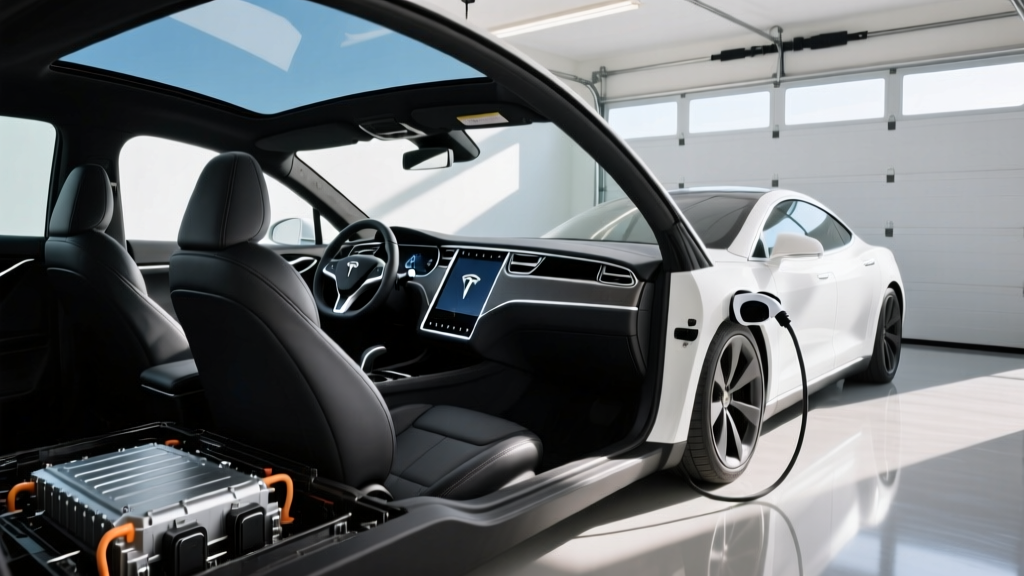
The 2014 Tesla Model S interior was unlike anything else on the road when it launched. Tesla stripped away nearly every physical button, replacing traditional gauges and climate controls with a portrait-oriented 17-inch capacitive touchscreen that handled navigation, media, HVAC, vehicle settings, and even the glovebox release. A small digital instrument cluster behind the steering wheel displayed speed, range, and turn-by-turn directions.
The cabin materials drew mixed reactions even when new. The dashboard used a mix of soft-touch materials and harder plastics that didn't quite match the premium price tag, while available Nappa leather seats and Alcantara headliner upgrades improved the luxury feel. Fit and finish improved over the 2012-2013 launch years, but panel gaps and minor rattles remain common complaints among owners.
Interior Dimensions and Cargo Space
The Model S is a full-size liftback sedan with genuinely generous interior volume, aided by the lack of a transmission tunnel and the flat battery pack beneath the floor.
| Dimension | Measurement |
|---|---|
| Front headroom | 38.8 in |
| Front legroom | 42.7 in |
| Rear headroom | 37.9 in |
| Rear legroom | 35.4 in |
| Cargo volume (rear seats up) | 26.3 cu ft |
| Cargo volume (rear seats folded) | 58.1 cu ft |
| Frunk (front trunk) | 5.3 cu ft |
| Seating capacity | 5 (optional rear-facing 3rd row: 7) |
The 26.3 cu ft liftback area with seats upright is larger than most midsize SUV trunks, and the optional rear-facing third-row jump seats (rated for children under ~77 lbs) made the Model S a surprisingly practical family hauler. The frunk adds useful space for a charging cable bag or small groceries.
Infotainment and Driver-Assistance Technology
The 2014 Model S featured Tesla's first-generation MCU1 (Media Control Unit) powered by an NVIDIA Tegra 3 processor. By 2026 standards, this hardware feels sluggish — map rendering is slow, the web browser is nearly unusable, and the system does not support modern features like Tesla's visualization upgrades or the latest FSD (Supervised) capabilities without a paid MCU upgrade to MCU2 or MCU3.
Autopilot hardware in 2014 models used HW1 (Mobileye-based), which provides basic adaptive cruise control and lane-keeping assist — a SAE Level 2 driver-assistance system. The driver must remain fully engaged at all times; this is not a self-driving system. Tesla's later HW3/HW4 computers required for full FSD Supervised were not installed in 2014 vehicles from the factory, though some owners have paid for retrofits.
Range, Battery, and Efficiency Specs
The 2014 Model S was offered in three battery configurations. All use NMC (nickel-manganese-cobalt) lithium-ion chemistry — Tesla had not yet adopted LFP for any Model S variant. The battery pack sits in a structural "skateboard" platform beneath the floor, contributing to the car's low center of gravity.
| Trim | Battery (kWh, usable) | EPA Range | MPGe (combined) | kWh/100 mi |
|---|---|---|---|---|
| Model S 60 | 60 kWh (~58 usable) | 208 mi | 95 MPGe | 35 |
| Model S 85 | 85 kWh (~81 usable) | 265 mi | 89 MPGe | 38 |
| Model S P85 / P85D | 85 kWh (~81 usable) | 253-265 mi | 89 MPGe | 38 |
Source: EPA Fuel Economy
A well-maintained 2014 Model S 85 with 8-12% battery degradation will deliver approximately 225-240 miles of real-world range at highway speeds (65-75 mph) in moderate temperatures. In cold weather (below 32°F), expect a 20-30% reduction, dropping to roughly 160-190 miles. The Model S 60, with its smaller pack and similar degradation, may realistically deliver only 165-185 miles in mixed driving. Always check the specific vehicle's battery State of Health (SoH) via the Tesla service menu or a pre-purchase inspection before buying.
Charging: DC Fast Charge, Level 2, and Supercharger Access
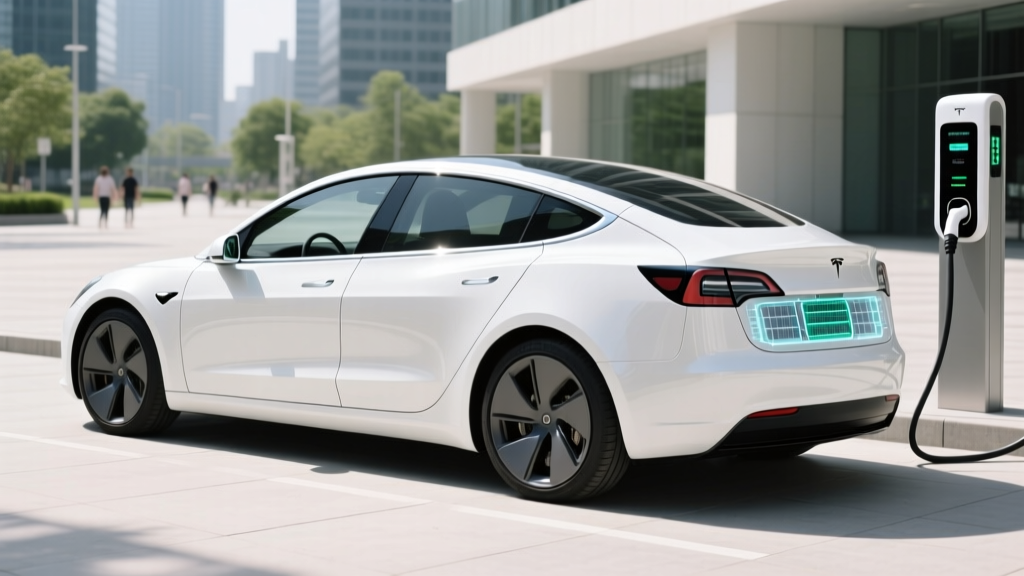
Charging speed is the 2014 Model S's most significant limitation compared to modern EVs. The vehicle uses Tesla's proprietary connector (now being phased in favor of NACS adapters on newer vehicles) and charges at rates that were impressive in 2014 but feel slow by 2026 standards.
| Charging Level | Power (kW) | Speed | Notes |
|---|---|---|---|
| Level 1 (120V household) | ~1.4 kW | ~3 mi/hr | Emergency/trickle only |
| Level 2 (240V, single charger) | 10 kW | ~29 mi/hr | Standard onboard charger |
| Level 2 (240V, dual chargers) | 20 kW | ~58 mi/hr | Optional dual onboard charger |
| DC Fast Charge (Supercharger V1/V2) | Peak ~120 kW | 10-80% in ~40-50 min | Significant taper above 60% SoC |
The 2014 Model S peaked at roughly 120 kW at Tesla Superchargers, but the charge curve tapers aggressively. Expect sustained rates of 60-80 kW for much of the session, making a 10-80% charge take 40-50 minutes in practice. Modern EVs on 800V architectures (Hyundai Ioniq 5, Kia EV6, Porsche Taycan) complete the same session in 18-22 minutes.
For home charging, the single 10 kW onboard charger adds about 29 miles per hour of charging — adequate for overnight replenishment. Models equipped with the optional dual chargers (20 kW) can refill much faster on a high-amperage Level 2 wall connector, but these are rare on the used market.
Performance: 0-60 Times, Horsepower, and Drivetrain
Even the base 2014 Model S delivered brisk acceleration that embarrassed many V8 sedans. The P85D's dual-motor all-wheel-drive "Insane Mode" was a cultural moment for EVs.
| Trim | Drivetrain | Horsepower | 0-60 mph |
|---|---|---|---|
| Model S 60 | RWD (single motor) | 302 hp | 5.5 sec |
| Model S 85 | RWD (single motor) | 362 hp | 5.4 sec |
| Model S P85 | RWD (single motor, performance) | 416 hp | 4.2 sec |
| Model S P85D | AWD (dual motor) | 691 hp (combined) | 3.5 sec |
The P85D's 3.5-second 0-60 time was staggering for a four-door sedan in 2014. Note that the 691 hp figure is the combined peak output of both motors — actual sustained power is lower due to battery current limits. Regenerative braking on all trims is strong and enables one-pedal-style driving in most conditions, though it does not bring the car to a complete stop (no "hold" mode in 2014 firmware).
Pricing, Tax Credits, and Used-Buyer Economics
The 2014 Model S originally carried an MSRP ranging from approximately $69,900 (Model S 60) to $101,000+ (P85D with options). In 2026, used examples trade between roughly $14,000 and $30,000 depending on mileage, battery health, trim, and condition.
| Trim | Original MSRP | 2026 Used Price Range |
|---|---|---|
| Model S 60 | ~$69,900 | $14,000 – $19,000 |
| Model S 85 | ~$79,900 | $17,000 – $24,000 |
| Model S P85 / P85D | ~$93,400 – $101,000+ | $20,000 – $30,000 |
Federal Tax Credit Eligibility for Used EVs
Under the IRS §25E Used Clean Vehicle Credit, buyers of qualifying pre-owned EVs may claim up to $4,000 (or 30% of the sale price, whichever is lower) if all conditions are met:
- Sale price must be $25,000 or less
- Buyer income caps: $75,000 single / $112,500 head of household / $150,000 joint (MAGI)
- Vehicle must be at least 2 model years old (2014 qualifies)
- Vehicle must have a battery capacity of at least 7 kWh (all 2014 Model S variants qualify)
- Purchase must be from a licensed dealer (private-party sales do not qualify)
- Credit is non-refundable and can only be claimed once per VIN
A 2014 Model S 85 purchased from a dealer for $22,000 by a qualifying buyer could yield a $4,000 credit, effectively reducing net cost to $18,000. Consult a tax professional to confirm your eligibility.
Warranty, Battery Degradation, and Long-Term Ownership
The original 2014 Model S warranty included:
- Battery & Drive Unit: 8 years / 125,000 miles (60 kWh) or 8 years / unlimited miles (85 kWh)
- New Vehicle Limited Warranty: 4 years / 50,000 miles
As of 2026, the original battery warranty has expired on virtually all 2014 Model S vehicles (8 years from manufacture date). This is the single most important factor in your purchase decision.
Battery Degradation Reality
Real-world data from Tesla owner communities and fleet analyses show that 2014 Model S NMC battery packs typically retain 82-90% of original capacity after 100,000-150,000 miles. Packs that were regularly charged to 100% or frequently DC fast-charged may show greater degradation. A replacement battery pack from Tesla costs approximately $12,000-$18,000 including labor — a significant expense relative to the vehicle's current value.
Before purchasing, request a battery health report from Tesla Service or use third-party tools like TeslaFi or Scan My Tesla (with an OBD-II adapter) to check current usable capacity against original specs. Budget $1,500-$3,000 annually for potential out-of-warranty repairs on a vehicle of this age (drive unit, air suspension, MCU failures, and door handles are known weak points).
Pros, Cons, and Who Should Buy
Pros
- Spacious liftback with 26.3 cu ft cargo + 5.3 cu ft frunk
- Strong acceleration even on base RWD trims
- Tesla Supercharger network access (though at older peak rates)
- Over-the-air updates still deliver incremental improvements
- Low used prices with potential $4,000 used-EV tax credit
- Massive 17-inch touchscreen still impressive
Cons
- Original battery warranty expired — replacement is $12K-$18K
- Slow DC fast charging by 2026 standards (~40-50 min, 10-80%)
- MCU1 infotainment hardware is sluggish and feature-limited
- Autopilot HW1 provides only basic Level 2 assist
- Interior materials and build quality don't match the original price
- No heat pump — cold-weather range loss is significant (20-30%)
- Out-of-warranty repair costs can be high
Who This EV Suits Best
The 2014 Model S is best suited for budget-conscious commuters who can charge at home, need a roomy sedan for family duties, and are willing to accept the risk of aging-EV repair costs. It works well as a daily driver for trips under 150 miles. It is not ideal for frequent long-distance road trippers (slow charging), cold-climate drivers without garage charging, or buyers who want modern ADAS features or warranty peace of mind.
Frequently Asked Questions
What is the real-world range of a used 2014 Tesla Model S?
A 2014 Model S 85 in good battery health delivers approximately 225-240 real-world miles at highway speeds in moderate weather. Expect 160-190 miles in cold conditions. The Model S 60 delivers roughly 165-185 miles in mixed driving. Actual range depends heavily on battery State of Health, driving style, and temperature.
How fast does the 2014 Model S charge at home and on DC fast chargers?
On a Level 2 home charger (240V), the single onboard charger adds about 29 miles per hour at 10 kW. DC fast charging at a Supercharger peaks around 120 kW but tapers significantly, making a 10-80% session take approximately 40-50 minutes — much slower than modern EVs.
Does the 2014 Tesla Model S qualify for a federal tax credit?
Yes, under the IRS §25E Used Clean Vehicle Credit, qualifying buyers can receive up to $4,000 if the purchase price is $25,000 or less, the buyer meets income caps, and the vehicle is purchased from a licensed dealer. The original §30D new-vehicle credit no longer applies. Always verify eligibility with a tax professional.
Is the 2014 Model S worth buying vs. newer used EVs?
It depends on your risk tolerance. The 2014 Model S offers more space, performance, and Supercharger access than most used EVs in the $15K-$25K range (Nissan Leaf, Chevy Bolt, early BMW i3). However, expired battery warranties, slow charging, and aging electronics are real drawbacks. A 2018+ Model 3 or a used Chevy Bolt EUV may offer better reliability and faster charging at a similar price.
What should I inspect before buying a used 2014 Model S?
Prioritize: (1) battery State of Health percentage via Tesla Service or OBD-II diagnostic, (2) drive unit whine or vibration, (3) air suspension function (if equipped), (4) MCU responsiveness and screen burn-in, (5) door handle operation, and (6) service history for any battery or drive unit replacements.
Can the 2014 Model S use modern Superchargers and NACS adapters?
The 2014 Model S uses Tesla's proprietary connector natively and can use all Tesla Superchargers. Since the industry is standardizing on NACS, Tesla has begun offering adapters for older vehicles, but compatibility should be confirmed with Tesla directly for your specific VIN.