The Verdict on the 2014 Smart Fortwo Electric Drive
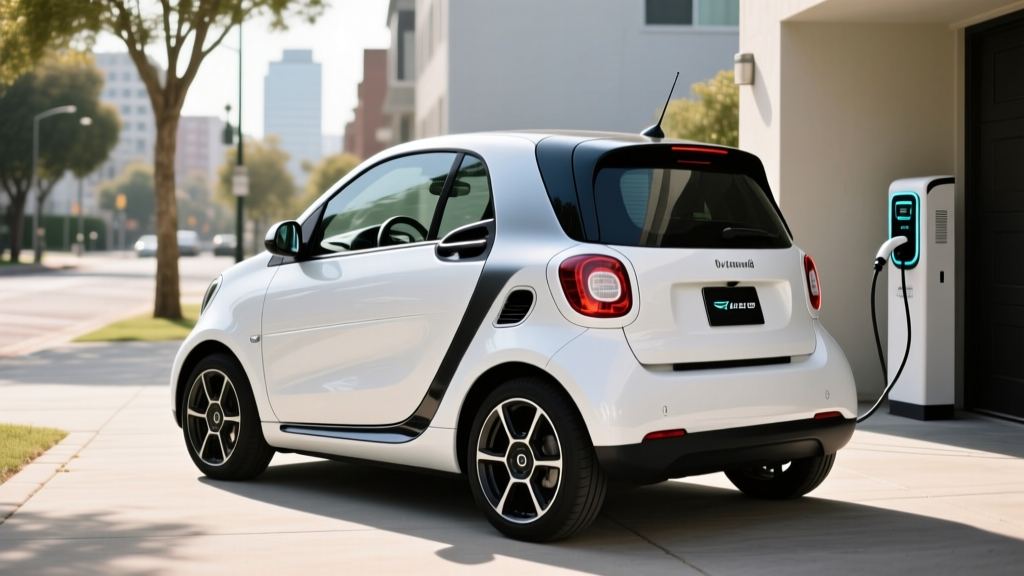
The 2014 Smart Fortwo Electric Drive (ED) delivers an EPA-estimated 68 miles of range from its 17.6 kWh lithium-ion battery, with real-world city driving yielding roughly 55–65 miles and highway or cold-weather use dropping that to 40–50 miles. It charges at a maximum of 3.3 kW on Level 2 (no DC fast charging), meaning a full charge takes about 6 hours. In 2026, used examples sell for $4,000–$7,500 depending on mileage and battery health. It works as a dedicated city commuter with reliable home charging access, but it is not a practical sole vehicle for anyone with a commute exceeding 25 miles each way or who faces extreme winters.
Range, Battery, and Efficiency: What the Numbers Actually Mean
The 2014 Smart Fortwo ED is built around a 17.6 kWh lithium-ion battery pack (approximately 14.5 kWh usable, with the remainder as a buffer to protect longevity). This pack powers a 55 kW (74 horsepower) electric motor mounted at the rear, producing 96 lb-ft of torque.
| Specification | 2014 Smart Fortwo Electric Drive |
|---|---|
| EPA Range | 68 miles |
| Real-World Range (City, Mild Weather) | 55–65 miles |
| Real-World Range (Highway/Cold) | 40–50 miles |
| Battery Capacity (Total / Usable) | 17.6 kWh / ~14.5 kWh |
| Battery Chemistry | Lithium-ion (NMC-type) |
| Motor Output | 55 kW / 74 hp / 96 lb-ft |
| 0–60 mph | ~11.5 seconds |
| EPA Efficiency | 122 MPGe combined (107 city / 143 hwy) |
| Energy Consumption | ~28 kWh/100 miles |
| Top Speed (Electronically Limited) | 78 mph |
Real-World Range Reality: The EPA's 68-mile figure assumes mixed driving in moderate temperatures. In practice, owners report 55–65 miles in stop-and-go city traffic (where regenerative braking helps), but sustained highway driving at 65+ mph drops range to 45–55 miles. In freezing temperatures (below 32°F), expect a 25–35% reduction — meaning 40–50 miles is realistic on a cold winter day. This car has no active battery thermal management (no heat pump or liquid cooling for the pack), which amplifies cold-weather losses and limits charging speed in extreme temperatures.
For context, the EPA rated the 2014 Fortwo ED at 122 MPGe combined. According to fueleconomy.gov, that translates to roughly $0.04–$0.06 per mile in electricity costs at the national average residential rate of $0.16/kWh in 2026 — far cheaper than the gas-powered 2014 Smart Fortwo's 36 MPG combined, which costs roughly $0.10–$0.13 per mile at $3.30/gallon.
Charging: Level 2 Only, No Fast-Charging Option
The 2014 Smart Fortwo ED is equipped with a J1772 inlet for AC charging. It does not support DC fast charging (no CCS, CHAdeMO, or NACS connector). This is the single most important limitation for prospective buyers to understand.
| Charging Level | Power (kW) | Time (Empty to Full) | Miles Added per Hour |
|---|---|---|---|
| Level 1 (120V Household Outlet) | ~1.4 kW | ~14–16 hours | ~5–6 miles |
| Level 2 (240V, 16A) | 3.3 kW (vehicle-limited) | ~6 hours | ~11–12 miles |
| DC Fast Charging | Not Supported | N/A | N/A |
The onboard charger is capped at 3.3 kW, meaning even if you plug into a 7.2 kW or 11.5 kW Level 2 station, the car will only draw 3.3 kW. This isn't a problem for overnight home charging — six hours is fine if you plug in when you get home — but it means you cannot top up quickly during the day at a public charger. A 30-minute stop at a public Level 2 station adds roughly 5–6 miles of range. That's essentially useless for extending your day.
Home charging setup: Most owners install a basic 240V Level 2 EVSE (Electric Vehicle Supply Equipment) on a 20-amp circuit. In 2026, a quality Level 2 home charger (such as a ChargePoint Home Flex or Emporia Vue) costs $300–$600 for the unit, plus $500–$2,000 for professional electrician installation depending on your panel proximity and local permit requirements. Since the Fortwo ED only draws 3.3 kW, you do not need a 48-amp hardwired unit — a 16-amp plug-in unit on a NEMA 6-20 outlet is sufficient and cheaper to install.
EV vs. Gas: 2014 Fortwo Electric Drive Compared to the Gasoline Fortwo
The gasoline 2014 Smart Fortwo (1.0L 3-cylinder, 70 hp) was rated at 34 city / 38 highway / 36 MPG combined. Here's how the two stack up over five years of ownership at 10,000 miles per year:
| Factor | 2014 Fortwo Electric Drive | 2014 Fortwo Gasoline |
|---|---|---|
| Used Purchase Price (2026) | $4,000–$7,500 | $3,500–$6,000 |
| Fuel/Energy Cost per Mile | $0.04–$0.06 | $0.10–$0.13 |
| Annual Fuel/Energy (10k mi) | $400–$600 | $1,000–$1,300 |
| 5-Year Fuel/Energy Total | $2,000–$3,000 | $5,000–$6,500 |
| Annual Maintenance | $200–$400 | $600–$900 |
| 5-Year Maintenance Total | $1,000–$2,000 | $3,000–$4,500 |
| Oil Changes | None | 2x per year |
| Transmission | Single-speed, no service | 5-speed automated manual (known issues) |
| 5-Year Total Operating Cost | $3,000–$5,000 | $8,000–$11,000 |
The electric Fortwo saves roughly $4,000–$6,000 in operating costs over five years compared to the gasoline model. The gas Fortwo's automated manual transmission is a known weak point — shuddering, hesitation, and expensive repairs are common as these cars age. The EV's single-speed drivetrain eliminates that entirely. However, the EV's higher upfront purchase price (roughly $1,000–$1,500 more for a comparable example) and the risk of battery degradation partially offset those savings.
Real-World Ownership Costs in 2026
Buying a decade-old EV requires a different calculus than buying new. Here's a realistic cost breakdown for a 2014 Smart Fortwo ED purchased in 2026:
| Cost Category | Estimated Amount | Notes |
|---|---|---|
| Purchase Price | $4,000–$7,500 | Varies by mileage, condition, battery SoH |
| Home Level 2 Charger + Install | $800–$2,000 | One-time cost; 16A unit is sufficient |
| Annual Electricity (10k mi) | $400–$600 | At $0.16/kWh national average |
| Annual Insurance | $700–$1,100 | Varies by state, driver profile |
| Annual Maintenance | $200–$400 | Tires, cabin filter, brake fluid, wipers |
| Battery Replacement (if needed) | $5,000–$8,000 | Rare, but possible on 12-year-old pack |
| Federal Tax Credit (§30D) | $0 | Not eligible — used EV credit (§25E) max $4,000 if under $25k and income-qualified |
| Registration / Taxes | $100–$300/yr | Some states add EV registration fees |
Federal tax credit note: The 2014 Fortwo ED does not qualify for the new-vehicle §30D credit (obviously, as it's used). Under the §25E used clean vehicle credit, you could potentially claim up to $4,000 (30% of sale price, capped at $4,000) if the vehicle sells for $25,000 or less, you buy from a licensed dealer, and your modified adjusted gross income falls below $75,000 (single) / $150,000 (joint). Since most used Fortwo EDs sell well under $25,000, the sale-price cap isn't the barrier — but the income cap and dealer-purchase requirement are. Consult a tax professional for eligibility.
Battery Health: The Critical Question for a 12-Year-Old EV
The 2014 Fortwo ED's battery is now 12 years old. Lithium-ion batteries degrade through calendar aging (time) and cycle aging (charge/discharge use). Smart's original battery warranty was 8 years / 100,000 miles — which has expired for every 2014 model by now.
What to expect: Based on owner reports and general NMC degradation curves for passively cooled packs of this era, expect 15–30% capacity loss at 12 years. A pack that originally delivered 68 EPA miles might now deliver 48–58 miles at 100% state of charge. Some well-maintained examples (garage-kept, never fast-charged, moderate climates) may retain 80%+ capacity; cars in hot climates (Arizona, Texas) or those frequently drained to low SoC will be closer to 70%.
Before buying, insist on:
- A battery State of Health (SoH) reading from a Mercedes-Benz/Smart dealer diagnostic tool or an OBD2 reader with EV-capable software (such as LeafSpy-equivalent tools for the Fortwo platform)
- Documentation of any battery replacement or module service
- A full charge test: charge to 100% and verify the displayed estimated range — if it shows under 50 miles, the pack has degraded significantly
Battery replacement, if necessary, runs $5,000–$8,000 through a dealer — which can exceed the car's value. Third-party refurbishment or module-level repair may be available for $2,500–$4,000 in some markets, but availability is limited. This is the biggest financial risk of ownership, and you should price it into your purchase decision.
Common Misconceptions About the 2014 Fortwo ED
| Myth | Fact |
|---|---|
| "It can charge at any public charger" | It can use any J1772 Level 2 station, but cannot use DC fast chargers (CCS, CHAdeMO, NACS). You're limited to slow AC charging. |
| "68 miles of range is enough for anyone" | It's enough for a city commute under 25 miles round-trip with home charging. It's not enough for most suburban or rural driving patterns, especially in winter. |
| "The battery will need replacing immediately" | Not necessarily. NMC packs from this era often retain 70–85% capacity at 12 years. A SoH check before purchase is essential, but many packs are still functional. |
| "It qualifies for the $7,500 federal tax credit" | No. The §30D credit applies only to new vehicles meeting current battery-sourcing and MSRP requirements. The §25E used credit may provide up to $4,000 if you meet income and dealer-purchase criteria. |
| "Maintenance-free means zero costs" | You still need tires (the Fortwo uses staggered 15" front / 17" rear — not cheap), cabin air filters, brake fluid flushes, 12V battery replacement, and wiper blades. Budget $200–$400/year. |
| "It's unsafe because it's tiny" | The 2014 Fortwo earned an IIHS Top Safety Pick rating in its class with Good ratings in moderate overlap front and side impact. However, it lacks modern ADAS features (no AEB, no lane-keeping). See IIHS ratings for details. |
Decision Framework: Should You Buy One?
Buy the 2014 Smart Fortwo Electric Drive if:
- Your daily round-trip commute is under 30 miles, mostly city streets
- You have reliable home charging (garage or driveway with a 240V outlet)
- You live in a mild climate (rarely below 25°F or above 100°F for extended periods)
- You want the lowest possible operating cost for a second car or city runabout
- You can verify battery SoH before purchase and accept the residual degradation risk
- You're comfortable with a 2-seat, minimal-cargo vehicle (12.2 cu ft trunk space)
Do NOT buy it if:
- Your commute exceeds 25 miles one way, or you regularly drive at highway speeds
- You rely on street parking with no access to overnight charging
- You live in a region with harsh winters (below 20°F regularly) — range drops to 40 miles or less
- This would be your only vehicle
- You cannot absorb a potential $5,000–$8,000 battery replacement cost
- You need to carry more than one passenger or any significant cargo
What First-Time EV Buyers Should Know About This Car
If the 2014 Fortwo ED is your entry point into EV ownership, understand that it represents the earliest generation of mass-market electric vehicles. Technology has advanced dramatically. A 2026 Chevrolet Bolt EV offers 259 miles of range, DC fast charging at 55 kW, and modern safety tech — for around $28,000 new (before credits). Even a used 2020–2022 Nissan Leaf (149–226 miles range, depending on battery size) represents a massive leap in usability.
The Fortwo ED makes sense only as a budget-conscious, city-only second vehicle where its low purchase price and minimal operating cost outweigh its range and charging limitations. It's a compelling experiment in urban electric mobility — just don't expect it to replace a modern EV or serve as your primary transportation.
Frequently Asked Questions
Can I take the 2014 Smart Fortwo ED on a road trip?
Practically, no. With 40–68 miles of range, no DC fast charging, and 6-hour Level 2 recharge times, any trip beyond your daily range requires meticulous planning around Level 2 charging stops where you'd need to wait hours. This is a city car, not a road-trip vehicle.
Does the 2014 Fortwo ED use a Tesla/NACS plug?
No. It uses a J1772 connector for Level 1 and Level 2 AC charging. You can use any public J1772 Level 2 station. It cannot use Tesla Superchargers or any DC fast charger, even with adapters.
How long will the battery last before needing replacement?
The battery is already 12 years old. Most NMC packs of this era retain 70–85% capacity at this age. With proper care (avoiding deep discharges, keeping SoC between 20–80% for daily use, garage parking in extreme heat), the pack may last another 3–5 years before degradation becomes impractical. Budget for eventual replacement or sell before it becomes an issue.
Is the 2014 Fortwo ED safe?
For its era and size, yes. The IIHS gave it Good ratings in moderate overlap front and side crash tests. The steel safety cell (Tridion cell) is robust. However, it lacks any modern driver-assistance systems — no automatic emergency braking, no blind-spot monitoring, no lane-keeping assist. In a collision with a larger modern vehicle, physics is not on your side. See NHTSA for federal crash-test data.
What's the difference between kW and kWh on this car?
kW (kilowatts) measures power — the rate at which the car charges or accelerates. The Fortwo ED charges at 3.3 kW and its motor produces 55 kW. kWh (kilowatt-hours) measures energy — the total capacity of the battery. The Fortwo ED has a 17.6 kWh battery. Think of kW as the width of a hose and kWh as the size of the bucket.
Can I charge from a regular wall outlet?
Yes, using the included Level 1 EVSE cord on a standard 120V outlet. However, at ~1.4 kW, a full charge takes 14–16 hours and adds only about 5–6 miles per hour of charging. This is viable only if you drive less than 25 miles per day and can plug in for 12+ hours overnight.