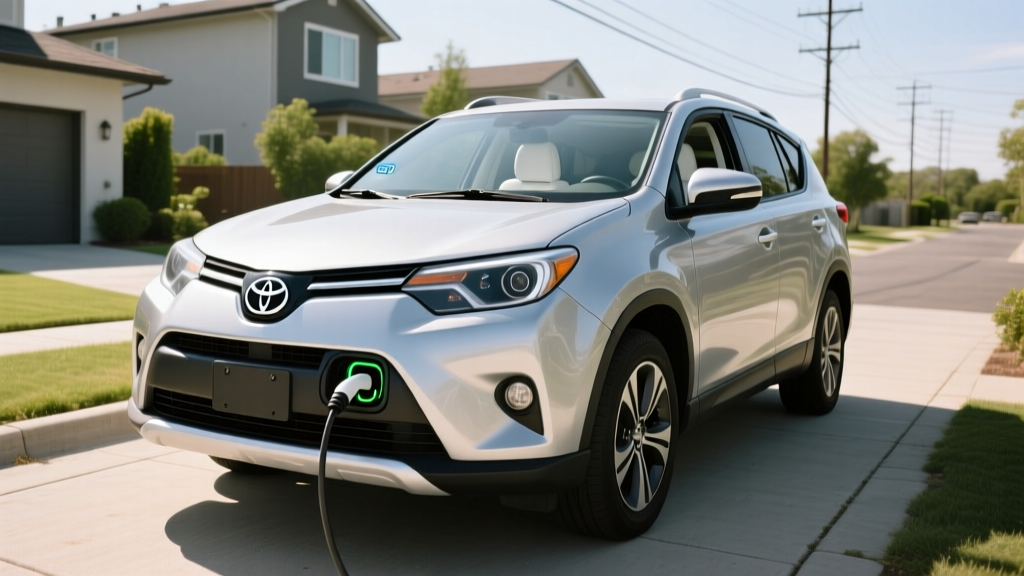
Quick Verdict: The 2014 Toyota RAV4 EV is a niche used-EV option with an EPA-rated 103 miles of range, a 41.8 kWh lithium-ion battery (sourced from Tesla), and a CHAdeMO DC fast-charging port. In 2026, expect to pay between $8,000 and $14,000 on the used market. It works as a short-commute city runabout if you can charge at home, but its limited range, aging battery, and outdated tech make modern used EVs like the Chevy Bolt EUV or Nissan Leaf a more practical choice for most buyers.
What Exactly Is the 2014 RAV4 Electric?
The 2014 Toyota RAV4 EV was the second and final model year of Toyota's compliance electric SUV, built in partnership with Tesla. Toyota essentially dropped a Tesla-derived powertrain — including a 41.8 kWh lithium-ion battery pack and a 154-hp (115 kW) AC induction motor — into a first-generation RAV4 chassis. Only about 2,600 units were sold across the 2012–2014 model years, almost exclusively in California, to meet the state's ZEV mandate.
This vehicle is not related to the current RAV4 Prime plug-in hybrid or the bZ4X battery-electric SUV. It was discontinued after 2014, making it a 10+ year-old EV in a market that has advanced dramatically since.
| Spec | Value |
|---|---|
| EPA Range | 103 miles |
| Battery Capacity | 41.8 kWh (usable ~35 kWh) |
| Battery Chemistry | NMC (Nickel Manganese Cobalt) |
| Motor Output | 154 hp (115 kW) / 218 lb-ft torque |
| 0–60 mph | ~8.6 seconds |
| EPA Efficiency | 76 MPGe combined |
| Level 2 Charging (6.6 kW onboard) | ~6 hours (0–100%) |
| DC Fast Charging (CHAdeMO) | ~50 kW peak, 0–80% in ~45 min |
| Connector | J1772 (Level 2) / CHAdeMO (DCFC) |
| Drivetrain | Front-wheel drive |
| Cargo Volume | 36.4 cu ft (rear seats up) |
Real-World Range: What to Actually Expect
EPA Sticker: 103 miles
Real-World Expectation: 75–95 miles in mixed driving; as low as 55–65 miles in cold weather or sustained highway use at 70+ mph.
The 103-mile EPA figure was modest even in 2014. In 2026, with a decade of battery degradation factored in, most surviving RAV4 EVs will deliver meaningfully less. Lithium-ion NMC packs typically lose 10–20% of original capacity over 10 years depending on usage patterns, climate exposure, and charging habits. A pack that started with roughly 35 kWh usable may now offer 28–31 kWh.
Highway driving at 70 mph pushes the RAV4 EV's boxy aerodynamics hard, dropping efficiency to roughly 3.0–3.5 miles per kWh, yielding 85–100 miles from a degraded pack. In freezing temperatures (below 32°F), expect a further 20–30% reduction due to cabin heating demands and reduced battery chemistry performance — putting real winter range in the 55–70 mile band.
Before purchasing any used RAV4 EV, request a battery health report from a qualified EV technician or use an OBD-II scanner with EV-capable software to read the State of Health (SoH). A pack below 80% SoH should significantly lower the price you're willing to pay.
Charging: Connectors, Speeds, and Infrastructure Reality
The 2014 RAV4 EV uses two connectors:
| Level | Connector | Power (kW) | Miles Added per Hour | Time (0–100% or 10–80%) |
|---|---|---|---|---|
| Level 1 (120V) | J1772 | ~1.4 kW | ~4 mi/hr | ~25 hours (full) |
| Level 2 (240V) | J1772 | 6.6 kW | ~20 mi/hr | ~6 hours (full) |
| DC Fast Charge | CHAdeMO | ~50 kW peak | ~120 mi/hr (peak) | ~45 min (0–80%) |
The CHAdeMO problem: This is the single biggest ownership concern in 2026. The CHAdeMO DC fast-charging standard has been almost entirely supplanted by CCS and NACS across North America. Electrify America, EVgo, and most other networks have stopped expanding CHAdeMO stalls, and many older CHAdeMO stations have been decommissioned. If you rely on DC fast charging, verify that CHAdeMO stations exist along your regular routes using apps like PlugShare before committing to this vehicle.
For daily use, Level 2 home charging is the practical path. A 6.6 kW onboard charger is adequate for overnight replenishment — plug in after a 60-mile commute and you'll wake up fully charged. However, a professional Level 2 home installation typically costs $800–$2,000 depending on panel capacity and wiring distance, which must be factored into your total purchase cost.
Cost Breakdown: Purchase, Charging, and Maintenance
Here's what owning a 2014 RAV4 EV actually costs versus a comparable used gas RAV4 from the same era:
| Cost Category | 2014 RAV4 EV | 2014 RAV4 Gas (FWD) |
|---|---|---|
| Purchase Price (used, 2026) | $8,000–$14,000 | $10,000–$16,000 |
| "Fuel" Cost (annual) | $450–$650 (electricity at $0.14/kWh) | $1,500–$1,900 (gas at $3.50/gal, 26 MPG) |
| Maintenance (annual) | $300–$500 | $700–$1,100 |
| Insurance (annual) | $1,200–$1,600 | $1,100–$1,500 |
| Estimated Battery Replacement Reserve | $5,000–$10,000 (if needed) | N/A |
| Total 5-Year Operating Cost (fuel + maint.) | $3,750–$5,750 | $11,000–$15,000 |
The RAV4 EV's operating cost advantage is real — roughly $1,000–$1,500 per year in fuel and maintenance savings. But that savings must be weighed against the battery replacement risk. A degraded pack replacement for a 10+ year-old EV with limited parts availability could cost $5,000–$10,000 from a third-party specialist, potentially exceeding the vehicle's entire value.
Tax credit note: The federal §30D new-vehicle tax credit does not apply to a 2014 purchase. The Used Clean Vehicle Credit (§25E) offers up to $4,000 (30% of sale price, capped at $4,000) for qualified used EVs purchased from a dealer, but the vehicle must have an MSRP under $25,000 (new) and the buyer must meet income caps ($75,000 single / $150,000 joint). The 2014 RAV4 EV's original MSRP was approximately $49,800, which disqualifies it from the used-EV credit. Consult a tax professional for your specific situation.
How Does It Compare to Modern Used EVs?
The 2014 RAV4 EV was a compliance car, not a technology leader. Here's how it stacks up against other used EVs you can buy in the same price range in 2026:
| Vehicle | EPA Range | Battery | DCFC Standard | 10–80% Time |
|---|---|---|---|---|
| 2014 Toyota RAV4 EV | 103 mi | 41.8 kWh (NMC) | CHAdeMO (~50 kW) | ~45 min |
| 2017–2019 Chevy Bolt EV | 238 mi | 60 kWh (NMC) | CCS (~55 kW) | ~50 min |
| 2019–2021 Nissan Leaf Plus | 215 mi | 62 kWh (NMC) | CHAdeMO (~100 kW) | ~40 min |
| 2020–2022 Hyundai Kona Electric | 258 mi | 64 kWh (NMC) | CCS (~75 kW) | ~47 min |
The Bolt EV and Kona Electric offer more than double the range, use the still-supported CCS standard, and benefit from more modern thermal management systems. The RAV4 EV's only advantages are its SUV ride height and the Toyota badge — neither of which compensates for the range and charging-infrastructure deficit for most buyers.
Common Misconceptions About the 2014 RAV4 EV
| Myth | Fact |
|---|---|
| "It's a Tesla underneath, so it's reliable." | The Tesla-sourced powertrain was an early-generation system. Parts availability and specialized service knowledge are limited in 2026, and Tesla does not service this vehicle. |
| "103 miles is enough for city driving." | Adequate for short commutes, but degraded battery capacity, HVAC use, and highway segments will regularly push real range below 80 miles. Range stress is real with this vehicle. |
| "I can fast-charge anywhere." | CHAdeMO infrastructure is shrinking rapidly. CCS and NACS dominate new deployments. Verify local CHAdeMO availability before buying. |
| "It qualifies for the used-EV tax credit." | The original MSRP (~$49,800) exceeds the §25E cap of $25,000. It does not qualify for the federal used clean vehicle credit. |
| "Toyota dealers can service it." | Most Toyota dealers have limited or no RAV4 EV service capability. Independent EV specialists are often a better option. |
Who Should Actually Buy a 2014 RAV4 EV?
Consider the RAV4 EV if:
- You live in a mild climate (Southern California, Arizona, Texas) where cold-weather range loss is minimal
- Your daily round-trip commute is under 50 miles and you can charge at home every night
- You have reliable access to a remaining CHAdeMO station for occasional longer trips — or you own a second gas/hybrid vehicle
- You find one under $9,000 with verified battery SoH above 85%
- You value the SUV form factor and Toyota build quality over range and tech
Look elsewhere if:
- Your daily driving exceeds 60 miles or includes regular highway segments
- You live in a cold climate where winter range could drop below 60 miles
- You cannot install a Level 2 home charger
- You want a vehicle you can take on road trips without extensive planning
- Battery replacement cost would represent a financial hardship (it could exceed the car's value)
For most buyers in the $10,000–$16,000 used-EV budget, a 2017–2019 Chevy Bolt EV (238 miles EPA, CCS charging, widely available parts) or a 2020 Hyundai Kona Electric (258 miles EPA) delivers substantially more practicality. The RAV4 EV is a collector-adjacent curiosity for EV enthusiasts in the right niche circumstances — not a mainstream recommendation.
First-Time EV Buyer Checklist
If the 2014 RAV4 EV is your first EV, or you're comparing it against other used options, confirm these before signing:
- Battery SoH reading: Use an OBD-II EV scanner or request a dealer diagnostic. Target ≥85% SoH.
- Home charging plan: Confirm your electrical panel can support a 240V/30A circuit. Budget $800–$2,000 for professional installation by a licensed electrician.
- CHAdeMO station audit: Search PlugShare for CHAdeMO stations within 30 miles of your home and along any routes you'd drive.
- Service provider: Identify an independent EV shop in your area that can handle Tesla-era powertrain diagnostics before you need one.
- Insurance quote: Get a quote before purchase — older EVs with rare parts can carry higher premiums than expected.
- Tire condition: EVs are heavier than gas equivalents and wear tires faster. Budget $600–$1,000 for a replacement set if tread is low.
Frequently Asked Questions
Is the 2014 RAV4 EV a hybrid or fully electric?
It is a fully battery-electric vehicle (BEV) with no gasoline engine. It is not related to the RAV4 Hybrid or RAV4 Prime plug-in hybrid, which use Toyota's hybrid synergy drive system.
Can I charge a 2014 RAV4 EV at a Tesla Supercharger?
No. The RAV4 EV uses J1772 (Level 2) and CHAdeMO (DC fast charging) connectors. Tesla Superchargers use the NACS connector. Adapters exist for J1772-to-NACS for Level 2 destination charging at some locations, but there is no safe, widely available CHAdeMO-to-NACS adapter for DC fast charging.
What happens if the battery fails?
Battery replacement for the 2014 RAV4 EV is expensive ($5,000–$10,000) and complicated by limited parts supply. The original 8-year/100,000-mile battery warranty has expired for all 2014 models. Third-party EV shops may source refurbished packs, but availability is not guaranteed. This is the primary financial risk of ownership.
How does the RAV4 EV compare to a gas RAV4 in fuel savings?
At 12,000 miles per year, the RAV4 EV costs approximately $450–$650 in electricity versus $1,500–$1,900 in gasoline for a 2014 gas RAV4 (26 MPG combined at $3.50/gallon). That's roughly $1,000–$1,300 in annual fuel savings, though maintenance savings add another $300–$500 per year.
Does the 2014 RAV4 EV have regenerative braking?
Yes, it features regenerative braking that recaptures energy during deceleration. However, it does not offer true one-pedal driving — you still need the friction brake to come to a complete stop, unlike modern EVs with stronger regen systems.