Quick Verdict: A Budget Commuter With Caveats
The 2014 Nissan Leaf S was one of the most affordable new electric vehicles on the market when it launched, and over a decade later it remains one of the cheapest ways to get into a battery-electric car on the used market. But buyers in 2026 need to go in with eyes wide open: this is a first-generation EV with a small 24 kWh battery, CHAdeMO DC fast charging (increasingly rare in North America), and significant battery degradation that can cut its already modest 84-mile EPA range substantially.
If you have a short commute, access to Level 2 home charging, and can verify battery health before purchase, a used 2014 Leaf S can still serve as a capable second car or urban runabout for under $5,000. If you need highway range, road-trip capability, or access to modern DC fast-charging networks, look elsewhere.
2014 Nissan Leaf S: Core Specifications
| Spec | 2014 Nissan Leaf S |
|---|---|
| EPA Range (original) | 84 miles |
| Battery Capacity (usable) | ~21.3 kWh (of 24 kWh gross) |
| Battery Chemistry | NMC (nickel manganese cobalt), laminated cells |
| Motor | 80 kW AC synchronous (107 hp, 187 lb-ft torque) |
| Drivetrain | FWD (front-wheel drive) |
| 0–60 mph | ~11.5 seconds |
| Top Speed | ~90 mph (electronically limited) |
| EPA Efficiency | 114 MPGe combined (30 kWh/100 mi) |
| DC Fast Charge (max) | ~50 kW peak (CHAdeMO) |
| Level 2 Charge Rate | 6.6 kW (onboard charger) |
| Level 1 Charge Rate | ~1.4 kW (120V trickle) |
| Cargo Volume | 24.0 cu ft (rear seats up), 30.0 cu ft (folded) |
| Curb Weight | ~3,256 lbs |
| Original Base MSRP | $28,980 (before $7,500 federal credit) |
| Used Price Range (2026 est.) | $3,500–$6,500 depending on battery health |
| Battery Warranty (original) | 8 years / 100,000 miles (capacity loss below 9/12 bars) |
Range and Battery Health: The Defining Factor
EPA Range (when new): 84 miles
Real-World Expectation (2026, used): 50–75 miles depending on battery State of Health (SoH), driving style, and climate.
Highway driving (65–75 mph): Expect 15–25% less than the dashboard guess-o-meter, so roughly 40–60 usable miles on a degraded pack.
Cold weather (below 40°F): Range can drop an additional 20–30%. A Leaf S with a degraded battery in a northern winter may deliver as little as 30–40 miles before needing a charge. The 2014 Leaf S does not have a heat pump — it uses resistive cabin heating, which draws heavily from the traction battery.
The 2014 Leaf S uses a 24 kWh gross (approximately 21.3 kWh usable) lithium-ion battery pack composed of NMC (nickel manganese cobalt) chemistry in laminated pouch cells manufactured by AESC (Automotive Energy Supply Corporation, a Nissan/NEC joint venture). Unlike the liquid-cooled packs in the Chevy Volt or Tesla Model S, the Leaf's battery relies on passive air cooling — a design choice that has proven to accelerate degradation, especially in hot climates.
Checking Battery Health Before You Buy
The Leaf's instrument cluster displays battery health as a series of 12 bars on the far right of the dash. A new battery shows 12/12 bars. According to Nissan's original warranty terms, the battery capacity warranty covers defects that cause capacity to drop below 9 of 12 bars within 8 years or 100,000 miles. For a 2014 model, that warranty expired in 2022 at the latest.
Most 2014 Leaf S vehicles on the used market in 2026 show between 8 and 11 bars depending on climate history and charging habits. A car in Arizona with frequent DC fast-charging history may show 8 bars (roughly 65–70% State of Health), while a garage-kept Pacific Northwest example might still display 11 bars (~85% SoH). Use fueleconomy.gov to verify original EPA ratings.
For a more precise reading, ask the seller to run a LeafSpy diagnostic (an OBD-II dongle app that reads actual Ah capacity and SoH percentage). A pack reading below 70% SoH means you're working with roughly 15 kWh usable — translating to about 50 miles of real-world range.
Charging: CHAdeMO's Shrinking Network
| Charging Level | Connector | Max Power | Estimated Time (0–100%) | Miles Added per Hour |
|---|---|---|---|---|
| Level 1 (120V) | J1772 | ~1.4 kW | ~20+ hours | ~4–5 mi/hr |
| Level 2 (240V) | J1772 | 6.6 kW | ~4 hours (full) | ~20–22 mi/hr |
| DC Fast Charge | CHAdeMO | ~50 kW peak | ~30 min (0–80%) | ~90–100 mi/hr (at peak) |
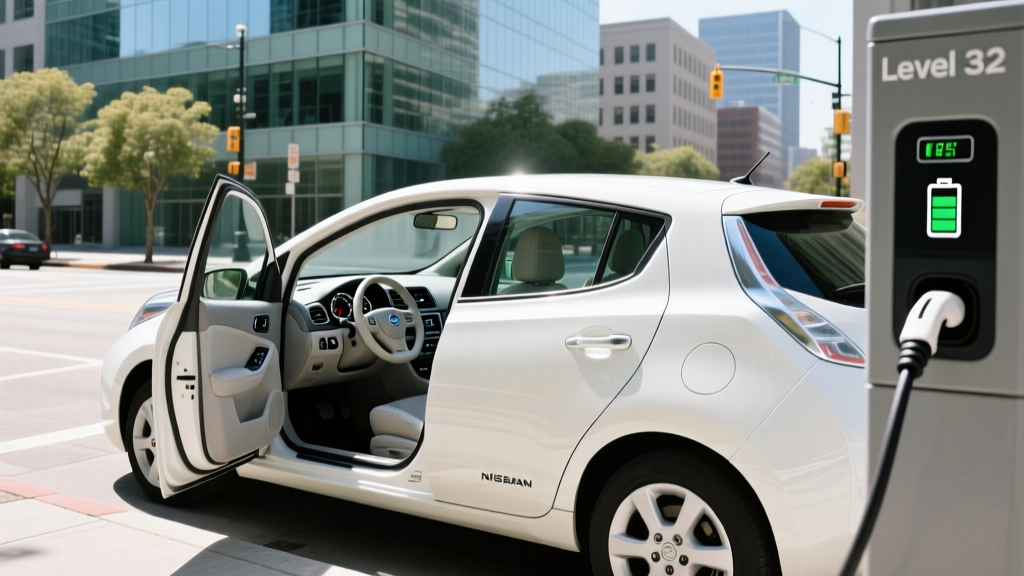
The 2014 Leaf S comes with a J1772 inlet for Level 1 and Level 2 AC charging, plus a CHAdeMO port for DC fast charging. Note that the base S trim in some model years shipped without the CHAdeMO port as standard — it was part of the optional Charge Package. Always verify the car has both ports before purchase.
The CHAdeMO Problem in 2026
This is the single biggest ownership concern beyond battery health. The North American charging infrastructure has decisively moved to CCS1 and, increasingly, NACS (Tesla's connector, now adopted by most major automakers). Electrify America, the largest US DC fast-charging network, has not installed CHAdeMO connectors on new stations since 2022. As of 2026, CHAdeMO plugs are increasingly rare at public fast-charging stations — you'll find them mainly at older Nissan dealer lots and legacy Electrify America or EVgo stations that haven't been retrofitted.
CHAdeMO-to-CCS adapters do not exist in the way NACS adapters do for CCS vehicles. If CHAdeMO infrastructure continues to shrink in your area, your DC fast-charging options will be severely limited, effectively making this a home-and-destination-charging-only vehicle.
Home Charging Setup
The Leaf S's 6.6 kW onboard charger is adequate for overnight Level 2 charging. A full charge from empty takes roughly 4 hours on a 240V/30A circuit. Most owners will plug in nightly and wake up to a full battery — for the typical commute, that's more than enough. Installation of a Level 2 home charger (like a ChargePoint Home Flex or Emporia Level 2) typically costs $500–$1,500 including electrician labor, depending on your panel capacity and run distance.
Performance and Driving Dynamics
The 2014 Leaf S is powered by an 80 kW (107 horsepower) AC synchronous electric motor driving the front wheels. Torque is a healthy 187 lb-ft, available instantly from zero RPM, which makes the car feel peppy around town despite the modest power figure. The 0–60 mph time of approximately 11.5 seconds is leisurely by modern EV standards — a 2026 Hyundai Ioniq 5 does it in roughly 5 seconds — but the instant torque makes stoplight-to-stoplight city driving feel more responsive than the number suggests.
Highway merging and passing require planning. The car runs out of breath above 65 mph, and wind noise becomes pronounced. The low rolling-resistance tires (P205/55R16) prioritize efficiency over grip, and the regenerative braking system offers two modes: standard (mild regen) and B-mode (stronger regen, though not true one-pedal driving like later EVs offer). There is no paddle-shift regen adjustment.
Ride quality is compliant and comfortable for a compact hatchback. The 3,256-pound curb weight keeps things manageable, and the low center of gravity (battery under the floor) gives decent body control. The steering is light and numb — this is a commuter appliance, not a driver's car.
Interior, Cargo, and Technology
The Leaf S is the base trim, so equipment is spartan by 2026 standards:
- 4.3-inch color display (non-touch) with basic audio and trip computer
- No navigation (that was reserved for SV and SL trims)
- Bluetooth phone and audio streaming
- Rearview camera (standard on all 2014 Leaf trims)
- Manual air conditioning with ECO mode
- Cloth upholstery, manual seat adjustment
- No adaptive cruise, no lane-keeping, no automatic emergency braking
Passenger space is generous for a compact hatchback: 42.5 inches of front legroom and 33.3 inches in the rear. The flat floor (no transmission tunnel) makes the rear middle seat usable. Cargo volume is 24.0 cubic feet behind the rear seats, expanding to 30.0 cubic feet with the 60/40 split rear seatbacks folded — competitive with a Honda Fit of the era.
Notable drawback: the 2014 Leaf has no battery thermal preconditioning for DC fast charging. In cold weather, CHAdeMO charging speeds can be painfully slow until the pack warms up through use — sometimes taking 45+ minutes for a 0–80% session in freezing temperatures.
Pricing, Tax Credits, and Used-EV Value
| Item | Detail |
|---|---|
| Original 2014 Base MSRP (S trim) | $28,980 |
| Original Federal Credit (§30D, 2014) | $7,500 (Nissan had not hit the 200,000-vehicle cap) |
| Effective Price When New | ~$21,480 (before state incentives) |
| 2026 Used Price Range | $3,500–$6,500 (varies by battery SoH, mileage, region) |
| Federal Used EV Credit (§25E, 2026) | Up to $4,000 or 30% of sale price, whichever is less |
| Example: Buy at $5,000 | 30% × $5,000 = $1,500 credit (if eligible) |
| Effective Cost After §25E Credit | As low as ~$2,000–$3,500 |
The 2014 Leaf S no longer qualifies for the new-vehicle §30D federal tax credit — the car hasn't been sold new in over a decade. However, it may qualify for the §25E Used Clean Vehicle Credit, which provides up to $4,000 (or 30% of the sale price, whichever is lower) for qualified used EV purchases from a licensed dealer. Key eligibility requirements for §25E in 2026:
- Sale price cap: The used vehicle must sell for $25,000 or less (the Leaf S easily clears this).
- Buyer income limits: AGI must not exceed $75,000 (single), $112,500 (head of household), or $150,000 (married filing jointly).
- Dealer sale required: Private-party sales do not qualify. The vehicle must be purchased through a licensed dealer.
- Model year requirement: The vehicle must be at least two model years old (a 2014 qualifies).
- One-time use per vehicle: The §25E credit can only be claimed once per VIN. If a previous buyer already claimed it on this specific car, you cannot claim it again.
- One-time per buyer: You can only claim the §25E credit once every three years.
Because the Leaf S typically sells for $3,500–$6,500, the 30% calculation usually yields $1,050–$1,950 — not the full $4,000. The credit can be applied at point of sale (transferred to the dealer) as of 2024 onward, reducing your out-of-pocket cost immediately.
Pros and Cons: Honest Assessment
Pros
- Extremely low used purchase price ($3,500–$6,500)
- Low operating cost: ~$0.04–$0.06/mile on residential electricity
- Comfortable ride and roomy interior for its class
- Reliable motor and power electronics (few moving parts)
- Qualifies for §25E used-EV credit (up to $1,500–$1,950 typical)
- Instant torque makes city driving pleasant
- Standard rearview camera and Bluetooth
Cons
- Severely degraded batteries on most examples (50–75 real-world miles)
- CHAdeMO DC fast-charging network is shrinking rapidly
- No battery thermal management (passive air cooling = faster degradation)
- No heat pump — resistive heating devastates winter range
- No modern ADAS (no AEB, no lane-keeping, no adaptive cruise)
- Base S trim lacks navigation, touchscreen, and premium features
- 11.5-second 0–60 is slow for highway merging
- Battery warranty expired — replacement costs $5,000–$8,000+ if pack fails
Who Should Buy a Used 2014 Nissan Leaf S?
Buy it if:
- Your daily round-trip commute is under 40 miles and you can charge at home
- You need an ultra-cheap second car for errands, school runs, or local driving
- You live in a mild climate (minimal range loss from heat or cold)
- You can verify battery SoH above 80% (10–12 bars) before purchase
- You have access to a Level 2 home charger or can install one
- You understand this is a city/suburban car, not a road-trip vehicle
Skip it if:
- Your commute exceeds 50 miles round trip
- You live in an extreme-heat or extreme-cold climate
- You need DC fast charging for road trips or apartment living without home charging
- You want modern safety tech (AEB, blind-spot monitoring, lane-keeping)
- You can stretch your budget to $10,000–$15,000 (a used 2018+ Leaf with 40 kWh or a Chevy Bolt EV is dramatically better)
Compared to key competitors on the used market: the 2014 Chevy Spark EV has a similarly small battery but uses a liquid-cooled pack that has degraded more gracefully. The 2014 Fiat 500e is more fun to drive with similar range but even less cargo space. The 2017+ Chevy Bolt EV (if you can stretch the budget) offers 238 miles of EPA range, CCS fast charging, and a liquid-cooled 60 kWh battery — a generational leap. See the IIHS 2014 Leaf safety ratings for crash-test performance.
Frequently Asked Questions
What is the real-world range of a used 2014 Nissan Leaf S?
With a battery at 80% State of Health (common for a 2014 model), expect 55–70 miles in moderate temperatures with mixed city/highway driving. Highway-only driving at 70 mph drops that to 45–55 miles. In freezing weather, range can fall to 35–50 miles. Always check battery health bars (aim for 10+) or run a LeafSpy diagnostic before purchasing.
How fast does the 2014 Leaf S charge?
On a Level 2 (240V) home charger, the 6.6 kW onboard charger adds roughly 20–22 miles of range per hour, fully charging the pack in about 4 hours. On a CHAdeMO DC fast charger, the car peaks at around 50 kW but only sustains that rate briefly — a typical 0–80% session takes 25–35 minutes in moderate temperatures, longer in cold weather due to the lack of battery preconditioning.
Does the 2014 Nissan Leaf S qualify for any federal tax credit in 2026?
Not the new-vehicle §30D credit — the car is long discontinued. However, if purchased from a licensed dealer for $25,000 or less, it can qualify for the §25E Used Clean Vehicle Credit. This provides 30% of the sale price (up to $4,000 max). At typical used prices of $4,000–$6,000, expect a credit of $1,200–$1,800. Buyer income caps apply ($75K single / $150K joint). The credit can only be claimed once per VIN — verify it hasn't been previously used on that car.
How much does a battery replacement cost?
A remanufactured 24 kWh Leaf battery replacement from Nissan or a third-party specialist typically costs $5,000–$8,000 including labor. Some independent EV shops offer refurbished packs for less. Given that the entire car is worth $3,500–$6,500, a battery replacement is rarely economical unless the rest of the vehicle is in excellent condition. Factor this risk into your purchase decision — buy a car with the healthiest battery you can find rather than planning a replacement.
Is the 2014 Leaf S worth buying versus a newer used EV?
It depends entirely on your budget and needs. If your budget is strictly under $5,000 and your commute is short, the Leaf S is one of the few viable options. If you can stretch to $8,000–$12,000, a 2017–2018 Chevy Bolt EV (238-mile range, CCS charging, liquid-cooled battery) or a 2018+ Nissan Leaf (40 kWh, 151-mile range) is a substantially better vehicle in every measurable way. The Leaf S makes sense as a dirt-cheap city runabout, not as a primary vehicle.
Can I charge the 2014 Leaf S at Tesla Superchargers?
No. The 2014 Leaf uses CHAdeMO for DC fast charging and J1772 for AC charging. Tesla's Magic Dock adapter at some Superchargers supports CCS1 vehicles only, not CHAdeMO. There is no commercially available adapter to charge a Leaf at a NACS/Tesla DC fast charger. You can use a J1772 adapter for Tesla Level 2 destination chargers, but not for Supercharging.