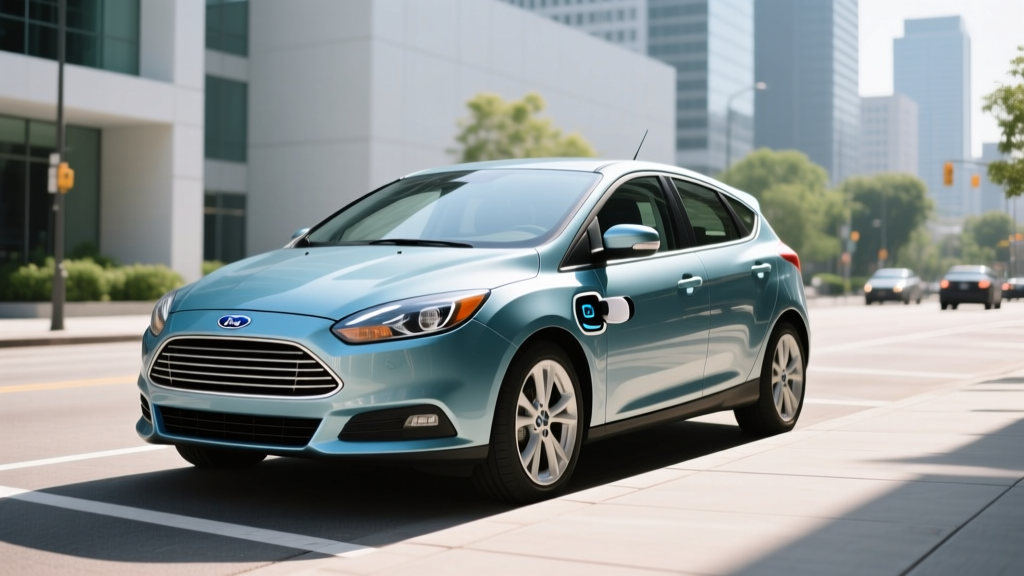
The Quick Answer: Is the 2014 Ford Focus Electric Worth It?
Bottom line: The 2014 Ford Focus Electric hatchback is a budget-priced used EV best suited as a second car or short-distance commuter. With an original EPA range of just 76 miles from its 23 kWh usable battery, it cannot serve as a sole household vehicle for most drivers. However, at used prices between $5,000–$9,000 in 2026, it offers extremely cheap per-mile commuting if you have reliable home Level 2 charging and a daily round trip under 50 miles.
Ford discontinued the Focus Electric after the 2018 model year, and the entire Focus line was killed in the US market shortly after. That means you are looking at a 12-year-old electric vehicle with first-generation battery chemistry and no DC fast-charging capability. The trade-off is rock-bottom acquisition cost and minimal running expenses. Let's examine the numbers that matter.
Specs That Define the Ownership Experience
| Specification | 2014 Ford Focus Electric |
|---|---|
| EPA Range | 76 miles (real-world: 55–70 mi highway/cold) |
| Battery (Usable) | 23 kWh, liquid-cooled NMC lithium-ion |
| Motor Output | 143 hp (107 kW), 184 lb-ft torque |
| 0–60 mph | ~9.2 seconds |
| Onboard Charger (Level 2) | 6.6 kW (J1772 connector) |
| DC Fast Charging | Not available |
| Level 2 Charge Time (0–100%) | ~3.5–4 hours |
| Level 1 Charge Time (120V, 12A) | ~18–20 hours |
| EPA Efficiency | 105 MPGe combined (32 kWh/100 mi) |
| Cargo Volume | 14.5 cu ft (reduced by battery packaging) |
| Original MSRP (2014) | $29,170 (before incentives) |
| Used Price Range (2026) | $5,000–$9,000 depending on mileage/battery SoH |
The critical limitation is the absence of DC fast charging. The 2014 Focus Electric was built on Ford's early electrification platform, which only supported Level 1 (120V) and Level 2 (240V) AC charging. This means road trips require multi-hour stops at Level 2 public chargers — effectively eliminating this car from long-distance duty.
Real-World Range Reality: The EPA sticker says 76 miles. In practice, expect 65–70 miles in mild weather with mixed city/highway driving. In winter temperatures below 35°F, range drops to roughly 50–55 miles due to cabin heating demand and reduced battery efficiency. Highway driving at 70+ mph also cuts range significantly — plan for about 55–60 miles at sustained interstate speeds.
Used Focus Electric vs. Gas Focus vs. Modern Budget EV
To understand whether this 2014 model makes financial sense, we need to compare it against both its gas-powered sibling and a modern used EV alternative. Here's how the numbers stack up for a driver covering 10,000 miles per year:
| Factor | 2014 Focus Electric | 2014 Focus Gas (2.0L) | 2022 Nissan Leaf S (Used) |
|---|---|---|---|
| Used Purchase Price | $6,500 avg | $7,500 avg | $14,000 avg |
| EPA Range / Tank | 76 mi | ~360 mi (12.4 gal) | 149 mi |
| Fuel/Energy Cost (Annual) | ~$350 (electricity) | ~$1,350 (gas at $3.40/gal) | ~$400 (electricity) |
| Annual Maintenance | ~$200 | ~$650 | ~$250 |
| 5-Year Fuel + Maint. | $2,750 | $10,000 | $3,250 |
| Insurance (Annual Avg) | ~$1,100 | ~$1,200 | ~$1,300 |
| DC Fast Charging | No | N/A | Yes (CHAdeMO, 50 kW) |
The Focus Electric saves roughly $1,000 per year in fuel and maintenance compared to its gas counterpart. Over five years, that's $5,000 in savings — nearly covering the purchase price. However, the gas Focus offers 360 miles of range and five-minute refueling, which matters if you ever need flexibility beyond your commute.
Compared to a used 2022 Nissan Leaf S with its 149-mile range and available CHAdeMO DC fast charging, the Focus Electric is a generation behind in capability — but also $7,500 cheaper to acquire. Your decision hinges on whether 76 miles is enough for your daily needs.
Real Costs of Ownership: The Full Breakdown
| Cost Category | Year 1 | Year 2–5 (Annual Avg) | 5-Year Total |
|---|---|---|---|
| Purchase Price | $6,500 | — | $6,500 |
| Home Level 2 Charger Install | $800–$1,500 | — | $1,150 avg |
| Electricity (10k mi/yr) | $350 | $350 | $1,750 |
| Maintenance | $200 | $200 | $1,000 |
| Insurance | $1,100 | $1,100 | $5,500 |
| Tires (replacement cycle) | — | $300 | $1,200 |
| Registration/Taxes | $200 | $200 | $1,000 |
| Total | $9,150–$9,850 | $2,250 | $18,100 |
Several ownership realities deserve attention:
- Home charging is non-negotiable. Without a garage or dedicated parking spot with 240V access, relying on Level 1 (120V) charging means nearly 20 hours for a full charge. That's impractical for daily driving. Budget $800–$1,500 for a Level 2 home charger installation (equipment plus licensed electrician), assuming your electrical panel has capacity.
- Battery State of Health (SoH) is the wildcard. A 12-year-old NMC battery will have degraded. Expect 70–85% of original capacity depending on climate history and charging habits. A Focus Electric that started with 76 miles of range may now deliver 55–65 miles. Always request a battery health report before purchasing.
- No federal tax credit applies. The IRS §25E used EV credit offers up to $4,000, but it requires the vehicle to have a manufacturer-suggested retail price originally under specific thresholds and the model must be on the qualified list. The 2014 Focus Electric is unlikely to qualify in most dealer transactions. Check current IRS guidance before assuming eligibility.
- Battery replacement cost is a dealbreaker. If the traction battery fails outside warranty, replacement runs $6,000–$9,000 — often exceeding the car's value. Ford's original battery warranty was 8 years/100,000 miles, meaning every 2014 model is now out of warranty coverage.
Common Misconceptions About the Focus Electric
| Myth | Fact |
|---|---|
| "It can charge at any public station." | It only accepts Level 2 AC (J1772). It cannot use DC fast chargers (CCS, CHAdeMO, or NACS). You'll be limited to slower public Level 2 stations. |
| "76 miles of range is enough for everyone's commute." | The average US one-way commute is 16 miles (US Census Bureau), but errands, detours, and climate control reduce usable range. Plan for 55–65 real-world miles. |
| "Used EVs are unreliable." | The Focus Electric's electric drivetrain is mechanically simpler than a gas Focus — no transmission, no exhaust, no timing belt. The risk is battery degradation, not drivetrain failure. |
| "I'll save a fortune on maintenance." | You will save on oil changes, spark plugs, and transmission service. But at 12 years old, suspension components, brakes, 12V battery, and HVAC systems still need attention. |
| "The liquid-cooled battery prevents all degradation." | Liquid cooling helps significantly vs. passive air cooling (as in early Nissan Leafs), but all NMC batteries lose capacity over time and charge cycles. Expect 15–30% loss after 12 years. |
Who Should Buy the 2014 Focus Electric — And Who Shouldn't
Buy the 2014 Focus Electric if:
- You need a second car strictly for commuting under 40 miles round-trip
- You have guaranteed access to Level 2 home charging (garage or driveway with 240V)
- Your budget is under $8,000 and you want the lowest per-mile cost possible
- You live in a mild climate (less cold-weather range penalty)
- You can verify battery SoH above 80% before purchase
- You have a gas or long-range vehicle available for road trips
Do NOT buy the 2014 Focus Electric if:
- This will be your only vehicle
- You lack home charging access and would rely on public infrastructure
- Your daily driving exceeds 50 miles round-trip
- You live in a region with sustained sub-freezing winters
- You cannot absorb a potential $6,000+ battery replacement cost
- You need cargo space — the battery intrusion reduces the hatch area to 14.5 cu ft
For buyers who want more range but are still budget-conscious, a used 2018–2019 Chevrolet Bolt EV (238-mile EPA range, DC fast charging capable, CCS connector) in the $12,000–$16,000 range is a substantially more versatile choice. The Bolt also qualifies for the §25E used clean vehicle credit (up to $4,000) when purchased through a dealer, subject to income caps — potentially narrowing the price gap considerably.
What to Inspect Before Purchasing
If you're seriously considering a 2014 Focus Electric, these pre-purchase checks are essential:
- Battery State of Health: Use an OBD-II scanner with EV-compatible software (such as FORScan for Ford vehicles) to read the battery's SoH percentage. Anything below 75% means significantly reduced range and potential near-term replacement risk.
- Charge port and cable: Inspect the J1772 inlet for corrosion, loose pins, or burning marks. Test charging at multiple Level 2 stations if possible.
- 12V auxiliary battery: Like all EVs, the Focus Electric has a conventional 12V battery that powers electronics. These fail every 3–5 years and a dead 12V battery will prevent the car from starting even if the traction battery is full.
- Thermal management system: The liquid cooling loop for the battery should be inspected for leaks or coolant degradation. Ford specified specific coolant that must not be substituted.
- Tire wear pattern: EVs are heavier than their gas counterparts and can wear tires faster. Check for uneven wear indicating alignment issues.
Frequently Asked Questions
Can I add DC fast charging to a 2014 Focus Electric?
No. DC fast charging requires dedicated hardware (high-voltage contactors, charge port wiring, thermal management upgrades, and ECU programming) that the Focus Electric was never designed to accommodate. There is no aftermarket solution. What you see is what you get: Level 2 AC charging at a maximum of 6.6 kW.
How much does it cost to charge at home?
At the US average residential electricity rate of ~$0.16/kWh (EIA), fully charging the 23 kWh battery costs approximately $3.68. For 10,000 miles of annual driving at 32 kWh/100 mi, you'll use about 3,200 kWh per year — roughly $512 annually, or about $0.05 per mile. Compare that to a gas Focus at 30 MPG combined and $3.40/gallon: about $0.11 per mile.
Will the Focus Electric work in cold climates?
It works, but with significant compromise. The liquid-cooled battery helps preserve longevity, but cold temperatures still reduce range by 20–35% in sub-freezing conditions. The Focus Electric uses a resistive cabin heater (not a heat pump), which draws heavily from the battery. Expect 50–55 miles of range on a cold winter day — tight for anything beyond a short commute.
Is the 2014 Focus Electric safe?
The 2014 Focus Electric received a 4-star overall rating from NHTSA and was an IIHS Top Safety Pick. It includes standard stability control, anti-lock brakes, and six airbags. However, it lacks modern ADAS features like automatic emergency braking, lane-keeping assist, or blind-spot monitoring that became common in later years.
What happens if the battery dies completely?
If the traction battery degrades below usable capacity or suffers a cell failure, replacement costs $6,000–$9,000 from a dealer. Third-party refurbishment shops may offer rebuilt packs for $4,000–$6,000, but availability for the Focus Electric is limited since the model was discontinued. In many cases, a failed battery will total the vehicle given its low resale value.
Does the 2014 Focus Electric qualify for any tax credits in 2026?
The original $7,500 federal credit (§30D) is only available for new vehicle purchases and no longer applies. The §25E used clean vehicle credit (up to $4,000 or 30% of sale price, whichever is less) may apply when purchased from a licensed dealer, but the vehicle must meet battery sourcing requirements and the buyer must fall within income caps ($75,000 single / $150,000 married filing jointly). Given the car's low price, the credit would likely max out at 30% of the sale price — roughly $1,500–$2,400 on a $5,000–$8,000 purchase. Confirm eligibility with a tax professional before relying on this credit.