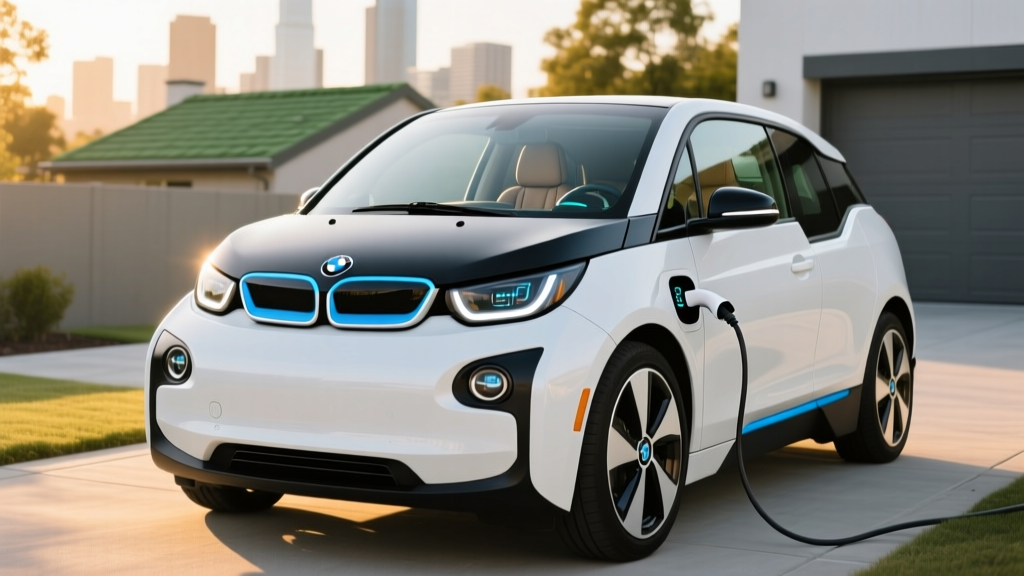
The 2014 BMW i3 Hatchback: A Pioneering EV in the Used Market
The 2014 BMW i3 hatchback was one of the first mass-produced electric vehicles built from the ground up on a dedicated EV platform. Its carbon-fiber-reinforced plastic (CFRP) passenger cell, rear-wheel-drive layout, and quirky design made it unlike anything else on the road when it launched. Now, over a decade later, the i3 has become one of the most affordable entry points into EV ownership on the used market — with examples regularly selling between $7,000 and $14,000 depending on mileage and condition.
But buying a decade-old EV requires careful scrutiny of battery health, charging capability, and whether its limited range fits your daily driving. This review covers every number that matters for a prospective 2014 BMW i3 buyer in 2026.
Range, Battery, and Real-World Efficiency
The 2014 BMW i3 BEV (pure electric, no range extender) came equipped with a 22 kWh gross battery pack (approximately 18.8 kWh usable) using Samsung SDI NMC (nickel-manganese-cobalt) lithium-ion cells. The EPA rated it at 81 miles of combined range when new.
EPA sticker: 81 miles combined (73 city / 90 highway equivalent). In 2026, expect a used 2014 i3 with moderate battery degradation (10-20% capacity loss) to deliver 65–75 miles of real-world range in mild weather. Highway driving at 70+ mph drops this to roughly 55–65 miles. In freezing winter conditions (below 32°F), expect a further 25–35% reduction, putting usable range in the 45–55 mile neighborhood. The i3 has no active battery thermal management for heating — it relies on a heat pump for cabin warmth, which helps efficiency but doesn't precondition the pack for optimal performance in extreme cold.
The i3's efficiency was impressive for its era. The EPA rated it at 124 MPGe combined (137 city / 111 highway), translating to roughly 27 kWh per 100 miles. That efficiency figure still holds up well — the lightweight CFRP and aluminum construction (curb weight around 2,799 lbs) means the i3 uses less energy per mile than most modern EVs that are heavier and more powerful.
| Spec | Value |
|---|---|
| EPA Range (new) | 81 miles combined |
| Battery (gross / usable) | 22 kWh / ~18.8 kWh |
| Chemistry | NMC (Samsung SDI) |
| MPGe (combined) | 124 MPGe |
| Energy Consumption | 27 kWh / 100 mi |
| Motor | 125 kW (170 hp), 184 lb-ft torque |
| Drivetrain | Rear-wheel drive (RWD) |
| 0-60 mph | 7.0 seconds |
| DC Fast Charge (max) | 50 kW (CCS Combo 1) |
| Level 2 Charge Rate | 7.4 kW (onboard charger) |
| Original MSRP (base) | $41,350 (before incentives) |
| Used Price Range (2026) | $7,000 – $14,000 |
| Battery Warranty (original) | 8 years / 100,000 miles |
Charging Speed: DC Fast and Home Level 2
The 2014 i3 supports DC fast charging via CCS Combo 1 at a maximum rate of 50 kW. This was standard for the era but is modest by 2026 standards. On a 50 kW charger, BMW quoted a 0–80% charge in approximately 25–30 minutes. The small battery means absolute charge times stay reasonable even at lower power — but the charge curve tapers significantly above 80%, as is typical for NMC chemistry. Expect 80–100% to add another 20+ minutes.
One important note: some early 2014 i3 models were sold without the DC fast-charging option. BMW charged roughly $750 extra for the CCS DC fast-charge port at the time. Before buying used, physically verify the vehicle has a CCS port (the lower portion of the charge port, below the J1772 connector) — not all examples on the used market have it.
| Level | Power | Time (0–80%) | Miles Added/Hour |
|---|---|---|---|
| Level 1 (120V) | ~1.4 kW | ~14+ hours (full) | ~4–5 mi/hr |
| Level 2 (240V) | 7.4 kW | ~2.5 hours (full) | ~25 mi/hr |
| DC Fast (CCS) | 50 kW peak | ~25–30 min (0–80%) | ~90–100 mi/hr (peak) |
For daily use, most i3 owners charge at home on Level 2. At 7.4 kW, a full charge takes about 2.5 hours — meaning you can easily top up overnight or even during a short window after work. The small battery is actually an advantage here: even a 120V Level 1 outlet adds roughly 4–5 miles per hour, which may suffice for low-mileage commuters who drive 20–30 miles daily.
Performance and Driving Dynamics
The 2014 i3 is powered by a rear-mounted electric motor producing 170 horsepower (125 kW) and 184 lb-ft of torque. That torque is available instantly from zero RPM, making the i3 feel punchy around town. The 0–60 mph sprint takes 7.0 seconds — quick enough for confident highway merging and genuinely fun in city driving.
The driving experience is distinctly BMW. The steering is precise, the turning radius is tight (ideal for urban parking), and the low center of gravity from the under-floor battery pack keeps body roll minimal. The tall, narrow 155/70R19 tires are optimized for low rolling resistance rather than grip, so the i3 is not a corner-carver — but it handles daily driving with composure.
Regenerative braking is aggressive and operates in a one-pedal driving style. Lifting off the accelerator decelerates the car significantly, often eliminating the need to touch the brake pedal in stop-and-go traffic. BMW did not offer adjustable regen levels in the 2014 model year — it's a fixed, strong regen calibration that most owners learn to appreciate quickly.
Interior, Cargo, and Technology
The i3's interior is one of its most distinctive features. BMW used sustainable materials extensively: eucalyptus wood trim, recycled plastic textiles, and natural wool blends. The result is an airy, modern cabin that still looks fresh in 2026. The "coach doors" (rear-hinged back doors) create a wide opening for rear-seat access but require the front door to be open first — a quirk that takes getting used to.
Practical dimensions matter for daily usability:
- Cargo volume: 15.1 cubic feet behind the rear seats; 36.9 cu ft with rear seats folded
- Rear legroom: 31.9 inches (tight for adults on longer trips)
- Front headroom: 39.6 inches (generous, thanks to the tall roofline)
- Seating: 4 passengers (no middle rear seat)
Technology in the 2014 i3 includes BMW's iDrive infotainment system with a 6.5-inch display (10.2-inch with the optional Technology package), navigation, and BMW ConnectedDrive services. Standard features include automatic climate control with a heat pump (more efficient than resistive heating), keyless entry, and a digital instrument cluster. However, there is no Apple CarPlay or Android Auto — these were not available until later model years. Bluetooth audio streaming and USB connectivity are standard.
Driver-assistance features are basic by 2026 standards: cruise control, parking sensors, and a rearview camera (optional on base, standard on higher trims). There is no adaptive cruise control, lane-keeping assist, or automatic emergency braking on the 2014 model.
Pricing, Tax Credits, and Ownership Costs
The 2014 BMW i3 originally started at $41,350 (BEV, before any incentives). The optional Range Extender (REx) model — which added a 650cc two-cylinder BMW motorcycle engine as a generator — started at $45,200. Options like the Technology package, DC fast charging, and premium interior materials could push the as-tested price above $50,000.
In the 2026 used market, expect to pay:
- $7,000–$9,000: Higher-mileage examples (70,000+ miles), possible battery degradation
- $9,000–$12,000: Average mileage (40,000–70,000 miles), good condition
- $12,000–$14,000+: Low-mileage, well-maintained examples, often with full service history
The 2014 BMW i3 may qualify for the up to $4,000 federal used EV tax credit (IRS §25E, not §30D which applies to new vehicles). Key eligibility requirements as of 2026:
- Sale price must be $25,000 or less (virtually all used i3s qualify)
- Buyer income caps: $75,000 single / $112,500 head of household / $150,000 married filing jointly (modified AGI)
- Credit equals 30% of the sale price, up to $4,000 maximum
- Must be purchased from a licensed dealer (private-party sales do not qualify)
- The vehicle must be at least two model years old (2014 easily qualifies)
- Credit is non-refundable — you must have sufficient tax liability to claim it
At a $10,000 purchase price, the credit would be $3,000 (30% of sale price). At $13,334 or above, the credit maxes out at $4,000. Always verify current rules at irs.gov and consult a tax professional.
For operating costs, the i3's exceptional efficiency (27 kWh/100 mi) means charging is very inexpensive. At the national average electricity rate of ~$0.16/kWh, a full charge costs roughly $3.00 — translating to about 3.5–4.0 cents per mile. Compare that to a 30 MPG gas car at $3.50/gallon (11.7 cents per mile), and the i3 saves approximately $800–$1,000 per year in energy costs for a 10,000-mile driver.
Battery Health, Degradation, and Warranty
The 2014 i3's 22 kWh NMC battery was engineered for longevity, but after 10+ years, some degradation is inevitable. Based on owner-reported data and industry analysis, expect 10–20% capacity loss in a typical 2014 i3 — meaning a pack that originally delivered 81 EPA miles may now provide 65–73 miles when new-old-stock equivalent. Units in hot climates (Arizona, Texas, Southern California) tend to show more degradation than those in moderate climates.
BMW's original high-voltage battery warranty was 8 years / 100,000 miles, covering defects and capacity loss below 70% of original capacity. For a 2014 model, this warranty has expired for nearly all examples (the 8-year window closed in 2022). This means any battery-related repair or replacement is now an out-of-pocket expense.
A full battery replacement for the 2014 i3 is estimated at $8,000–$12,000 through BMW, though independent EV shops may offer refurbished pack replacements for less. Before purchasing, request a battery health report — BMW dealerships can run a capacity test, and third-party tools like LeafSpy (adapted for BMW) can estimate State of Health (SoH). Look for examples above 80% SoH for the best remaining usable life.
✅ Pros
- Ultra-efficient: 124 MPGe, ~4 cents/mile
- Lightweight CFRP construction — unique and corrosion-resistant
- Fun to drive: instant torque, tight turning radius
- Very affordable on the used market ($7K–$14K)
- Qualifies for up to $4,000 used-EV tax credit
- Sustainable interior materials still look modern
- Strong regenerative braking for one-pedal driving
❌ Cons
- Short range: 65–75 real-world miles (degraded)
- 50 kW DC fast charging is slow by 2026 standards
- Battery warranty has expired — replacement risk
- No Apple CarPlay / Android Auto
- Rear coach doors are impractical in tight parking
- Limited rear-seat legroom (31.9 in)
- Some units lack DC fast-charge capability
- Narrow tires limit wet/snow traction
Who Should Buy the 2014 BMW i3?
Decision Framework
Buy the 2014 BMW i3 if:
- Your daily round-trip commute is under 50 miles and you can charge at home
- You want the cheapest possible entry into EV ownership with premium build quality
- You're a city driver who values a tight turning radius and easy parking
- You qualify for the §25E used-EV credit and want to maximize its value on a low-cost purchase
- You want a fun, unique second car for errands and local driving
Look elsewhere if:
- You regularly drive more than 60 miles in a day without access to mid-day charging
- You need a family vehicle with usable rear seats and generous cargo space
- You live in an extremely cold climate and need reliable year-round range
- You want modern driver-assistance features or CarPlay/Android Auto
- Road trips longer than 80 miles are part of your routine
Compared to other used EVs in this price range — such as the 2014–2016 Nissan Leaf (84-mile range, more interior space, less engaging to drive) or the 2016–2017 Chevrolet Bolt EV (238-mile range, but typically $13K–$18K used) — the i3 occupies a niche as the premium city commuter. It trades range and practicality for driving enjoyment, build quality, and efficiency.
Frequently Asked Questions
What is the real-world range of a used 2014 BMW i3 in 2026?
Expect 65–75 miles in mild weather with a moderately degraded battery. Highway driving at sustained speeds drops this to 55–65 miles. In freezing winter conditions, plan for 45–55 miles. Always verify the specific vehicle's battery State of Health before purchase — a well-preserved pack above 85% SoH will deliver closer to the original 81-mile EPA figure.
How fast does the 2014 BMW i3 charge?
On a 50 kW DC fast charger (CCS), 0–80% takes approximately 25–30 minutes. On a 240V Level 2 home charger at 7.4 kW, a full charge takes about 2.5 hours. On a standard 120V outlet, expect roughly 14+ hours for a full charge. Verify that the specific vehicle has the optional DC fast-charge port before relying on public fast charging.
Does the 2014 BMW i3 qualify for the federal EV tax credit?
It does not qualify for the §30D new-vehicle credit (it's no longer sold new). However, it may qualify for the §25E used clean vehicle credit of up to $4,000, provided you buy from a licensed dealer, the sale price is under $25,000, and your income falls within IRS caps ($75K single / $150K married filing jointly). Consult IRS guidance and a tax professional for your specific situation.
Is the 2014 BMW i3 worth buying vs. a used Nissan Leaf or Chevy Bolt?
It depends on your priorities. The i3 offers superior build quality, driving dynamics, and efficiency but has the shortest range of the three. The Leaf offers more interior space at a similar price point. The Bolt offers dramatically more range (238 miles EPA) but typically costs $3K–$6K more on the used market. If your commute is short and you value premium feel, the i3 is a strong choice. If range flexibility matters, stretch your budget for a Bolt.
What happens if the battery fails on a 2014 i3?
The original 8-year/100,000-mile battery warranty has expired. A replacement battery through BMW costs an estimated $8,000–$12,000, which may exceed the vehicle's value. Independent EV repair shops may offer refurbished replacements for less. Before purchasing, invest in a battery health check — spending $100–$200 on a diagnostic can save you from a five-figure surprise.
Can I daily-drive a 2014 BMW i3?
Absolutely — if your daily driving stays within its range envelope. Thousands of owners use the i3 as their primary commuter. With home Level 2 charging, you wake up to a full "tank" every morning. The key constraint is trips exceeding ~60 miles without charging access. For those, you'll need a second vehicle or careful route planning around DC fast chargers.
Sources: EPA range and efficiency data via fueleconomy.gov; IRS used-EV credit rules at irs.gov; BMW i3 specifications from BMW USA press archives.