Quick Verdict: The Original EV Icon Ages Unevenly
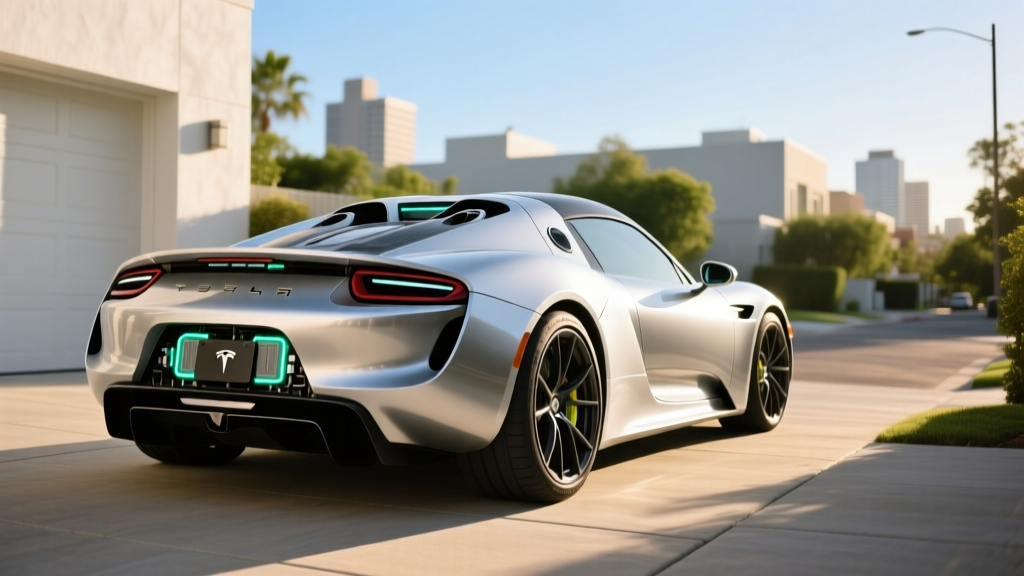
The 2013 Tesla Roadster occupies a strange place in the electric vehicle landscape. As the car that proved battery-electric performance could embarrass supercars at stoplights, its historical significance is unquestionable. But evaluating a 2013 Tesla Roadster as a potential purchase in 2026 requires separating nostalgia from practical reality. This is a 13-year-old, low-volume, hand-built sports car with aging battery cells, proprietary connectors, and zero modern driver-assistance features. It remains a collectible and an occasional-driver thrill machine — but it is emphatically not a daily driver or a sensible first EV.
Only about 2,450 Roadsters were built between 2008 and 2012 (Tesla ended production before the 2013 model year, though some vehicles were titled and sold as 2013 models). If you're researching a 2013 Tesla Roadster, you're likely looking at a late-production Roadster 2.5 — the final and most refined variant — on the used market, where prices typically range from $120,000 to over $200,000 depending on mileage, battery health, and provenance.
Range, Battery, and Real-World Efficiency
Real-World Expectation in 2026: Expect 150–190 miles on a full charge for a vehicle with an original battery. Highway driving at 70+ mph, cold weather below 40°F, and aggressive throttle use can push range toward 120–140 miles. Battery degradation over 13 years is the single biggest variable — request a State of Health (SoH) report before purchase.
The 2013 Tesla Roadster uses a 53 kWh lithium-ion battery pack composed of 6,831 individual 18650-format cells — the same cell form factor Tesla later used in the Model S, though arranged differently. The chemistry is NMC (nickel-manganese-cobalt), which offers high energy density but is more susceptible to calendar degradation than the LFP (lithium iron phosphate) chemistry found in modern Tesla vehicles.
| Specification | Value |
|---|---|
| Battery Capacity | 53 kWh (lithium-ion, NMC, 6,831 cells) |
| EPA Range (Ideal) | 244 miles |
| EPA Range (Combined, adjusted) | ~220 miles |
| Energy Consumption | ~280 Wh/mile (36 kWh/100 mi) |
| MPGe (Combined) | 120 MPGe (EPA original estimate) |
| Motor | Single AC induction, rear-wheel drive |
| Horsepower | 288 hp (215 kW) |
| Torque | 295 lb-ft (from 0 RPM via 2-speed gearbox in 1st gear) |
| 0–60 mph | 3.7 seconds |
| Top Speed | 125 mph (electronically limited) |
| Curb Weight | ~2,800 lbs |
| Drivetrain | RWD, 2-speed automatic (1st gear for launch, 2nd for cruise) |
Efficiency is a mixed story. At roughly 280 Wh/mile (or 36 kWh per 100 miles), the Roadster is less efficient than most modern EVs — the 2026 Tesla Model 3 achieves around 25 kWh/100 mi. The Roadster's Lotus Elise-based chassis is light, but its older powertrain electronics and single-speed cruising gear limit efficiency at highway speeds. According to fueleconomy.gov, the original EPA rating was approximately 120 MPGe combined.
Charging: Speeds, Connectors, and 2026 Realities
Charging the 2013 Tesla Roadster in 2026 is where prospective buyers need to pay close attention. This vehicle predates the CCS standard, predates the NACS (Tesla's North American Charging Standard used on Model S/3/X/Y), and uses a proprietary connector that is not compatible with any modern public charging network without an adapter.
| Charging Level | Power / Rate | Time / Notes |
|---|---|---|
| Level 1 (120V household) | ~1.4 kW | ~38–40 hours for full charge; adds ~5 mi/hr |
| Level 2 (240V, Roadster HPC) | Up to 16.8 kW (70A) | ~3.5 hours full charge; adds ~58 mi/hr |
| Level 2 (240V, standard J1772 w/ adapter) | ~6.6–7.2 kW (30A) | ~7–8 hours full charge; adds ~24 mi/hr |
| DC Fast Charging | Not natively supported | No DC fast-charge capability |
The Roadster's High Power Connector (HPC) was Tesla's proprietary plug before the company adopted what is now called NACS. The HPC wall connector delivered up to 70 amps (16.8 kW), which was exceptional for 2010 but is now outpaced by the 11.5–19.2 kW onboard chargers in modern EVs. Critically, the Roadster has no DC fast-charging capability whatsoever. There is no way to charge it at a Tesla Supercharger or any CCS/CHAdeMO station at high speed.
Tesla does sell an HPC-to-J1772 adapter (and some third-party adapters exist), allowing you to use standard Level 2 public chargers, but you're limited to the Roadster's onboard acceptance rate. Most public Level 2 stations deliver 6.6–7.2 kW, meaning a full charge takes 7–8 hours. Road trip planning is essentially impractical — this is a garage-charge-and-drive-locally vehicle.
Home charging setup: If you're installing a dedicated 240V circuit for a Roadster, a 70-amp circuit with the original HPC wall connector (if you can source one) provides the fastest home charging. More realistically, a standard 40-amp or 50-amp Level 2 circuit (like a Tesla Wall Connector with a NACS-to-HPC adapter, or a J1772 station with an adapter) will charge the car overnight in 6–8 hours. Expect $500–$1,500 for a licensed electrician to install a 240V/50A circuit, depending on panel proximity and local permitting.
Performance and Driving Dynamics
Despite its age, the 2013 Tesla Roadster 2.5 still delivers genuine sports car thrills. The single rear-mounted AC induction motor produces 288 hp and 295 lb-ft of torque available from zero RPM. The 0–60 mph sprint takes 3.7 seconds — a figure that was astonishing in 2010 and still holds up against many modern sports cars, even if it's been eclipsed by the Model S Plaid (1.99 seconds) and the upcoming next-generation Tesla Roadster (claimed sub-1-second).
The Roadster's unique 2-speed automatic transmission (built by Magna Powertrain after the original 2-speed manual proved unreliable in early production) shifts from first to second gear at around 40 mph. First gear provides explosive launch acceleration; second gear is optimized for highway cruising. The shift is noticeable — a brief torque interruption that feels unlike any modern single-speed EV.
Handling benefits from the Lotus Elise chassis: double-wishbone suspension, mid-rear weight bias (battery pack behind the seats), and a curb weight of roughly 2,800 lbs. The steering is unassisted and heavy at low speeds but communicative. There is no stability control, no traction control (in early models), and none of the electronic safety nets modern drivers expect. This is an analog driving experience with an electric powertrain.
Interior, Tech, and Practicality
The Roadster's interior is essentially a Lotus Elise interior with a Tesla touchscreen grafted in. Build quality reflects the car's hand-assembled, low-volume origins — panel gaps vary, materials are basic, and the cabin is tight. Key dimensions and practicality notes:
- Seating: 2 passengers only. No rear seats.
- Cargo space: ~3.5 cubic feet behind the seats (a shallow shelf) plus a small front trunk (frunk) of roughly 1.5 cubic feet — enough for a soft duffel bag, not luggage for a weekend trip.
- Legroom: Adequate for drivers up to about 6'2", but the fixed-seat, adjustable-pedal layout (inherited from Lotus) feels cramped for taller occupants.
- Infotainment: A 7-inch touchscreen with basic media playback, vehicle settings, and energy monitoring. No navigation, no Bluetooth audio streaming (on most units), no Apple CarPlay or Android Auto, no over-the-air updates.
- Driver assistance: None. No Autopilot, no adaptive cruise control, no lane-keeping, no automatic emergency braking, no backup camera. This is a pure, unassisted driving machine.
- Convertible top: Manually removable fabric soft top. Storage requires folding and placing it in the trunk — a 10-minute process.
The standout tech feature is simply the powertrain itself: instant torque, silent operation, and the novelty of a 2013-era EV that still turns heads at every cars-and-coffee. But from a modern technology standpoint, the Roadster has nothing that a 2026 Nissan Leaf doesn't surpass.
Pricing, Tax Credits, and Total Ownership Cost
The 2013 Tesla Roadster was never sold at a conventional MSRP in the way modern Teslas are — late-production Roadster 2.5 models had a base price of approximately $109,000 when new (with options pushing past $120,000). In the 2026 used market, examples typically sell for $120,000–$220,000, with low-mileage, well-documented cars commanding premiums.
| Item | Details |
|---|---|
| Original MSRP (2012–2013 Roadster 2.5) | ~$109,000–$120,000 |
| Typical Used Price (2026 market) | $120,000–$220,000 |
| Federal §30D New EV Tax Credit | Not applicable (discontinued vehicle, no longer sold new) |
| Federal Used EV Tax Credit (§25E) | Not eligible — credit caps at $4,000 or 30% of sale price, but only for vehicles with MSRP under $25,000. Roadster sale prices far exceed this cap. |
| Estimated Annual Insurance | $3,500–$6,000+ (specialty/collector car policies may reduce this if mileage is limited) |
| Estimated Annual Maintenance | $1,500–$4,000 (coolant service, brake fluid, HVAC, suspension bushings — parts scarcity is a real concern) |
Federal tax credit reality: The 2013 Tesla Roadster does not qualify for the IRS §30D new clean vehicle credit — it is no longer sold new. The §25E used EV credit is technically available for used electric vehicles, but it requires the sale price to be $25,000 or less. Since every Roadster on the market sells for well above $25,000, no buyer will receive a federal tax credit for this purchase. State and local incentives for used EVs vary by jurisdiction — consult your state's energy office or a tax professional for specifics.
Total 5-year ownership cost for a $150,000 Roadster with 2,000 miles/year driven: approximately $185,000–$210,000 including purchase price, insurance, maintenance, electricity (minimal at ~$400/year), and expected depreciation (which is highly unpredictable for collector EVs — some have appreciated).
Battery Health, Warranty, and Longevity Concerns
The original battery and powertrain warranty on the Roadster was 3 years/36,000 miles for the vehicle and 5 years/60,000 miles for the battery pack. Every 2013 Roadster is now well beyond all factory warranty coverage. This is the single most important factor in evaluating a purchase.
Tesla offered a Battery Replacement Program for Roadster owners, with a replacement pack (upgraded to newer cells in some cases) costing approximately $29,000–$40,000 depending on the program phase. As of 2026, Tesla's official Roadster battery replacement availability is uncertain — the company has shifted focus to its current lineup, and third-party specialists (such as Gruber Motor Company in Arizona) have become the primary resource for Roadster battery diagnostics, repair, and module-level replacement.
Battery degradation on a 13-year-old NMC pack is significant. Owners report State of Health (SoH) figures ranging from 60% to 85% of original capacity, depending on storage habits, charge patterns, and climate. A Roadster with 65% SoH effectively has a ~35 kWh usable pack, translating to roughly 120–140 miles of real-world range. Before purchasing, insist on a full battery diagnostic from a Roadster-qualified technician.
The Roadster's PEM (Power Electronics Module) and drive motor are generally robust, but the 2-speed transmission, HVAC compressor, and 12V auxiliary systems are known failure points. Parts availability is a growing concern as Tesla's Roadster inventory of spares has dwindled.
Who Should Buy a 2013 Tesla Roadster?
Pros
- Historic significance — the car that launched Tesla and the modern EV movement
- Lightweight, analog driving feel absent from modern heavy EVs
- Collector appreciation potential (values have risen for well-maintained examples)
- Instant torque and 3.7-second 0–60 still thrill
- Low running costs if charged at home (electricity ~$0.04/mile)
- Removable top for open-air driving
Cons
- No DC fast charging — road trips are impractical
- Severely degraded battery likely; replacement costs $30,000–$40,000+
- No modern safety features (no airbags beyond front, no stability control, no ADAS)
- Cramped 2-seat cabin with minimal cargo space (~5 cu ft total)
- Proprietary charging connector requires adapters
- Parts scarcity for Tesla-specific and Lotus-specific components
- No federal tax credit eligibility
- Insurance costs are high; specialty policies require mileage limits
The 2013 Tesla Roadster is best suited for:
- Collectors and enthusiasts who want a piece of EV history and will drive it 1,000–3,000 miles per year as a weekend/show car.
- Investors betting on long-term appreciation as the car that started the Tesla phenomenon.
It is not suited for daily commuters, road trippers, families, or anyone seeking a practical EV. A 2026 Tesla Model 3, Hyundai Ioniq 6, or BMW i4 offers more range, faster charging, full warranty coverage, modern safety tech, and daily usability for a fraction of the price.
2013 Tesla Roadster FAQ
What is the real-world range of the 2013 Tesla Roadster?
The original EPA ideal range was 244 miles. In real-world 2026 driving with a degraded battery, expect 150–190 miles under normal conditions, dropping to 120–140 miles in cold weather or at highway speeds. Actual range depends heavily on the battery's State of Health — always verify SoH before purchasing.
How fast does the 2013 Tesla Roadster charge?
The Roadster does not support DC fast charging. On Level 2 at home with the original High Power Connector (70A/16.8 kW), a full charge takes approximately 3.5 hours. On a standard public Level 2 charger (6.6–7.2 kW) with an adapter, expect 7–8 hours. Level 1 (120V) takes 38–40 hours.
Does the 2013 Tesla Roadster qualify for any federal EV tax credit?
No. The §30D new vehicle credit does not apply (the car is no longer sold new). The §25E used EV credit requires a sale price of $25,000 or less, and all Roadsters sell far above that threshold. Consult a tax professional for any applicable state incentives.
Is the 2013 Tesla Roadster worth buying versus a modern EV?
As a collector car or weekend toy with historic significance, it can be worth it if the battery health is documented and you accept high maintenance costs. As a practical EV purchase, no — any modern EV (Model 3, Ioniq 5, Polestar 2) offers superior range, charging, safety, and technology at a lower price with warranty coverage.
Can I charge a 2013 Tesla Roadster at a Tesla Supercharger?
No. The Roadster uses Tesla's legacy HPC (High Power Connector), which is physically and electrically incompatible with Superchargers, NACS connectors, and CCS stations. You need adapters to use standard J1772 Level 2 public chargers, and charging is limited to Level 2 speeds only.
What does it cost to replace the battery in a 2013 Tesla Roadster?
Battery replacement or refurbishment typically costs $29,000–$40,000+ through Tesla's program (if available) or third-party specialists like Gruber Motor Company. Module-level repairs (replacing individual failed cell groups) can cost $5,000–$15,000 but may not address overall pack degradation.
How does the 2013 Roadster compare to the upcoming next-generation Tesla Roadster?
They share only a name. The next-generation Roadster (announced in 2017, still not in production as of 2026) promises a 620-mile range, sub-1-second 0–60, and AWD with three motors. It is an entirely different vehicle in every measurable way. The 2013 Roadster is a collector's item; the upcoming model is a next-generation hypercar — if and when it ships.