Quick Verdict: The Original EV That Started It All
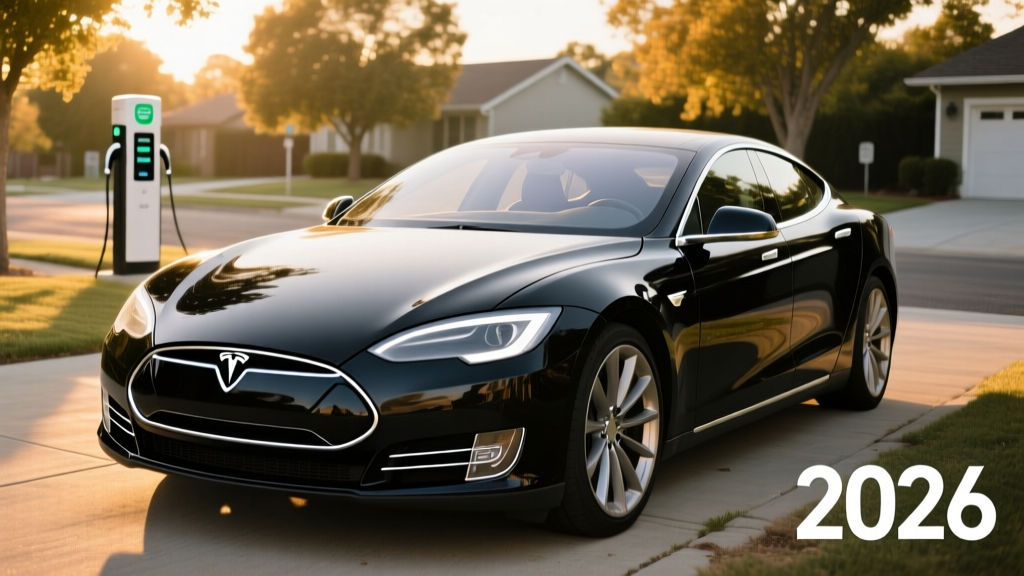
The 2013 Tesla Model S sedan remains one of the most consequential vehicles in automotive history — the car that proved a battery-electric sedan could compete with luxury internal-combustion rivals on performance, technology, and range. More than a decade later, the 2013 Model S has transitioned from a cutting-edge flagship to an accessible entry point on the used EV market, with examples routinely selling between $12,000 and $22,000 depending on mileage, battery health, and trim.
But buying a 12-year-old electric vehicle raises specific questions that conventional used-car shoppers never face: How much battery degradation should you expect? Is the original warranty still meaningful? What does charging look like on a 2013-era architecture? This profile answers those questions with hard data.
2013 Tesla Model S Sedan: Core Specifications
| Attribute | Model S 60 | Model S 85 | Model S P85 |
|---|---|---|---|
| EPA Range | 208 mi | 265 mi | 265 mi |
| Battery (Usable) | 60 kWh | 85 kWh | 85 kWh |
| Chemistry | NMC (Panasonic) | NMC (Panasonic) | NMC (Panasonic) |
| Motor / Drivetrain | RWD / Single | RWD / Single | RWD / Single |
| Horsepower | 302 hp | 362 hp | 416 hp |
| 0-60 mph | 5.9 sec | 5.4 sec | 4.2 sec |
| MPGe (Combined) | 95 MPGe | 89 MPGe | 89 MPGe |
| kWh / 100 mi | 35 | 38 | 38 |
| Original MSRP | $69,900 | $79,900 | $93,400 |
| 2026 Used Avg. | ~$10,000–$14,000 | ~$14,000–$20,000 | ~$16,000–$24,000 |
Real-World Range: What the EPA Sticker Doesn't Tell You
EPA Estimated Range: 265 miles (85 kWh) / 208 miles (60 kWh)
Real-World Expectation in 2026: 170–220 miles (85 kWh), depending on battery State of Health (SoH). Expect 150–190 miles at highway speeds (70+ mph), and 120–160 miles in sub-30°F winter conditions.
The 2013 Model S predates Tesla's more advanced heat-pump thermal management. Cabin heating relies on a resistive PTC heater, which can draw 3–6 kW in cold weather — a meaningful range penalty. Owners in northern climates should budget a 25–35% range reduction in winter versus the already-degraded baseline.
Battery degradation is the dominant variable for a 2013 model. Panasonic NMC cells from this era typically exhibit 10–15% capacity loss in the first 50,000 miles, followed by a slower linear decline. A 2013 Model S 85 with 120,000 miles might realistically deliver 70–80% of original capacity — translating to roughly 185–210 miles in moderate temperatures. Always request a battery health reading (available through the car's service menu or third-party apps like TeslaFi) before purchase.
Charging: Speeds, Connectors, and 2026 Network Access
| Charging Level | Power | Rate / Time | Notes |
|---|---|---|---|
| Level 1 (120V) | ~1.4 kW | ~3–4 mi/hr | Emergency/trickle only |
| Level 2 (240V, single-phase) | Up to 10 kW (dual charger option: 20 kW) | ~29 mi/hr (single) / ~58 mi/hr (dual) | Requires J1772 adapter (included) |
| Tesla Supercharger (DC) | Peak ~120 kW (V2) | 10–80% in ~40 min | Native NACS connector; V3/V4 stalls throttle older cars |
| CHAdeMO (via adapter) | ~50 kW | 10–80% in ~70 min | Third-party adapter required; increasingly rare |
The 2013 Model S uses Tesla's proprietary connector (now standardized as NACS). This is a significant advantage in 2026: the car accesses the Tesla Supercharger network natively, which remains the most reliable DC fast-charging infrastructure in North America. Over 7,500 Supercharger stations are operational as of early 2026, per Tesla's Supercharger page.
Important caveat: The 2013 Model S cannot accept V3 (250 kW) or V4 Supercharger peak speeds. Its onboard charge management caps DC input around 120 kW, and the charge curve tapers significantly above 60% State of Charge (SoC). Plan for 35–45 minutes at a Supercharger for a meaningful road-trip top-up (10–80%), not the 15-minute stops newer EVs advertise.
For home charging, a Level 2 wall connector on a 60-amp circuit delivers roughly 10 kW — sufficient to replenish a depleted 85 kWh battery overnight in about 9–10 hours. The optional dual-charger configuration (20 kW AC) was available in 2013 but is uncommon; verify its presence if fast home charging matters to you.
Performance and Driving Dynamics
The 2013 Model S P85's 4.2-second 0-60 mph time was extraordinary for a full-size luxury sedan in its day, and it remains brisk by any standard. The rear-wheel-drive layout and low center of gravity (battery pack mounted under the floor) deliver confident handling with minimal body roll. However, the single-motor RWD configuration lacks the all-weather traction of the dual-motor AWD models Tesla introduced in late 2014.
Ride quality is firm but composed, and the cabin is remarkably quiet at speed — a hallmark of EV powertrains. Steering is precise but somewhat detached, and the regenerative braking offers strong one-pedal driving capability with only one intensity setting (no adjustable regen levels as in later models).
Interior, Cargo, and Practicality
The 2013 Model S seats five adults, with an optional rear-facing third-row jump seat (bringing capacity to seven, though best suited for small children). Key dimensions:
- Front legroom: 42.7 inches
- Rear legroom: 35.4 inches
- Cargo (rear trunk): 26.3 cu ft
- Frunk (front trunk): 5.3 cu ft
- Total cargo (seats folded): 58.1 cu ft
The 17-inch center touchscreen was revolutionary in 2013 and remains functional, though the interface hardware is noticeably slower than current Tesla infotainment. Over-the-air updates continue for safety-critical features, but the Media Control Unit (MCU1) in 2013 models is prone to failure and is ineligible for newer software features like the full Tesla app suite or streaming entertainment. Many owners have upgraded to MCU2 (an ~$1,500–$2,000 service-center procedure) for improved responsiveness and feature access.
Tax Credits, Pricing, and 2026 Ownership Cost
The 2013 Model S is only available on the used market. Under the IRS §25E Used Clean Vehicle Credit, eligible buyers can claim up to $4,000 (30% of the sale price, capped at $4,000) on a used EV purchased from a licensed dealer for $25,000 or less.
Eligibility requirements for §25E (as of 2026):
- Vehicle sale price must be $25,000 or less
- Buyer AGI must not exceed $75,000 (single) / $150,000 (married filing jointly)
- Vehicle must be at least two model years old (2013 qualifies)
- Credit is non-refundable; point-of-sale transfer available at participating dealers
- Can only be claimed once every three years per buyer
| Scenario | Used Price | §25E Credit | Effective Cost |
|---|---|---|---|
| Model S 60, high mileage | $11,000 | $3,300 | ~$7,700 |
| Model S 85, avg. mileage | $17,000 | $4,000 | ~$13,000 |
| Model S P85, low mileage | $23,000 | $4,000 | ~$19,000 |
Note: The §30D new-vehicle credit does not apply to 2013 purchases. Private-party sales do not qualify for §25E — the vehicle must be purchased through a licensed dealer.
Warranty, Battery Longevity, and Replacement Cost
The original 2013 Model S battery and drive unit warranty was 8 years / 125,000 miles (85 kWh) or 8 years / 100,000 miles (60 kWh). As of 2026, all original battery warranties have expired based on the time limit, regardless of mileage. This is the single most important financial consideration for a used 2013 Model S buyer.
If the battery pack requires replacement out of warranty, expect costs between $12,000 and $20,000 at a Tesla Service Center, depending on pack availability and labor. Third-party EV repair shops may offer refurbished packs for $8,000–$14,000. Given that a replacement can exceed the vehicle's value, a pre-purchase battery health assessment is non-negotiable.
Tesla's NMC cells from this generation are well-documented. Data aggregated by TeslaFi users and independent researchers (per fueleconomy.gov) shows median degradation of approximately 10–12% at 100,000 miles, with a long tail of units retaining 80%+ capacity at 150,000 miles — but outliers requiring early replacement do exist.
Pros, Cons, and Who Should Buy
Pros
- Native NACS connector — full Supercharger access in 2026
- Strong performance (P85: 416 hp, 4.2s 0-60)
- Spacious interior with frunk + 26.3 cu ft trunk
- Air suspension (optional) provides adjustable ride height
- Continued OTA updates for core safety features
- Eligible for up to $4,000 used-EV tax credit (§25E)
Cons
- Original battery warranty fully expired — replacement risk is on you
- MCU1 infotainment is slow, prone to failure; upgrade costs ~$1,500+
- DC fast-charge peak ~120 kW; road trips take longer than modern EVs
- RWD only — no AWD option for snow-belt buyers
- Resistive cabin heater causes significant winter range loss
- No Autopilot hardware on early 2013 builds (added late 2014)
Best suited for: Budget-conscious EV enthusiasts, tech-curious commuters with home charging access, and buyers who want Supercharger network access at the lowest possible entry price. The 2013 Model S is a compelling daily driver for 100–150 mile round-trip commutes but a risky choice for buyers without reliable home Level 2 charging or those in extreme cold climates.
Not ideal for: Road-trip-heavy drivers (slow DC charging), buyers in regions with harsh winters (RWD + range loss), or anyone unable to absorb a potential $12,000–$20,000 battery replacement.
Frequently Asked Questions
What is the real-world range of the 2013 Tesla Model S in 2026?
Expect 170–220 miles from an 85 kWh model in moderate temperatures, assuming 70–80% battery State of Health. Highway driving at 75 mph reduces this to roughly 150–190 miles. Winter conditions (below 30°F) can drop range to 120–160 miles due to resistive heating and cold-induced cell impedance.
How fast does the 2013 Model S charge?
On a Tesla V2 Supercharger, the 2013 Model S peaks around 120 kW and charges 10–80% in approximately 40 minutes. At home on a 240V/48A Level 2 circuit, it charges at roughly 10 kW, adding about 29 miles of range per hour — a full overnight replenishment for most daily needs.
Does the 2013 Tesla Model S qualify for any federal tax credit?
Yes, but only the §25E Used Clean Vehicle Credit (up to $4,000), not the §30D new-vehicle credit. Eligibility requires a dealer purchase at or below $25,000 and buyer income under $75,000 (single) or $150,000 (joint). Consult a tax professional to confirm your situation, as IRS rules are subject to change.
Is the 2013 Model S worth buying versus a newer used EV?
At $13,000–$19,000 after the used-EV credit, the 2013 Model S offers more space, performance, and Supercharger access than competitors like the 2017–2019 Nissan Leaf or 2018 Chevrolet Bolt. However, the expired battery warranty and aging MCU1 hardware are legitimate risks. If you can budget for a potential battery replacement, the value proposition is strong; if not, consider a newer used Model 3 with remaining warranty coverage.
Does the 2013 Model S have Autopilot or self-driving capability?
No. The 2013 Model S predates Tesla's Autopilot hardware suite, which was introduced in October 2014. Early 2013 builds have no driver-assistance features beyond basic stability control. This is a Level 0 vehicle per SAE automation definitions — the driver is fully responsible at all times.
What should I check before buying a used 2013 Model S?
Prioritize: (1) Battery State of Health percentage (request a TeslaFi report or service-center diagnostic), (2) MCU version — MCU1 is a known failure point, (3) drive unit whine or clunking (indicates impending replacement), (4) air suspension functionality if equipped (compressor and strut failures are common above 80,000 miles), and (5) 12V auxiliary battery age (replace proactively every 3–4 years).