The 2013 Tesla Model S in 2026: A Pioneer Worth Owning?
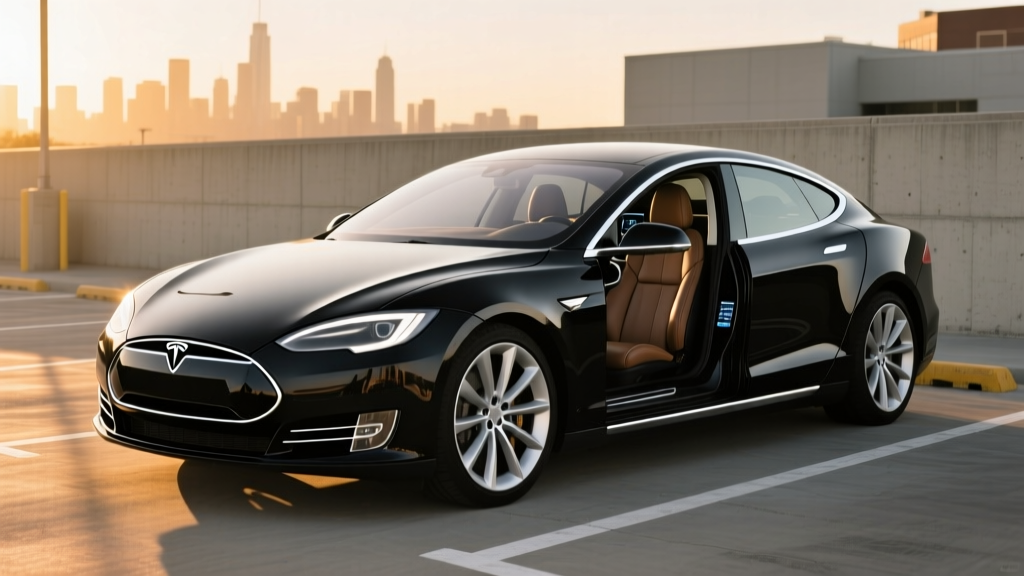
The 2013 Tesla Model S was the vehicle that proved a battery-electric sedan could compete with luxury internal-combustion cars on performance, technology, and daily usability. More than a decade later, it remains a fixture on the used EV market, with examples trading between $8,000 and $22,000 depending on mileage, battery health, and trim. For bargain-hunting EV shoppers, the early Model S represents an intriguing proposition: flagship luxury at economy prices — but only if you understand the battery, charging, and ownership realities of a 13-year-old electric vehicle.
This review breaks down the 2013 Model S with 2026 ownership in mind: actual range you can expect today, charging infrastructure compatibility, known failure points, battery replacement economics, and whether this car still makes sense against modern sub-$30,000 EVs.
2013 Model S Specs at a Glance
| Specification | 60 kWh Trim | 85 kWh Trim | P85 Performance |
|---|---|---|---|
| EPA Range (original) | 208 miles | 265 miles | 265 miles |
| Battery Capacity (usable) | ~60 kWh (NMC) | ~85 kWh (NMC) | ~85 kWh (NMC) |
| Motor Output | 302 hp / 317 lb-ft | 362 hp / 325 lb-ft | 416 hp / 443 lb-ft |
| 0–60 mph | 5.9 seconds | 5.4 seconds | 4.2 seconds |
| Drivetrain | RWD (single motor) | RWD (single motor) | RWD (single motor) |
| DC Fast Charge (peak) | ~90 kW (Supercharger) | ~120 kW (Supercharger) | ~120 kW (Supercharger) |
| Level 2 Charge Rate | Up to 20 kW (dual charger option) | Up to 20 kW (dual charger option) | Up to 20 kW (dual charger option) |
| EPA Efficiency | 95 MPGe (35 kWh/100mi) | 89 MPGe (38 kWh/100mi) | 89 MPGe (38 kWh/100mi) |
| Original Base MSRP | $69,900 | $79,900 | $93,400 |
| Cargo Volume | 26.3 cu ft (rear hatch) + 5.3 cu ft (frunk) | ||
| Battery Warranty (original) | 8 yr / 125,000 mi | 8 yr / unlimited miles | |
Sources: EPA / fueleconomy.gov, Tesla press archives.
Real-World Range in 2026: What the Battery Actually Delivers
EPA sticker (85 kWh, new): 265 miles
Expected real-world range in 2026 (10–15% degradation): ~210–235 miles (85 kWh) / ~165–185 miles (60 kWh)
Highway (70+ mph, warm weather): ~185–210 miles (85 kWh)
Cold weather (below 32°F, mixed driving): ~150–180 miles (85 kWh) — a 25–35% reduction from degraded baseline
The 2013 Model S uses NMC (nickel-manganese-cobalt) lithium-ion cells in a Panasonic/Tesla pack. After 12–13 years of service, most 85 kWh packs have experienced between 10% and 20% capacity loss, depending on charging habits and climate exposure. Packs that were routinely charged to 100% or frequently DC fast-charged without thermal preconditioning tend to sit at the higher end of that degradation range.
The 60 kWh variant, already range-limited when new at 208 EPA miles, becomes a challenging daily driver in 2026 if your commute exceeds 60 miles round-trip or you live in a cold-weather region. Many original 60 kWh packs now deliver 165–185 usable miles in moderate conditions — adequate for city commuting but anxiety-inducing for road trips.
Critical context: the 2013 Model S lacks a heat pump (Tesla introduced those in the 2021 refresh). Cabin heating relies on a resistive PTC heater, which draws significant power from the traction battery in cold weather. Expect a 25–35% range reduction in sustained sub-freezing temperatures, compounding the existing degradation loss.
Charging Speeds: Supercharger Access and Home Charging
| Charging Method | Peak Power | Rate | 10–80% Time (est.) |
|---|---|---|---|
| Tesla Supercharger V2 (DC) | ~120 kW (85 kWh) / ~90 kW (60 kWh) | ~280–310 mi/hr | ~40–50 minutes |
| CHAdeMO w/ adapter (DC) | ~50 kW | ~130–150 mi/hr | ~70–90 minutes |
| Level 2 — Dual Onboard Charger (240V, 80A) | 20 kW | ~58 mi/hr | N/A (overnight) |
| Level 2 — Single Onboard Charger (240V, 40A) | 10 kW | ~29 mi/hr | N/A (overnight) |
| Level 1 (120V, 12A) | ~1.4 kW | ~3–4 mi/hr | N/A |
The 2013 Model S uses Tesla's proprietary connector (now being rebranded as NACS). This is a major advantage in 2026: the car has native access to the Tesla Supercharger network, which remains the most reliable and widely deployed DC fast-charging infrastructure in the United States.
However, the 2013 Model S cannot charge at the 250 kW rates of modern V3 Superchargers. Its peak rate of ~120 kW (on the 85 kWh model) means you'll charge at V2 speeds even at V3 stalls. A 10–80% session takes roughly 40–50 minutes — acceptable for road-trip meal breaks but noticeably slower than a 2025 Model 3 Highland, which hits 10–80% in about 18 minutes at 250 kW.
The optional dual onboard charger (20 kW AC) was a popular upgrade on 2013 models and remains valuable for destinations with high-power Level 2 infrastructure (workplace chargers, some public stations). Without it, you're limited to 10 kW on Level 2, which still adds ~29 miles per hour — sufficient for overnight home charging on a NEMA 14-50 outlet or Tesla Wall Connector.
Important: the 2013 Model S does not support CCS natively. A CHAdeMO adapter (approximately $300–450 used) allows access to non-Tesla DC fast chargers, but at a reduced ~50 kW rate. As the industry consolidates around NACS in 2025–2026, this limitation matters less than it did in 2020.
Performance and Driving Dynamics
Even by 2026 standards, the 2013 Model S P85 delivers exhilarating acceleration. Its 416 hp rear-mounted AC induction motor launches the car to 60 mph in 4.2 seconds — a figure that still embarrasses many gas-powered sport sedans. The standard 85 kWh model (5.4 seconds) and 60 kWh model (5.9 seconds) are hardly slow, either.
All 2013 Model S variants are rear-wheel drive with a single motor. Tesla did not introduce dual-motor all-wheel drive until late 2014 (as the 2015 model-year "D" variants). If you need AWD for snow-belt commuting, the 2013 model year is not your target — look for a 2015+ 85D or P85D instead.
The air suspension (optional on 85/P85, standard on some P85+ trims) provides a compliant ride and adjustable ground clearance, but it is a known maintenance item. Air struts on 2013-era cars have typically been replaced at least once by now; budget $1,200–2,500 per corner if original units are still fitted.
Technology, Interior, and Driver Assistance
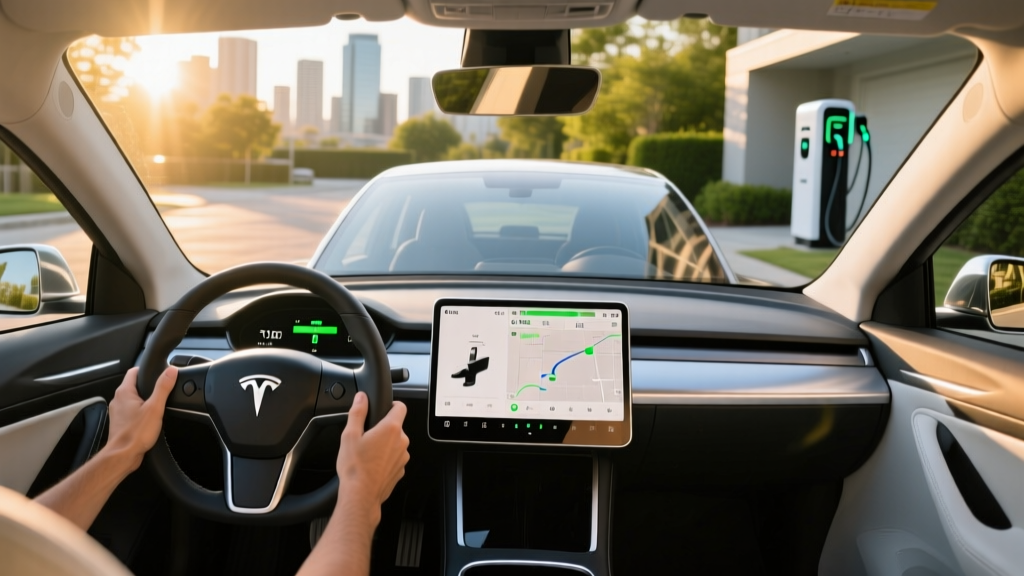
The 2013 Model S interior was minimalist and futuristic at launch, anchored by a 17-inch center touchscreen that controlled nearly every vehicle function. In 2026, that screen shows its age: the resolution and responsiveness lag behind modern tablets and current-generation Tesla infotainment. However, Tesla's over-the-air software updates kept 2013 models surprisingly current for years, adding features like improved navigation, streaming apps, and interface refinements long after purchase.
Autopilot note: The 2013 Model S predates Tesla's Autopilot hardware suite. These cars were built without the forward-facing radar, cameras, and ultrasonic sensors required for any driver-assistance features beyond basic cruise control and ABS/stability control. There is no Autopilot, no FSD, no automatic emergency braking, and no lane-keeping assist. The 2013 Model S is an SAE Level 0 vehicle in terms of driving automation — the driver is responsible for all aspects of vehicle operation at all times.
Cargo space remains a standout: 26.3 cubic feet behind the rear seats (accessible via a power liftgate hatch, not a traditional sedan trunk) and 5.3 cubic feet in the front trunk (frunk). Total interior volume accommodates five adults comfortably, with 42.7 inches of front legroom and 35.4 inches in the rear.
Used Pricing and Tax Credit Eligibility
As of early 2026, the 2013 Tesla Model S trades on the used market in these approximate ranges:
- 60 kWh (high mileage, 100k+ mi): $8,000–$12,000
- 85 kWh (80k–120k mi, good battery health): $12,000–$18,000
- P85 (under 80k mi, documented service): $16,000–$22,000
Does the 2013 Model S Qualify for the Federal EV Tax Credit?
- Credit amount: 30% of sale price, up to $4,000 maximum
- Vehicle price cap: Must sell for $25,000 or less (most 2013 Model S examples qualify)
- Buyer income cap: AGI ≤ $75,000 (single) / $112,500 (head of household) / $150,000 (joint)
- Vehicle age: Must be at least 2 model years old (2013 easily qualifies)
- Dealer requirement: Must purchase from a licensed dealer (not private party) to claim point-of-sale or tax-time credit
- First-time transfer: The credit applies only once per vehicle after its original sale; check IRS VIN eligibility at fueleconomy.gov
Source: IRS.gov — Previously-Owned Clean Vehicle Credit. Tax rules subject to change; consult a tax professional.
At a typical $15,000 purchase price from a qualifying dealer, an income-eligible buyer could claim $4,000 (30% of $15,000 capped at $4,000), bringing the effective cost to approximately $11,000. This makes the 2013 Model S one of the most affordable ways to own a large luxury electric sedan in 2026 — but only if you budget for the battery and maintenance risks outlined below.
Battery Health, Warranty, and Replacement Costs
The 2013 Model S battery warranty was 8 years/125,000 miles (60 kWh) or 8 years/unlimited miles (85 kWh). As of 2026, all original battery warranties have expired — the 8-year window closed in 2021 at the latest.
This is the single most important ownership factor. Battery replacement for a 2013 Model S runs $12,000–$22,000 through Tesla Service (remanufactured pack) or $8,000–$14,000 through independent EV shops using salvaged or aftermarket packs. A full replacement can exceed the vehicle's market value on lower-trim, higher-mileage examples.
Before purchasing, demand a battery health report. Tesla Service Centers can pull State of Health (SoH) data showing remaining capacity percentage. Target examples with SoH above 85%. Also check for:
- Drive unit history: Early Model S drive units had a known failure pattern; many were replaced under warranty. Confirm whether the current unit is original or a replacement.
- Coolant system: The battery thermal management system uses glycol coolant loops. Leaks or neglected fluid changes can accelerate cell degradation.
- 12V battery: Like all EVs, the Model S has a 12V auxiliary battery. Original lead-acid units should have been replaced multiple times; many owners upgrade to lithium 12V replacements.
- MCU (Media Control Unit): The original MCU1 in 2013 models is prone to eMMC memory chip failure (yellow tint, unresponsive screen). Tesla issued a recall/service campaign for this; verify it was addressed.
Pros and Cons of the 2013 Model S in 2026
✅ Pros
- Native Tesla Supercharger access (NACS connector)
- Spacious luxury sedan with hatchback practicality (26.3 cu ft cargo)
- Strong performance even on base trims (0–60 in 4.2–5.9 sec)
- Air suspension ride quality (when functional)
- Used pricing well below $25k — eligible for $4,000 used-EV tax credit
- Extensive OTA update history kept software relevant for years
❌ Cons
- All original battery warranties expired — $12k–$22k replacement risk
- No Autopilot or any ADAS features (SAE Level 0)
- RWD only — no AWD option for 2013 model year
- No heat pump — severe cold-weather range loss (25–35%)
- MCU1 screen failure risk if recall not addressed
- DC fast charging peaks at 120 kW — slow by 2026 standards
- Air suspension and drive unit are expensive failure points
2013 Model S vs. Modern Alternatives
- Choose the 2013 Model S if: You want a large luxury EV sedan under $18,000 (after credit), you have reliable home Level 2 charging, your daily driving stays under 120 miles round-trip, and you can absorb a potential $15,000 battery replacement within your ownership budget.
- Choose a 2022–2025 Chevrolet Bolt EV/EUV instead if: You need maximum reliability with a modern battery under warranty, you want a newer infotainment system, and you can accept a smaller vehicle. Used Bolts trade at $14,000–$20,000 with far lower maintenance risk.
- Choose a 2018+ Tesla Model 3 if: You want Autopilot capability, modern Supercharger speeds (up to 250 kW on newer variants), AWD availability, and a battery still under or recently out of warranty. Used Model 3s start around $18,000–$24,000.
- Choose a 2020+ Tesla Model S (Raven or Plaid) if: You need the Model S size and luxury but want adaptive suspension, heat pump efficiency, Autopilot hardware, and modern range (350–405 EPA miles). Expect $35,000–$55,000 on the used market.
Frequently Asked Questions
What is the real-world range of the 2013 Model S in 2026?
For the 85 kWh model with typical 10–15% battery degradation, expect 210–235 miles in moderate conditions, 185–210 miles on the highway, and 150–180 miles in sustained cold weather. The 60 kWh model delivers approximately 165–185 miles in moderate conditions after degradation.
How fast does the 2013 Model S charge?
On a Tesla Supercharger (V2), the 85 kWh model peaks at approximately 120 kW, adding about 280–310 miles per hour of charge rate. A 10–80% session takes roughly 40–50 minutes. At home on a 240V/40A Level 2 outlet, expect about 29 miles of range per hour; the optional dual charger doubles this to ~58 miles per hour at 20 kW.
Does the 2013 Model S qualify for any federal tax credit?
Yes, potentially. Under the IRS §30D Previously-Owned Clean Vehicle Credit, income-eligible buyers purchasing from a licensed dealer for $25,000 or less can claim 30% of the sale price up to $4,000. Income caps apply: $75k single / $150k joint. Verify VIN eligibility and consult a tax professional.
What is the biggest risk of buying a 2013 Model S?
Battery replacement cost. With all original warranties expired, a failed or severely degraded pack costs $12,000–$22,000 to replace — potentially exceeding the car's value. Always obtain a State of Health reading before purchase and budget for this contingency.
Does the 2013 Model S have Autopilot or self-driving capability?
No. The 2013 Model S was built before Tesla's Autopilot hardware existed. It has no forward radar, no surround cameras, and no driver-assistance features beyond standard ABS, traction control, and cruise control. It is an SAE Level 0 vehicle requiring full driver engagement at all times.
Can I use non-Tesla chargers with the 2013 Model S?
Yes, with adapters. The car natively uses the Tesla connector (NACS). A CHAdeMO adapter ($300–$450) enables DC fast charging at non-Tesla stations at ~50 kW. For Level 2, a Tesla-to-J1772 adapter (often included with the car) allows charging at standard public Level 2 stations. As of 2025–2026, many non-Tesla networks are adding NACS cables, improving compatibility without adapters.
Is the 2013 Model S a good first EV?
It can be, with caveats. The Supercharger network access and spacious interior are excellent. However, the expired battery warranty, lack of driver assists, cold-weather range loss, and potential for expensive repairs make it a better choice for EV-savvy buyers who can evaluate battery health and budget for maintenance — not for someone who wants a worry-free, warranty-backed first EV experience.