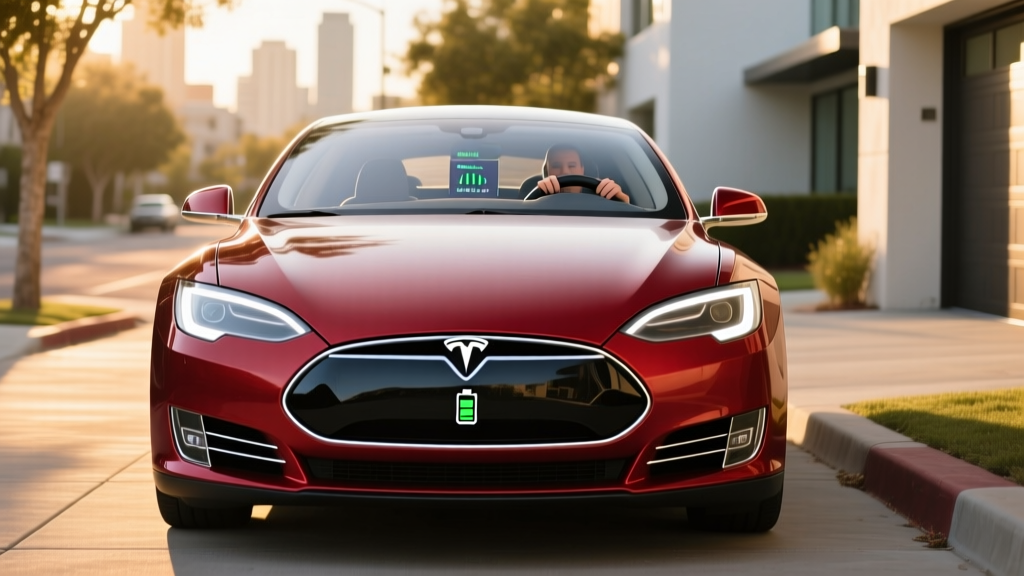
The 2013 Tesla Model S Performance was a watershed vehicle — the car that proved electric sedans could out-accelerate supercars while carrying five adults in relative luxury. More than a decade later, it remains a fixture on the used-EV market, often listing between $12,000 and $22,000 depending on mileage and battery condition. But buying a 12-year-old EV requires a fundamentally different calculus than buying new. Battery degradation, obsolete charging hardware, expired warranties, and the absence of modern driver-assist tech all shape the ownership equation in 2026.
This review examines the 2013 Model S Performance — specifically the top-tier P85 variant with its 85 kWh battery pack and 416-horsepower rear-drive motor — through the lens of a modern used-EV buyer. We'll cover what the EPA sticker promised versus what you'll actually experience, how charging works on aging hardware, and whether this pioneering sedan still makes sense against newer, cheaper EVs.
2013 Model S Performance: Core Specifications at a Glance
| Specification | Value |
|---|---|
| EPA Range (original) | 265 miles |
| Battery Capacity (usable, original) | ~81 kWh (85 kWh gross) |
| Battery Chemistry | NMC (Nickel Manganese Cobalt), Panasonic 18650 cells |
| Drivetrain | Rear-Wheel Drive (single motor) |
| Horsepower | 416 hp (310 kW) |
| Torque | 443 lb-ft |
| 0–60 mph | 4.2 seconds (4.0 sec with Performance Plus) |
| EPA Efficiency | 89 MPGe combined (38 kWh/100 mi) |
| Max DC Fast Charge (original) | ~120 kW peak (Tesla Supercharger V1/V2) |
| Level 2 Charge Rate | Up to 10 kW (single onboard charger) / 20 kW (twin chargers option) |
| Cargo Volume | 26.3 cu ft (rear) + 5.3 cu ft (frunk) |
| Seating | 5 passengers (optional rear-facing 3rd-row child seats) |
| Original MSRP (P85) | ~$93,400 (before incentives) |
| 2026 Used Price Range | $12,000 – $22,000 |
Battery Health and Real-World Range in 2026
The single most important question for any used Model S buyer is: how much of the original battery capacity remains? The 2013 P85 shipped with a Panasonic-sourced NMC pack composed of 7,104 individual 18650-format cylindrical cells arranged in 16 modules. This was cutting-edge architecture in 2012, but these early packs have shown measurable degradation over 12+ years of service.
Industry data and owner surveys compiled by sources like fueleconomy.gov and Tesla enthusiast communities suggest that 2012–2014 Model S packs typically retain between 70% and 82% of their original capacity at 100,000–150,000 miles. The variance is wide because degradation depends heavily on charging habits (frequent Supercharging and 100% state-of-charge storage accelerate wear), climate exposure (hot-state cars degrade faster), and whether the pack has been replaced under warranty.
EPA Original: 265 miles
Expected at ~75% battery health: 165–195 miles
Highway driving (70 mph): 140–170 miles
Cold weather (below 32°F): 110–145 miles
These figures assume a pack with 70–80% remaining capacity. Cars with replaced or low-mileage original packs may achieve 190–220 miles.
The efficiency penalty is real. The P85's single rear motor lacks the heat pump that modern Teslas use to mitigate cold-weather range loss. Instead, it relies on resistive cabin heating, which can draw 3–5 kW in freezing temperatures — cutting range by 30–40% on short, cold commutes. Highway driving at 75–80 mph also hits this older, less aerodynamic platform harder than the EPA test cycle suggests.
How to Check Battery State of Health Before Buying
- In-car energy graph: Navigate to the energy screen and note the "rated" range at 100% state of charge. Compare this to the original 265-mile figure.
- Third-party diagnostics: Services like Recurrent Auto or a Tesla Service Center scan can provide a precise State of Health (SoH) percentage.
- Supercharger history: Request the car's Supercharging log — heavy DC fast-charge usage correlates with higher degradation.
- Warranty replacement records: Some 2013 cars received replacement packs under the 8-year/125,000-mile warranty before it expired in 2021. A newer replacement pack is a significant plus.
Charging Speeds: Supercharger Access and Home Setup
Charging a 2013 Model S in 2026 requires understanding both the car's hardware limitations and the evolving Tesla Supercharger network.
| Charging Level | Max Power | Miles Added per Hour | Notes |
|---|---|---|---|
| Level 1 (120V household) | ~1.4 kW | ~3–4 mi/hr | Emergency/trickle only; 50+ hours for a full charge |
| Level 2 (240V single charger) | 10 kW | ~28–30 mi/hr | Standard onboard charger; ~8.5 hours 10–100% |
| Level 2 (240V twin chargers) | 20 kW | ~56–58 mi/hr | Optional upgrade; requires 80A+ circuit; ~4.5 hours |
| DC Fast (Tesla Supercharger V2) | ~120 kW peak | ~280–300 mi/hr (peak) | 10–80% in ~45–55 min; tapers sharply above 70% |
| DC Fast (CHAdeMO adapter) | ~50 kW | ~120 mi/hr | Via optional adapter; limited network availability |
Important connector note: The 2013 Model S uses Tesla's proprietary connector, which became the North American Charging Standard (NACS) in 2024. This means the car can natively plug into Tesla Superchargers without an adapter — a significant advantage over CCS-equipped rivals now that Tesla's network has opened to other brands. However, for non-Tesla Level 2 public chargers (J1772 standard), you'll need the Tesla Mobile Connector's J1772 adapter, which Tesla included with the car.
The charging curve reality: While the 2013 P85 can peak around 120 kW at a V2 Supercharger, it only sustains that rate briefly — typically from 10–30% state of charge. Above 50%, the rate drops to 60–80 kW, and above 80% it slows to under 30 kW. Expect a 10–80% session to take 45–55 minutes at a V2 Supercharger, or 35–45 minutes at a V3/V4 station (though the car's hardware caps the benefit). This is considerably slower than modern EVs that achieve 10–80% in 18–25 minutes.
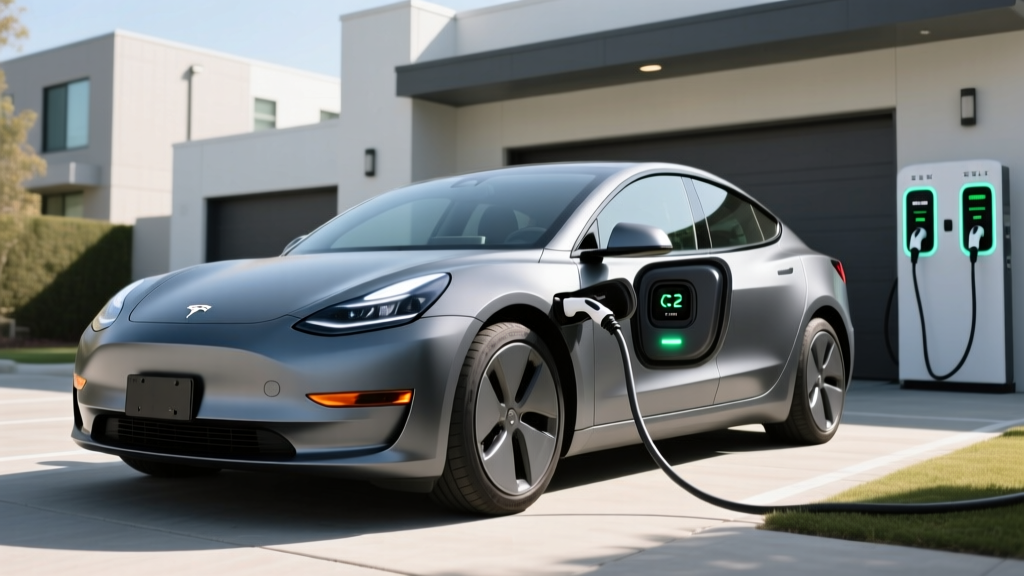
Home charging setup: For daily use, a Level 2 home charger is essential. A Tesla Wall Connector (current-gen, ~$475) set to the appropriate amperage will deliver 10 kW on the single-charger car, adding roughly 29 miles of range per hour — enough to fully replenish overnight. Installation costs vary widely: expect $800–$2,500 for a straightforward 60A circuit on an existing 200A panel, but older homes may require a panel upgrade adding $1,500–$3,500. Always have a licensed electrician evaluate your panel capacity before installation.
Performance and Driving Dynamics
Even by 2026 standards, the P85's straight-line performance remains genuinely quick. The 416-hp rear-mounted AC induction motor delivers 443 lb-ft of torque from zero RPM, launching the 4,600-pound sedan to 60 mph in 4.2 seconds (4.0 seconds with the Performance Plus package that included stiffer suspension and wider tires). That puts it in the company of contemporary BMW M5s and Audi S8s — cars that cost well over $100,000 new.
The driving experience is distinctly old-school Tesla. The electric power steering is light and somewhat numb compared to modern systems, and the regenerative braking offers only a single mode — strong enough to enable one-pedal driving in most situations, but without the adjustable regen levels found in newer EVs. The air suspension (standard on Performance models) provides a supple highway ride but can develop costly leaks as the car ages — replacement air struts run $1,200–$1,800 per corner.
Notably, this is a rear-wheel-drive-only platform. There is no dual-motor all-wheel-drive option for 2013 (AWD debuted with the 2014 Model S 85D). For buyers in snow-belt states, this is a meaningful limitation compared to modern dual-motor EVs or the later Model S variants.
Tech, Interior, and Driver-Assist Features
The 2013 Model S interior was revolutionary at launch — the 17-inch portrait touchscreen dominated the dash and controlled virtually every vehicle function. In 2026, that screen still impresses in size but shows its age in resolution, responsiveness, and software capability.
What You Get
- Infotainment: 17-inch touchscreen with navigation, Bluetooth audio, HD Radio, and (on updated cars) basic streaming apps. Early 2013 cars may still run older MCU1 hardware with sluggish performance; some owners have paid $1,500–$2,500 for Tesla's MCU2 retrofit upgrade.
- Driver assists: Basic stability control, ABS, and traction control. No Autopilot hardware was installed on 2013 models — Tesla's Autopilot suite debuted in late 2014. This means no adaptive cruise control, no lane-keeping assist, and no automatic emergency braking.
- Keyless entry: The iconic model-car key fob with proximity unlock.
- OTA updates: Tesla continues to push limited over-the-air software updates to 2013 vehicles, though new feature additions have largely ceased for pre-Autopilot hardware.
Notable Drawbacks
- No Autopilot or any Level 2 driver-assist capability — a significant safety and convenience gap versus any post-2016 EV.
- MCU1 hardware (pre-upgrade) is prone to screen delamination and eMMC memory failure, a known issue that can cost $1,000+ to repair.
- No native CCS compatibility; Supercharger-only for DC fast charging limits road-trip flexibility in areas with sparse Tesla coverage.
- The panoramic sunroof (optional) is a known leak source on 2012–2014 cars.
Used Pricing, Ownership Costs, and Tax Credit Eligibility
The 2013 Model S Performance occupies a curious position in the used-EV market. Original MSRPs of $85,000–$105,000 (depending on options) have collapsed to $12,000–$22,000 in 2026, making it one of the most affordable ways to own a car with 400+ horsepower and 200+ miles of range.
Does the 2013 Model S Qualify for the Federal Used-EV Tax Credit?
Yes — but with strict caveats. Under the IRS §25E Used Clean Vehicle Credit, eligible buyers can claim up to $4,000 (30% of the sale price, capped at $4,000) when purchasing a qualifying used EV from a licensed dealer. Here are the requirements:
- Sale price cap: The vehicle must sell for $25,000 or less (most 2013 P85s qualify).
- Buyer income limits (2026): Modified AGI cannot exceed $75,000 (single), $112,500 (head of household), or $150,000 (joint filers).
- Dealer sale required: Private-party purchases do not qualify.
- Vehicle age: Must be at least 2 model years old (2013 easily qualifies).
- Battery capacity: Must have at least 7 kWh (the P85's 85 kWh pack qualifies).
- First transfer since Aug 16, 2022: The credit applies only to the first qualifying resale after that date — verify with the dealer that this specific VIN hasn't already been claimed.
- Point-of-sale transfer: The credit can be applied at purchase to reduce your out-of-pocket cost.
Important: Tax rules change. Consult a tax professional and review current IRS guidance before relying on credit eligibility.
5-Year Ownership Cost Snapshot (Used P85, ~12,000 miles/year)
| Category | Estimated Cost | Notes |
|---|---|---|
| Purchase price (avg) | $17,000 | After $4,000 used-EV credit: ~$13,000 net |
| Electricity (home charging) | $3,500–$5,000 | At $0.14/kWh avg; 60,000 miles |
| Insurance | $9,000–$14,000 | $1,800–$2,800/yr; varies by state/age |
| Maintenance & repairs | $4,000–$8,000 | Suspension, MCU, door handles, coolant service |
| Potential battery replacement | $0–$14,000 | If pack fails outside warranty; remanufactured packs ~$10K–$14K |
| Estimated 5-year total | $29,500–$54,000 | Wide range reflects battery risk |
The wild card is battery replacement. If the original pack fails or degrades below usable capacity, a remanufactured 85 kWh pack from Tesla or a third-party specialist costs $10,000–$14,000 installed. Some independent EV shops now offer module-level repairs for $3,000–$6,000 if only a few of the 16 modules have degraded cells. The original 8-year/125,000-mile battery warranty expired no later than 2021 for all 2013 vehicles, so all battery risk now falls on the owner.
Warranty Status in 2026
| Component | Original Coverage | 2026 Status |
|---|---|---|
| Basic Vehicle | 4 years / 50,000 miles | Expired |
| Battery Pack (85 kWh) | 8 years / 125,000 miles (no minimum SoH guarantee for 2013) | Expired (ended 2021 at latest) |
| Drive Unit (motor) | 8 years / 125,000 miles | Expired |
| Restraint System | 5 years / 60,000 miles | Expired |
| Corrosion Perforation | 12 years / unlimited miles | Active through 2025 (most now expired) |
Every factory warranty component on a 2013 Model S has expired or is expiring in 2025–2026. Buyers should budget for out-of-pocket repairs and consider an extended warranty from a third-party EV specialist — though coverage for the battery and drive unit is often excluded or prohibitively expensive on 12-year-old vehicles.
2013 Model S P85 vs. Modern Used-EV Alternatives
| Attribute | 2013 Tesla Model S P85 | 2018 Chevrolet Bolt EV | 2019 Tesla Model 3 LR RWD |
|---|---|---|---|
| Used Price Range | $12,000–$22,000 | $11,000–$16,000 | $17,000–$23,000 |
| EPA Range (original) | 265 mi | 238 mi | 310 mi |
| Expected Range (2026) | 165–195 mi | 190–215 mi | 250–280 mi |
| Battery Warranty | Expired | Active (8yr/100K mi; expires 2026) | Active (8yr/120K mi; expires 2027) |
| Autopilot/ADAS | None | None (basic safety) | Autopilot (basic) |
| 0–60 mph | 4.2 sec | 6.5 sec | 5.1 sec |
| DC Fast Charge (peak) | ~120 kW | ~55 kW (CCS) | ~170 kW (NACS) |
| Supercharger Access | Yes (native NACS) | Yes (via NACS adapter) | Yes (native NACS) |
The Model S P85 wins on performance, interior space (26.3 cu ft cargo vs. the Bolt's 16.9 cu ft), and prestige. But the 2019 Model 3 Long Range delivers more remaining range, active battery warranty, Autopilot capability, and faster charging — for roughly the same money. The Bolt EV is the budget play, offering solid range and potentially remaining battery warranty at a lower entry price, though with far less power and a cramped rear seat.
- You want 400+ hp performance for under $20,000
- You prioritize cargo space and a full-size sedan cabin
- You have home Level 2 charging and a short-to-moderate commute
- You're comfortable assuming battery-replacement risk
- You value Supercharger network access without adapters
- You need reliable 250+ mile range for road trips
- You want active battery warranty coverage
- Driver-assist features (adaptive cruise, lane-keeping) are important
- You want lower long-term maintenance risk
Pros and Cons: Honest Assessment
Pros
- 4.0–4.2 second 0–60 mph performance at a fraction of its original $93K+ price
- Spacious cabin with 26.3 cu ft cargo volume and optional 3rd-row child seating
- Native NACS/Supercharger access — no adapter needed
- Air suspension provides excellent highway ride quality
- Eligible for up to $4,000 used-EV federal tax credit (income/price limits apply)
- Strong enthusiast community and third-party repair ecosystem
- Over-the-air updates still provide occasional improvements
Cons
- Significant battery degradation — expect 165–195 real-world miles, less in cold
- All factory warranties expired; battery replacement costs $10,000–$14,000
- No Autopilot, adaptive cruise, or any driver-assist technology
- MCU1 infotainment hardware is slow and failure-prone (if not upgraded)
- Rear-wheel drive only — no AWD option
- Air suspension failures are common and expensive ($1,200–$1,800 per corner)
- DC fast charging (10–80% in ~50 min) is slow by 2026 standards
- Panoramic sunroof leaks, door handle failures, and coolant system issues are common
Frequently Asked Questions
What is the real-world range of a 2013 Tesla Model S P85 in 2026?
With typical battery degradation (70–80% remaining health), expect 165–195 miles in mixed driving. Highway driving at 70+ mph drops this to 140–170 miles. In sub-freezing temperatures, the resistive heater and battery chemistry reduce usable range to roughly 110–145 miles. Cars with replacement packs may achieve 200–220 miles.
How fast does the 2013 Model S charge at home and on road trips?
At home on a 240V Level 2 charger with the standard single onboard charger, the P85 charges at up to 10 kW, adding about 29 miles of range per hour — a full overnight replenishment. On Tesla Superchargers, it peaks at roughly 120 kW but tapers significantly above 50% state of charge. A 10–80% Supercharger session takes approximately 45–55 minutes. This is roughly twice as long as modern EVs on current V3/V4 Superchargers.
How much does a used 2013 Model S P85 cost after tax credits?
Used P85s list between $12,000 and $22,000 depending on mileage, condition, and battery health. If you purchase from a licensed dealer for $25,000 or less and meet IRS income limits ($75K single / $150K joint), the §25E Used Clean Vehicle Credit can reduce your cost by up to $4,000 — bringing a $17,000 car down to roughly $13,000 net. Verify VIN eligibility with the dealer before purchasing.
Is the 2013 Model S Performance worth buying vs. newer used EVs?
It depends on your priorities. If you want maximum performance and interior space for the dollar and have home charging with a short commute, the P85 is compelling. If you need reliable long range, modern safety tech, remaining battery warranty, and lower repair risk, a 2018–2020 Model 3 Long Range or Chevrolet Bolt EV offers a more practical ownership experience at similar prices. The P85 is a enthusiast's used-EV play, not a low-risk daily commuter.
Does the 2013 Model S qualify for the federal EV tax credit?
Not the $7,500 new-vehicle credit (§30D), which applies only to new purchases. However, it may qualify for the §25E Used Clean Vehicle Credit of up to $4,000, subject to the $25,000 sale-price cap, buyer income limits, dealer-sale requirement, and the rule that the credit applies only to the first qualifying transfer since August 16, 2022. Always confirm eligibility via the IRS used vehicle credit page and with a tax professional.
What are the most common repairs on a 2013 Model S?
The most frequent issues reported by owners and documented in NHTSA complaints include: (1) MCU1 screen failure and eMMC memory wear; (2) air suspension strut leaks requiring $1,200–$1,800 per-corner replacement; (3) retractable door handle motor failures ($400–$700 each); (4) drive unit (motor) bearing noise in high-mileage examples; (5) coolant system leaks at the battery pack; and (6) panoramic sunroof seal degradation causing water intrusion. Budgeting $2,000–$4,000 annually for repairs is prudent.
Can I still get Tesla service for a 2013 Model S in 2026?
Yes. Tesla Service Centers continue to support 2013 Model S vehicles, though parts availability for some components (particularly air suspension parts and MCU1 units) can involve longer wait times. Third-party EV specialists have also become increasingly capable of servicing older Teslas, often at lower labor rates. Mobile Ranger service is available for many common repairs.