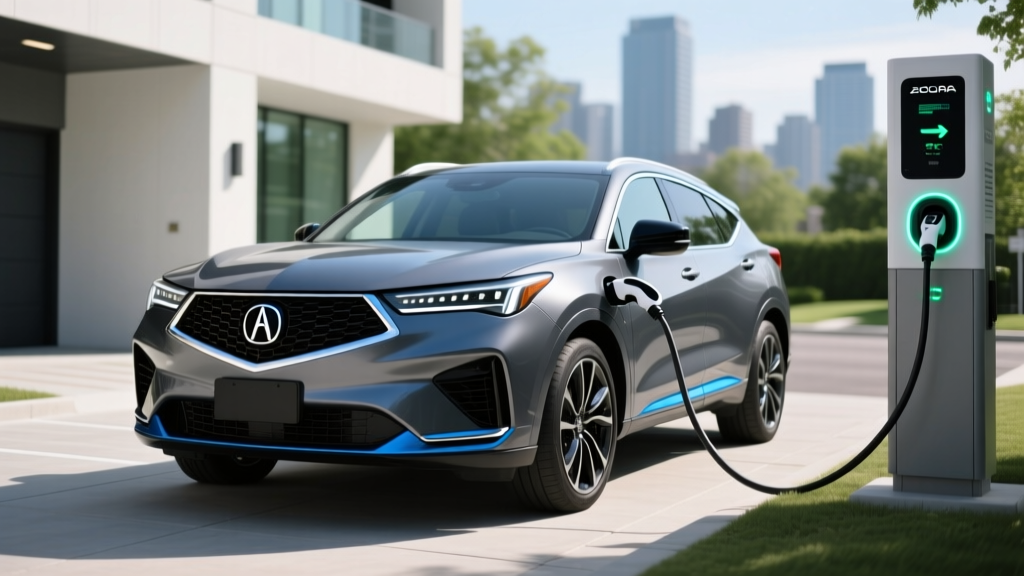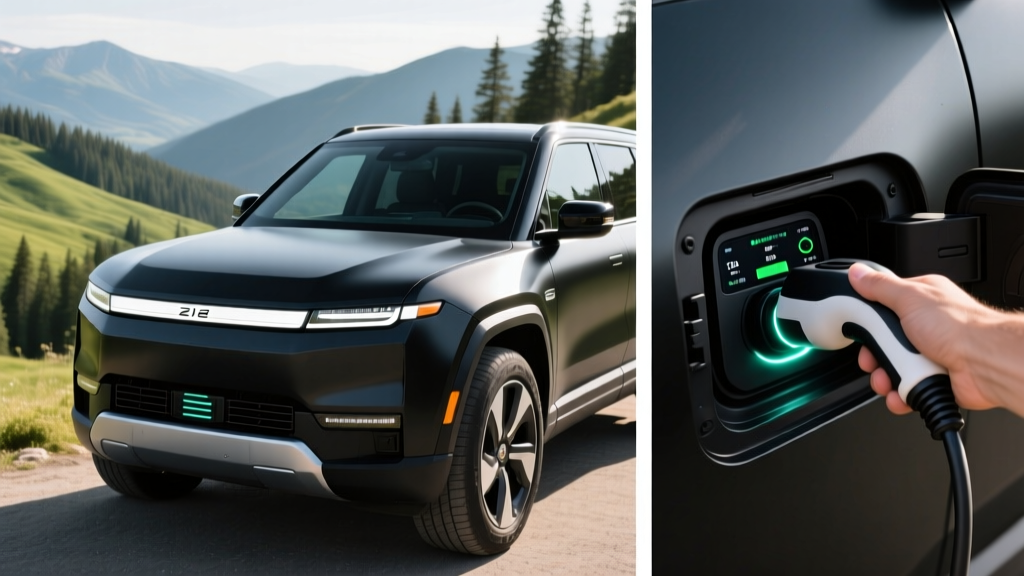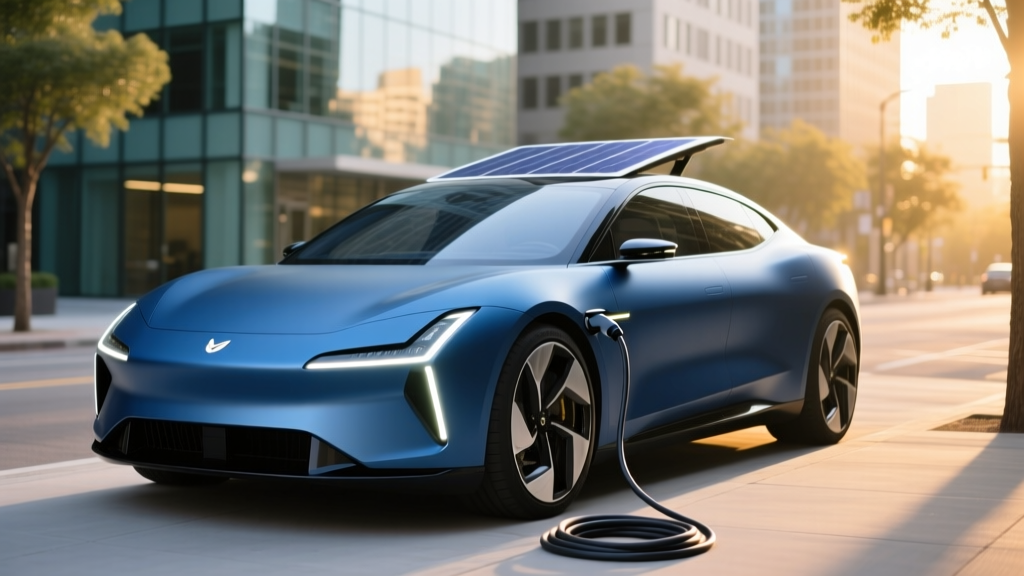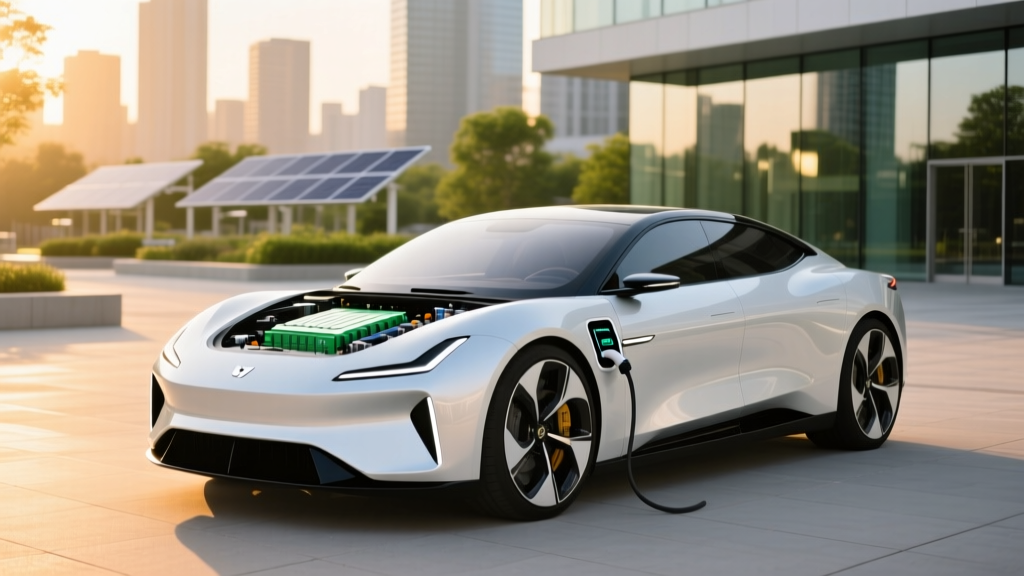
When Henrik Fisker unveiled the Pear (Personal Electric Automotive Revolution) in early 2023, it was pitched as the affordable EV the market desperately needed: a compact crossover starting at $29,990, targeting 300 miles of EPA range, built on a lightweight skateboard platform, and arriving by late 2024. By June 2024, Fisker Inc. had filed for Chapter 11 bankruptcy, and the Pear — along with every other Fisker program — was dead. This article is a post-mortem on what the 2024 Fisker Pear was supposed to be, why it never reached production, and what today's buyers should consider instead.
What the Fisker Pear Promised: Preliminary Specs
Before Fisker's financial collapse, the company released enough preliminary engineering data to sketch a credible picture of the Pear. Keep in mind these figures were announced targets, not EPA-certified numbers, and no production vehicle was ever built or independently tested.
| Specification | Announced Target |
|---|---|
| Base MSRP (pre-incentive) | $29,990 |
| EPA Range (targeted) | ~300 miles (single-motor); ~250 miles (AWD variant planned) |
| Battery Capacity | Estimated 75 kWh usable (LFP chemistry, CATL supply agreement) |
| Drivetrain | Rear-wheel drive (base); dual-motor AWD (planned higher trim) |
| Horsepower | ~275 hp (RWD single-motor target) |
| 0-60 mph | Not officially published; estimated ~6.5 sec (RWD) |
| DC Fast Charge Peak | Targeted ~150 kW (800V architecture discussed but unconfirmed) |
| 10-80% Charge Time | ~30 minutes (projected, unverified) |
| Level 2 Home Charging | ~11 kW onboard charger (targeted) |
| Efficiency (MPGe target) | ~120 MPGe combined (projected) |
| Cargo Volume | ~20 cu ft behind rear seats; ~55 cu ft folded (estimated from concept dimensions) |
| Seating | 5-passenger compact crossover |
| Battery/Powertrain Warranty | 8 years / 100,000 miles (announced target, aligned with industry standard) |
| Production Partner | Magna Steyr (Austria) — contract signed but never executed |
| Platform | Fisker SLV1 ("Skateboard Light Vehicle") — proprietary, aluminum-intensive |
The Pear was supposed to ride on Fisker's in-house SLV1 platform, which the company claimed would use fewer parts than a conventional EV skateboard — roughly 10% fewer components than a comparable architecture — to cut assembly time and cost. Magna Steyr, the respected Austrian contract manufacturer behind the Jaguar I-PACE and BMW 5 Series, was lined up to build it.
Real-World Range: What Buyers Would Have Actually Seen
LFP (lithium iron phosphate) chemistry, which Fisker's supply agreement with CATL pointed toward, offers advantages in longevity and thermal stability but carries an energy-density penalty compared to NMC. That means a 75 kWh LFP pack is physically heavier and bulkier than an equivalent NMC pack, which can affect efficiency. On the plus side, LFP cells tolerate regular 100% charging without accelerated degradation — a practical benefit for daily commuters who can charge at home every night.
The Pear's compact crossover footprint (roughly the size of a Hyundai Kona Electric) and relatively modest power output would have helped efficiency. But the "lightweight" SLV1 platform claims were never independently verified, and early Fisker Ocean reviews revealed that the company's software-defined vehicle approach introduced weight from redundant computing hardware that offset structural savings.
Charging Speed: Adequate but Not Class-Leading
The Pear's targeted ~150 kW DC fast-charge peak would have been respectable for 2024 but already falling behind. The Hyundai Ioniq 5 peaks at 240 kW (with its 800V architecture), and the Tesla Model Y hits ~250 kW on V3 Superchargers. A 150 kW peak on a ~75 kWh battery yields roughly a 2C charge rate — meaning the 10-80% fill would take approximately 25-30 minutes under ideal conditions, which is what Fisker projected.
Charging-curve taper is the detail most spec sheets hide. At 150 kW peak, the Pear would likely have sustained that rate only between roughly 10-50% state of charge, then tapered progressively. Above 80%, expect charge rates to drop below 50 kW, making the last 20% painfully slow — a universal EV reality, but one worth budgeting for on road trips.
For home Level 2 charging, the targeted 11 kW onboard charger would add roughly 35-40 miles of range per hour on a 48-amp, 240V circuit. That's enough to fully replenish the battery overnight (roughly 8-9 hours for a full charge) and is standard for the segment.
Why the Fisker Pear Was Cancelled: The Bankruptcy Timeline
The Pear's cancellation wasn't a standalone decision — it was a casualty of Fisker Inc.'s complete financial collapse. Here's the sequence:
- February 2023: Fisker unveils the Pear at the company's "Product Vision Day," announcing a $29,990 starting price and late-2024 production target.
- Mid-2023: Fisker signs a development and manufacturing agreement with Magna Steyr for Pear production in Austria.
- Late 2023: Fisker's first vehicle, the Ocean SUV, launches to mixed reviews. Software bugs, build-quality issues, and slow deliveries erode confidence.
- Q1 2024: Fisker issues a going-concern warning, reveals critical cash shortages, and slashes Ocean pricing to move inventory.
- March 2024: Fisker halts Ocean production at Magna Steyr and begins seeking a strategic partner or buyer.
- June 17, 2024: Fisker Inc. files for Chapter 11 bankruptcy in Delaware, listing $1 billion+ in liabilities. All vehicle programs, including the Pear, are terminated.
- Late 2024: Fisker's remaining Ocean inventory is liquidated at steep discounts. The Pear program has no buyer and no path to production.
The core problem was cash. Fisker operated on an "asset-light" model — designing vehicles but outsourcing manufacturing — which still required hundreds of millions in R&D, software development, and supply-chain commitments before the first car rolled off the line. The Ocean's troubled launch consumed the capital that was supposed to fund the Pear's development. By the time Fisker needed to tool up for Pear production, the money was gone.
Tax Credit Eligibility: A Moot Point
Had the Pear reached production, its $29,990 base price would have cleared the IRS §30D MSRP cap for SUVs/crossovers ($80,000). However, the federal tax credit — up to $7,500 — depends on multiple factors that the Pear would have needed to satisfy:
- Battery component manufacturing: A percentage of battery components must be manufactured or assembled in North America (phasing up annually through 2029).
- Critical minerals sourcing: A percentage of critical minerals must be sourced from the U.S. or free-trade-agreement partners.
- Buyer income caps: AGI must not exceed $150,000 (single), $225,000 (head of household), or $300,000 (joint).
- FEOC restriction: Vehicles with battery components from a "foreign entity of concern" (primarily Chinese companies) are disqualified. CATL, Fisker's announced LFP supplier, is a Chinese firm — which would likely have disqualified the Pear from the credit or required a costly supply-chain pivot.
This last point is critical. Even if the Pear had launched on schedule, its CATL battery supply chain would almost certainly have triggered the FEOC exclusion, potentially making it ineligible for the full $7,500 credit. Fisker never publicly addressed how it planned to resolve this tension between its $29,990 price target (which depended on affordable CATL cells) and tax-credit eligibility (which required non-Chinese battery sourcing).
What to Buy Instead: 2025-2026 Alternatives at ~$30,000-$40,000
The affordable compact EV crossover space that the Pear targeted is now served by several production vehicles with real EPA ratings, established service networks, and available tax credits. Here's how the most relevant alternatives stack up against the Pear's announced targets:
| Spec | Fisker Pear (announced) | 2025 Hyundai Kona Electric | 2025 Tesla Model Y (LR) | 2025 Volvo EX30 |
|---|---|---|---|---|
| Base MSRP | $29,990 | $32,975 | $44,990 | $34,950 |
| EPA Range | ~300 mi (target) | 261 mi | 320 mi | 261 mi (Single Motor) |
| Battery / Chemistry | ~75 kWh / LFP (est.) | 64.8 kWh / NMC | 78.1 kWh / NMC | 69 kWh / NMC |
| Peak DC Charge kW | ~150 kW (target) | 100 kW | 250 kW | 153 kW |
| 10-80% Time | ~30 min (proj.) | ~43 min | ~25 min | ~27 min |
| 0-60 mph | ~6.5 sec (est.) | 7.6 sec | 4.8 sec | 6.2 sec |
| Drivetrain | RWD / AWD planned | FWD | RWD or AWD | RWD or AWD |
| Cargo (rear seats up) | ~20 cu ft (est.) | 25.8 cu ft | 30.2 cu ft | 11.2 cu ft |
| §30D Credit Eligible? | Unknown (likely FEOC issue) | Partial ($3,750) | Yes (up to $7,500) | No (imported from China) |
Hyundai Kona Electric: The closest spiritual successor to the Pear's mission. It's affordable, efficient, and practical — though its 100 kW DC charge rate is a clear weakness for road-trippers. The 261-mile EPA range is adequate for commuting but tight for longer drives.
Tesla Model Y Long Range: More expensive, but delivers 320 miles of range, 250 kW Supercharger access, and the most mature charging network in North America. After the $7,500 federal credit, effective pricing drops into the high $30K range, making it surprisingly competitive.
Volvo EX30: Stylish, quick, and well-built, but its tiny cargo area (11.2 cu ft) and Chinese manufacturing origin (disqualifying it from §30D) limit its appeal. Best as a premium urban commuter, not a family hauler.
The Verdict: An EV That Showed Promise but Never Existed
The Pear's story is a reminder that in the EV industry, announced specs and concept-car pricing mean nothing without the capital to execute. Henrik Fisker's second automotive venture (after the original Fisker Automotive's 2013 bankruptcy) repeated many of the same mistakes: overpromising on price, undercapitalizing development, and relying on complex supply chains without enough cash reserves to weather delays.
For buyers, the lesson is practical: prioritize EVs from manufacturers with proven production capability, established service networks, and balance sheets strong enough to honor warranties. A $29,990 EV is only a good deal if the company exists to fix it when something breaks.
Frequently Asked Questions
Can I still buy a 2024 Fisker Pear?
No. The Fisker Pear was never produced. Fisker Inc. filed for Chapter 11 bankruptcy in June 2024, and all vehicle programs were cancelled. No production vehicles exist.
What happened to Fisker's other vehicles?
Fisker's only production vehicle, the Ocean SUV, was manufactured by Magna Steyr from late 2022 through early 2024. Approximately 11,000+ units were built. After the bankruptcy, remaining inventory was liquidated at significant discounts (some selling for under $25,000). Fisker Ocean owners face uncertain long-term support, as the company's service infrastructure and software-update pipeline collapsed with the bankruptcy.
Was the Fisker Pear's $29,990 price realistic?
Almost certainly not, given the announced specifications. A 75 kWh LFP battery pack alone cost roughly $7,000-$9,000 at 2023-2024 cell prices. Adding the powertrain, chassis, interior, electronics, safety systems, and Magna Steyr's manufacturing margin would have pushed the true production cost well above $29,990 — unless Fisker planned to sell at a loss initially (a strategy that requires deep capital reserves, which Fisker lacked).
Would the Pear have qualified for the $7,500 federal EV tax credit?
Unlikely at the full amount. The announced CATL battery supply would have triggered the FEOC (Foreign Entity of Concern) restriction under IRS §30D rules, potentially disqualifying the vehicle from the critical-minerals portion of the credit. Fisker never publicly detailed a plan to source compliant battery materials.
What's the best alternative to the Fisker Pear in 2025-2026?
For the Pear's target buyer — someone seeking an affordable, efficient compact EV crossover — the Hyundai Kona Electric ($32,975, 261 mi EPA) is the closest match. For more range and faster charging at a higher price, the Tesla Model Y ($44,990, 320 mi EPA, eligible for $7,500 credit) is the segment benchmark. Watch for the next-generation Chevrolet Bolt EV, expected to arrive with updated specs and a sub-$30,000 target price.
Is Fisker Inc. still in business?
No. Fisker Inc. completed its Chapter 11 liquidation in late 2024. The company's assets, intellectual property, and remaining inventory were sold off to creditors. Henrik Fisker has not announced a third automotive venture as of early 2026.