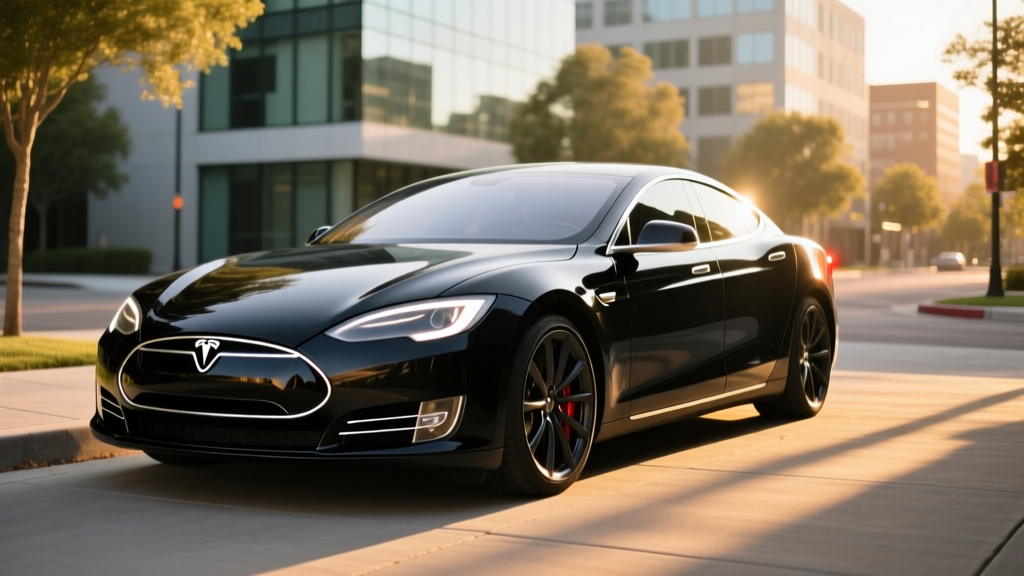
The 2013 Tesla Model S Performance was the car that proved electric vehicles could be fast, luxurious, and practical all at once. More than a decade later, it remains a compelling — and increasingly affordable — entry into EV ownership on the used market. But buying a 13-year-old electric sedan requires clear-eyed analysis of battery degradation, outdated charging hardware, and ownership costs that differ sharply from a new EV. This review breaks down exactly what the 2013 Model S Performance delivers today, with the numbers and caveats used buyers need.
Quick Verdict: Still Thrilling, But Know the Risks
The 2013 Model S Performance (badged P85) pairs a 416-horsepower rear-mounted motor with an 85 kWh lithium-ion battery for a 265-mile EPA range and a 4.2-second 0-60 mph time that still impresses. On the used market, well-maintained examples trade between $12,000 and $22,000 depending on mileage and battery state of health. It's a compelling enthusiast EV, but buyers must budget for potential battery or drive unit replacement, accept slower DC charging by modern standards, and understand that no federal tax credit applies to this model year in private-party or most dealer sales.
Range, Battery, and Efficiency
Real-World Expectation: 210–240 miles in mixed driving; 180–210 miles at sustained 75 mph highway speeds; 150–180 miles in freezing temperatures with cabin heat. A 2013 pack with 10–15% degradation may deliver 190–225 usable miles at 100% SoC when new-equivalent, less in cold weather.
The 2013 Model S Performance uses an 85 kWh (gross) NMC (nickel-manganese-cobalt) lithium-ion battery pack. Usable capacity was approximately 81 kWh when new. Tesla's early battery management systems were conservative with top-end buffers but less protective of the lower limit than modern packs, which is why many high-mileage 85 kWh packs from this era show measurable degradation.
According to fueleconomy.gov, the 2013 Model S with the 85 kWh battery achieves 89 MPGe combined (88 city / 90 highway), consuming approximately 38 kWh per 100 miles. That efficiency figure is notably higher than modern EVs — the car's weight (4,969 lbs) and older powertrain electronics contribute to higher energy consumption per mile compared to, say, a 2024 Hyundai Ioniq 6 at 27 kWh/100mi.
| Specification | Value |
|---|---|
| Battery Chemistry | NMC (Nickel-Manganese-Cobalt) |
| Gross Battery Capacity | 85 kWh |
| Usable Capacity (new) | ~81 kWh |
| EPA Range | 265 miles |
| EPA MPGe (combined) | 89 MPGe |
| Energy Consumption | 38 kWh / 100 mi |
| Typical Degradation (10+ yrs) | 10–20% capacity loss |
Battery State of Health (SoH) is the single most important factor when evaluating a used 2013 Model S. Request a Tesla service center battery health report or use third-party tools that read the BMS via the car's diagnostic port. A pack retaining 85–90% of original capacity is considered healthy for its age; anything below 80% significantly impacts usable range and resale value.
Charging Speeds: DC Fast, Level 2, and Level 1
The 2013 Model S uses Tesla's proprietary connector (pre-NACS standardization) and charges via Tesla Superchargers or, with an adapter, CCS or J1772 stations. This is one area where the 2013 model shows its age most clearly.
| Charging Level | Connector | Max Rate | Speed / Time |
|---|---|---|---|
| DC Fast Charge (Supercharger V2) | Tesla Proprietary | ~120 kW peak | ~170 mi/hr peak; 10–80% in ~45–55 min |
| DC Fast Charge (Supercharger V1/early) | Tesla Proprietary | ~90 kW peak | ~140 mi/hr peak; 10–80% in ~60 min |
| Level 2 (HPWC / Wall Connector) | Tesla Proprietary | 20 kW (80A, dual charger option) | ~58 mi/hr |
| Level 2 (standard single charger) | Tesla Proprietary / J1772 adapter | 10 kW (40A) | ~29 mi/hr |
| Level 1 (120V outlet) | NEMA 5-15 / Mobile Connector | ~1.4 kW | ~3–4 mi/hr |
Key charging reality: The 2013 Model S peaks around 120 kW on V2 Superchargers but sustains that rate only briefly. The charge curve tapers significantly above 60% SoC, and charging from 80–100% can take nearly as long as 10–80%. On a road trip, plan stops around the 10–70% window for the fastest average charging speed.
The dual onboard charger option (80A / 20 kW) was a $3,650 upgrade in 2013 and is highly desirable for home charging, cutting a full charge from roughly 9 hours (single 40A charger) to under 5 hours. Verify whether a used example has single or dual chargers before purchase.
With a CCS adapter (available from Tesla or third parties for ~$150–$250), the 2013 Model S can access non-Tesla DC fast chargers, though peak speeds remain limited by the car's hardware, not the station's capability.
Performance and Drivetrain
| Specification | Value |
|---|---|
| Drivetrain | Rear-Wheel Drive (single motor) |
| Motor Type | AC Induction |
| Horsepower | 416 HP |
| Torque | 443 lb-ft |
| 0–60 mph | 4.2 seconds |
| Top Speed | 130 mph (electronically limited) |
| Curb Weight | 4,969 lbs |
The P85's rear-mounted AC induction motor delivers instant torque that made it one of the quickest production sedans of its era. The single-motor RWD layout means no all-weather traction advantage — buyers in snow-belt states should factor in winter tires or consider a later dual-motor Model S (85D or P85D, introduced for 2015). The Performance variant also includes a sport-tuned air suspension, 21-inch wheels, and upgraded brakes over the standard 85 kWh model.
Regenerative braking on the 2013 Model S is strong but not true one-pedal driving by modern standards — the car will creep at low speeds and requires brake application to come to a complete stop.
Interior, Cargo, and Technology
The 2013 Model S interior was minimalist and forward-looking at launch, though materials quality drew criticism even then. Soft-touch surfaces are limited, and the large 17-inch portrait touchscreen — revolutionary in 2013 — uses older hardware that can feel sluggish compared to modern infotainment. Early 2013 cars may still run older firmware; verify whether the vehicle has received the MCU1 (NVIDIA Tegra) hardware, as later software updates (including improved navigation and streaming) depend on it.
| Specification | Measurement |
|---|---|
| Front Legroom | 42.7 in |
| Rear Legroom | 35.4 in |
| Front Headroom | 38.8 in |
| Rear Headroom | 37.9 in |
| Cargo (rear seats up) | 26.3 cu ft |
| Cargo (rear seats folded) | 58.1 cu ft |
| Front Trunk (Frunk) | 5.3 cu ft |
| Seating Capacity | 5 (standard) / 7 (optional rear-facing child seats) |
The optional rear-facing third-row jump seats (for children only) were a distinctive feature, making the Model S a 7-seater on paper — though the space is extremely tight and suitable only for small children on short trips. The liftback design and flat load floor make cargo loading easy, and the combined 31.6 cu ft (seats up + frunk) is generous for a sedan.
Driver Assistance: The 2013 Model S predates Tesla's Autopilot hardware suite. There is no adaptive cruise control, lane-keeping assist, or automatic emergency braking on this model year. It is an SAE Level 0 vehicle for automation — all driving tasks are the driver's responsibility. This is a significant consideration for buyers accustomed to modern ADAS features.
Pricing, Used Market Values, and Tax Credit Eligibility
The 2013 Model S Performance originally carried a base MSRP of approximately $94,900 before incentives, with well-optioned examples reaching $110,000+. Today, used-market pricing is dramatically lower:
| Condition / Mileage | Typical Price Range |
|---|---|
| Under 60,000 mi, excellent, battery >90% SoH | $18,000 – $24,000 |
| 60,000–100,000 mi, good condition | $14,000 – $19,000 |
| 100,000+ mi, fair condition, some degradation | $10,000 – $15,000 |
| Replaced battery or drive unit (documented) | +$3,000 – $5,000 premium |
Warranty, Battery Longevity, and Maintenance Costs
The original 2013 Model S came with a 4-year/50,000-mile limited warranty and an 8-year/125,000-mile battery and drive unit warranty (no capacity retention guarantee on early models — Tesla's 70% retention threshold was added later). In 2026, nearly all 2013 examples are fully out of factory warranty unless an extended Tesla Extended Service Agreement was purchased and remains transferable.
Battery replacement cost: A remanufactured 85 kWh pack from Tesla currently costs approximately $12,000–$16,000 installed. Third-party EV repair shops offer replacements for $8,000–$12,000 using refurbished or salvaged packs. This is a critical budget item — if the pack fails outside warranty, the replacement cost can approach or exceed the vehicle's market value.
Drive unit: The large rear drive unit on P85 models is known to require replacement at higher mileages (80,000–150,000 miles). Remanufactured units cost approximately $4,000–$7,000 installed.
Air suspension: The Performance model's air suspension struts are a known wear item, typically failing between 70,000–120,000 miles. Replacement costs $1,500–$2,500 per corner. Some owners convert to aftermarket coil springs to eliminate future air suspension costs.
Compared to a gas sedan of similar age, the Model S eliminates oil changes, transmission fluid, and exhaust maintenance — but introduces high-cost items (battery, drive unit, air suspension) that can be financially devastating without a reserve fund.
Pros, Cons, and Who Should Buy
- 416 HP and 4.2-second 0-60 remain thrilling; RWD engagement for enthusiasts
- 265-mile EPA range still practical for commuting and moderate road trips
- Spacious liftback cargo area (26.3 cu ft + 5.3 cu ft frunk)
- Access to Tesla Supercharger network (largest and most reliable DC network in the US)
- Over-the-air updates still deliver new features to 2013 hardware
- Low purchase price relative to performance and luxury
- No Autopilot, no adaptive cruise, no AEB — zero driver assistance
- Battery degradation risk; replacement cost can exceed vehicle value
- Slow DC fast charging by 2026 standards (~120 kW peak vs. 250–350 kW for modern EVs)
- MCU1 infotainment hardware is slow; screen delamination is a known issue
- Air suspension failures are common and expensive
- Single-motor RWD limits all-weather capability
- No federal new-vehicle tax credit; used credit limited to $4,000 with strict rules
Best for: EV enthusiasts who want an affordable performance sedan, understand the maintenance risks, have home Level 2 charging, and primarily commute or take moderate-distance trips. The P85 rewards drivers who value instant torque, Supercharger access, and a spacious cabin — and who can set aside $5,000–$10,000 for potential major repairs.
Not ideal for: Buyers who need modern ADAS features, all-wheel drive for snow, the longest possible range, or a vehicle with predictable maintenance costs. Families needing reliable long-distance travel should consider a newer dual-motor Model S (2016+ with Autopilot hardware) or a modern EV with current safety tech.
2013 Model S P85 vs. Key Used Competitors
| Vehicle | EPA Range | 0–60 mph | DC Fast Charge | ADAS |
|---|---|---|---|---|
| 2013 Tesla Model S P85 | 265 mi | 4.2s | ~120 kW | None (Level 0) |
| 2016 Tesla Model S 75D | 218 mi | 5.2s | ~120 kW | Basic Autopilot (Level 2) |
| 2018 Chevrolet Bolt EV | 238 mi | 6.5s | ~55 kW (CCS) | Lane keep, AEB |
| 2017 BMW i3 (94 Ah) | 114 mi (+ REx option) | 6.9s | ~50 kW (CCS) | Limited |
The 2013 P85 wins on raw performance and range-per-dollar but loses decisively on charging speed, safety tech, and long-term cost predictability. A 2016+ Model S 75D offers Autopilot, dual-motor AWD, and a similar Supercharger experience at a modest price premium — often the smarter used buy for most shoppers.
Frequently Asked Questions
What is the real-world range of a 2013 Tesla Model S Performance today?
Expect 210–240 miles in mild weather with mixed driving on a pack in good health. Highway driving at 75+ mph drops this to 180–210 miles. In freezing temperatures, range can fall to 150–180 miles. A degraded pack (80–85% SoH) will reduce all of these figures proportionally.
How fast does the 2013 Model S P85 charge?
On a Tesla V2 Supercharger, it peaks around 120 kW, adding roughly 170 miles of range per hour at peak rate, with a 10–80% charge taking approximately 45–55 minutes. At home on a 40A Level 2 charger, it adds about 29 miles per hour (roughly 9 hours for a full charge). The optional dual-charger setup doubles home charging speed to ~58 mi/hr.
Does the 2013 Model S qualify for any federal tax credit?
Not the new-vehicle §30D credit (up to $7,500), which applies only to new EVs. The used clean vehicle credit (up to $4,000) may apply if you buy from a licensed dealer at or below $25,000, and meet income caps ($75,000 single / $150,000 joint). Private-party purchases do not qualify. Confirm current eligibility at IRS.gov.
Is the 2013 Model S P85 worth buying in 2026?
For an enthusiast who can self-insure against a potential $12,000–$16,000 battery replacement and values the P85's performance and Supercharger access, yes — it's one of the most compelling performance-per-dollar EVs on the used market. For a buyer prioritizing reliability, modern safety features, predictable costs, or all-weather capability, a newer EV is a better choice.
What are the biggest things to check before buying a used 2013 Model S?
Request a battery State of Health reading (aim for 85%+). Check for air suspension leaks (car should raise/lower smoothly). Verify whether the drive unit has been replaced. Inspect the 17-inch touchscreen for delamination (yellowing or bubbling at screen edges). Confirm whether the car has single or dual onboard chargers. Review service records for MCU1 hardware. A pre-purchase inspection at a Tesla Service Center or experienced independent EV shop is strongly recommended.