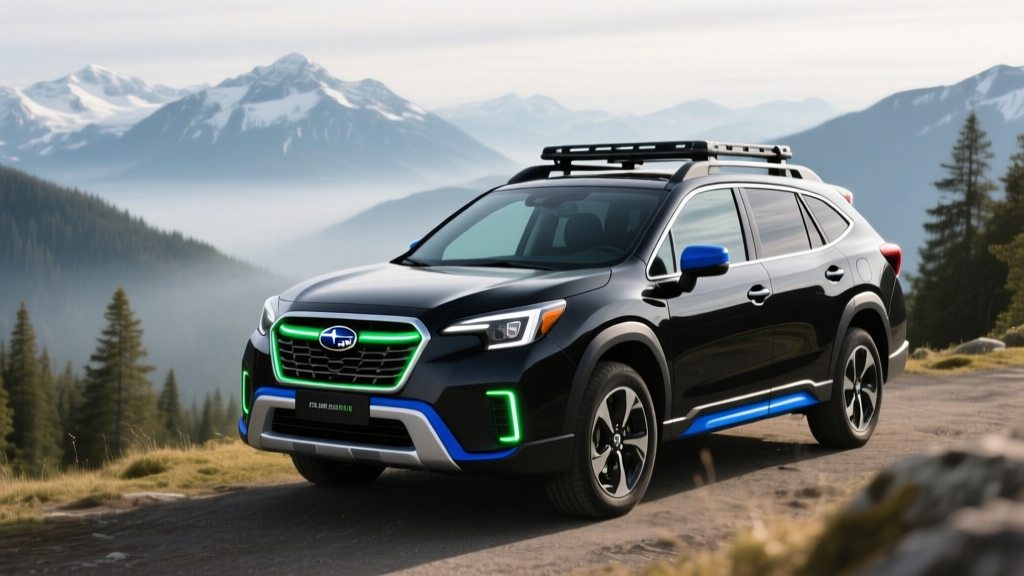
The 2026 Subaru Trailseeker EV does not currently exist as a production or announced vehicle from Subaru. As of early 2026, Subaru's electric vehicle lineup in the U.S. consists of the Solterra SUV, developed jointly with Toyota. Search interest in a "Subaru Trailseeker EV" likely stems from confusion with either the Subaru Solterra, the Subaru Outback (a popular wagon often associated with trail and outdoor use), or speculative concept renders circulating on social media. This guide addresses what Subaru actually offers electric buyers today, what the Trailseeker name could represent if it materializes, and how to evaluate Subaru's EV strategy against real competitors.
What Subaru Actually Offers in 2026
Subaru entered the EV market with the Solterra, a compact electric SUV sharing its e-TNGA platform with the Toyota bZ4X. For the 2026 model year, the Solterra carries over with modest updates to charging capability and infotainment. Here is what the spec sheet looks like:
| Spec | Value |
|---|---|
| EPA Range | 222–228 miles (depending on trim/wheels) |
| Battery Capacity | 71.4 kWh usable, lithium-ion (NMC) |
| Peak DC Fast Charge | ~150 kW (CCS1) |
| 10–80% DC Charge Time | ~56 minutes (limited charge curve) |
| Level 2 AC Charge Rate | 6.6 kW (~9 hours for full charge) |
| Horsepower | 215 hp (dual motor AWD) |
| 0–60 mph | ~6.5 seconds |
| Ground Clearance | 8.3 inches |
| Starting MSRP | $38,495 (before incentives) |
| Battery Warranty | 8 years / 100,000 miles |
Trailseeker Speculation: What Could It Be?
The "Trailseeker" name has never been trademarked or used by Subaru for a production vehicle. However, it aligns with Subaru's brand identity — rugged, outdoor-oriented, all-wheel-drive. If Subaru were to expand its EV lineup, a Trailseeker-badged vehicle would likely slot into one of these categories:
- Electric Outback equivalent: A lifted wagon/crossover on a stretched EV platform with 280+ miles of range and 10+ inches of ground clearance
- Compact trail-focused EV: Smaller than the Solterra, more off-road-oriented, competing with the upcoming Jeep Recon or Ford Bronco Sport EV
- Three-row family EV: Larger SUV platform to compete with the Kia EV9 and Hyundai Ioniq 9
Subaru's parent company, Toyota, has committed to a broader EV rollout by 2027–2028, and Subaru has indicated it will follow with additional models. Until an official announcement, all Trailseeker specifications remain pure speculation. Any article or video presenting confirmed specs for a "2026 Trailseeker" is not based on manufacturer data.
EV vs Gas: How the Solterra Compares to the Outback
Since many Trailseeker searchers likely want a Subaru with outdoor capability, comparing the Solterra EV against the gas-powered Outback provides a practical decision framework:
| Category | 2026 Solterra (Premium) | 2026 Outback (Premium) |
|---|---|---|
| Base MSRP | $38,495 | $32,695 |
| Federal Tax Credit (§30D) | Up to $7,500 (see eligibility below) | $0 |
| Effective Purchase Price | ~$30,995 | $32,695 |
| Fuel/Energy Cost (15k mi/yr) | ~$600/yr (home L2, $0.14/kWh) | ~$1,950/yr (28 mpg avg, $3.65/gal) |
| 5-Year Fuel/Energy Total | ~$3,000 | ~$9,750 |
| Maintenance (5 yr) | ~$1,200 (tire rotation, cabin filter) | ~$3,500 (oil, brakes, filters) |
| EPA Range / Tank Range | 228 mi (real-world ~190 mi highway) | ~510 mi (18.5-gal tank) |
| Ground Clearance | 8.3 in | 8.7 in |
| AWD | Standard (dual motor) | Standard (symmetrical) |
The Solterra wins on running costs — roughly $6,750 less in fuel and maintenance over five years — but loses decisively on range and refueling flexibility. For rural buyers or those who regularly drive 300+ miles between stops, the Outback remains the pragmatic choice. For suburban commuters with home charging, the Solterra's lower operating cost and instant torque make it compelling.
Federal Tax Credit: Do You Qualify?
The Solterra's competitiveness hinges significantly on the §30D Clean Vehicle Credit, but eligibility is not universal. For 2026, the rules include:
- MSRP Cap: SUVs must be under $80,000; sedans under $55,000. The Solterra qualifies at ~$38,495.
- Income Cap: Modified AGI must not exceed $150,000 (single), $225,000 (head of household), or $300,000 (joint filers).
- Battery Sourcing: A percentage of critical minerals and battery components must be sourced from the U.S. or free-trade-agreement countries. This requirement tightens annually — verify current-year sourcing compliance with your dealer before purchase.
- Point-of-Sale Transfer: Eligible buyers can transfer the credit to the dealer at purchase, reducing the purchase price directly rather than waiting for a tax refund.
- One Credit Per Vehicle: The credit is non-refundable — you must have sufficient tax liability to claim it unless using the point-of-sale transfer.
Always consult a tax professional and verify current IRS guidance before making a purchase decision. Rules change and battery-sourcing compliance varies by production batch.
Real-World Ownership: What First-Time EV Buyers Should Know
If you're considering a Subaru EV — whether it's the current Solterra or a future model — these ownership realities separate expectation from experience:
Home Charging Is Essential
Level 1 charging (standard 120V outlet) adds roughly 3–4 miles of range per hour on the Solterra. For a 228-mile battery, a full charge from empty takes over 50 hours. A Level 2 home charger (240V, 6.6 kW) reduces this to about 9 hours — overnight for most owners. Installation costs typically range from $500 to $2,500 depending on panel capacity and conduit runs. If you live in an apartment or lack dedicated parking, public charging becomes your primary fuel source, which costs 2–4× more per mile than home charging.
DC Fast Charging Limitations
The Solterra's peak charge rate of ~150 kW sounds respectable, but its charge curve is conservative. The battery tapers significantly above 50% state of charge, meaning a 10–80% session takes roughly 56 minutes — considerably longer than competitors like the Hyundai Ioniq 5 (240 kW peak, ~18 minutes 10–80%) or Tesla Model Y (250 kW peak, ~20 minutes). On road trips, this difference compounds quickly.
Cold Weather Hits Hard
Lithium-ion batteries lose efficiency in cold temperatures. The Solterra lacks a dedicated battery heat pump (a feature available on many competitors), which means winter range loss can reach 30% in sub-freezing conditions. A 228-mile EPA rating becomes roughly 160 miles in January in Minnesota or Maine. Preconditioning the battery while plugged in mitigates this, but only if you have garage or outlet access.
Decision Framework: Should You Wait for a Trailseeker?
- You commute under 60 miles round-trip and have home Level 2 charging
- You want standard AWD and 8+ inches of ground clearance for light trails and snow
- You qualify for the full $7,500 federal tax credit, bringing effective price below $31,000
- You rarely drive more than 180 miles between overnight stops
- You regularly drive 250+ miles in a single day or tow more than 1,500 lbs
- You live in a rural area with limited DC fast-charging infrastructure
- You lack access to home or workplace Level 2 charging
- You need maximum cargo space (Outback offers 75.7 cu ft vs Solterra's 63.5 cu ft)
- You want 300+ miles of EPA range with faster DC charging (200+ kW sustained)
- You need three rows or a larger cargo area
- You're not under time pressure and can wait for 2027–2028 model announcements
Common Misconceptions
| Myth | Fact |
|---|---|
| "The Trailseeker EV is available to order now." | No Subaru Trailseeker EV exists. The only current Subaru EV is the Solterra. |
| "All EVs get the $7,500 tax credit." | Eligibility depends on MSRP caps, buyer income, battery sourcing, and tax liability. Many buyers qualify for less or nothing. |
| "EV range is the same year-round." | Cold weather reduces range 15–30%. The Solterra's 228 EPA miles can drop to ~160 in deep winter. |
| "EV batteries need replacing every few years." | Modern EV batteries are warrantied for 8 years/100,000 miles and typically retain 85–90% capacity after 100k miles. |
| "The Solterra can't handle trails." | With 8.3 inches of ground clearance, X-MODE AWD, and decent approach angles, the Solterra handles fire roads and snow capably — just not rock crawling. |
Frequently Asked Questions
Is Subaru releasing a Trailseeker EV in 2026 or 2027?
Subaru has not announced any vehicle named Trailseeker. The company has indicated additional EVs are in development for the 2027–2028 timeframe, potentially including a larger SUV, but no names, specs, or pricing have been confirmed.
What's the best Subaru for someone who wants an electric vehicle today?
The 2026 Subaru Solterra is the only option. It offers AWD, decent ground clearance, and competitive pricing after tax credits, but its 228-mile range and slow DC charging are notable limitations compared to rivals.
How much does it cost to charge a Solterra at home vs. public chargers?
At home on Level 2 (assuming $0.14/kWh national average), a full charge costs roughly $10, or about $0.04 per mile. Public DC fast chargers average $0.30–$0.50/kWh, making a full charge $21–$36, or roughly $0.10–$0.16 per mile. Home charging is dramatically cheaper.
Can the Solterra tow?
The 2026 Solterra is not rated for towing. If you need to tow a trailer or camper, the gas Outback (2,700 lbs capacity) or a different EV platform is required.
Will Subaru's future EVs use NACS (Tesla) or CCS charging?
Subaru has not officially committed to NACS adoption. The current Solterra uses CCS1. Several automakers have announced NACS transitions for 2025–2026, but Subaru's charging-standard decision for future models remains unconfirmed. Monitor Subaru's press releases for updates.