The EV That Started It All — A 2026 Used-Buyer's Assessment
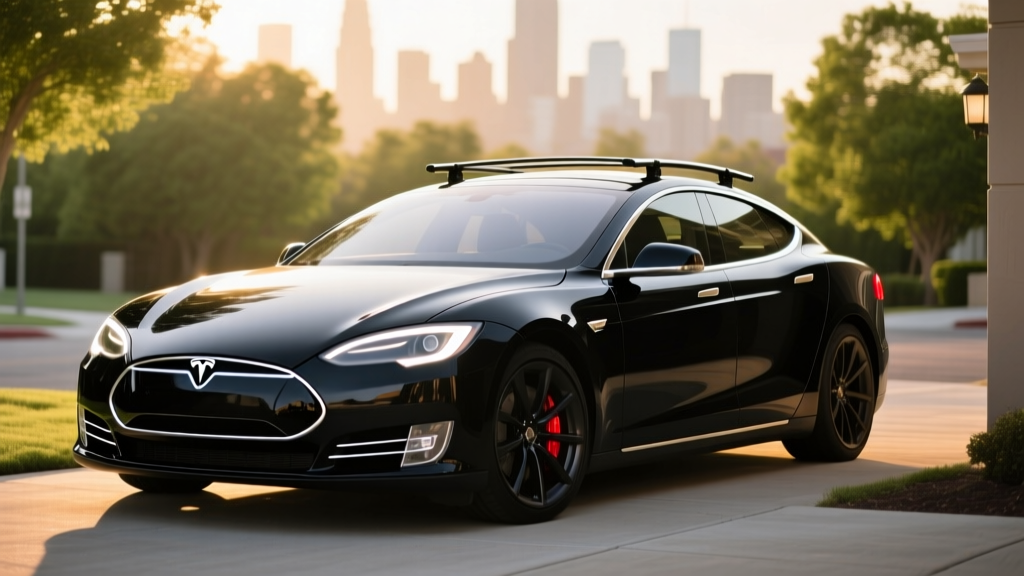
The 2013 Tesla Model S P85 isn't just a used car — it's the vehicle that proved battery-electric sedans could compete with luxury German sport sedans on performance and daily usability. More than a decade later, these early Model S examples are appearing on the used market at prices that make them accessible to a far broader audience than the original $90,000+ MSRP. But buying a 12-year-old EV requires a different calculus than buying a new one. Battery degradation, outdated charging hardware, expired warranties, and the absence of modern driver-assist features all factor into the equation.
This profile breaks down exactly what a 2026 buyer needs to know: the real range you'll see on a degraded 85 kWh pack, what charging looks like on the original DC fast-charge architecture, the performance numbers that still hold up, and the ownership costs that will determine whether a used P85 is a bargain or a money pit.
| Spec | 2013 Tesla Model S P85 |
|---|---|
| EPA Range (Original) | 265 miles |
| Battery Capacity | 85 kWh (NMC lithium-ion) |
| Drivetrain | Rear-Wheel Drive (single motor) |
| Horsepower | 416 hp |
| Torque | 443 lb-ft |
| 0-60 mph | 4.2 seconds |
| MPGe (Combined) | 89 MPGe |
| Efficiency | 38 kWh/100 mi |
| Max DC Fast Charge | ~120 kW (Supercharger V1/V2) |
| Level 2 Charge Rate | 10 kW (onboard charger) |
| Cargo Volume | 26.3 cu ft (rear), 5.3 cu ft (frunk) |
| Original Base MSRP | $92,400 (before incentives) |
| Used Price Range (2026) | $14,000–$22,000 |
| Battery Warranty | 8 yr / 125,000 mi (expired) |
Real-World Range: What 85 kWh Actually Delivers Today
When new, the 2013 Model S P85 carried an EPA-estimated 265 miles of range from its 85 kWh NMC (nickel-manganese-cobalt) lithium-ion battery pack. That was class-leading in 2013 — the Nissan Leaf managed 84 miles, and the BMW i3 hadn't yet launched in the U.S.
EPA Sticker: 265 miles
Real-World Expectation in 2026: 175–220 miles depending on battery state of health (SoH), driving style, and climate
Most 2013 P85 battery packs have experienced 15–30% degradation after 10+ years and 100,000+ miles. A pack at 80% SoH yields roughly 210 miles from a full charge under ideal conditions. Highway driving at 70+ mph reduces that to 175–190 miles. Cold-weather driving (below 40°F) can shave another 15–25% due to cabin heating loads and increased battery internal resistance — expect as little as 140–160 miles in freezing conditions.
The 85 kWh pack uses NMC chemistry, which offers higher energy density than LFP (lithium iron phosphate) but is more susceptible to calendar degradation, especially if the previous owner routinely charged to 100% or let the pack sit at very low states of charge. Before purchasing, request a battery health reading — either through Tesla Service or a third-party diagnostic tool like Scan My Tesla paired with an OBD-II adapter. Look for packs retaining at least 75% of original capacity; anything below 70% means you're working with under 180 miles of range in best-case scenarios.
Tesla's original battery management system (BMS) was conservative with top and bottom buffers, which helped longevity. But the early 85 kWh packs predate the improved cell chemistry Tesla introduced with the 90 kWh pack in 2015 and the 100 kWh pack in 2016. Some early 85 kWh packs have been replaced under warranty or through Tesla's battery swap program — a replacement pack is a significant positive if documented.
Charging Speeds: 2013 Hardware in a 2026 Charging Landscape
The 2013 Model S P85 uses Tesla's proprietary connector (now being superseded by NACS as the industry standard, though Tesla's connector is the basis for NACS). For DC fast charging, it relies on Tesla Supercharger V1 and V2 stations. Here's the critical limitation: the 2013 P85 predates Tesla's CCS adapter support and cannot natively charge at non-Tesla DC fast chargers without hardware modifications that are not officially supported.
| Charging Level | Power (kW) | Speed | Notes |
|---|---|---|---|
| Level 1 (120V household) | ~1.4 kW | ~3–4 mi/hr | Emergency/trickle only; full charge takes days |
| Level 2 (240V, 40A circuit) | 10 kW | ~29 mi/hr | Standard onboard charger; full charge ~9 hrs |
| Level 2 (240V, dual charger option) | 20 kW | ~58 mi/hr | Rare dual-charger option; full charge ~4.5 hrs |
| DC Fast (Supercharger V2) | ~120 kW peak | 10–80% in ~45 min | Peak rate only below 50% SoC; tapers heavily above 70% |
| DC Fast (Supercharger V3/V4) | ~120 kW (capped by car) | 10–80% in ~45 min | Car cannot accept V3's 250 kW; limited by onboard hardware |
The charging curve on the 85 kWh pack is notably less aggressive than modern EVs. The P85 peaks around 120 kW at low states of charge (below 40–50% SoC), but the rate tapers progressively. From 70% to 80%, you're looking at roughly 60–70 kW, and above 80% the rate drops to under 40 kW. A 10–80% charge takes approximately 45 minutes at a V2 Supercharger — adequate for road trips but noticeably slower than a modern Model 3 Long Range (10–80% in ~25 minutes at V3 stations).
For home charging, the single onboard charger accepts up to 10 kW on a 240V/50A circuit (40A continuous). This adds roughly 29 miles of range per hour, meaning a full charge from near-empty takes about 9 hours — perfectly fine for overnight charging. Some P85s were optioned with Tesla's dual-charger setup (20 kW), which cuts that to roughly 4.5 hours. Verify which configuration the specific car has before purchasing, as it's not easily retrofitted.
Connector compatibility note: As Tesla opens Supercharger access to NACS-equipped non-Tesla vehicles, the 2013 Model S retains full Supercharger access natively. However, you cannot use third-party CCS networks (Electrify America, EVgo CCS stalls) without an adapter — and Tesla's official CCS adapter is not officially supported on pre-2016 Model S vehicles. This limits your road-trip charging to the Supercharger network.
Performance: 416 HP That Still Turns Heads
The P85's rear-axle induction motor produces 416 horsepower and 443 lb-ft of torque, delivering a 4.2-second 0–60 mph time that was supercar territory in 2013 and remains genuinely quick today. The instant torque delivery — no turbo spool, no transmission kickdown — makes the P85 feel even faster than the numbers suggest in around-town driving.
Because the P85 is single-motor, rear-wheel-drive, it lacks the all-weather traction of the Dual Motor (D) variants Tesla introduced in late 2014. In rain and snow, the P85's traction control is competent but the weight distribution and instant torque can catch inexperienced EV drivers off guard. Winter tires are strongly recommended if you live in a climate with regular snow.
The air suspension (standard on early Model S, though some examples were built with coil springs) provides adjustable ride height and a comfortable highway ride. However, early air suspension struts are a known failure point — replacements cost $1,500–$2,500 per corner, and most 2013 examples will need them if they haven't already been replaced. Check for uneven ride height, slow height-adjustment response, or compressor noise during a pre-purchase inspection.
Interior, Tech, and the Pre-Autopilot Reality
The 2013 Model S interior was futuristic for its time — the 17-inch center touchscreen dominated the dashboard and controlled nearly every vehicle function, from climate to suspension height to regenerative braking strength. The instrument cluster is a 12.3-inch digital display behind the steering wheel.
However, the 2013 model year is notable for what it lacks:
- No Autopilot hardware. Tesla introduced Autopilot hardware (cameras, radar, ultrasonic sensors) in September 2014. The 2013 P85 has no driver-assist features beyond basic cruise control and stability control. This is a SAE Level 0 vehicle for longitudinal/lateral control.
- Outdated infotainment. The original MCU1 (Media Control Unit) uses an NVIDIA Tegra 3 processor that is painfully slow by 2026 standards. Map rendering lags, app switching is sluggish, and the browser is essentially unusable. Tesla offered an MCU2 upgrade (Intel Atom-based) for ~$2,000–$2,500 that dramatically improves responsiveness — check whether the car has received this upgrade.
- No over-the-air feature updates. While Tesla still pushes security and minor maintenance updates to 2013 vehicles, the P85 will never receive new features via OTA. What you see is what you get.
- Basic connectivity. No native Bluetooth audio streaming on early builds (added via firmware on some units), no USB-C ports, no wireless phone charging.
On the practical side, the Model S offers generous interior space. Rear-seat legroom measures 35.4 inches, and the liftback design provides 26.3 cubic feet of cargo volume behind the rear seats — expandable to 58.1 cubic feet with the 60/40 split rear seats folded. The front trunk (frunk) adds 5.3 cubic feet, useful for charging cables or a small bag.
Driver-Assist Level: SAE Level 0. The 2013 Model S P85 has no adaptive cruise control, no lane-keeping assist, and no automatic emergency braking. The driver is fully responsible for all vehicle control at all times.
Used Pricing, Tax Credits, and Ownership Costs
The 2013 Model S P85 originally carried a base MSRP of approximately $92,400 before the $7,500 federal tax credit and any state incentives that were available at the time. Well-equipped examples with the Tech Package, air suspension, and premium leather pushed past $105,000.
| Cost Factor | Amount |
|---|---|
| Original Base MSRP (2013) | $92,400 |
| Typical As-Tested Price (2013) | $98,000–$108,000 |
| Used Market Price (2026) | $14,000–$22,000 |
| Federal Used EV Tax Credit (§25E) | Up to $4,000 (30% of sale price, capped) |
| Estimated Price After §25E Credit | $10,000–$18,000 |
| Annual Insurance (avg.) | $1,800–$2,600 |
| Annual Electricity Cost (12,000 mi/yr) | $540–$720 (at $0.13–$0.17/kWh) |
Federal tax credit for used EVs (IRS §25E): Unlike the new-vehicle §30D credit, the used-EV credit under §25E can apply to a 2013 Model S. The credit equals 30% of the sale price, capped at $4,000. To qualify: the vehicle must be purchased from a dealer (not a private party), the sale price must be $25,000 or less, the buyer's adjusted gross income must not exceed $75,000 (single) / $150,000 (joint), and the vehicle must be at least two model years old. Verify current rules at IRS.gov, as §25E provisions are subject to legislative changes.
The new-vehicle §30D credit does NOT apply to a 2013 purchase — that credit was available only to the original buyer. The §30D MSRP caps, income limits, and battery-sourcing requirements are relevant only if you're shopping for a new EV alongside this used P85.
Ownership cost reality: While electricity costs are low (roughly $600/year for 12,000 miles at national average rates), maintenance and repair costs on a 2013 Model S are not negligible. Budget $2,000–$4,000 annually for potential repairs — air suspension, drive unit replacement, 12V battery, MCU issues, and door handle mechanisms are common failure points. The high-voltage battery, if original and not replaced, is the largest financial risk. A Tesla battery replacement currently costs $12,000–$20,000 depending on the pack and labor.
Pros and Cons at a Glance
Pros
- 4.2-second 0–60 mph still delivers thrilling acceleration
- Spacious liftback with 26.3 cu ft cargo + frunk
- Supercharger network access for road-trip charging
- Low running costs: ~$600/yr electricity vs ~$1,800/yr gasoline
- Used pricing ($14K–$22K) offers luxury performance at economy prices
- Potential $4,000 used-EV tax credit under §25E
- Air suspension provides adjustable ride height and comfort
Cons
- 175–220 mile real-world range due to battery degradation
- 45-minute 10–80% DC fast charge is slow by 2026 standards
- No Autopilot, no AEB, no driver-assist features (SAE Level 0)
- Sluggish MCU1 infotainment unless upgraded to MCU2
- Expired battery warranty — replacement costs $12K–$20K
- Air suspension failures common and expensive to repair
- RWD only — limited all-weather capability vs Dual Motor variants
- No CCS adapter support — locked to Supercharger network for DC fast charging
Who Should Buy a 2013 Model S P85?
Buy the P85 if: You want a performance EV bargain for commuting and weekend drives, you have reliable home Level 2 charging, your daily round-trip commute is under 100 miles, you're mechanically sympathetic and can budget for aging-EV repairs, and you value the Tesla Supercharger network for occasional road trips.
Skip the P85 if: You need modern driver-assist features for highway commuting, you live in a cold climate where degraded range becomes a real problem, you can't absorb a potential $15,000+ battery replacement, you want access to non-Tesla DC fast-charging networks, or you need a reliable family hauler with minimal maintenance risk. Consider a 2018+ Model 3 Long Range or a 2017+ Model S 100D instead — newer battery chemistry, Autopilot hardware, and better range.
The P85 is best understood as an enthusiast's used EV — a car you buy because you appreciate what it represents and enjoy the driving experience, not because it's the most rational appliance. If you go in with eyes open about the range, the charging speed, and the repair budget, it can be an immensely rewarding ownership experience at a fraction of its original price.
Frequently Asked Questions
What is the real-world range of a 2013 Tesla Model S P85 in 2026?
Expect 175–220 miles from a full charge, depending on the battery's state of health. Packs retaining 80%+ of original capacity deliver around 210 miles in mixed driving. Highway driving at 75 mph reduces that to roughly 180 miles, and cold weather (below 40°F) can drop range to 140–160 miles due to cabin heating and increased battery resistance.
How fast does the 2013 P85 charge at home and on the road?
On a Level 2 home charger (240V, 40A), the P85 charges at up to 10 kW, adding about 29 miles of range per hour — a full overnight charge takes roughly 9 hours. At a Tesla Supercharger, it peaks around 120 kW but tapers significantly above 50% SoC, resulting in a 10–80% charge time of approximately 45 minutes. It cannot use non-Tesla CCS fast chargers.
Does the 2013 Model S P85 qualify for any federal tax credit?
The new-vehicle §30D credit is not available — that was for the original purchaser. However, the used-EV credit under §25E may apply if you buy from a dealer for $25,000 or less and your income is under $75,000 (single) or $150,000 (joint). The credit is 30% of the sale price, capped at $4,000. Check current eligibility at IRS.gov.
Is a 2013 P85 worth buying versus a used Model 3 or newer Model S?
It depends on priorities. The P85 offers more interior space, air suspension, and a unique driving experience at a lower purchase price than a comparable Model 3 Long Range. However, a 2018+ Model 3 LR gives you 310+ miles of range, Autopilot hardware, faster charging, modern infotainment, and likely some remaining battery warranty. If reliability and daily usability are your top priorities, the Model 3 is the safer bet. If you want a collectible performance EV and accept the trade-offs, the P85 is compelling.
What are the most common and expensive repairs on the 2013 P85?
The four biggest repair risks are: (1) high-voltage battery replacement ($12,000–$20,000), (2) air suspension strut replacement ($1,500–$2,500 per corner), (3) drive unit (motor) replacement ($5,000–$8,000), and (4) MCU1 screen failure or upgrade ($1,500–$2,500). Door handles, window regulators, and the 12V battery are smaller but frequent annoyances. A pre-purchase inspection by a Tesla-certified technician or experienced independent EV shop is strongly recommended.
Can the 2013 P85 use Tesla's Full Self-Driving or Autopilot?
No. The 2013 Model S was built before Tesla introduced any Autopilot hardware. There are no cameras, radar, or ultrasonic sensors for driver-assist functions. This is a SAE Level 0 vehicle — the driver must perform all steering, braking, and acceleration tasks manually at all times. FSD cannot be added to this vehicle.