Quick Verdict: A Budget Commuter EV With Major Caveats
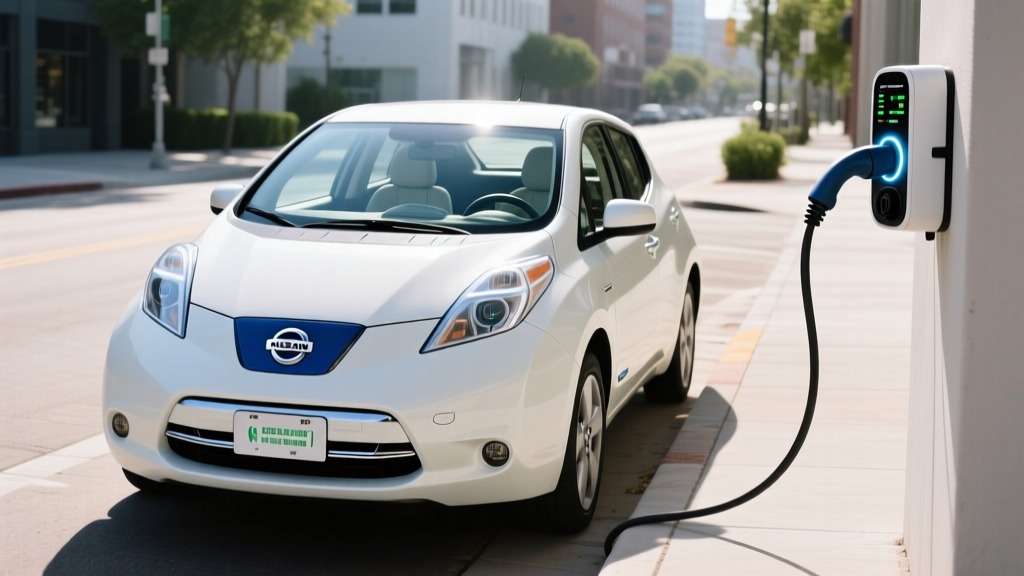
The 2013 Nissan Leaf SV was one of the first mass-market electric vehicles to offer everyday buyers an affordable, practical BEV. More than a decade later, it remains one of the cheapest ways to get into an electric car on the used market — often changing hands for $4,000 to $8,000 depending on battery health. But buying a 2013 Leaf SV in 2026 requires a clear-eyed understanding of what you're getting: a car with 75 miles of EPA-rated range when new, significant battery degradation on most surviving examples, and a CHAdeMO fast-charging connector that's increasingly sidelined by the industry's shift to NACS and CCS.
If your commute is short, you can charge at home, and you find an example with strong battery health, the 2013 Leaf SV can still serve as an ultra-low-cost daily driver. For everyone else, newer used EVs — even a 2018 Leaf with its 40 kWh pack — offer dramatically more capability. Here's the full breakdown.
Range & Efficiency: 75 Miles EPA, Often Far Less in Reality
Real-World Range in 2026 (Typical Used Example): 45–65 miles depending on battery State of Health (SoH)
Highway (70 mph): ~55 miles on a healthy pack, ~35–45 miles on a degraded one
Cold Weather (below 32°F): Expect 30–40% range loss, potentially dropping to 25–40 miles on a degraded battery
When new, the 2013 Leaf SV carried an EPA-estimated 75 miles of range on its 24 kWh lithium-ion battery pack (approximately 21.3 kWh usable). That figure was modest even by 2013 standards, and it's a significant limitation today. The car's efficiency was rated at 115 MPGe combined (29 kWh per 100 miles) by the EPA on fueleconomy.gov, which remains respectable — the Leaf is a light, aerodynamic hatchback that sips electrons.
The critical issue is battery degradation. The 2013 Leaf uses an NMC (nickel manganese cobalt) lithium-ion pack with passive air cooling — no active liquid thermal management. This design choice, combined with years of charge cycles and heat exposure, means most 2013 Leafs on the road today have lost 20–40% of their original capacity. Nissan's dashboard displays battery health as a series of bars (out of 12). A car showing 10 or fewer bars has meaningful capacity loss that directly reduces your usable range.
Buyers should request a LeafSpy Pro report before purchasing. This third-party OBD-II app reads the actual battery State of Health percentage, giving you a far more accurate picture than the dashboard bars alone. A 2013 Leaf SV with 80%+ SoH is a reasonable find; below 70%, you're looking at 40–50 miles of real-world range or less.
Battery & Charging: Slow by Modern Standards, CHAdeMO Limitations
| Specification | 2013 Nissan Leaf SV |
|---|---|
| Battery Capacity (Total / Usable) | 24 kWh / ~21.3 kWh |
| Battery Chemistry | NMC (Nickel Manganese Cobalt) |
| Thermal Management | Passive air cooling (no active system) |
| Max DC Fast Charge Rate | 50 kW (CHAdeMO connector) |
| DC Fast Charge 10–80% Time | ~30 minutes (when battery is preconditioned/healthy) |
| Level 2 Charge Rate (Onboard Charger) | 6.6 kW (SV trim; S trim was 3.3 kW) |
| Level 2 Full Charge Time | ~4 hours (from empty) |
| Level 1 (120V) Charge Rate | ~1.4 kW (~5 miles per hour) |
| Charging Port | CHAdeMO (DC) + J1772 (Level 1/2) |
The SV trim's 6.6 kW onboard charger was a major upgrade over the base S trim's 3.3 kW unit, cutting Level 2 home charging time roughly in half. On a 240V Level 2 home charger, you'll add approximately 20–25 miles of range per hour of charging — adequate for overnight replenishment.
DC fast charging tops out at 50 kW via the CHAdeMO connector. In practice, the 2013 Leaf's small battery and passive thermal management mean charging sessions are short but also limited. A 10–80% session takes roughly 30 minutes under ideal conditions, but the car's battery temperature can rise quickly during fast charging, causing the system to throttle charge speeds — a phenomenon Leaf owners call "Rapidgate." On a hot day or after repeated fast charges, expect speeds to drop significantly.
The bigger concern in 2026 is CHAdeMO infrastructure. The U.S. charging industry has standardized on CCS and, increasingly, Tesla's NACS connector. Electrify America, the largest U.S. DC fast-charging network, still maintains CHAdeMO connectors at many stations, but new installations often omit them. Before buying, check your local charging landscape using apps like PlugShare to confirm CHAdeMO availability along your routes.
Performance & Drivetrain
The 2013 Leaf SV is powered by an 80 kW (107 horsepower) AC synchronous electric motor driving the front wheels. Torque is rated at 187 lb-ft, available instantly from zero RPM, which gives the Leaf surprisingly peppy acceleration around town.
| Performance Metric | Value |
|---|---|
| Horsepower | 107 hp (80 kW) |
| Torque | 187 lb-ft |
| 0–60 mph | ~9.8 seconds |
| Top Speed | ~90 mph (electronically limited) |
| Drivetrain | Front-wheel drive (single motor) |
| Regenerative Braking | Standard; B-mode for increased regen |
Around town, the Leaf feels responsive and easy to drive. The instant torque makes stoplight-to-stoplight driving pleasant, and the B-mode (selected via the shift lever) increases regenerative braking enough to approximate one-pedal driving in light traffic, though the car will not come to a complete stop on regen alone.
Highway performance is where the Leaf shows its age. Acceleration above 60 mph is leisurely, merging onto fast-moving freeways requires planning, and the car's light weight (~3,300 lbs) combined with narrow low-rolling-resistance tires means crosswinds and semi-trucks are noticeable. This is a city commuter, not a road-trip cruiser.
Interior, Cargo & Technology
The 2013 Leaf SV is a five-seat hatchback with a surprisingly practical interior layout. The battery pack is mounted under the floor, preserving cargo and passenger space.
| Dimension | Measurement |
|---|---|
| Cargo Volume (rear seats up) | 24.0 cu ft |
| Cargo Volume (rear seats folded) | 30.0 cu ft |
| Front Legroom | 42.5 inches |
| Rear Legroom | 33.3 inches |
| Front Headroom | 40.9 inches |
| Rear Headroom | 38.0 inches |
The SV trim added meaningful upgrades over the base S model: a 7-inch touchscreen infotainment system with navigation, a rearview camera, Bluetooth audio streaming, and a quick-charge port (CHAdeMO). The infotainment system is dated by 2026 standards — no Apple CarPlay, no Android Auto, and the navigation maps are long out of date — but Bluetooth phone and audio still function.
Notable drawbacks include the lack of any advanced driver-assistance features beyond ABS and stability control (no automatic emergency braking, no lane-keeping assist), a somewhat cheap-feeling interior with hard plastics, and the rear-seat floor being slightly elevated due to the battery pack, which creates a knees-up seating position for rear passengers.
The Leaf also came equipped with Nissan's CARWINGS telematics system (now rebranded as NissanConnect EV). In 2026, remote services on this generation are largely unsupported, so don't count on app-based preconditioning or remote charging status.
Pricing, Tax Credits & Used-EV Economics
| Category | Detail |
|---|---|
| Original 2013 MSRP (SV trim) | $32,200 (before incentives) |
| Typical 2026 Used Price | $4,000–$8,000 (varies by battery SoH, mileage, condition) |
| Federal §30D New EV Credit | Not applicable (vehicle is used) |
| Federal Used EV Credit (§25E) | Up to $4,000 or 30% of sale price (whichever is less) — see eligibility below |
| Estimated Price After §25E Credit | As low as ~$2,500–$4,000 for qualifying buyers |
The 2013 Leaf SV is no longer eligible for the new-vehicle federal tax credit (§30D), which expired for the original Leaf years ago. However, the federal used EV credit (§25E), introduced by the Inflation Reduction Act, can apply. This credit offers 30% of the sale price, up to $4,000, for qualifying used EVs purchased from a licensed dealer.
Per IRS guidelines on irs.gov, eligibility for §25E requires:
- Sale price must be $25,000 or less (easily met by a used 2013 Leaf)
- Buyer income caps: $75,000 single / $112,500 head of household / $150,000 joint (modified AGI)
- Vehicle must be purchased from a licensed dealer (not a private party)
- Vehicle must be at least two model years old (met)
- Buyer must not have claimed the used EV credit in the prior 3 years
- Point-of-sale transfer is available, reducing your out-of-pocket cost at purchase
Given that a 2013 Leaf SV typically sells for $4,000–$8,000, the 30% credit would yield $1,200–$2,400 off the purchase price — making this one of the cheapest possible entries into EV ownership. Consult a tax professional to confirm your eligibility.
Battery Warranty, Degradation & Long-Term Ownership
Nissan's original battery warranty on the 2013 Leaf covered 8 years / 100,000 miles against capacity loss below 9 bars (out of 12) on the dashboard capacity gauge. For most 2013 Leafs, this warranty expired in 2021 at the latest. You are buying this car entirely as-is unless the selling dealer offers a separate warranty.
Battery replacement is the single biggest financial risk. A refurbished 24 kWh Leaf battery from Nissan or a third-party supplier typically costs $5,000–$8,000 installed — potentially exceeding the car's entire value. Some owners have sourced used packs from wrecked Leafs for $2,000–$3,500, but installation still adds $1,000–$2,000 in labor.
The passive air-cooling system is the root cause of accelerated degradation. Leafs in hot climates (Arizona, Texas, Southern California) tend to show more capacity loss than those in cooler regions. If you're shopping for a 2013 Leaf SV, prioritize examples from mild-weather states with lower mileage and documented battery health reports.
Who Should Buy a 2013 Nissan Leaf SV?
- Your daily round-trip commute is under 30 miles and you can charge at home
- You want the cheapest possible entry into EV ownership
- You find an example with 80%+ battery SoH at a fair price
- You have a second vehicle for longer trips
- You qualify for the §25E used EV credit, pushing your net cost below $4,000
- Your commute exceeds 40 miles round-trip
- You live in a cold climate where winter range loss compounds the small battery
- You need DC fast charging for road trips (CHAdeMO availability is shrinking)
- You want modern safety features (AEB, lane assist, blind-spot monitoring)
- You cannot charge at home and would rely on public infrastructure
2013 Leaf SV vs. Key Used EV Competitors
| Spec | 2013 Nissan Leaf SV | 2013 Fiat 500e | 2015 VW e-Golf |
|---|---|---|---|
| EPA Range (New) | 75 miles | 87 miles | 83 miles |
| Battery (Usable) | ~21.3 kWh | ~19.2 kWh | ~21.2 kWh |
| DC Fast Charge | 50 kW CHAdeMO | None (Level 2 only) | 50 kW CCS |
| Level 2 Onboard | 6.6 kW | 6.6 kW | 7.2 kW |
| Horsepower | 107 hp | 111 hp | 115 hp |
| Cargo (seats up) | 24.0 cu ft | 7.0 cu ft | 22.8 cu ft |
| Typical Used Price (2026) | $4,000–$8,000 | $5,000–$9,000 | $7,000–$11,000 |
The Leaf's main advantage is cargo space and rear-seat usability — the Fiat 500e is a two-seat commuter with almost no trunk. The e-Golf is a more refined car with CCS fast charging, but it costs more on the used market. If you can find a 2016+ Leaf with the 30 kWh pack (107 miles EPA) or a 2018+ Leaf with the 40 kWh pack (151 miles EPA), the jump in usability is substantial and worth the higher price.
Pros & Cons
- Extremely low purchase price — one of the cheapest EVs available used
- Low operating costs: ~$0.04–$0.06 per mile on home electricity
- Spacious hatchback cargo area for its class (24 cu ft)
- SV trim's 6.6 kW onboard charger enables reasonable Level 2 speeds
- Eligible for up to $4,000 federal used EV credit (§25E)
- Smooth, quiet, zero-tailpipe-emission city driving
- 75-mile EPA range (new); most used examples deliver 45–65 miles
- Severe battery degradation risk due to passive air cooling
- CHAdeMO DC fast-charging standard is declining in the U.S.
- No modern ADAS features (no AEB, no lane assist)
- Battery replacement ($5,000–$8,000) can exceed vehicle value
- Outdated infotainment with no smartphone integration
- Original battery warranty expired years ago
Frequently Asked Questions
What is the real-world range of a 2013 Nissan Leaf SV in 2026?
Expect 45–65 miles on a typical used example with moderate battery degradation. A well-preserved example with 85%+ State of Health might deliver 60–70 miles in mild weather. In cold conditions (below freezing), subtract 30–40%, leaving you with potentially just 25–40 miles on a degraded pack. Always check battery health via LeafSpy before purchasing.
How fast does the 2013 Leaf SV charge?
On DC fast charging (CHAdeMO), the Leaf peaks at 50 kW, reaching 10–80% in approximately 30 minutes under ideal conditions. However, the passive thermal management system causes charge speeds to throttle as battery temperature rises. On Level 2 (240V), the SV's 6.6 kW onboard charger delivers a full charge in about 4 hours, or roughly 20–25 miles of range per hour. Level 1 (120V) adds about 5 miles per hour.
Does the 2013 Nissan Leaf SV qualify for any federal tax credit?
Not the new-vehicle §30D credit. However, it can qualify for the §25E used clean vehicle credit, which provides 30% of the sale price up to $4,000. Requirements include a sale price under $25,000, purchase from a licensed dealer, and buyer income below $75,000 (single) / $150,000 (joint). See IRS.gov for current §25E rules.
Is the 2013 Leaf SV worth buying vs. a newer used EV?
It depends on your budget and commute. At $4,000–$8,000, the 2013 Leaf SV is the cheapest way into EV ownership, and for sub-30-mile commutes with home charging, it works. But a 2018 Leaf (151 miles EPA, 40 kWh, $12,000–$16,000 used) offers double the range, better battery chemistry management, and CCS compatibility. If you can stretch your budget, the newer car is dramatically more usable.
What should I check before buying a used 2013 Leaf?
The single most important step is checking battery health. Use the LeafSpy Pro app with an OBD-II dongle to read the actual State of Health percentage. Also check: the number of capacity bars displayed on the dash (12 is perfect, 10 or fewer indicates significant loss), the car's geographic history (hot-climate cars degrade faster), total mileage, and whether the battery has ever been replaced. A pre-purchase inspection by a Leaf-experienced technician is strongly recommended.
Can I road-trip in a 2013 Nissan Leaf SV?
Technically yes, but practically no. With 45–65 miles of real-world range and a CHAdeMO connector at shrinking numbers of stations, trip planning becomes extremely difficult. You'll need to stop every 40–50 miles for 30+ minutes, and many highway corridors lack CHAdeMO-equipped stations entirely. This car is best treated as a dedicated local commuter.