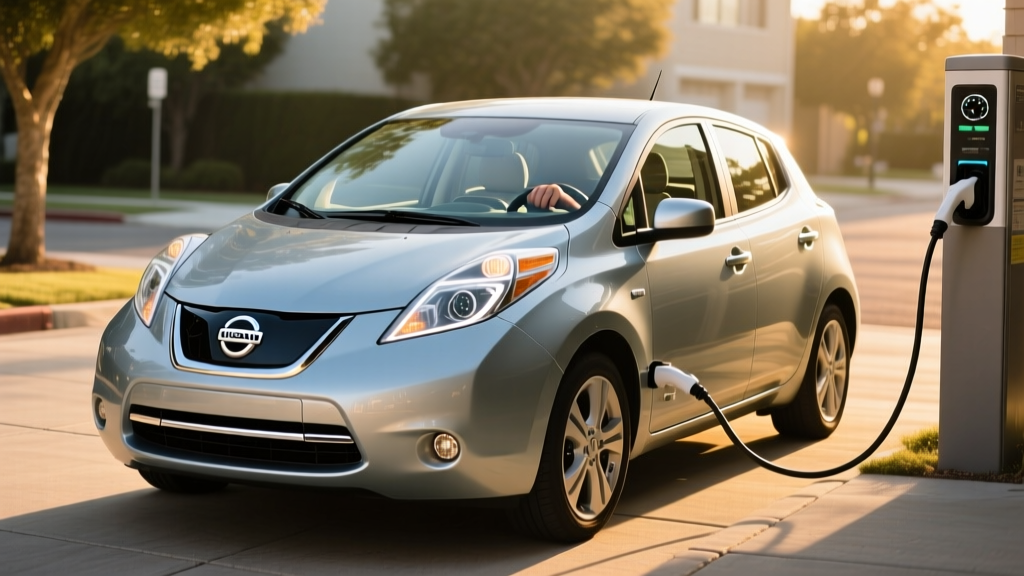
Quick Verdict: The Original Mass-Market EV, Now a Budget Commuter
The 2013 Nissan Leaf S was the entry-level trim of the car that launched the modern electric vehicle movement. Over a decade later, it exists exclusively on the used market, typically selling for $4,000–$8,000 depending on battery health and mileage. With an original EPA-estimated range of just 75 miles and a 24 kWh battery that has likely degraded 20–40% by now, this is not a do-everything EV. But as a low-cost city commuter, second-car grocery getter, or a teenager's first car, a well-preserved 2013 Leaf S can still deliver real value — if you buy smart and understand exactly what you're getting.
This review covers every spec, charging limitation, and ownership reality you need to evaluate before purchasing a used 2013 Leaf S in 2026.
2013 Nissan Leaf S: Core Specifications
| Specification | Value |
|---|---|
| Original Base MSRP | $28,800 (before incentives) |
| Battery Capacity (Total / Usable) | 24 kWh total / ~21.6 kWh usable |
| Battery Chemistry | Lithium Manganese Oxide (LMO), passive air cooling |
| EPA Range (New) | 75 miles |
| EPA Efficiency | 115 MPGe combined / 29 kWh/100 mi |
| Motor Output | 80 kW (107 hp), 187 lb-ft torque |
| 0–60 mph | ~9.9 seconds |
| Drivetrain | Front-wheel drive (single motor) |
| DC Fast Charge (CHAdeMO) | ~45 kW peak (optional on S trim) |
| Level 2 Charge Rate | 6.6 kW (3.3 kW on early 2013 builds) |
| Cargo Volume | 24.0 cu ft (rear seats up), 30.0 cu ft (folded) |
| Rear Legroom | 33.3 inches |
| Battery Warranty (Original) | 8 years / 100,000 miles (capacity loss coverage) |
| Powertrain Warranty | 5 years / 60,000 miles |
Real-World Range: What 75 EPA Miles Actually Means in 2026
The 2013 Leaf's 24 kWh battery pack was modest even at launch, and Nissan's decision to use passive air cooling rather than active liquid thermal management has proven costly for long-term battery health. Batteries in hot climates (Arizona, Texas, Florida) have degraded faster than those in temperate Pacific Northwest or Northern European climates.
Here is what range looks like under different conditions for a 2013 Leaf S with average degradation (~30% capacity loss, leaving roughly 15–17 kWh usable):
- City driving, 70°F: 55–65 miles (regenerative braking helps in stop-and-go)
- Highway at 65 mph, 70°F: 45–55 miles (aerodynamic drag and no regen benefit)
- City driving, 30°F (winter): 35–45 miles (cabin heating and cold chemistry reduce range ~25–35%)
- Highway, 30°F: 30–40 miles (worst-case scenario)
The 2013 Leaf S uses a resistive PTC heater rather than a heat pump, which draws significant power from the traction battery in cold weather. If you live where winters drop below freezing, plan your commute around a 40% range reduction.
Before purchasing any used 2013 Leaf, request a LeafSpy battery health report. This third-party OBD2 app reads the battery's State of Health (SoH) directly. Look for an SoH above 75% — anything below 70% means you're working with under 17 kWh of usable capacity, and replacement costs ($6,500–$9,000 for a refurbished pack) can exceed the car's value.
Charging Speeds: CHAdeMO, Level 2, and the Connector Problem
| Charging Level | Power | Time (Empty to Full or 80%) | Miles Added per Hour |
|---|---|---|---|
| Level 1 (120V household) | ~1.2 kW | ~20+ hours (full) | ~4–5 mi/hr |
| Level 2 (240V, 3.3 kW onboard) | 3.3 kW | ~7 hours (full) | ~12–14 mi/hr |
| Level 2 (240V, 6.6 kW onboard)* | 6.6 kW | ~4 hours (full) | ~22–26 mi/hr |
| DC Fast (CHAdeMO) | ~45 kW peak | ~30 min (0–80%) | ~90–110 mi/hr (at peak) |
*The 6.6 kW onboard charger was optional on the S trim in 2013; standard was 3.3 kW. Verify which charger your specific car has before purchase.
The 2013 Leaf S uses the CHAdeMO DC fast-charging connector, and this is the single biggest practical concern for used buyers in 2026. The North American charging infrastructure has decisively shifted to NACS (Tesla's standard, now adopted by Ford, GM, Hyundai, and most others) and CCS1. CHAdeMO stations are increasingly scarce — Electrify America has largely discontinued CHAdeMO connectors on new installations, and many older CHAdeMO stations have been retired.
Before buying, map every CHAdeMO-compatible public charger within your daily driving radius using apps like PlugShare or ChargePoint. If you cannot rely on home Level 2 charging and your area lacks CHAdeMO infrastructure, the 2013 Leaf becomes impractical for anything beyond a tight neighborhood loop.
On DC fast charging, the Leaf's ~45 kW peak rate was respectable in 2013 but is slow by 2026 standards. The small battery does mean the charging session is short in absolute terms — you can go from 20% to 80% in roughly 20–25 minutes. However, the passive air-cooled battery is prone to "Rapidgate": after two or three consecutive DC fast charges, the battery management system throttles charge speed significantly to prevent overheating. This makes road-trip charging frustrating.
Performance, Driving Dynamics, and Daily Usability
The 2013 Leaf S is powered by an 80 kW (107 hp) front-mounted synchronous electric motor producing 187 lb-ft of torque. The 0–60 mph time of approximately 9.9 seconds feels adequate for city merging but sluggish on highway on-ramps. Top speed is electronically limited to roughly 90 mph.
Where the Leaf shines is low-speed responsiveness. Like all EVs, torque is instant from zero RPM, making the car feel peppier than its horsepower figure suggests around town. The regenerative braking system offers moderate one-pedal-like deceleration when the shifter is in "B" mode, though it does not come to a complete stop without using the friction brakes — this is not true one-pedal driving by 2026 standards.
Ride quality is compliant and comfortable for a compact hatchback. The low center of gravity (battery pack under the floor) keeps body roll reasonable in corners, though the narrow, low-rolling-resistance tires prioritize efficiency over grip. Steering is light and numb — fine for parking, unengaging on back roads.
Cargo and passenger space remains a Leaf strong point. The hatchback design provides 24.0 cubic feet behind the rear seats and 30.0 cubic feet with the 60/40 split rear seats folded. Rear legroom is 33.3 inches — tight for tall adults on long trips but fine for children or short commutes. The lack of a frunk (front trunk) is a missed opportunity; the space under the hood houses power electronics.
Technology, Safety, and the S-Trim Trade-Offs
The S trim was the base model in 2013, and it shows. Standard equipment included:
- 4.3-inch color display (non-touch) with basic trip computer
- Bluetooth phone connectivity
- USB and auxiliary audio input
- Push-button start with intelligent key
- Cruise control
- Four-wheel anti-lock disc brakes with stability control
What the S trim lacked compared to the SV and SL trims:
- No navigation system (SV/SL included a 7-inch touchscreen with nav)
- No CHAdeMO DC fast-charge port (standard on SV/SL, optional on S)
- No 6.6 kW onboard charger (standard on SV/SL, optional on S)
- No heated seats or heated steering wheel (critical for range preservation in cold climates)
- No LED headlights or fog lights
- No rearview camera (standard on SL, optional on SV)
- No solar panel spoiler (SL exclusive)
From a safety standpoint, the 2013 Leaf earned the IIHS Top Safety Pick award with Good ratings in moderate overlap front, side, roof strength, and head restraint tests. However, it predates modern ADAS features — there is no automatic emergency braking, lane-keeping assist, blind-spot monitoring, or adaptive cruise control. The only driver-assistance features are ABS, traction control, and stability control. For buyers accustomed to 2026 safety tech, this is a significant gap.
Pricing, Tax Credits, and Total Used-Cost Picture
| Cost Factor | Estimated Amount |
|---|---|
| Original Base MSRP (2013) | $28,800 |
| Used Price Range (2026) | $4,000–$8,000 |
| Used EV Tax Credit (§25E, max) | Up to $4,000 (if eligible) |
| Effective Price After Credit | $0–$4,000 (best case) |
| Battery Replacement (if needed) | $6,500–$9,000 (refurbished pack) |
| Home Level 2 Charger Install | $500–$2,000 (240V circuit + EVSE) |
| Annual Electricity Cost (10K mi/yr) | ~$350–$550 (at $0.12–$0.18/kWh) |
| Annual Insurance Estimate | $600–$1,000 |
The economics of a used 2013 Leaf S hinge on battery health. A $5,000 car with 85% SoH is an excellent deal. A $4,000 car with 60% SoH is a money pit — you'll spend more on a replacement battery than the car is worth. Always factor in a potential $7,000–$9,000 battery replacement within your first few years of ownership unless the SoH is strong.
Battery Health, Degradation, and What to Watch For
The 2013 Leaf's battery uses lithium manganese oxide (LMO) chemistry, which offered good power density but has proven less durable than the NMC (nickel manganese cobalt) and LFP (lithium iron phosphate) chemistries used in modern EVs. Combined with passive air cooling, degradation is the defining ownership issue.
Nissan's original battery warranty covered capacity loss below 9 bars (out of 12) on the dashboard capacity gauge for 8 years or 100,000 miles. As of 2026, every 2013 Leaf's battery warranty has expired. You are on your own for replacement costs.
Key battery health indicators to check before purchase:
- Dashboard capacity bars: 12/12 = excellent, 10–11 = average, 9 or below = significant degradation
- LeafSpy SoH reading: Above 80% is ideal; 70–80% is acceptable; below 70% is risky
- Climate history: Cars from hot states degrade faster; Pacific Northwest and Canadian cars tend to hold up better
- Charging history: Frequent DC fast charging and regular 100% SoC storage accelerate wear
If you need a replacement, options include refurbished 24 kWh packs ($6,500–$9,000 installed), upgraded 30 kWh or 40 kWh packs from later Leaf models (requires additional adapters and programming, $8,000–$12,000), or aftermarket solutions. None are cheap relative to the car's value.
Pros and Cons
- Very low used purchase price ($4K–$8K)
- Potential $4,000 used EV tax credit
- Extremely low operating cost (~$0.04/mile electricity)
- Practical hatchback cargo space (24–30 cu ft)
- Smooth, quiet electric drivetrain
- Strong low-speed torque for city driving
- Proven, simple mechanicals (few moving parts)
- Short real-world range (35–65 miles typical)
- CHAdeMO connector — shrinking public network
- Passive air-cooled battery — accelerated degradation
- All original battery warranties expired
- No modern ADAS safety features (AEB, LKA, BSM)
- Resistive heater drains range in cold weather
- S trim lacks fast charging and 6.6 kW charger as standard
- Battery replacement cost exceeds vehicle value
Who Should Buy the 2013 Nissan Leaf S?
Not for: Anyone without reliable home charging, anyone in extreme-heat climates (battery degradation risk), anyone needing highway-capable range for commutes over 50 miles, or buyers expecting modern driver-assistance technology.
If your budget allows $15,000–$20,000, strongly consider a used 2018+ Leaf (40 kWh battery, 151-mile EPA range, liquid-cooled battery option) or a used Chevrolet Bolt EV (238-mile range, CCS connector, active thermal management). The additional range, better battery longevity, and modern connector standards make them far more practical daily drivers.
Frequently Asked Questions
What is the real-world range of the 2013 Nissan Leaf S?
With a new battery, the EPA rated it at 75 miles. In 2026, most used examples have degraded batteries yielding 45–65 miles in mild weather and 30–45 miles in freezing temperatures. Always check the SoH via LeafSpy before purchasing.
How fast does the 2013 Leaf S charge at home and on DC fast chargers?
On a 240V Level 2 charger, expect 4–7 hours for a full charge depending on whether the car has the optional 6.6 kW onboard charger or the standard 3.3 kW unit. DC fast charging via CHAdeMO peaks around 45 kW, reaching 80% in approximately 25–30 minutes — but consecutive fast charges trigger thermal throttling.
Does the 2013 Nissan Leaf S qualify for any federal tax credit?
Not the new-vehicle §30D credit. However, the Used Clean Vehicle Credit (§25E) may provide up to $4,000 if you buy from a licensed dealer, the sale price is under $25,000, and your income is below $75,000 (single) or $150,000 (joint). Consult a tax professional to confirm eligibility.
Is the CHAdeMO connector a dealbreaker in 2026?
It depends on your local infrastructure. CHAdeMO is a legacy standard in North America, with most new public chargers using NACS or CCS1. If you can charge primarily at home and have at least one reliable CHAdeMO station nearby for emergencies, it's manageable. If you rely on public charging, it's a serious limitation.
Is the 2013 Leaf S worth buying vs. competitors?
Against a used 2013 Fiat 500e (87-mile range) or 2013 Chevrolet Spark EV (82-mile range), the Leaf offers more cargo space and a slightly more refined driving experience. However, both competitors used liquid-cooled batteries that have degraded less. If you can stretch your budget, a 2017+ Bolt EV or 2018+ Leaf with a 40 kWh pack offers dramatically more range and better long-term battery health for roughly $10,000–$15,000.
How much does a replacement battery cost for the 2013 Leaf?
Refurbished 24 kWh packs run $6,500–$9,000 installed. Upgraded 30 kWh or 40 kWh packs cost $8,000–$12,000 with necessary adapters and programming. Given that the car itself is worth $4,000–$8,000, a battery replacement is a significant economic decision — buy a car with strong SoH to avoid this cost.