Quick Verdict: The 2012 Toyota RAV4 Electric in 2026
The 2012 Toyota RAV4 Electric was a compliance car built in partnership with Tesla, offering an EPA-rated 103 miles of range from a 41.8 kWh lithium-ion battery. In 2026, used examples typically sell for $6,000–$10,000 depending on battery state of health. It can work as a budget commuter EV if you have home charging and a short daily drive, but its aging battery, CHAdeMO-only DC charging, and limited cargo space (due to the battery pack) make modern used EVs like a 2018+ Chevrolet Bolt or 2019+ Nissan Leaf Plus stronger choices for most buyers.
What Is the 2012 Toyota RAV4 Electric?
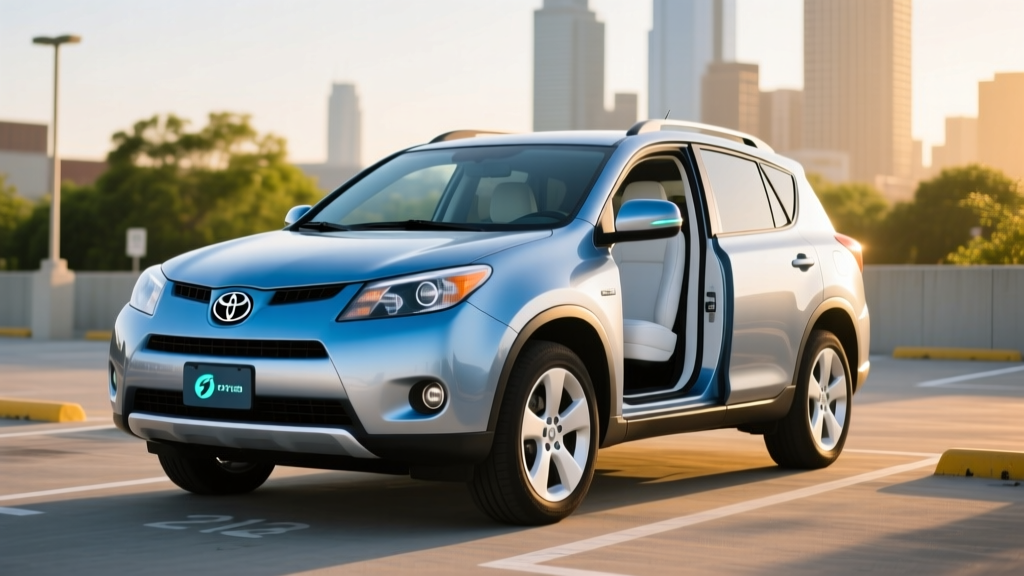
Toyota produced the RAV4 EV from 2012 to 2014 as a zero-emissions compliance vehicle to meet California Air Resources Board (CARB) mandates. Under the skin, it used a Tesla-supplied powertrain — a 115 kW (154 hp) AC induction motor and a 41.8 kWh usable battery pack (gross capacity ~50 kWh). This was the same generation of Tesla battery technology found in early Model S vehicles, adapted into Toyota's compact SUV shell.
Only about 2,500 units were sold, all in California, making it a rare sight on the used market. The RAV4 EV was never sold new outside California, though some have since migrated to other states through private sales.
Range, Battery, and Real-World Efficiency
The EPA rated the 2012 RAV4 EV at 103 miles of combined range with an efficiency of 76 MPGe (approximately 44 kWh/100 miles), per fueleconomy.gov. That was respectable for 2012, but battery degradation is the central concern for any 13-year-old EV in 2026.
Real-World Range Expectations
| Condition | Expected Range |
|---|---|
| EPA Sticker (new) | 103 miles |
| Typical 2026 used (70–85% SoH) | 70–88 miles |
| Cold weather (below 40°F) | 55–70 miles |
| Highway (70 mph sustained) | 65–80 miles |
The RAV4 EV's battery lacks an active thermal management system — it uses passive air cooling. This accelerates degradation in hot climates and reduces efficiency in cold weather. Expect real-world range to be 20–35% below the original EPA figure depending on battery health and conditions.
Battery Health: What to Check Before Buying
Before purchasing any 2012 RAV4 EV, demand a State of Health (SoH) reading. This can be checked via an OBD-II scanner with EV-capable software (such as LeafSpy-equivalent tools, though RAV4 EV support is limited). A healthy pack should retain at least 70% of original capacity (~29 kWh usable). Below 65%, range drops below practical daily usability for most drivers.
Toyota's original battery warranty was 8 years/100,000 miles, which has expired for all 2012 models. A replacement battery, if one can be sourced at all, would likely cost $8,000–$14,000 through specialty recyclers — often exceeding the vehicle's value.
Charging: Connectors, Speeds, and Home Setup
The 2012 RAV4 EV's charging profile reflects 2012 technology, which means compromises in 2026's charging landscape.
| Level | Connector | Max Power | Charge Time | Miles Added/Hour |
|---|---|---|---|---|
| Level 1 (120V) | J1772 | 1.4 kW | ~36 hours (0–100%) | ~3 mi/hr |
| Level 2 (240V) | J1772 | 10.0 kW (onboard charger upgrade*) | ~5 hours (0–100%) | ~22 mi/hr |
| DC Fast Charge | CHAdeMO | 50 kW | ~30 min (10–80%) | N/A |
*The 2012–2014 RAV4 EV originally shipped with a 6.6 kW onboard charger. Some owners installed an aftermarket upgrade to 10 kW using a Tesla HPWC adapter, as the car shares Tesla's early charging architecture.
The CHAdeMO Problem
The RAV4 EV uses the CHAdeMO DC fast-charging standard, which has been effectively abandoned in North America as of 2026. Electrify America, EVgo, and most networks have shifted to CCS1 and NACS. Remaining CHAdeMO stations are mostly older Nissan-adjacent chargers, and their numbers shrink each year. This makes road-trip charging in the RAV4 EV impractical — plan trips around the 70–85 mile real-world range and rely on Level 2 destination charging if available.
Home Charging Requirements
For daily use, a Level 2 home charger is essential. A 240V/40A circuit with a J1772 Level 2 station (such as a ChargePoint Home Flex or Emporia Vue) will fully recharge the RAV4 EV overnight. Installation costs typically run $500–$2,000 depending on panel proximity and whether your electrical panel needs an upgrade. Without home charging, owning this vehicle is not recommended — public CHAdeMO infrastructure is too sparse to rely on.
Cost Breakdown: Purchase, Charging, and Ownership
Here's what owning a 2012 RAV4 EV actually costs in 2026 compared to keeping a similarly aged gas-powered RAV4.
| Category | RAV4 EV | RAV4 Gas (2.5L I4) |
|---|---|---|
| Purchase Price (2026 used) | $6,000–$10,000 | $8,000–$13,000 |
| Annual Fuel / Electricity | $480–$720 (at $0.14/kWh) | $1,680 (at $3.50/gal, 26 MPG) |
| Annual Maintenance | $200–$400 | $600–$1,000 |
| Insurance (avg) | $900–$1,200 | $900–$1,200 |
| Federal Tax Credit | None (used EV credit expired/limited*) | None |
| 5-Year Total Fuel + Maint. | $3,400–$5,600 | $11,400–$15,000 |
*The IRS §30D used-EV credit (up to $4,000) applies only to vehicles purchased from a dealer for under $25,000, with income caps. Most 2012 RAV4 EV transactions are private-party sales and do not qualify. Verify current rules at irs.gov.
The EV saves roughly $1,000–$1,800 per year in fuel and maintenance. Over five years, that's $5,000–$9,000 in savings — enough to offset the purchase price. However, a single battery failure ($8,000+) wipes out those savings entirely, which is the core financial risk.
How Does It Compare to Modern Used EVs?
At the $6,000–$10,000 price point, the RAV4 EV competes with several other used EVs available in 2026. Here's how the key specs compare:
| Vehicle | EPA Range | Battery | DC Charging | Typical Used Price |
|---|---|---|---|---|
| 2012–2014 Toyota RAV4 EV | 103 mi | 41.8 kWh | CHAdeMO 50 kW | $6,000–$10,000 |
| 2017–2019 Chevrolet Bolt EV | 238 mi | 60 kWh | CCS 55 kW | $9,000–$13,000 |
| 2018–2020 Nissan Leaf Plus | 215 mi | 62 kWh | CHAdeMO 100 kW | $8,000–$12,000 |
| 2016–2018 BMW i3 (94 Ah) | 114 mi | 33.2 kWh | CCS 50 kW | $8,000–$11,000 |
The Chevrolet Bolt EV is the clear winner for most buyers: more than double the range, CCS charging (still widely supported), and a larger battery that tolerates degradation better. The Nissan Leaf Plus also offers far more range and faster CHAdeMO charging, though its passive battery cooling shares the same degradation concerns as the RAV4 EV.
The RAV4 EV's only real advantage is its SUV cargo position (though compromised by the raised floor over the battery) and the novelty of its Tesla-derived powertrain. If you specifically want an SUV form factor on a tight budget, it's one of the only options from this era — but the Bolt EUV (if you can find one under $14,000) surpasses it in every measurable spec.
Common Misconceptions About the RAV4 EV
| Myth | Fact |
|---|---|
| "It's basically a Tesla, so the battery will last forever." | The RAV4 EV uses first-generation Tesla battery modules with passive cooling. Degradation is typically 15–30% after 10+ years, worse than liquid-cooled packs in modern Teslas. |
| "I can charge it at any DC fast charger." | CHAdeMO chargers are increasingly rare in North America. Most new public installations are CCS or NACS only. |
| "The $7,500 federal tax credit applies." | The new-vehicle §30D credit expired for Toyota in 2019. The used-EV credit (up to $4,000) has strict income, price, and dealer-sale requirements that most RAV4 EV transactions don't meet. |
| "103 miles of range is enough for anyone." | With degradation, expect 70–88 real-world miles. That works for short commutes but leaves no margin for detours, climate control use, or cold weather. |
| "Toyota will replace the battery if it fails." | The 8-year/100,000-mile battery warranty expired years ago. Toyota does not offer a subsidized replacement program for the RAV4 EV. |
Decision Framework: Should You Buy the 2012 RAV4 EV?
Buy the 2012 RAV4 EV If:
- Your daily round-trip commute is under 50 miles
- You have reliable Level 2 home charging (garage or driveway with 240V access)
- You live in a mild climate (minimal cold-weather range loss)
- You can verify battery SoH above 75% before purchase
- You want an EV for under $10,000 and accept the range/charging limitations
- You have a second vehicle for longer trips
Skip It and Buy a 2017+ Bolt EV or Leaf Plus If:
- You need more than 80 miles of reliable daily range
- You live in a hot climate (Arizona, Texas, inland California) where passive-cooled batteries degrade faster
- You rely on public DC fast charging for any regular driving
- You want a vehicle you can realistically resell in 3–5 years — the RAV4 EV's parts scarcity and CHAdeMO obsolescence will further depress its value
- This will be your only vehicle
FAQ: 2012 Toyota RAV4 Electric Ownership
Is the 2012 RAV4 EV eligible for any federal tax credit in 2026?
Almost certainly not for private-party sales. The IRS used clean vehicle credit (up to $4,000, or 30% of sale price) requires purchase from a licensed dealer, a sale price under $25,000, buyer income below $75,000 (single) or $150,000 (joint), and the vehicle must be at least two model years old. Even if you find a dealer selling one, verify battery sourcing requirements. Consult a tax professional before counting on this credit.
What happens if the battery fails?
A full battery replacement would cost $8,000–$14,000 through specialty EV recyclers or independent shops, if modules can be sourced at all. Given the vehicle's $6,000–$10,000 market value, a battery failure is typically a total-loss event. Some owners have successfully replaced individual failed modules for $1,500–$3,000, but this requires a technician experienced with Tesla-era battery architecture.
Can I convert the RAV4 EV to use a NACS or CCS charger?
For Level 2 AC charging, a simple J1772-to-NACS adapter ($50–$100) allows you to use Tesla Wall Connectors and some NACS-equipped public Level 2 stations. For DC fast charging, no reliable CHAdeMO-to-CCS or CHAdeMO-to-NACS adapter exists for this vehicle. You are limited to whatever CHAdeMO stations remain in your area.
How does the RAV4 EV drive compared to the gas RAV4?
The EV is notably quicker off the line — 0–60 mph in approximately 8.6 seconds versus ~9.5 seconds for the 2012 gas RAV4's 176-hp four-cylinder. The electric motor's instant torque makes it feel punchy in city driving. However, the EV is heavier (approximately 4,032 lbs vs. ~3,400 lbs for the gas version), which shows in cornering and braking. Cargo volume is reduced from 73 cu ft to roughly 36 cu ft due to the raised floor over the battery pack.
What's the best way to check battery health before buying?
Ask the seller for a recent diagnostic report from a Toyota dealer or an EV specialist. If using an OBD-II tool, look for total pack capacity in kWh compared to the original 41.8 kWh usable. A full charge showing less than 30 kWh of usable capacity indicates significant degradation. Also check the vehicle's charging history — frequent DC fast charging on a passively cooled pack accelerates wear.
Is the 2012 RAV4 EV safe?
The 2012 RAV4 EV was not crash-tested by NHTSA or IIHS specifically, but it shares the 2012 RAV4's platform, which earned a 4-star overall NHTSA rating in its gas configuration. The EV version's additional weight and low-mounted battery may alter crash dynamics slightly, but it includes standard stability control, six airbags, and anti-lock brakes. It lacks any modern ADAS features — no automatic emergency braking, no lane-keeping assist.
Final Word
The 2012 Toyota RAV4 Electric is a fascinating artifact from the early days of modern EVs — a Toyota body with Tesla guts, built to satisfy California regulators. In 2026, it's a viable budget commuter EV for the right buyer: someone with home charging, a short commute, a second car for road trips, and the willingness to accept that a 13-year-old battery with no thermal management is a depreciating asset with a finite lifespan. For everyone else, spending $2,000–$4,000 more on a 2017+ Chevrolet Bolt EV delivers double the range, modern charging standards, and far less ownership anxiety.