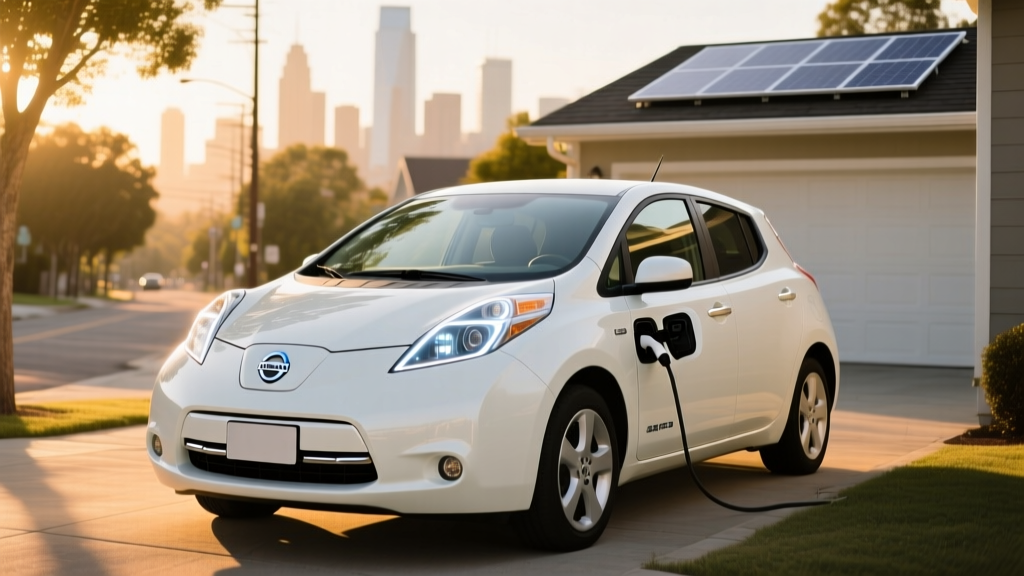
The original Nissan Leaf changed the electric vehicle landscape when it launched in late 2010 as a 2011 model. By the time the 2012 Nissan Leaf electric hatchback reached driveways, it had already proven that a mass-market, fully electric, zero-tailpipe-emission car was viable. More than a decade later, the 2012 Leaf remains one of the most affordable entry points into EV ownership on the used market — often selling for $4,000 to $8,000 depending on battery health. But buying a 14-year-old electric car requires a very different calculus than buying a new one. Battery degradation is the single most important variable, and the 2012 Leaf's air-cooled 24 kWh pack is its defining strength and its most significant liability.
This review breaks down everything a prospective used-Leaf buyer needs to know: realistic range expectations in 2026, charging speeds on an outdated but still-functional connector standard, what to look for in battery health, and whether this pioneer still makes sense against modern used EVs.
2012 Nissan Leaf Specs at a Glance
| Specification | Value |
|---|---|
| EPA Range (original) | 73 miles |
| Battery Capacity (usable) | 21.3 kWh (of 24 kWh gross) |
| Battery Chemistry | NMC (Lithium Manganese Oxide variant) |
| Thermal Management | Passive air-cooled (no active liquid cooling) |
| Motor Output | 80 kW (107 hp), 187 lb-ft torque |
| Drivetrain | FWD, single-speed reduction gear |
| 0-60 mph | ~9.9 seconds |
| EPA Efficiency | 99 MPGe combined (34 kWh/100 mi) |
| Max DC Fast Charge | ~50 kW (CHAdeMO only) |
| Level 2 Charge Rate | 3.3 kW (J1772 connector) |
| Cargo Volume | 24.0 cu ft (rear seats up), 30.0 cu ft (folded) |
| Original Base MSRP | $35,200 (before $7,500 federal credit) |
| Used Price Range (2026) | $4,000 – $8,500 |
| Battery Warranty (original) | 8 yr / 100,000 mi (capacity loss below 9 bars) |
Real-World Range: What to Actually Expect in 2026
Real-World Expectation with Moderate Degradation (10-12 bars remaining): 50–65 miles in mixed driving
Cold Weather (below 35°F): 35–50 miles — expect 25-40% loss due to cabin heating and reduced battery chemistry performance
Highway at 70 mph: Range drops significantly vs. city driving; regen braking benefits disappear at sustained speed
The 2012 Leaf's 73-mile EPA rating was modest even at launch, but for city commuters with home charging, it worked. The problem in 2026 is that virtually no 2012 Leaf retains its original battery capacity. Nissan's passive air-cooling design means the pack degrades faster than liquid-cooled competitors, especially in hot climates like Arizona, Texas, and Southern California.
According to aggregated owner data tracked by communities like MyNissanLeaf and the LeafSpy diagnostic community, a typical 2012 Leaf in 2026 shows between 9 and 11 capacity bars (out of 12) on the dashboard health indicator. That translates to roughly 70-85% state of health (SoH), meaning your usable capacity is closer to 15–18 kWh. At the Leaf's consumption rate of about 34 kWh per 100 miles, that gives you 44 to 61 miles of practical range before the low-battery warning forces you to find a charger.
City driving with frequent regenerative braking can push toward the upper end of that range. Highway driving at 65-70 mph, especially with HVAC running, pushes you to the lower end. In winter, the Leaf's resistive cabin heater is a major energy drain — unlike modern EVs with heat pumps, the 2012 model has no efficient heating system, and range loss of 30-40% is well-documented in sub-freezing conditions.
Charging: CHAdeMO, 3.3 kW Level 2, and Infrastructure Realities
| Charging Level | Power | Connector | Estimated Time |
|---|---|---|---|
| Level 1 (120V outlet) | ~1.2 kW | J1772 | ~20+ hours (empty to full) |
| Level 2 (240V) | 3.3 kW | J1772 | ~7 hours (empty to full) |
| DC Fast Charge | ~50 kW peak | CHAdeMO | ~30 min (0-80%); tapers sharply above 80% |
The 2012 Leaf charges through a J1772 connector for AC charging and uses the CHAdeMO standard for DC fast charging. This is a critical consideration in 2026: the North American charging industry has overwhelmingly adopted the NACS (Tesla) and CCS1 standards, and CHAdeMO infrastructure is shrinking. Electrify America stations, for example, typically include only one CHAdeMO cable per site — if it's occupied or broken, you're out of luck.
The onboard charger is limited to 3.3 kW, which means even a 40-amp Level 2 home charger (capable of 9.6 kW) will only deliver 3.3 kW to the battery. That adds roughly 14-16 miles of range per hour of charging — adequate for overnight replenishment of a 50-mile daily commute, but slow by modern standards.
On DC fast charging, the 50 kW peak rate sounds painfully slow compared to modern 250-350 kW chargers, but remember: the Leaf's battery is only ~21 kWh usable. At 50 kW, you can theoretically add 10-12 miles of range in about 5 minutes. A 0-80% charge takes roughly 30 minutes at a functioning 50 kW CHAdeMO station. However, the air-cooled battery heats up rapidly during fast charging, and the Leaf's battery management system (BMS) will throttle charge speed to protect the cells — especially on consecutive fast charges or in hot weather. This phenomenon, known among Leaf owners as "rapidgate," was first documented on later 40 kWh models but applies in milder form to the 24 kWh pack as well.
Home charging recommendation: A standard 240V / 16A Level 2 circuit is sufficient. There's no benefit to installing a 48A charger for this vehicle. Expect $400-$800 for a basic Level 2 EVSE and installation on an existing 240V circuit, or $1,200-$2,500 if a new circuit is needed (source: typical electrician rates; consult a licensed electrician for your specific panel).
Performance and Driving Dynamics
The 2012 Leaf's 80 kW (107 hp) AC synchronous motor delivers 187 lb-ft of torque from zero RPM, which gives it a surprisingly punchy feel around town. The 0-60 mph time of roughly 9.9 seconds is leisurely by modern EV standards (a 2026 Model 3 does it in under 4 seconds), but the instant torque makes the Leaf feel quicker than its numbers suggest in stoplight-to-stoplight driving.
Top speed is electronically limited to approximately 90 mph. The single-speed reduction gear means there's no shifting — just smooth, linear acceleration that tapers above 50 mph. The low center of gravity from the floor-mounted battery pack gives the Leaf competent handling for an economy hatchback, though the 3,300-pound curb weight and eco-oriented tires mean grip is modest.
Regenerative braking offers two modes: standard drive mode (moderate regen) and "B" mode (stronger regen that recovers more energy on deceleration). The 2012 Leaf does not offer true one-pedal driving to a full stop — you still need the friction brakes at low speeds — but B-mode reduces brake wear significantly in city traffic.
Battery Health: The #1 Used-Leaf Buying Factor
Buying a 2012 Leaf in 2026 is fundamentally a battery-health purchase decision. Everything else about the car — the interior, the motor, the electronics — tends to hold up well. The battery is the wildcard.
Nissan's original battery warranty covered 8 years or 100,000 miles against capacity loss below 9 bars (out of 12 displayed on the dash). That warranty has expired for all 2012 models as of 2020. You are now entirely dependent on whatever state of health the pack has retained.
What to check before buying:
- Capacity bars on dash: The instrument cluster shows 12 bars when new. Count them. 12 bars is exceptional (likely a replacement battery). 10-11 bars is typical and acceptable. 9 bars or fewer means significant degradation — expect under 50 miles of range.
- LeafSpy Pro diagnostic: This $20 OBD-II app reads the actual state of health percentage, cell voltage variance, and amp-hour capacity. It's the gold standard for used Leaf evaluation. A healthy pack shows cell variance under 50 mV at rest.
- Climate history: A Leaf from Phoenix will typically have worse degradation than one from Portland or Seattle. Heat is the primary enemy of the passively cooled Leaf battery.
- Fast-charge history: Frequent DC fast charging on an air-cooled pack accelerates degradation. Ask the seller about their charging habits.
Battery replacement cost: If the pack is shot, a refurbished 24 kWh replacement from Nissan or a third-party supplier like Green Leaf Auto typically costs $4,500-$6,500 installed as of 2026. Some owners have successfully swapped in 30 kWh or 40 kWh packs from later Leaf models for increased range, but this requires specialized knowledge and is not a plug-and-play procedure.
Interior, Cargo, and Daily Practicality
The 2012 Leaf is a compact five-door hatchback that seats five, though the rear middle seat is best suited for a child. Front legroom is generous at 41.3 inches, while rear legroom measures 33.3 inches — adequate for adults on shorter trips.
Cargo space behind the rear seats is 24.0 cubic feet, expanding to 30.0 cubic feet with the 60/40 split rear seats folded. That's competitive with compact hatchbacks like the Honda Fit and significantly more than a sedan trunk. The cargo area is slightly compromised by the battery's location beneath the floor, which raises the load height.
The interior materials are typical of a 2012 economy car: hard plastics dominate, but assembly quality is solid. The center-stack navigation screen (on SV and SL trims) provides basic EV-specific displays including an energy flow diagram, range estimator, and nearby charging station locator. Bluetooth phone connectivity and a USB port are standard. There is no Apple CarPlay or Android Auto — you'd need an aftermarket head unit for modern smartphone integration.
Notable tech features for the era:
- Remote climate control pre-conditioning via Nissan's CARWINGS telematics (now branded NissanConnect EV — service availability may be limited on 2012 models)
- Regenerative braking level selection (D and B modes)
- Eco driving mode that limits throttle response and HVAC power
- Solar panel rear spoiler (optional on SL trim) — provides a trickle charge to the 12V accessory battery, not the traction battery
Pricing, Tax Credits, and Used-EV Economics
| Item | Amount |
|---|---|
| Original MSRP (SV base) | $35,200 |
| Original MSRP (SL trim) | $37,250 |
| Original Federal Tax Credit (2012) | $7,500 (IRS §30D) |
| Effective Original Price (after credit) | $27,700 – $29,750 |
| Used Price Range (2026, private party) | $4,000 – $8,500 |
| Used Price Range (dealer, certified) | $6,000 – $10,000 |
| Federal Used EV Credit (§25E, 2026) | Up to $4,000 (30% of sale price, capped) |
The 2012 Nissan Leaf does not qualify for the new-vehicle §30D federal tax credit — that credit applies only to new EV purchases and the Leaf has been out of production in this generation for over a decade. However, it may qualify for the §25E Previously-Owned Clean Vehicle Credit, which offers 30% of the sale price up to a maximum of $4,000 for eligible used EVs.
§25E used-EV credit eligibility requirements (as of 2026, per IRS.gov):
- Sale price must be $25,000 or less (easily met — the 2012 Leaf sells for under $10,000)
- Buyer income caps: $75,000 single / $112,500 head of household / $150,000 joint (modified AGI)
- Vehicle must be at least 2 model years old (met)
- Must purchase from a licensed dealer (private-party sales do not qualify)
- Credit can be transferred to the dealer at point of sale as a price reduction
- Buyer can only claim one used-EV credit per 3-year period
At a typical dealer price of $7,000, the §25E credit could reduce your effective cost to approximately $4,900 — making the 2012 Leaf one of the cheapest ways to get into an electric vehicle in 2026. However, factor in potential battery replacement ($4,500-$6,500) if the pack is degraded, and the total investment can approach the cost of a newer used EV with more range and better charging infrastructure compatibility.
2012 Leaf vs. Modern Used EV Alternatives
The 2012 Leaf's value proposition hinges entirely on budget. Here's how it stacks up against other used EVs commonly found in the $5,000-$15,000 range in 2026:
| Vehicle | Typical Used Price | EPA Range | DC Fast Standard | Battery Cooling |
|---|---|---|---|---|
| 2012 Nissan Leaf | $4,000 – $8,500 | 73 mi (new) | CHAdeMO | Passive air |
| 2015-2016 VW e-Golf | $8,000 – $12,000 | 83 mi | CCS1 | Passive air |
| 2017-2018 Chevy Bolt EV | $10,000 – $14,000 | 238 mi | CCS1 | Liquid-cooled |
| 2013-2015 Fiat 500e | $5,000 – $8,000 | 87 mi | None (L2 only) | Passive air |
| 2018-2019 Nissan Leaf (40 kWh) | $12,000 – $16,000 | 151 mi | CHAdeMO | Passive air |
The 2017+ Chevy Bolt EV is the clear winner for range and charging infrastructure compatibility, but it costs roughly double. The Fiat 500e offers similar range to the Leaf but lacks DC fast charging entirely, making it strictly a home-charge commuter. The 2012 Leaf occupies a specific niche: ultra-low entry price, adequate city range, and DC fast-charge capability (even if CHAdeMO is fading).
- Extremely low purchase price ($4k-$8.5k)
- Eligible for up to $4,000 §25E used-EV credit
- Reliable motor and power electronics
- Hatchback practicality with 24 cu ft cargo
- Low operating cost (~$0.04/mi on home electricity)
- Strong owner community and diagnostic tools (LeafSpy)
- Severely limited range (50-65 mi real-world)
- CHAdeMO fast-charge standard is disappearing
- Air-cooled battery degrades faster, especially in heat
- 3.3 kW onboard charger is slow for Level 2
- No modern driver-assist features (no AEB, no lane keep)
- Resistive cabin heater destroys range in winter
- Battery replacement cost can exceed vehicle value
Who Should Buy a 2012 Nissan Leaf in 2026?
Wrong fit: Anyone who needs highway range, lives in extreme heat or cold, relies on public fast charging, or wants a primary vehicle for a household without a second car.
The 2012 Leaf makes sense in a narrow but real set of circumstances. If you have a garage with a 240V outlet, a daily commute of 30 miles or less, and access to a second vehicle for longer trips, the Leaf can serve as an ultra-cheap daily driver that costs pennies per mile to operate. At an average US electricity rate of $0.16/kWh, fully charging the Leaf's ~21 kWh usable battery costs about $3.36 — enough for 50-60 miles of real-world driving. Compare that to $10-$12 in gasoline for the same distance in a 30 MPG compact car.
However, if you live in an apartment without charging access, need to drive more than 50 miles daily, or reside in a region where CHAdeMO chargers are scarce, the 2012 Leaf's limitations become dealbreakers. In those cases, stretching your budget to a 2017+ Chevy Bolt EV (238-mile EPA range, CCS1 charging, liquid-cooled battery) is strongly recommended.
Frequently Asked Questions
What is the real-world range of a 2012 Nissan Leaf in 2026?
Expect 50-65 miles in mild weather with a battery at 75-85% state of health. Cold weather (below 35°F) can reduce this to 35-50 miles due to the resistive heater and reduced battery performance. Highway driving at 70 mph also significantly reduces range compared to city driving with regenerative braking.
How fast does the 2012 Leaf charge at home and on DC fast chargers?
On a 240V Level 2 home charger, the Leaf is limited to 3.3 kW, adding about 14-16 miles per hour — a full charge takes roughly 7 hours. On a CHAdeMO DC fast charger, it peaks at approximately 50 kW, achieving 0-80% in about 30 minutes. However, CHAdeMO stations are becoming scarce in North America as the industry shifts to NACS and CCS1.
Does a used 2012 Nissan Leaf qualify for any federal tax credit?
Not the new-vehicle §30D credit. However, if you purchase from a licensed dealer for $25,000 or less and meet income requirements ($75k single / $150k joint), you may qualify for the §25E Previously-Owned Clean Vehicle Credit — worth 30% of the sale price up to $4,000. This can be applied as a point-of-sale price reduction at the dealer.
How do I check the battery health of a used 2012 Leaf?
The simplest method is checking the capacity bars on the right side of the instrument cluster — 12 bars is like-new, 9 or fewer indicates significant degradation. For a precise reading, use the LeafSpy Pro app with an OBD-II Bluetooth dongle to read actual state of health percentage, cell voltage variance, and amp-hour capacity. A pre-purchase battery inspection is strongly recommended.
Is the 2012 Nissan Leaf worth buying vs. other used EVs?
It depends on your budget and use case. At $4,000-$8,500, it's the cheapest way into EV ownership, and the §25E credit can lower that further. But the limited range, degrading CHAdeMO infrastructure, and potential battery replacement cost are serious drawbacks. If you can spend $10,000-$14,000, a used Chevy Bolt EV offers 238 miles of EPA range, CCS1 charging, and a liquid-cooled battery — a dramatically more capable vehicle for daily use.
What happens if the 2012 Leaf's battery fails completely?
A refurbished 24 kWh replacement pack costs approximately $4,500-$6,500 installed as of 2026. Some owners pursue third-party battery upgrades (30 kWh or 40 kWh packs from later Leafs), but these require specialized installers. Given that the car itself may only be worth $5,000-$8,000, a battery failure can be a total-loss scenario economically. Always verify battery health before purchase.