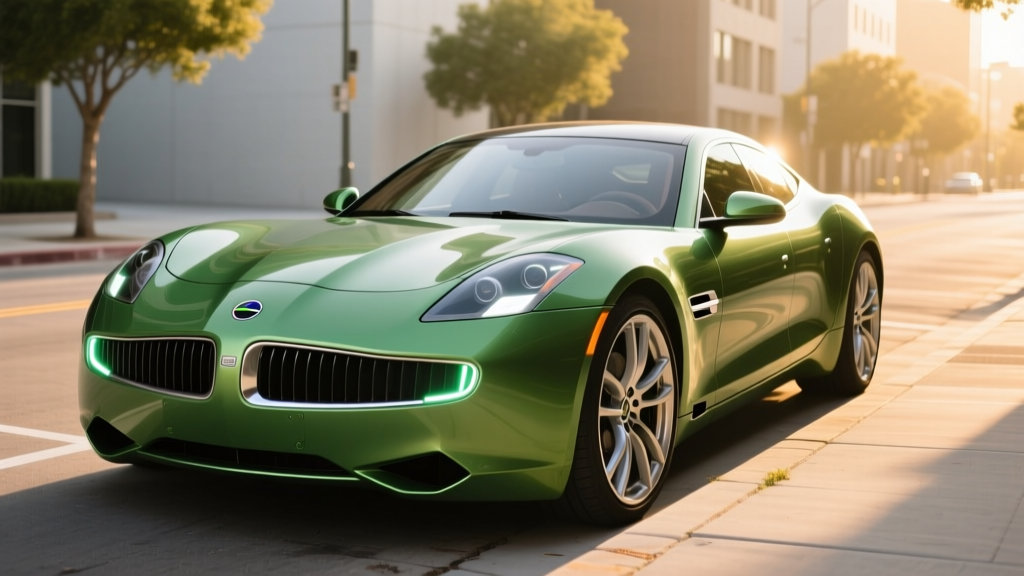
The 2012 Fisker Karma EcoSport remains one of the most polarizing electrified vehicles ever sold in the United States. Designed by Henrik Fisker and built by Valmet Automotive in Finland, this extended-range electric vehicle (EREV) promised sports-sedan aesthetics with plug-in hybrid efficiency. More than a decade later, it survives as a used-market curiosity — a design icon with a complicated mechanical legacy that demands careful scrutiny from any prospective buyer.
This review dissects the 2012 Karma EcoSport's powertrain, real-world range, charging behavior, and ownership realities as of 2026. If you are considering one on the used market, the numbers below will determine whether this car is a collectible bargain or a financial liability.
Powertrain and Performance Specifications
The Karma operates as a series hybrid — meaning the gasoline engine never drives the wheels directly. Instead, a 2.0-liter turbocharged GM Ecotec four-cylinder acts solely as a generator, producing electricity to feed the traction motors or maintain battery state of charge. Two rear-mounted electric motors deliver combined output to the rear axle.
| Specification | Value |
|---|---|
| Powertrain Type | Series Plug-in Hybrid (EREV) |
| Drivetrain | Rear-Wheel Drive (dual rear motors) |
| Combined Electric Motor Output | 403 hp / 959 lb-ft torque |
| Gasoline Generator | 2.0L Turbo I4 (260 hp generator output) |
| 0-60 mph (Sport Mode) | 5.8 seconds (EPA-verified: 6.3 sec) |
| Top Speed | 125 mph (electronically limited) |
| Curb Weight | 5,300 lbs |
| Battery Usable Capacity | ~18 kWh (Lithium Iron Phosphate / LFP) |
| Total Battery Gross Capacity | 20.1 kWh (A123 Systems prismatic cells) |
| Fuel Tank Capacity | 9.5 gallons |
The LFP (lithium iron phosphate) chemistry was unusual for a 2012 passenger vehicle. LFP offers superior thermal stability and longer cycle life compared to NMC (nickel manganese cobalt) chemistries common at the time, but at the cost of lower energy density — contributing to the Karma's substantial 5,300-pound curb weight. The A123 Systems battery pack became a critical failure point when the supplier filed for bankruptcy in late 2012, creating long-term parts scarcity that affects every surviving Karma today.
EPA Range, MPGe, and Real-World Efficiency
EPA Electric-Only Range: 32 miles
EPA Combined (EV + Gas): 230 miles total
Real-World EV Range: Expect 22–28 miles in mixed driving; 18–22 miles in cold weather (below 40°F) or sustained highway speeds above 70 mph.
Real-World Gas-Only MPG: Approximately 18–20 MPG combined once the battery is depleted (EPA rated 20 MPG combined in charge-sustaining mode).
EPA MPGe (Electric Mode): 54 MPGe combined
The EPA's official Fisker Karma listing confirms the 32-mile electric-only figure and 54 MPGe rating. However, the Karma's heavy curb weight and relatively modest 18 kWh usable battery mean that real-world electric range degrades noticeably under load. Highway driving at 75 mph can cut EV range to roughly 20 miles, and winter temperatures routinely push it below 22 miles due to cabin heating demands and reduced battery discharge efficiency.
In charge-sustaining (gas generator) mode, the Karma returns approximately 20 MPG combined — respectable for a 5,300-pound luxury sedan in 2012, but uncompetitive against modern plug-in hybrids like the Toyota Prius Prime (52 MPG combined) or even the BMW 330e (28 MPG combined gas-only). The 9.5-gallon fuel tank limits total gas-mode range to roughly 190 miles, giving a combined EV+gas maximum of about 220–230 miles between fill-ups and charges.
Charging Speed and Infrastructure Compatibility
The 2012 Karma EcoSport uses a J1772 connector for AC charging and does not support DC fast charging of any kind — no CCS, no CHAdeMO, and obviously no NACS. This is a significant limitation by 2026 standards and fundamentally shapes how this car can be used.
| Charging Level | Connector | Power (kW) | Time (0–100%) | Miles of EV Range Added per Hour |
|---|---|---|---|---|
| Level 1 (120V household) | J1772 | ~1.4 kW | ~14 hours | ~4 miles/hr |
| Level 2 (240V, 32A) | J1772 | 3.3 kW (onboard charger limit) | ~6 hours | ~10 miles/hr |
| DC Fast Charging | Not Supported | N/A | N/A | N/A |
The onboard charger is capped at 3.3 kW, meaning that even if you plug into a 7.2 kW or 11.5 kW Level 2 station, the Karma will only draw 3.3 kW. A full charge from empty takes approximately six hours on Level 2 — adequate for overnight charging at home but impractical for any mid-day top-up strategy.
For a used Karma buyer, home Level 2 installation is effectively mandatory. Expect to budget $500–$1,500 for a dedicated 240V/20A circuit installation (per a licensed electrician), assuming your electrical panel has sufficient capacity. The Karma's slow AC charging rate means you will never rely on public charging infrastructure for anything other than emergency trickle top-ups.
Interior, Cargo, and Daily Practicality
The Karma's cabin is undeniably dramatic — reclaimed wood trim, eco-suede upholstery, and a center console that runs the full length of the car, eliminating any possibility of a third rear passenger. The EcoSport trim added premium leather seating surfaces and upgraded interior accents over the base EcoStandard model.
| Dimension | Measurement |
|---|---|
| Seating Capacity | 4 passengers (2+2 configuration) |
| Front Legroom | 42.5 inches |
| Rear Legroom | 29.0 inches |
| Cargo Volume (Trunk) | 6.9 cubic feet |
| Wheelbase | 124.4 inches |
| Overall Length | 196.7 inches |
| Curb Weight | 5,300 lbs |
The 6.9 cubic-foot trunk is severely compromised by the battery tunnel running through the car's center spine. This makes the Karma impractical for airport runs, family grocery hauls, or any cargo beyond a pair of soft duffel bags. Rear legroom at 29 inches is tight for adults on anything beyond short trips — children and shorter passengers fare better.
Infotainment is handled by a touchscreen interface that was middling in 2012 and feels dated by 2026 standards. There is no Apple CarPlay, no Android Auto, no over-the-air updates, and no modern driver-assistance suite. The Karma offers basic stability control, ABS, and front/side airbags, but nothing resembling adaptive cruise control, lane-keeping assist, or automatic emergency braking.
Used Pricing, Tax Credit Eligibility, and Total Cost
The 2012 Fisker Karma EcoSport originally carried an MSRP of approximately $102,000 (base EcoStandard started around $96,850). Depreciation has been severe — as of early 2026, used examples typically trade between $25,000 and $45,000 depending on mileage, condition, and critically, battery health.
Because the Karma is purchased as a used vehicle, it may qualify for the Used Clean Vehicle Credit (§25E) — up to $4,000 or 30% of the sale price (whichever is lower), subject to these requirements:
- Sale price must be $25,000 or below (many Karmas exceed this threshold)
- Buyer AGI limits: $75,000 single / $112,500 head of household / $150,000 joint
- Vehicle must be at least 2 model years old (2012 qualifies)
- Must purchase from a licensed dealer (private-party sales excluded)
- Vehicle must have a battery capacity of at least 7 kWh (Karma's 20.1 kWh qualifies)
There is no new-vehicle §30D credit applicable here, as the Karma has not been in production since 2012 and Fisker Automotive ceased operations in 2013. The original §30D credit for the Karma was $7,500 when new, but that is irrelevant to today's used buyer.
Battery Health, Warranty Status, and Replacement Reality
This is where the 2012 Karma demands the most caution. The original battery warranty was 5 years / 60,000 miles — long expired for every surviving example. The A123 Systems prismatic LFP cells were robust in chemistry but the pack integration and thermal management proved problematic. Multiple recalls were issued for battery-related fire risks, and some vehicles received replacement packs under warranty before Fisker's collapse.
As of 2026, battery replacement options are extremely limited. A123 Systems no longer supports the Karma pack, and aftermarket solutions are scarce. Reported replacement costs range from $8,000 to $15,000+ through specialized hybrid/EV repair shops, with long lead times for refurbished modules. Some owners have sourced cells from salvaged Karmas, but this carries obvious risk.
Before purchasing, demand a battery state-of-health (SoH) assessment. A healthy Karma battery should still deliver close to 28–30 miles of EV range when fully charged. If the seller reports only 15–20 miles of EV range, the pack has degraded significantly and you should negotiate accordingly — or walk away.
Who Should (and Shouldn't) Buy a 2012 Karma EcoSport
- You want a head-turning design statement and accept the practicality trade-offs
- You have a short commute (under 25 miles) and can charge at home every night
- You view the car as a weekend/collector vehicle, not a daily driver
- You have access to a specialist mechanic familiar with the Karma's powertrain
- You budget $2,000–$4,000 annually for maintenance surprises
- You need cargo space, rear-seat practicality, or family hauling capability
- You rely on DC fast charging for road trips or apartment living
- You want modern ADAS features (automatic emergency braking, lane-keep, blind-spot monitoring)
- You need a dependable daily commuter with low running costs
- You cannot tolerate long waits for scarce replacement parts
Compared to a 2026 Toyota Prius Prime ($33,000 new, 44-mile EV range, 50 MPG gas-only, full warranty), the Karma is a fundamentally different proposition — one is transportation, the other is a rolling sculpture with a generator.
Frequently Asked Questions
What is the real-world electric range of the 2012 Fisker Karma EcoSport?
The EPA rated it at 32 miles electric-only. In real-world mixed driving, expect 22–28 miles. Highway driving at 70+ mph or cold weather below 40°F can reduce this to 18–22 miles. The 18 kWh usable LFP battery and 5,300-lb weight work against efficiency.
How fast does the Karma charge at home?
The onboard charger is limited to 3.3 kW on Level 2 (240V), meaning a full charge takes approximately 6 hours. On a standard 120V household outlet (Level 1), expect roughly 14 hours for a full charge. DC fast charging is not supported.
Does the 2012 Karma qualify for any federal EV tax credit?
As a used vehicle, it may qualify for the §25E Used Clean Vehicle Credit of up to $4,000 — but only if the dealer sale price is $25,000 or less and the buyer meets income caps ($75K single / $150K joint). Most well-maintained Karmas sell above $25,000, disqualifying them. Check current rules at IRS.gov.
Is the 2012 Fisker Karma reliable enough for daily use?
Honestly, no — not by 2026 standards. The A123 battery pack is aging with no easy replacement path, the generator engine requires standard ICE maintenance, and parts availability remains constrained since Fisker Automotive's 2013 bankruptcy. It can serve as a daily driver for short commutes if well-maintained, but budget for downtime and specialist repair costs.
How does the Karma compare to modern plug-in hybrids?
It doesn't compete favorably on specs. A 2026 Prius Prime delivers 44 miles EV range, 50 MPG gas-only, DC fast charging capability, full ADAS, and a new-car warranty — for roughly $33,000. The Karma's value is entirely in its design, rarity, and collector appeal, not in efficiency or practicality metrics.
What should I check before buying a used 2012 Karma?
Prioritize: (1) Battery state-of-health — demand an EV range test showing at least 25+ miles. (2) Recall completion — verify all battery and coolant-line recalls were performed. (3) Generator engine maintenance records. (4) Underbody inspection for corrosion given the car's weight and low ground clearance. (5) Electrical system diagnostics — the Karma's complex power electronics are costly to repair.