Quick Verdict: A Collector's Plug-In Hybrid, Not a Daily EV
The 2012 Fisker Karma EcoSport sedan occupies a strange corner of the electrified-vehicle world. Originally marketed as a range-extended electric vehicle (EREV), it pairs a 20 kWh lithium-ion traction battery with a 2.0-liter turbocharged GM Ecotec generator to push total range past 250 miles. In 2026, it trades as a used collector car — typically $25,000–$45,000 depending on condition, battery state of health (SoH), and whether the A123 Systems battery has been refurbished under the original recall campaign.
For buyers researching the 2012 Fisker Karma EcoSport sedan today, the honest framing is this: you're buying a design icon with meaningful electric-only commuting capability, not a modern EV. Real-world EV range on a healthy battery is closer to 20–25 miles, not the 32-mile EPA sticker. DC fast charging is unavailable. And federal tax credits no longer apply to this model year. If those constraints work for your use case, the Karma remains one of the most visually striking plug-in vehicles ever sold.
EPA Range, Battery Chemistry, and Real-World Expectations
Real-world EV range (2026): 18–25 miles with a healthy used pack; 12–18 miles if SoH has degraded below 75%
Combined gas+electric range: ~250–280 miles (EPA 35 MPG highway in charge-sustaining mode)
Cold-weather caveat: Expect 25–35% EV-range loss below 32°F due to the pack's passive thermal management and cabin heater load.
The Karma's traction battery is a 20.1 kWh (total) / ~18 kWh usable lithium-iron-phosphate (LFP) pack supplied by A123 Systems. LFP chemistry was unusual for passenger cars in 2012, but it offered two advantages: longer cycle life and better thermal stability than the NMC packs used in the Nissan Leaf or Chevy Volt of the same era. The trade-off was lower energy density, which is why the Karma's battery tunnel runs the full length of the cabin floor, cutting rear-seat footroom and raising the seating position.
Because A123 Systems filed for bankruptcy in late 2012 and Fisker Automotive followed in 2013, battery support has been the Karma's Achilles heel. Many surviving cars received replacement modules under NHTSA Safety Recall 12V-248 (related to a coolant leak that could short the battery). In 2026, prospective buyers should demand a recent SoH report from a Karma-specialist shop; replacement packs sourced from companies like Hybrid Shop or independent rebuilders run $8,000–$14,000.
Charging: Level 1, Level 2, and No DC Fast-Charge Option
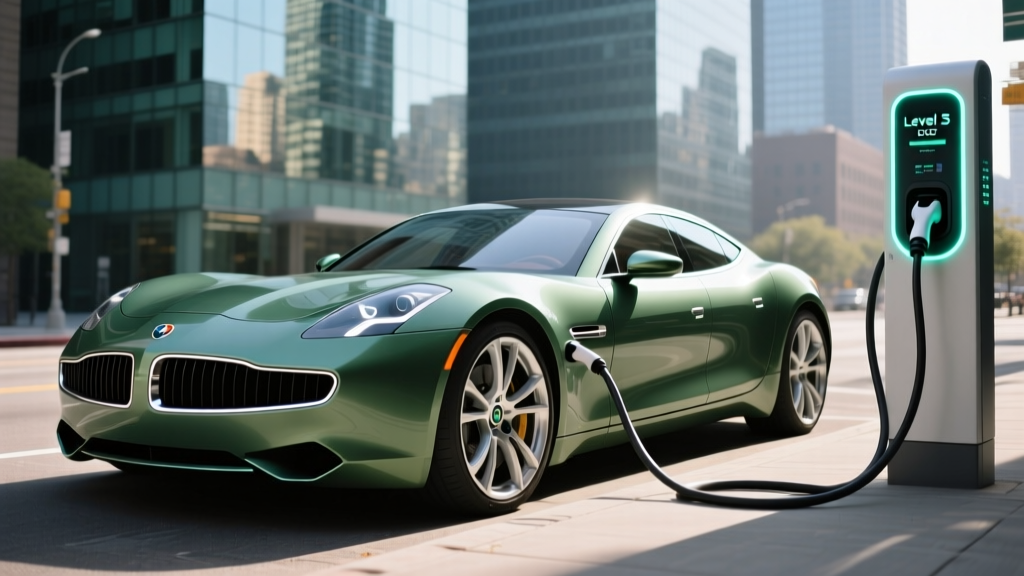
The Karma uses a standard J1772 (SAE J1772) inlet, compatible with every public Level 2 station in North America. However, it has no DC fast-charging capability — no CCS, no CHAdeMO, no NACS. This is the single biggest practical limitation for 2026 buyers coming from modern EVs that peak at 150–350 kW on DC.
| Charging Level | Power (kW) | 0–Full Time | Miles of EV Range / Hour |
|---|---|---|---|
| Level 1 (120V, 12A) | ~1.4 kW | ~14 hours | ~3 mi/hr |
| Level 2 (240V, 16A onboard limit) | 3.3 kW | ~6 hours | ~8 mi/hr |
| DC Fast Charge | N/A — not equipped | — | — |
The onboard charger is limited to 3.3 kW, so even if you plug into a 7.2 kW or 11.5 kW public Level 2 post, the Karma will only pull 3.3 kW. For a 250-mile road trip, plan on running the gasoline range extender — there's no way to fast-charge on the highway. For daily use, a home Level 2 wallbox (e.g., ChargePoint Home Flex or Emporia Vue) will fully replenish the pack overnight, which is all the car was designed for.
Performance: 403 HP, But Weight Is the Enemy
The Karma's series-hybrid powertrain routes all wheel torque through two rear-mounted electric motors producing a combined 403 horsepower and 960 lb-ft of torque. A 2.0L turbocharged inline-4 (GM Ecotec LNF) acts solely as a generator, never mechanically driving the wheels. This gives the car an EV-like launch feel, but its 5,300-pound curb mass blunts acceleration.
| Spec | Value |
|---|---|
| 0–60 mph (Sport mode) | 5.9 seconds (EPA-certified); ~6.3 sec real-world |
| Horsepower | 403 hp (electric motors combined) |
| Torque | 960 lb-ft |
| Drivetrain | Rear-wheel drive (dual rear motors) |
| Top Speed | 125 mph (electronically limited) |
| Curb Weight | 5,300 lbs |
| 0–30 mph EV-only launch | Strong (instant torque, sub-2.5 sec) |
Driving modes include Stealth (pure EV, up to 95 mph), Sport (generator supplements battery for max power), and Sustain (holds battery SoC for later EV driving — useful before entering city centers or zero-emission zones). The Sport mode's 403 hp figure is legitimate but only available while the generator is online and battery SoC is adequate; in pure Stealth mode with a depleted pack, performance drops noticeably.
Interior, Cargo, and the Battery-Tunnel Compromise
The Karma's cabin is undeniably dramatic — diamond-dust paint, reclaimed wood trim, and a hand-wrapped interior were standard on the EcoSport trim (the mid-tier model, above the base EcoStandard and below the EcoChic). However, the longitudinal battery tunnel dominates the interior architecture:
- Rear legroom: 29.6 inches (tight for adults over 5'10")
- Front headroom: 37.4 inches
- Cargo volume: 6.8 cubic feet (trunk), split by the battery tunnel — effectively two small compartments
- Seating: 4 passengers only (no middle rear seat due to tunnel)
- Infotainment: 10.2-inch touchscreen with haptic "floating" buttons — looks futuristic but is laggy by 2026 standards, no Apple CarPlay/Android Auto
The EcoSport trim added specific features: a solar-panel roof (supplements the 12V auxiliary battery and cabin ventilation), premium audio, and upgraded leather. None of the trims include modern ADAS — no adaptive cruise, no lane-keep assist, no automatic emergency braking. This is a 2012 vehicle; drive accordingly.
Pricing, Tax Credits, and Used-Market Reality in 2026
When new, the 2012 Fisker Karma EcoSport carried an MSRP of approximately $102,000 (before the $7,500 federal credit that applied at launch). Today, it trades exclusively as a used vehicle, and IRS §30D federal tax credits do not apply to the original purchase. The Used Clean Vehicle Credit (§25E) could theoretically apply — up to $4,000 or 30% of sale price, whichever is lower — but only if the buyer meets income caps ($75,000 single / $150,000 joint) and purchases from a licensed dealer. Many Karma transactions happen privately, which disqualifies the credit.
| Scenario | Typical Price Range |
|---|---|
| Private-party, fair condition (SoH ~70%) | $22,000–$30,000 |
| Dealer, good condition (SoH ~80%) | $30,000–$38,000 |
| Concours/restored (new battery, low miles) | $40,000–$55,000 |
| §25E used-EV credit (dealer purchase only) | Up to $4,000 off, income-capped |
Always verify the car's title history (several Karmas were written off after Hurricane Sandy in 2012 when saltwater flooded port-held inventory) and confirm the A123 recall work was completed. Per the IRS §25E guidance, eligibility depends on dealer reporting, buyer AGI, and the vehicle's original MSRP falling under the $25,000 used-sale threshold — which most Karmas exceed, disqualifying them from the credit entirely.
Efficiency: MPGe and Charge-Sustaining MPG
The EPA rated the Karma at 54 MPGe combined when operating in EV-blended mode, and 20 MPG combined in charge-sustaining (gasoline-only) operation. The wide gap reflects the car's heavy weight working against it once the battery is depleted. On the highway at 70 mph with the generator running, expect 22–24 MPG; around town in Sport mode with aggressive throttle use, 16–18 MPG is common.
For context, a 2026 Toyota Prius Prime PHEV delivers 127 MPGe and 48 MPG gas-only, in a package that seats five and costs under $35,000 new. The Karma's efficiency numbers reflect 2012 technology and a design priority weighted toward drama, not economy.
Warranty, Reliability, and the Support Ecosystem
The original Fisker warranty — 6 years/60,000 miles basic, 8 years/100,000 miles on the battery — is essentially orphaned. Fisker Automotive's 2013 bankruptcy left no OEM to honor claims. Some third-party warranty companies cover Karmas on a case-by-case basis, but exclusion lists are long.
Reliability in 2026 depends almost entirely on three factors:
- Battery SoH: Below 70% SoH, EV range drops under 20 miles and the car feels gutted. Budget $10,000+ for a refurb if the pack is weak.
- Generator (Ecotec LNF): The GM-sourced 2.0L turbo is well-understood and serviceable by any competent shop; parts are still available.
- Electronics and infotainment: The Karma's body-control modules, HVAC controls, and touchscreen are proprietary and increasingly scarce. A failed BCM can immobilize the car.
The owner community (FiskerBuzz forums, Karma Owners Club) is the de facto support network. Independent specialists like Fisker of Tampa Bay and select Hybrid Shop affiliates handle most major service in 2026.
Who Should Buy the 2012 Fisker Karma EcoSport Sedan?
- Jaw-dropping design that still turns heads in 2026
- LFP battery chemistry offers longer cycle life than contemporary NMC packs
- Instant 960 lb-ft torque from dual rear motors
- Solar roof is a genuine functional feature, not just a gimmick
- 4-seat grand-tourer character with EV-commute capability
- Collector-car appreciation potential (low-production, ~2,400 built)
- No DC fast charging — road trips run on gasoline
- Real-world EV range of 20–25 miles (less in cold)
- Cramped rear seats and tiny trunk due to battery tunnel
- Orphaned warranty; proprietary electronics are a liability
- No modern ADAS features (AEB, BSM, ACC)
- High insurance premiums (collector-car policies recommended)
- Outdated infotainment with no smartphone integration
Buy it if: You want a conversation-piece daily driver with a 20-mile electric commute, you have garage Level 2 charging, and you accept the running costs of a low-volume orphan brand. Treat it as a collector vehicle that happens to plug in.
Skip it if: You need family seating, road-trip fast-charging, modern safety tech, or predictable dealership support. A 2026 BMW 330e xDrive PHEV or used Tesla Model S will serve those use cases far more practically.
Frequently Asked Questions
What is the real-world EV range of a 2012 Fisker Karma EcoSport today?
With a healthy battery (80%+ SoH), expect 20–25 miles of electric-only driving in mild weather. Cold temperatures (below 32°F) and highway speeds above 60 mph reduce this to 15–18 miles. Cars with degraded packs (sub-70% SoH) may deliver as little as 12 miles.
Does the 2012 Karma qualify for any federal EV tax credit in 2026?
Not the original §30D new-vehicle credit. The §25E used-vehicle credit (up to $4,000) could theoretically apply, but only on dealer purchases under $25,000 with buyer income caps — a combination most Karma sales fail to meet. Consult a tax professional and the IRS §25E page for your specific situation.
Can I DC fast-charge the Karma on a road trip?
No. The 2012 Karma has no DC fast-charge port — no CCS, CHAdeMO, or NACS. Long trips rely on the 2.0L gasoline generator, which refuels at any gas station in minutes. Plan on ~22 MPG highway in charge-sustaining mode.
Is it worth buying vs. a modern PHEV like the BMW 330e or Toyota Prius Prime?
As a daily transportation appliance, no — modern PHEVs offer more EV range, better efficiency, full warranties, current safety tech, and dealer support. As a collector-car purchase with EV-commute functionality, the Karma has no direct rival; its design and provenance are unique.
What should I inspect before buying a used 2012 Karma?
Prioritize: (1) a battery SoH test from a Karma specialist, (2) confirmation that NHTSA recall 12V-248 was performed, (3) a clean title (avoid Hurricane Sandy flood cars), and (4) a functional test of the proprietary BCM and touchscreen. Budget $500–$1,000 for a pre-purchase inspection at a qualified shop.
How much does a battery replacement cost in 2026?
Refurbished A123 LFP packs from independent rebuilders typically run $8,000–$14,000 installed. Full new-pack replacements are rare and can exceed $18,000. Given the car's market value, a battery refurb often represents 30–50% of the vehicle's purchase price — factor this into your budget up front.