Why Insurance on a Tesla Model 3 Costs More Than You Expect
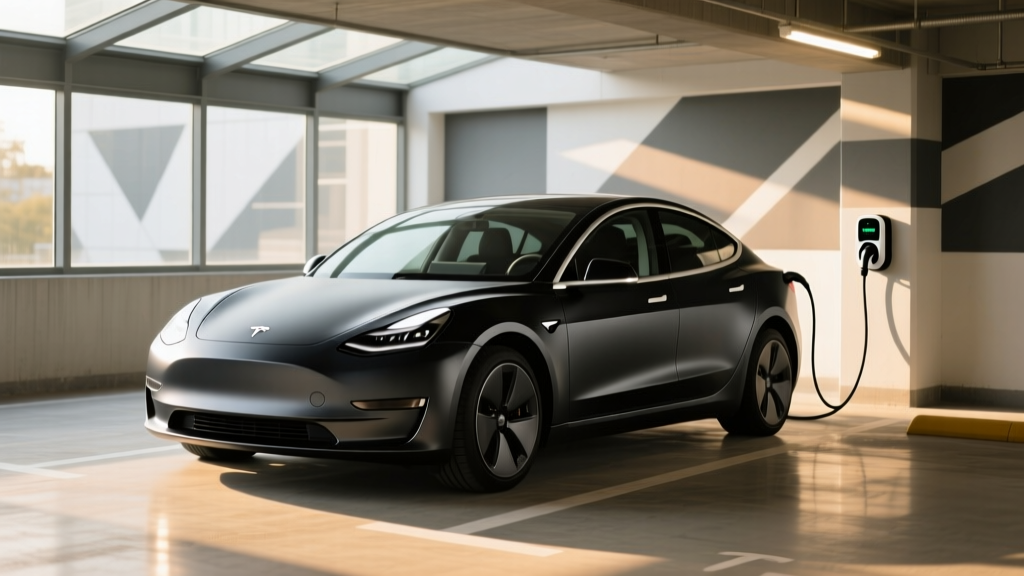
If you've searched for insurance on a Tesla Model 3, you've probably seen quotes that made you double-check the numbers. The Model 3 remains one of the best-selling EVs in the US, but its insurance premiums consistently run 30–60% higher than comparable gas sedans. In 2026, the national average full-coverage premium for a Model 3 hovers between $2,200 and $3,400 per year, depending on trim, driver profile, state, and claims history.
But before you walk away, consider this: the Model 3's total cost of ownership — factoring in fuel savings, lower maintenance, and available federal tax credits — often offsets that insurance premium gap within two to three years. This review walks through every number that matters: real-world range, charging speeds, battery longevity, tax-credit math, and the specific factors driving Tesla insurance costs.
| Spec | RWD (Base) | Long Range AWD | Performance |
|---|---|---|---|
| EPA Range | 272 mi | 363 mi | 315 mi |
| Battery (usable) | ~60 kWh (LFP) | ~79 kWh (NMC) | ~79 kWh (NMC) |
| 0-60 mph | 5.8 sec | 4.2 sec | 2.9 sec |
| Horsepower | 283 hp | 346 hp | 510 hp |
| Drivetrain | RWD single motor | AWD dual motor | AWD dual motor |
| Peak DC Fast Charge | 170 kW | 250 kW | 250 kW |
| 10-80% DCFC Time | ~25 min | ~22 min | ~22 min |
| Level 2 (11.5 kW) | ~44 mi/hr | ~44 mi/hr | ~44 mi/hr |
| MPGe (combined) | 132 MPGe | 134 MPGe | 118 MPGe |
| Base MSRP | $38,990 | $47,740 | $54,990 |
Real-World Range: What the EPA Number Doesn't Tell You
The Long Range AWD carries a 363-mile EPA estimate. In real-world mixed driving at moderate temperatures (60–75°F), expect 320–340 miles. On a sustained 75-mph highway run, that drops to roughly 280–300 miles. In freezing weather (below 30°F) with cabin heat, plan for 240–270 miles — a 25–30% reduction from the sticker.
The base RWD model's 272-mile EPA rating translates to about 240 miles real-world in mixed conditions and closer to 190–210 miles on a cold highway day. That LFP battery is more resilient to daily 100% charging, which partially compensates — Tesla recommends charging LFP packs to 100% at least weekly to maintain cell calibration, unlike NMC packs which prefer an 80% daily limit.
For commuters doing 40–60 miles round trip, even the RWD trim offers four to five days between charges. Road-trippers should note that Tesla's navigation factors elevation, wind, and temperature into its range estimates — one of the most accurate trip-planning systems in any EV.
Charging Speed and Infrastructure
The Model 3's biggest ownership advantage is access to Tesla's Supercharger network, now exceeding 20,000 stalls across North America. Here's how charging breaks down across levels:
| Level | Power (kW) | Speed | Typical Use Case |
|---|---|---|---|
| Level 1 (120V) | ~1.4 kW | ~5 mi/hr | Emergency / trickle overnight |
| Level 2 (240V / 48A) | 11.5 kW | ~44 mi/hr | Home daily charging (Wall Connector) |
| DC Fast (RWD) | 170 kW peak | 10-80% in ~25 min | Supercharger V3/V4 |
| DC Fast (LR/Perf) | 250 kW peak | 10-80% in ~22 min | Supercharger V3/V4 |
A critical note on charging curves: the Long Range and Performance trims peak at 250 kW only at low state of charge (around 10–20%). By 50% SoC, the rate tapers to roughly 150 kW, and above 80% it drops sharply to under 50 kW. That 10–80% time of ~22 minutes assumes battery preconditioning is active — navigate to a Supercharger in the Tesla app or car nav, and the system warms the pack automatically. Without preconditioning, add 5–10 minutes to your stop, especially in cold weather.
With the included NACS connector, Model 3 owners can also use adapters for Electrify America, ChargePoint, and other CCS-based networks, though Tesla's proprietary Supercharger experience remains the most seamless in the industry.
How Much Does Insurance on a Tesla Model 3 Actually Cost?
Insurance on a Tesla Model 3 averages $2,500–$3,100 annually for a 35-year-old driver with a clean record and full coverage (100/300/100 liability, $500 deductible). That compares to roughly $1,600–$1,900 for a Toyota Camry or Honda Accord. Several factors drive this gap:
- Repair costs: Tesla's aluminum-intensive body, integrated structural battery pack, and sensor-dense bumpers (cameras, ultrasonic replacements) mean even minor collisions carry higher repair bills.
- Performance: The Long Range and Performance trims produce supercar-level acceleration. Insurers price for the 2.9-second 0-60 of the Performance model.
- Parts availability: Tesla controls its parts supply chain tightly, and body shops must be Tesla-certified — limiting competition on repair pricing.
- Advanced tech: While Autopilot and active safety features reduce some risk, the cost to replace windshield-integrated cameras and sensors offsets those discounts.
Tesla Insurance — available in most states — uses real-time driving data from the vehicle to calculate monthly premiums. Safe drivers have reported premiums 20–35% below traditional carrier quotes, though aggressive braking or frequent hard acceleration can increase rates. Always compare Tesla Insurance against quotes from Geico, Progressive, and State Farm; the cheapest option varies significantly by state and driving profile.
Pricing, Tax Credits, and Total Ownership
The 2026 Model 3 lineup starts at $38,990 for the RWD and reaches $54,990 for the Performance before destination fees and options. Here's how the federal tax credit changes the math:
| Trim | Base MSRP | §30D Credit | Effective Price* |
|---|---|---|---|
| RWD | $38,990 | Up to $7,500 | ~$31,490 |
| Long Range AWD | $47,740 | Up to $7,500 | ~$40,240 |
| Performance | $54,990 | Up to $7,500 | ~$47,490 |
*Effective price assumes full §30D eligibility. Actual credit depends on battery sourcing, buyer income, and tax liability. Source: IRS.gov
The IRS §30D federal tax credit offers up to $7,500, split into two halves: $3,750 for meeting critical-minerals sourcing requirements and $3,750 for battery-component manufacturing in North America. Eligibility hinges on three caps:
- MSRP cap: Sedans must be priced at or below $55,000. The RWD and Long Range qualify; the Performance trim at $54,990 scrapes in under the limit before options push it over.
- Income cap: Modified adjusted gross income must not exceed $150,000 (single), $225,000 (head of household), or $300,000 (joint filing).
- Battery sourcing: The full $7,500 requires meeting both critical-minerals and component requirements. Tesla's shifting supply chain means the exact credit amount can change — verify current eligibility on the IRS website before purchasing.
As of 2026, buyers can elect a point-of-sale transfer of the credit, reducing the purchase price at the dealer rather than waiting for a tax refund. Consult a tax professional to confirm your eligibility.
Interior, Tech, and the Minimalist Cabin
The refreshed Model 3 (codenamed "Highland") that carries into 2026 features a significantly improved interior over the pre-2024 version: ventilated front seats, ambient lighting, acoustic glass, and rear-seat ventilation. The 15.4-inch center touchscreen handles everything — climate, media, navigation, vehicle settings — with no physical buttons below the steering wheel.
Cargo and passenger space:
- Rear trunk: 21.0 cu ft
- Front trunk (frunk): 3.1 cu ft
- Rear legroom: 35.3 inches
- Front headroom: 40.3 inches
That trunk space is generous for the segment, but the Model 3's sloping roofline cuts into rear headroom for passengers over 6 feet tall. If you regularly carry adults in back, the Model Y's taller roofline is worth the step-up in price.
Driver assistance: Basic Autopilot (adaptive cruise + lane centering) comes standard and represents SAE Level 2 automation — you must keep hands on the wheel and eyes on the road at all times. Full Self-Driving (Supervised) remains a $8,000 option (or $99/month subscription) and, despite the name, is also Level 2. It handles city streets, stoplights, and lane changes with increasing competence but requires constant driver supervision. It is not a Level 4 autonomous system.
Battery Longevity, Warranty, and Degradation
Tesla warranties the Model 3 battery and drive unit for 8 years / 100,000 miles (RWD) or 8 years / 120,000 miles (Long Range and Performance), retaining at least 70% of original capacity. Real-world data from Tesla's fleet reports and third-party tracking shows:
- LFP packs (RWD): Lose roughly 5–8% capacity over 100,000 miles. LFP chemistry tolerates daily 100% charges and shows excellent cycle life.
- NMC packs (LR/Performance): Lose roughly 8–12% over 100,000 miles. Best practice: charge to 80% daily, 100% only for road trips.
A full battery replacement outside warranty runs $12,000–$16,000 at current pricing, though most Model 3 batteries are projected to outlast 200,000 miles with 15–20% degradation based on fleet data published by Tesla's Impact Reports.
Pros, Cons, and the Verdict
Pros
- Class-leading Supercharger network access
- Up to 363 mi EPA range (Long Range)
- 250 kW peak DC fast charging (LR/Perf)
- Over-the-air updates continuously add features
- Strong safety ratings (IIHS Top Safety Pick+)
- Low maintenance costs vs. gas sedans
- Point-of-sale tax credit transfer available
Cons
- Insurance premiums 30–60% above gas sedans
- No physical buttons or stalks (turn signals on wheel)
- Rear headroom tight for tall passengers
- FSD remains Level 2 despite the name and price
- Repair costs after collision are above average
- RWD LFP range drops sharply in freezing weather
Who Should Buy the Model 3?
Commuters and tech-forward singles/couples get the most from the Model 3. If your daily drive is under 80 miles round-trip, the RWD at ~$31,500 after tax credit is one of the most cost-efficient EVs available. Road-trippers should opt for Long Range AWD — 363 miles of EPA range and Supercharger access make it the most practical EV sedan for long hauls. Families needing rear-seat space should cross-shop the Model Y or Hyundai Ioniq 5.
Frequently Asked Questions
What is the real-world range of the Tesla Model 3?
The Long Range AWD delivers approximately 320–340 miles in mixed driving, 280–300 miles on the highway, and 240–270 miles in cold weather. The RWD achieves roughly 240 miles mixed and 190–210 miles in freezing highway conditions.
How fast does the Model 3 charge at home and on road trips?
At home on a Level 2 Wall Connector (11.5 kW), the Model 3 adds about 44 miles of range per hour — a full overnight charge from 20% to 80% takes roughly 5 hours. On a Supercharger, the Long Range and Performance peak at 250 kW and charge from 10–80% in about 22 minutes with preconditioning active.
Does the Tesla Model 3 qualify for the federal EV tax credit?
Yes, with conditions. The RWD ($38,990) and Long Range ($47,740) fall under the $55,000 sedan MSRP cap. The Performance ($54,990) qualifies only before options push it above the cap. Buyer income must not exceed $150K single / $300K joint, and the credit amount depends on current battery-sourcing compliance. Verify at IRS.gov.
Is the Model 3 worth buying vs. competitors like the Hyundai Ioniq 6 or BMW i4?
The Model 3 wins on charging infrastructure, software integration, and value after tax credits. The Ioniq 6 offers a smoother ride and physical controls; the BMW i4 delivers premium build quality at a higher price. If Supercharger access matters to you — and for road-tripping Americans, it should — the Model 3 remains the default choice.
Why is insurance on a Tesla Model 3 more expensive?
Higher repair costs from Tesla's aluminum body, structural battery pack, sensor-dense bumpers, and certified-shop requirements all drive premiums up. The Performance trim's 510 hp also factors in. Tesla Insurance's real-time driving data can reduce premiums 20–35% for safe drivers.
How long will the Model 3 battery last?
Tesla warranties the battery for 8 years / 100,000–120,000 miles (depending on trim) at 70% minimum capacity. Fleet data suggests most packs retain 80–85% capacity at 150,000 miles. Full replacement costs $12,000–$16,000 out of warranty.