The Car That Proved EVs Could Be Fast
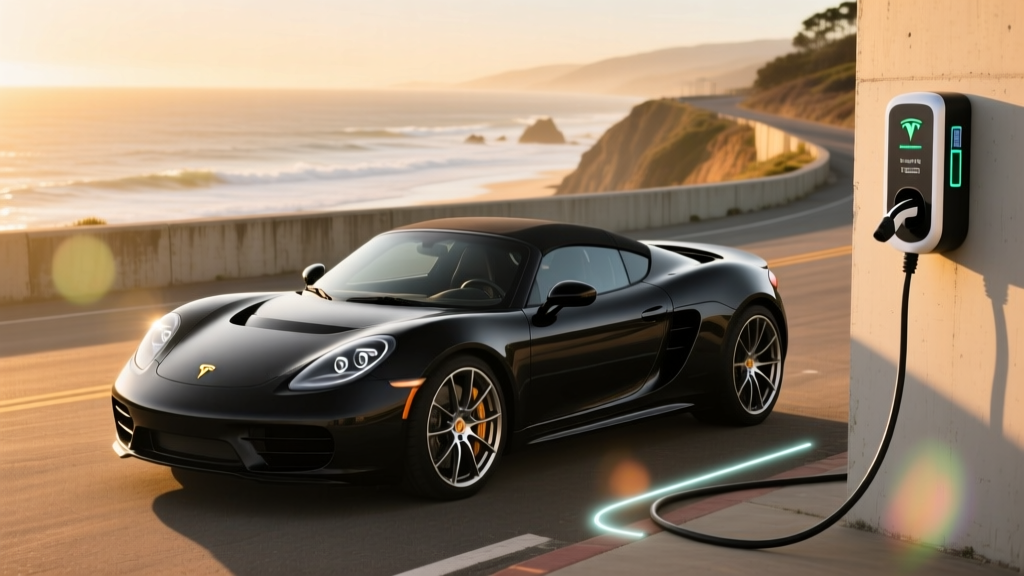
Before the Model S, before the Supercharger network, and before Tesla became the most valuable automaker on Earth, there was the Roadster. The 2011 Tesla Roadster Sport — the performance variant of Tesla's very first production vehicle — was the car that shattered the assumption that electric vehicles had to be slow, golf-cart-like compromises. Built on a modified Lotus Elise chassis and powered by a hand-built battery pack of 6,831 laptop-style lithium-ion cells, the Roadster Sport was a low-volume halo car with a massive mission: prove that an EV could out-accelerate a Porsche.
In 2026, the 2011 Roadster Sport is a collector's piece and a historical artifact. It's not a car you cross-shop against a modern EV. But understanding what it offered — and where it falls short by today's standards — is essential for collectors, enthusiasts, and anyone studying the trajectory of electric mobility. This review covers the real specs, real-world ownership considerations, and the hard truths about buying a 15-year-old pioneer EV.
Full Spec Sheet: 2011 Tesla Roadster Sport at a Glance
| Specification | 2011 Tesla Roadster Sport |
|---|---|
| EPA Range (original) | 244 miles |
| Battery Capacity | 53 kWh (usable ~50 kWh), NMC lithium-ion (18650 cells) |
| Motor | Single AC induction, rear-wheel drive |
| Horsepower | 288 hp (215 kW) |
| Torque | 295 lb-ft (Sport: available from 0 rpm) |
| 0–60 mph | 3.7 seconds |
| Top Speed | 125 mph (electronically limited) |
| DC Fast Charging | None (no DC fast-charge capability) |
| Level 2 Charging (240V) | ~3.5 hours for full charge (70-amp connector); ~31 miles/hr |
| Level 1 Charging (120V) | ~48 hours full charge (~5 miles/hr) |
| Efficiency | 119 MPGe combined (EPA original rating) |
| Energy Consumption | ~28 kWh/100 mi |
| Cargo Space | ~2.5 cu ft (rear trunk, extremely limited) |
| Seating | 2 passengers |
| Curb Weight | ~2,888 lbs |
| Original MSRP | $128,500 (Sport: ~$140,000 with options) |
| 2026 Used Market Price | $130,000–$250,000+ (collector market) |
| Battery Warranty (original) | 5 years / 100,000 miles |
Range Reality: What 244 EPA Miles Means 15 Years Later
EPA Original Estimate: 244 miles
Real-World Expectation in 2026: 160–200 miles (varies heavily with battery State of Health)
The 244-mile EPA range figure was extraordinary in 2011 — no other production EV came close. The Nissan Leaf that same year offered just 73 miles. But that number was achieved with a brand-new battery pack. Fifteen years of calendar aging, charge cycles, and thermal stress have degraded most surviving Roadster batteries significantly.
Tesla's original NMC (nickel-manganese-cobalt) 18650-cell pack was not designed for the longevity we expect from modern LFP or advanced NMC chemistries. Most Roadster packs in 2026 have lost 20–35% of their original capacity unless they've been refurbished or replaced. A Roadster Sport with its original battery should realistically deliver 160–200 miles on a full charge in moderate conditions.
Highway driving at 70+ mph reduces range further due to the Roadster's aerodynamic drag (it's a convertible sports car, not a teardrop). Cold weather compounds the problem: expect 20–30% range loss in freezing temperatures, as the Roadster's thermal management system is rudimentary by modern standards — it can heat and cool the pack, but it lacks the sophisticated heat-pump preconditioning of current Teslas. A winter highway drive in a 2011 Roadster Sport could realistically yield as little as 120–140 miles.
Charging: The Roadster's Biggest Modern Limitation
If you're accustomed to pulling up to a 250 kW Supercharger and adding 200 miles in 15 minutes, the Roadster Sport's charging experience will be a shock. This car predates DC fast charging entirely.
| Charging Method | Power | Time (Full Charge) | Miles Added per Hour |
|---|---|---|---|
| Level 1 (120V household) | ~1.4 kW | ~48 hours | ~5 mi/hr |
| Level 2 (240V, 40A) | ~9.6 kW | ~5.5 hours | ~31 mi/hr |
| Level 2 (240V, 70A — HPWC) | ~16.8 kW | ~3.5 hours | ~48 mi/hr |
| DC Fast Charge | Not supported — no CCS, CHAdeMO, or NACS port | ||
The Roadster uses Tesla's proprietary early connector (not the modern NACS). The car shipped with a Mobile Connector for 120V and 240V outlets. Tesla's High Power Wall Connector (HPWC) at 70 amps was the fastest home option, but it requires a dedicated 90-amp circuit — an electrical upgrade that can cost $1,500–$3,000 for a modern installation.
The critical limitation: there is no DC fast charging. You cannot use a Supercharger, Electrify America, or any public fast-charging network. Every charge is an AC charge, meaning the Roadster is fundamentally a local-driving and overnight-charging vehicle. Road trips require meticulous planning around Level 2 stops — and hours of waiting at each one.
The onboard charger is rated at approximately 16.8 kW peak (with the HPWC), but many owners report sustained rates closer to 14–15 kW due to thermal management limitations during extended charging sessions.
Performance: Still Thrilling by Any Measure
This is where the 2011 Roadster Sport still commands respect. The single rear-mounted AC induction motor produces 288 horsepower and, critically in the Sport variant, delivers its full 295 lb-ft of torque from zero RPM. The Sport upgrade included a hand-wound motor with higher torque output and a revised two-speed transmission (though early two-speed units were notoriously fragile — most surviving examples have been converted to a single-speed reduction gear by Tesla or third-party specialists).
The 3.7-second 0–60 mph time was supercar territory in 2011 and remains genuinely quick today. The instant torque delivery, combined with the car's 2,888-pound curb weight, makes it feel even faster than the numbers suggest. There's no turbo lag, no gear hunting, no drivetrain slop — just a relentless, silent surge that pins you into the carbon-fiber-backed seats.
Handling is pure Lotus Elise: razor-sharp, communicative, and raw. The steering is unassisted and heavy at low speeds — a deliberate choice that modern drivers may find exhausting in parking lots but rewards on canyon roads. The regenerative braking is aggressive enough for most one-pedal driving scenarios, though the friction brakes (Brembo-sourced) are there when you need them.
There is no traction control, no stability control, and no driver-assistance system of any kind. This is an analog driving experience wrapped around an electric powertrain — which is exactly the point.
Interior, Tech, and Daily Usability
The Roadster's interior is a Lotus Elise interior with Tesla modifications, and that's both its charm and its Achilles' heel. The cabin is cramped, with a low seating position, minimal sound insulation, and a convertible top that's more of a fabric panel than a proper roof. Legroom is adequate for drivers under 6 feet, but taller owners report discomfort on longer drives.
Cargo space is approximately 2.5 cubic feet in a small rear trunk — enough for a couple of soft duffel bags. There is no frunk. This is strictly a two-seat sports car, and it makes no pretense of practicality.
The infotainment system is a small touchscreen that controls climate, audio, and vehicle settings. It is, by 2026 standards, painfully outdated — no navigation updates, no Bluetooth audio streaming (on most units), no over-the-air software updates, no app connectivity. Tesla ceased providing OTA updates for the Roadster years ago. The audio system is a basic unit that some owners have retrofitted with aftermarket Bluetooth adapters.
Notable tech features (for the era):
- Regenerative braking with adjustable strength
- Battery thermal management (active heating and cooling)
- Vehicle diagnostics via touchscreen
- Remote key fob with immobilizer
Notable drawbacks:
- No modern ADAS (no Autopilot, no lane-keeping, no AEB)
- No backup camera
- Outdated infotainment with no smartphone integration
- Convertible top is noisy and not fully weather-sealed
- No airbags beyond front dual-stage (no side curtains)
Pricing, Tax Credits, and the Collector Market
The 2011 Tesla Roadster Sport originally carried an MSRP of approximately $128,500, with the Sport Performance package pushing the as-tested price to roughly $140,000 with options. In 2026, the Roadster exists exclusively on the used and collector market.
| Item | Details |
|---|---|
| Original MSRP (2011) | $128,500 (base Roadster) / ~$140,000 (Sport) |
| 2026 Used Market Range | $130,000–$250,000+ (depending on mileage, battery SoH, provenance) |
| Federal §30D Tax Credit (New EV) | Not applicable — vehicle is no longer sold new |
| Used EV Credit (§25E) | Potentially $4,000, but MSRP cap and vehicle age make eligibility unlikely for collector-priced units |
For federal tax credit purposes, the IRS §30D new clean vehicle credit does not apply — the Roadster is long out of production. The §25E used EV credit offers up to $4,000 (30% of sale price, capped) for qualifying used EVs, but the vehicle must be sold for $25,000 or less to be eligible. Given that Roadster Sport prices on the collector market start well above $130,000, this credit is effectively unavailable for any realistic purchase.
Production of the original Roadster totaled approximately 2,450 units across all model years (2008–2012), making it rare. Low-mileage, well-maintained examples — especially those with documented battery replacements or refurbishments — command premium prices at auction. Barrett-Jackson and Bring a Trailer have seen Roadster sales exceed $200,000 for exceptional specimens.
Battery Health, Warranty, and Long-Term Ownership
The single most important factor in buying a 2011 Roadster Sport today is battery State of Health (SoH). Tesla's original warranty covered the battery for 5 years / 100,000 miles with a minimum 70% capacity retention. That warranty expired over a decade ago for every surviving example.
Tesla offered a battery replacement program for the Roadster, with a refurbished pack costing approximately $29,000–$35,000 (pricing varied by year and availability). As of 2026, Tesla's official support for Roadster battery replacements is limited and subject to parts availability. Third-party EV shops have emerged as alternative sources for cell-level repairs and pack refurbishments, but costs remain significant — typically $20,000–$40,000 depending on the extent of work needed.
The NMC 18650 chemistry used in the Roadster was optimized for energy density and power output, not calendar life. Cells degrade even when the car is not driven, and storage at high or low State of Charge accelerates this process. A Roadster that has been stored improperly (sitting at 100% SoC in a hot garage, for example) may have a pack in worse condition than one that was driven regularly and stored at 50% SoC.
Key ownership considerations:
- Request a battery capacity test (full discharge/charge cycle with kWh measurement) before purchasing
- Verify whether the pack has been replaced or refurbished — documentation is critical
- Budget $25,000–$40,000 for a potential battery replacement within your ownership horizon
- The 12V auxiliary battery should be checked and replaced regularly — a dead 12V battery can brick the car and prevent the main contactor from closing
- Coolant system for the battery thermal management loop should be flushed per maintenance schedules
Who Should (and Shouldn't) Buy the 2011 Roadster Sport
Buy it if:
- You're a collector who wants the car that launched the modern EV era
- You want a weekend canyon carver with instant electric torque and Lotus handling
- You have climate-controlled garage storage and access to Level 2 charging at home
- You understand and accept the battery replacement cost risk
- You value driving purity over technology — no driver aids, no screens, just you and the road
Skip it if:
- You need a daily driver with modern range, fast charging, and practicality
- You want driver-assistance features, modern infotainment, or over-the-air updates
- You live in a cold climate and need reliable year-round range
- You're looking for an EV that holds value like a modern Tesla — the Roadster's collector market is niche
- You can't absorb a potential $30,000+ battery replacement cost
Pros and Cons
Pros
- 3.7-second 0–60 mph remains genuinely thrilling
- Lotus-derived chassis delivers exceptional handling
- Historic significance — the car that launched Tesla and modern EV performance
- Rare and appreciating as a collector vehicle
- Pure, analog driving experience with instant electric torque
- Lightweight (2,888 lbs) compared to modern EVs
Cons
- No DC fast charging — road trips are impractical
- Severely degraded battery range in most surviving examples
- $25,000–$40,000 battery replacement risk with no warranty
- Outdated infotainment, no modern connectivity
- Zero driver-assistance systems — no AEB, no lane-keep, no backup camera
- Extremely limited cargo (2.5 cu ft) and 2-seat-only layout
- No federal tax credit eligibility at collector pricing
- Parts availability is dwindling; Tesla support is limited
Frequently Asked Questions
What is the real-world range of the 2011 Tesla Roadster Sport?
With a healthy battery, expect 160–200 miles in moderate conditions. Cold weather and highway speeds can reduce this to 120–140 miles. The original 244-mile EPA figure assumed a new battery — most 2026 examples have 20–35% degradation unless the pack has been replaced.
How fast does the 2011 Roadster Sport charge?
The fastest charge available is Level 2 at 70 amps (Tesla HPWC), delivering roughly 48 miles of range per hour and a full charge in about 3.5 hours. There is no DC fast-charging capability whatsoever — no Supercharger, CCS, or CHAdeMO support.
Does the 2011 Tesla Roadster Sport qualify for the federal EV tax credit?
No. The §30D new vehicle credit does not apply to a discontinued model. The §25E used EV credit caps eligibility at vehicles sold for $25,000 or less — well below the Roadster's collector-market pricing of $130,000+. Consult a tax professional for your specific situation, but practically speaking, no credit is available. See IRS guidelines for current rules.
Is the 2011 Roadster Sport worth buying vs. a modern EV?
They serve entirely different purposes. A modern Tesla Model 3 Performance ($53,000 MSRP) offers 315 miles of EPA range, 250 kW Supercharging, Autopilot, modern infotainment, and a full warranty. The Roadster Sport is a collector car — you buy it for history, driving feel, and rarity, not practicality or technology.
What is the biggest risk of owning a 2011 Roadster Sport today?
Battery health. A replacement or refurbishment costs $25,000–$40,000, and Tesla's official parts support for the Roadster is limited. Always insist on a full battery capacity test and documented maintenance history before purchasing. The 12V auxiliary battery is also a common failure point that can strand the car.
Can I take a 2011 Roadster Sport on a road trip?
Technically yes, but it requires extreme planning. With no DC fast charging, you're limited to Level 2 stops (hours-long waits at each one) and must plan routes around available 240V outlets or J1772 adapters. Most owners trailer the car to events rather than drive long distances.